











Sulfide Minerals
Sulfide minerals form when metal-rich fluids interact with sulfur under reducing conditions, creating dense, metallic compounds that play a major role in Earth’s ore-forming systems. From the bright metallic gold of chalcopyrite (CuFeS₂) to the perfect cubic cleavage of galena (PbS) and the resinous brown tones of sphalerite (ZnS), each mineral reflects the temperature, chemistry and pressure changes that shaped it deep underground. These minerals typically develop in hydrothermal veins, volcanic-related environments, intrusive margins or even ancient seafloor vents, where hot fluids cool and precipitate metal sulfides in fractures and porous rocks. Because they are the primary sources of metals like copper, lead, zinc, nickel and silver, sulfide minerals lie at the heart of global mining, metallurgy and modern industry. In this category, you’ll explore how sulfides form, how their structures and textures help geologists interpret geological processes, and why recognising minerals such as pyrite (FeS₂), pentlandite ((Fe,Ni)₉S₈) or bornite (Cu₅FeS₄) can reveal the deeper story of an ore deposit’s evolution and economic potential.

Cinnabar (Mercury)
A mercury sulfide, cinnabar takes its name from the Persian zinjirfrah and Arabic zinjafr, which mean “dragon’s blood.” It is bright scarlet to deep grayish red in color. It is the major source of mercury.
Stibnite
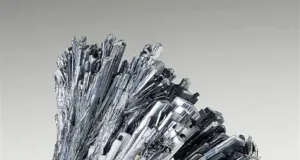
The principal ore of antimony, stibnite is antimony sulfide. Its name comes from the Latin stibium. Lead-gray to silvery gray in color, it often develops a black, iridescent tarnish on exposure to light. It normally occurs as elongated, prismatic crystals that may be bent or twisted.
Orpiment
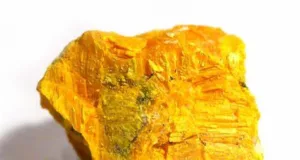
An arsenic sulfide, orpiment is a soft yellow or orange mineral. Widely distributed, it is typically powdery or massive, but it is also found as cleavable, columnar, or foliated masses. Distinct crystals are uncommon, but when found they are short prisms.
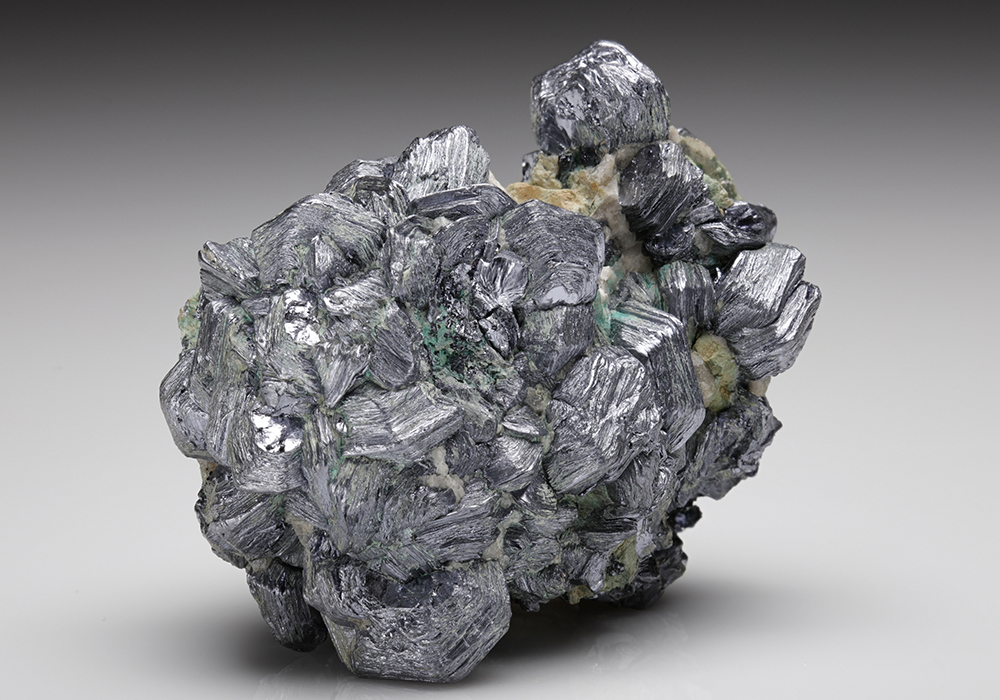
Molybdenite
A molybdenum sulfide, molybdenite is the most important source of molybdenum, which is an important element in high-strength steels. Molybdenite was originally thought to be lead, and its name is derived from the Greek word for lead, molybdos. It was recognized as a distinct mineral by the Swedish chemist Carl Scheele in 1778.
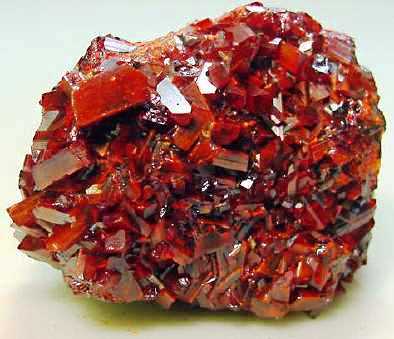
Realgar (Ruby Sulfur)
An important ore of arsenic, realgar is bright red or orange in color. Crystals are not often found, but when they occur they are short, prismatic, and striated. Realgar mostly occurs as coarse to fine granular masses and as encrustations.

Acanthite
Acanthite is a form of silver sulfide with the chemical formula: Ag2S. It crystallizes inside the monoclinic gadget and is the solid form of silver sulfide under 173 °C (343 °F). A silver sulfide, it is the maximum important ore of silver. It additionally happens in huge form and has an opaque, grayish black color.

Iridescent Rainbow Pyrite
Rainbow pyrite, also known as iridescent pyrite or peacock pyrite, is a captivating mineral known for its stunning metallic luster and a rainbow of...

Covellite
Covellite is a rare sulfide mineral that is known for its distinctive indigo-blue to blackish-blue coloration. Its name is derived from the Latin word...