



Silicate Minerals
Silicate minerals are by far the most abundant minerals on our planet, forming in effect the vast bulk of Earth’s crust and mantle thanks to their fundamental silicon-oxygen tetrahedral unit (SiO₄) and its countless ways of linking, sharing oxygens and accommodating various metal cations—whether magnesium, iron, aluminium, sodium or potassium. In simpler terms: you have tiny SiO₄ tetrahedra that may float alone (as in olivine), link into chains (pyroxenes), double-chains (amphiboles), sheets (micas and clays) or full 3-D frameworks (feldspars and quartz), and every structural variation changes how the mineral behaves, where it forms and how it breaks apart or weathers. Because silicates are so versatile, they show up in igneous, metamorphic and sedimentary rocks, drive engineering and geotechnical issues (think: clay swelling, feldspar weathering), and carry stories of tectonics, temperature, pressure and fluid flows. In this category you'll explore not just the chemistry and crystal architectures of silicates, but also how recognizing groups like olivine, pyroxene, mica or feldspar in the field or core can tell you about geological history, site behaviour or material performance—and why as a geologist, engineer or site-practitioner this matters deeply.

Dravite (Brown Tourmaline)
Dravite is a mineral that belongs to the tourmaline group, which is a group of complex borosilicate minerals. Tourmalines are well-known for their diverse...
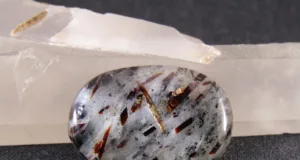
Astrophyllite
Astrophyllite is a rare and unique mineral that belongs to the group of complex silicate minerals. Its name is derived from the Greek words...
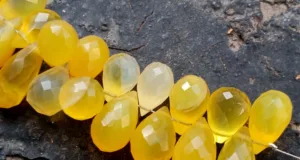
Yellow Chalcedony
Yellow chalcedony is a variety of chalcedony, which itself is a form of microcrystalline quartz. Chalcedony encompasses a broad range of cryptocrystalline quartz varieties...
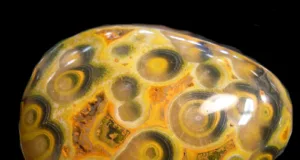
Bumble Bee Jasper
Bumble Bee Jasper, also known as Orpiment or Eclipse Jasper, is a unique and vibrant form of volcanic rock that is primarily composed of...
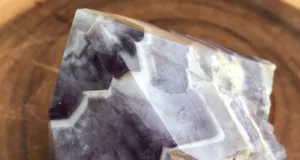
Banded Amethyst
Banded Amethyst is a specific variety of amethyst, which is a violet to purple variety of quartz. What sets Banded Amethyst apart is its...
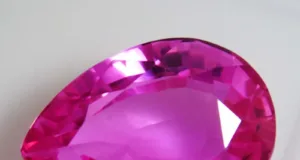
Poudretteite
Poudretteite is a rare and valuable gemstone that belongs to the spodumene mineral group. It is named after the Poudrette family, owners and operators...
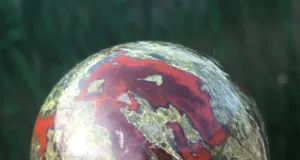
Dragon Bloodstone
Dragon's Blood stone, also known as Dragon's Blood jasper or Dragon Bloodstone, is a type of green jasper with red or deep green splotches....
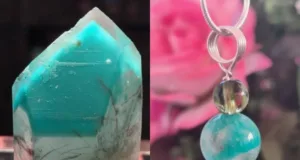
Ajoite
Ajoite is a rare mineral that is known for its stunning blue-green color. It belongs to the silicate mineral group and is specifically classified...
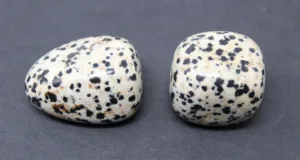
Dalmatian Jasper
Dalmatian Jasper, also known as Dalmatian Stone or Dalmatian Agate, is a unique and visually distinctive variety of chalcedony, which is a form of...
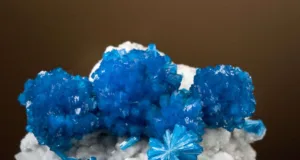
Cavansite
Cavansite is a relatively rare and striking mineral known for its vibrant blue color. The name "cavansite" is derived from its chemical composition, as...
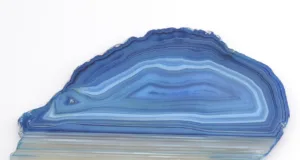
Blue Lace Agate
Blue Lace Agate is a variety of chalcedony, which is a type of microcrystalline quartz. It is known for its delicate blue and white...
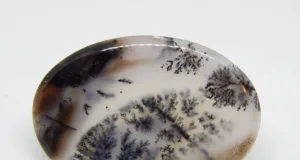
Dendritic Agate
Dendritic Agate is a variety of chalcedony, which is a type of microcrystalline quartz. What sets dendritic agate apart is its distinctive inclusions that...