





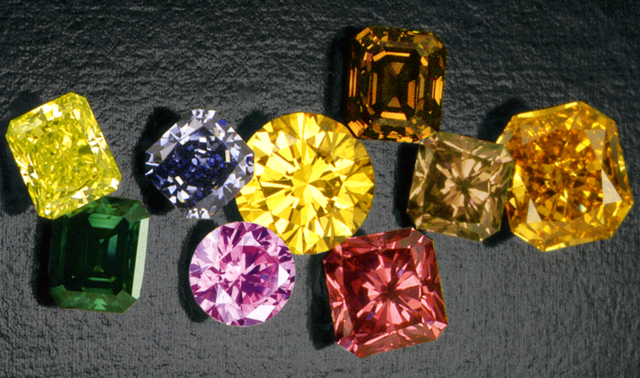
When geologists talk about the color of minerals, they are not just describing an aesthetic detail. Mineral color is one of the most fascinating physical expressions of how atoms, electrons, and light interact inside a crystal. Sometimes the color is tied directly to a mineral’s chemistry. Sometimes it comes from a tiny impurity that you would never see with the naked eye. And sometimes, a mineral’s beautiful color is the result of microscopic structural defects, radiation, or even particles trapped inside the crystal millions of years ago.
This is why color is both incredibly useful and dangerously misleading in mineral identification. Two samples of the same mineral can display completely different colors, while minerals with no chemical relationship to each other may look almost identical. Yet behind every color lies a precise physical explanation. The shades, tones, variations, and optical effects work like fingerprints of what is happening at the atomic scale.
What gives minerals their color is fundamentally the interaction between light (electromagnetic waves) and electrons. Some wavelengths are absorbed, some transmitted, and some reflected. What finally reaches our eyes is the remaining mixture, which we interpret as color. But the reasons for absorption or reflection vary widely, depending on chemistry, crystal structure, defects, and even nanoscale inclusions.
1) Electronic Transitions: How Electrons Absorb Light
The most fundamental reason minerals have color is because electrons in certain ions absorb specific wavelengths of light. Each ion has a unique electronic configuration, especially transition metals with their partially filled d-orbitals.
The usual culprits are:
- Fe²⁺ / Fe³⁺
- Cr³⁺
- Mn²⁺
- Ti³⁺ / Ti⁴⁺
- Co²⁺
- Cu²⁺
These ions can absorb photons with particular energies. When a photon strikes the ion, it may push an electron to a higher energy level. The absorbed wavelengths disappear from the spectrum, and the remaining wavelengths form the perceived color.
Classic example:
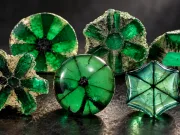
Emerald (green beryl): the Cr³⁺ ion absorbs red and violet light, leaving a vivid green.
Ametrine, amethyst, and many other varieties of quartz owe their colors to iron ions combined with slight distortions in the crystal lattice.
Electronic transitions are the dominant cause of color in many of the world’s most famous gemstones.
2) Trace Elements: Tiny Amounts, Big Color Changes
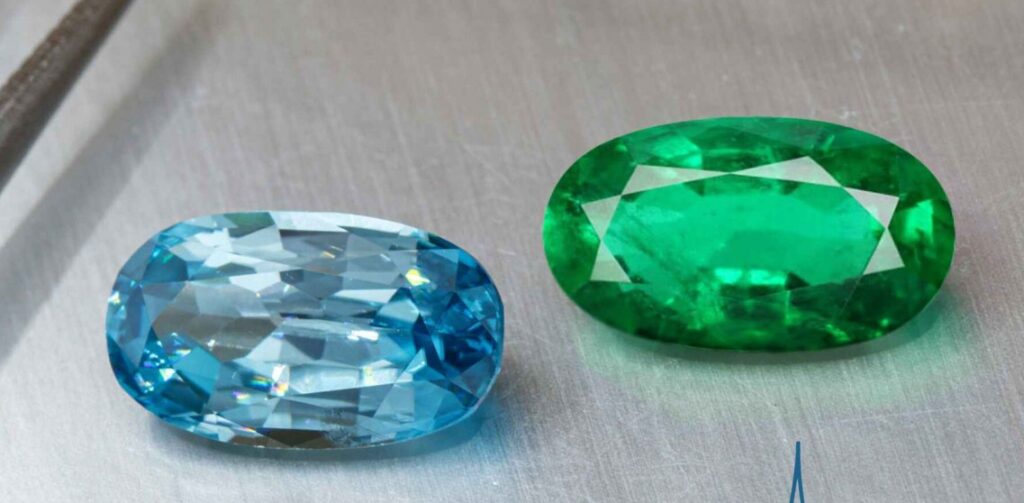
Sometimes a mineral’s color comes from an element that makes up less than 1% of the crystal. These elements substitute for the main ions in the structure. This substitution barely changes the chemistry but dramatically changes the optical behavior.
Beryl is the perfect example:
- Pure beryl is colorless.
- Add Cr³⁺ → emerald (green)
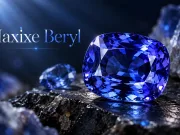
- Add Fe²⁺ / Fe³⁺ → aquamarine (blue)
- Add Mn²⁺ → morganite (pink)
- Add Fe³⁺ → heliodor (yellow)
A single trace element can give the same mineral a completely different identity and name.
Turmaline is another famous case. Depending on which trace elements happen to be present — Fe, Mn, Cr, V, Cu — you can get green, red, blue, yellow, or almost black crystals.
Trace-element coloring is one of the most powerful and common mechanisms in mineralogy.
3) Crystal Defects and Radiation Damage
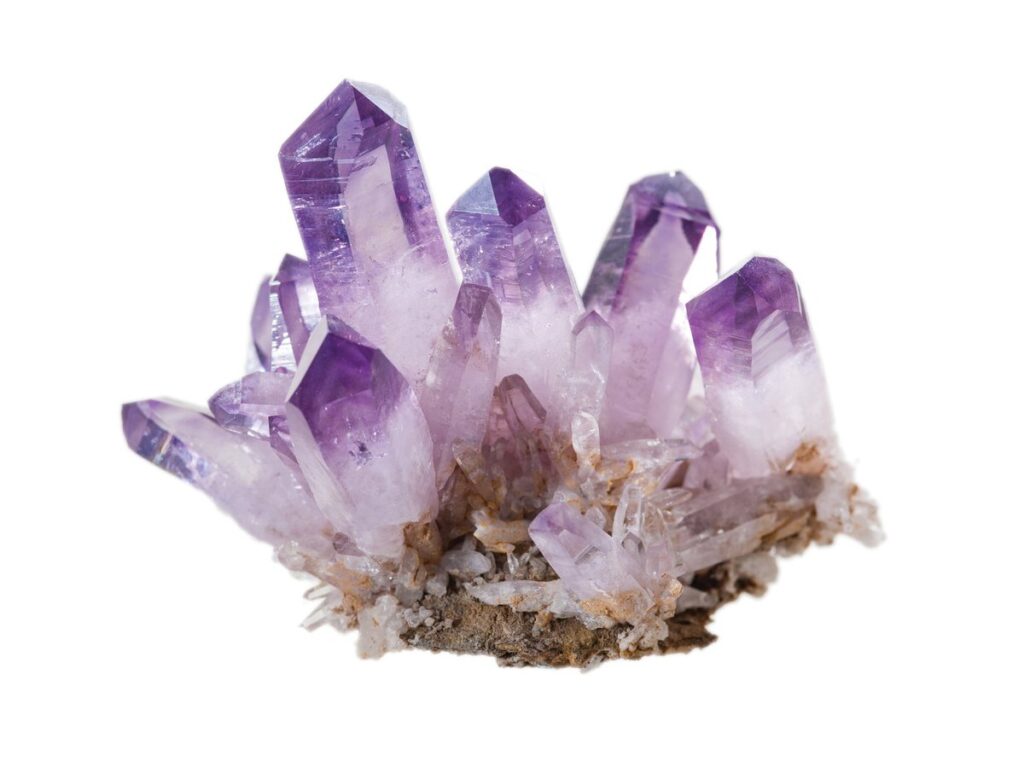
Not all color comes from chemistry. Many minerals get their color from imperfections in the crystal structure. These imperfections change how light moves inside the mineral.
Crystal defects include:
- vacancies
- distorted bonds
- misaligned ions
- structural voids
- “broken” lattice sites caused by irradiation
These defects create what mineralogists call color centers. They trap electrons or alter the way light is absorbed.
Examples:
- Amethyst’s purple color comes from Fe-related defects plus natural gamma radiation.
- Smoky quartz gets its brown-black tone from radiation-damaged Si–O bonds.
- Blue topaz forms through radiation-related color centers as well.
Color generated by defects is extremely common, especially in quartz and feldspar families.
4) Crystal Field Effects: Transition Metals in Specific Sites

Transition metals inside an oxygen framework experience what is called crystal field splitting. The surrounding atoms distort the electron cloud around the metal ion, raising or lowering specific energy levels. This makes the ion absorb specific wavelengths.
This is crucial for minerals like:
- olivine
- pyroxene
- amphibole
- garnet
- spinel
- tourmaline
Because each mineral has a different structural site geometry, the same metal ion can produce different colors. For example, Fe²⁺ may give a greenish tint in one structure and a brownish tint in another, depending on the symmetry and spacing of oxygen atoms.
Spinel’s wide range of colors — red, blue, pink, violet, green — is heavily influenced by crystal field effects.
5) Charge-Transfer Processes
Charge transfer occurs when an electron moves between two different ions. This movement absorbs specific wavelengths of light. These transitions often produce intense colors.
The most common pair is Fe²⁺ ↔ Fe³⁺.
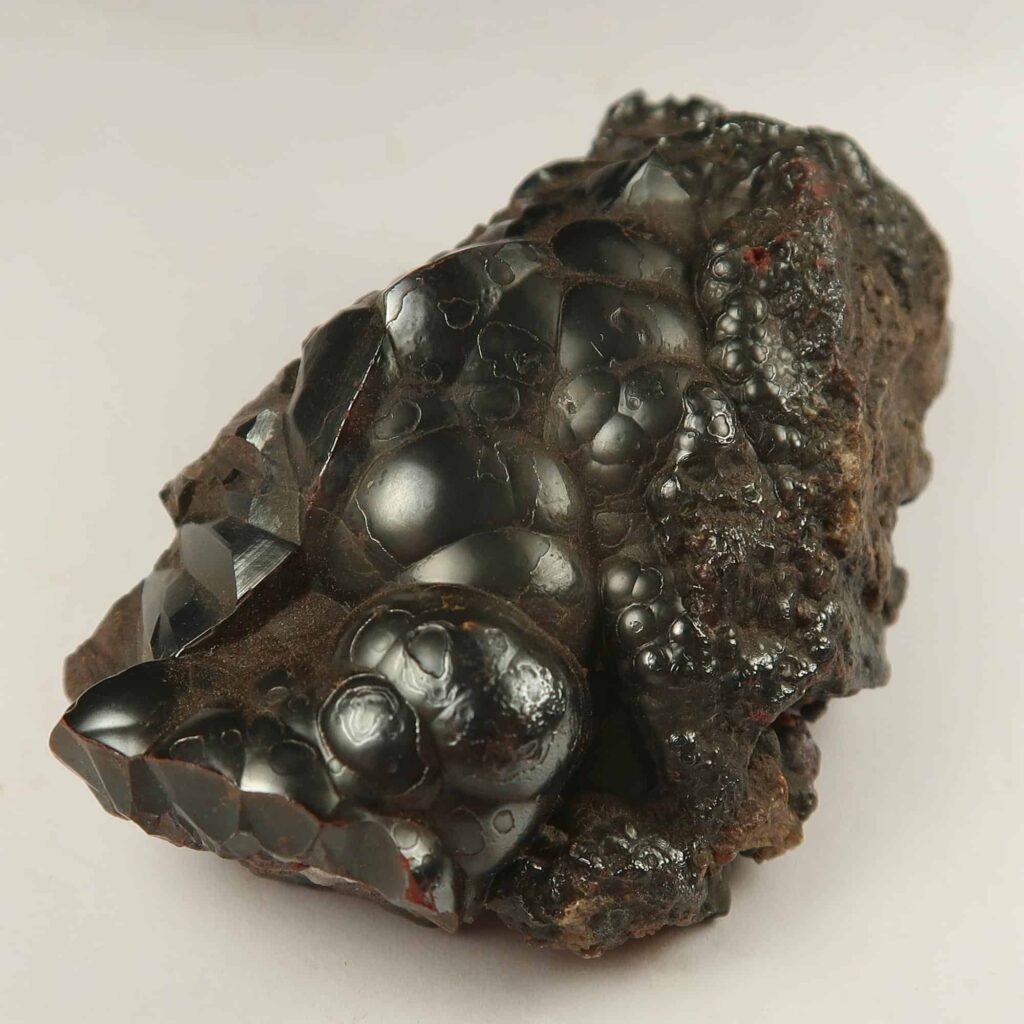
In minerals like hematite, goethite, and magnetite, charge-transfer reactions give rise to deep reds, browns, and blacks. These colors can be extremely strong, sometimes overpowering other optical characteristics.
Many iron oxides and hydroxides owe their distinctive appearance almost entirely to charge-transfer processes.
6) Inclusions and Scattering Effects
Some minerals are colored not by their chemistry but by what is trapped inside them. Tiny inclusions—crystals, particles, films, or voids—scatter and reflect light.
Examples:
- Lapis lazuli’s vibrant blue comes from lazurite mixed with pyrite and calcite.
- Aventurine quartz sparkles due to tiny flakes of fuchsite or hematite.
- Some obsidians show rainbow or golden patterns caused by nanoscale magnetite inclusions.
In these cases, color is a physical effect, not a chemical one. The mineral itself may be colorless; the inclusions create the color and texture.
7) Idiochromatic vs. Allochromatic Minerals
Minerals can be divided into two big groups based on whether their color is inherent or impurity-driven.
Idiochromatic Minerals
Their color comes directly from essential elements in their chemistry.
Examples:
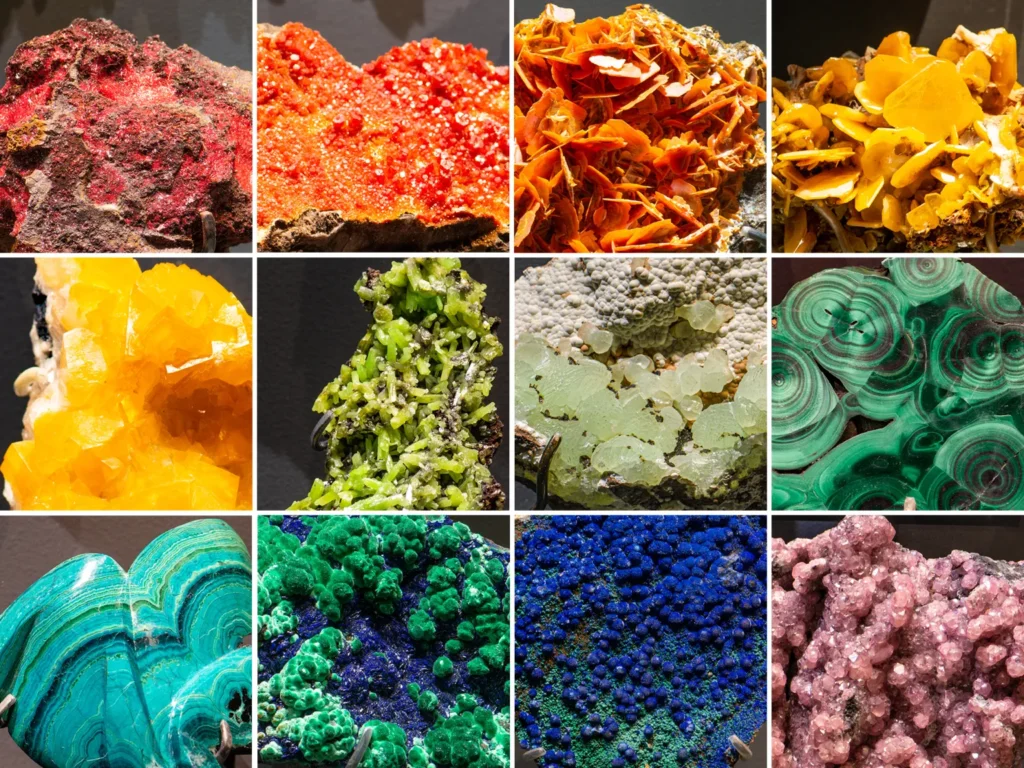
- Azurite → intense blue from Cu²⁺
- Malachite → green from Cu²⁺
- Realgar → red from As–S bonds
- Orpiment → yellow from As–S
- Sulfur → bright yellow from S–S bonds
These minerals almost always appear in their characteristic colors.
Allochromatic Minerals
Their color comes from impurities, defects, or inclusions.
Examples:
- Quartz
- Tourmaline
- Spinel
- Beryl
These minerals can appear in many colors, depending on which trace elements or defects are present.
8) Pleochroism: Multiple Colors in One Crystal
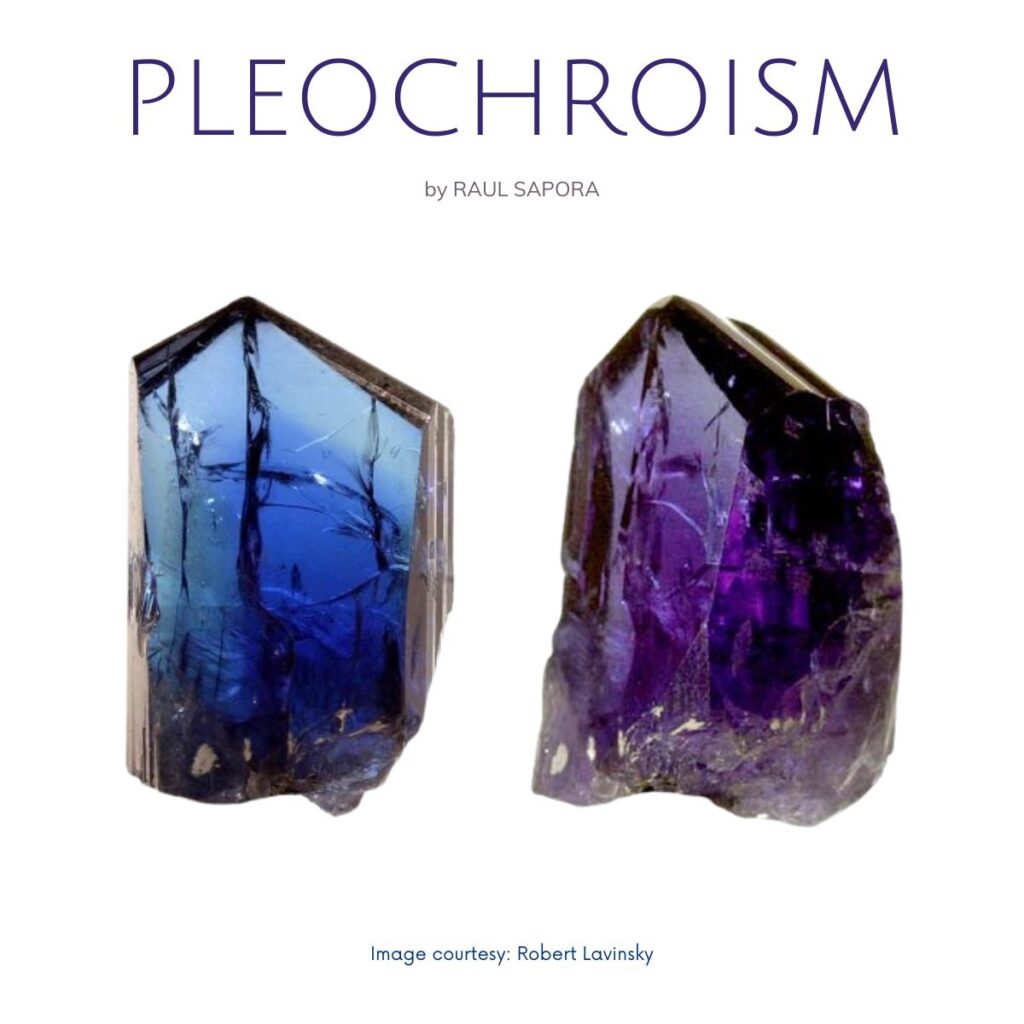
Some minerals show different colors when you view them from different directions. This is called pleochroism — a direct result of anisotropic absorption.
Two types exist:
- Dichroism: two colors
- Trichroism: three colors
Examples:
- Iolite → blue, violet-gray, yellowish brown
- Cordierite → strong trichroism
- Tourmaline → variable green, yellow, brown
- Amphiboles
- Pyroxenes
Pleochroism can be extremely strong and is a key diagnostic property in optical mineralogy.
9) Iridescence, Play-of-Color, and Thin-Film Effects
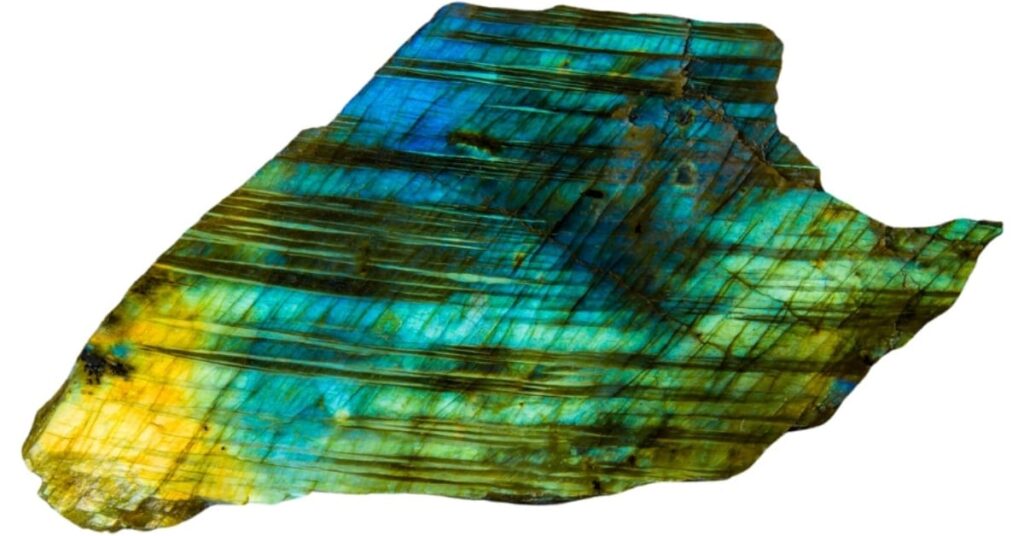
Some minerals are not just colored — they display shifting rainbows and light effects. These arise from interference of light within thin layers or repeating structures.
Examples:
- Opal → silica spheres diffract light and create play-of-color
- Labradorite → lamellar structures create labradorescence
- Moonstone → thin alternating layers cause adularescence
- Hematite films → iridescent rainbow tones
These optical behaviors produce some of the most spectacular visual effects seen in gem minerals.
10) Metallic Bonding and Free Electrons
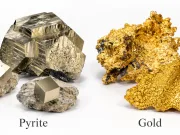
Native metals and metallic minerals have distinctive colors and shine because they contain free electrons that behave like a reflective sea.
- Gold → yellow
- Copper → reddish orange
- Silver → bright gray
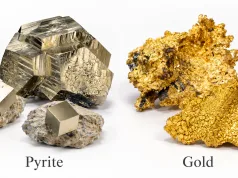
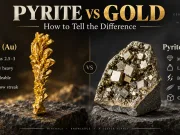
- Pyrite → brassy metallic gold
These colors result from collective electron behavior in the metallic bond.
11) Oxidation and Weathering Colors
Some minerals change color when exposed to water, oxygen, or environmental conditions. The surface may alter chemically, forming new compounds with different absorption properties.
Examples:
- Pyrite → weathers to reddish goethite or hematite
- Copper minerals → develop blue-green patinas
- Uranium minerals → shift toward greenish-yellow oxides
These color changes reflect surface chemistry rather than the mineral’s true internal structure.
12) Why the Same Mineral Appears in Many Colors
Quartz, fluorite, spinel, tourmaline, and beryl are classic examples of minerals that come in almost every color imaginable. The reasons include:
- different trace elements
- different irradiation histories
- different defect types
- regional geochemical variations
- trapped microscopic inclusions
- charge-transfer variations
The same chemical formula can produce completely different colors depending on the environment of formation.
13) Why Color Alone Is Not a Reliable Diagnostic Property
Geologists rarely rely on color alone because:
- many minerals are allochromatic
- weathering alters surface color
- inclusions distort color
- multiple minerals can share identical colors
- the same mineral species may show wide color variation
This is why streak color—the color of the powdered mineral—is often more useful. Streak removes the effects of transparency and inclusions, revealing the mineral’s core pigment.
Conclusion
The color of minerals is the visible expression of atomic-level interactions between electrons and light. Trace elements, defects, charge-transfer reactions, crystal field effects, inclusions, physical scattering, and thin-film interference all paint the mineral world in its extraordinary spectrum.
Every emerald green, amethyst purple, hematite red, sapphire blue, opal fire, or labradorite flash is the result of a precise interplay of physics and chemistry deep inside the Earth.
Mineral color is not superficial — it is a record of geological conditions, atomic structure, and the history a crystal has lived through.