





The Transformation of Rocks Under Pressure
Metamorphic rocks are the result of an incredible transformation. When existing rocks—whether igneous, sedimentary, or even older metamorphic rocks—are subjected to intense heat, pressure, or chemically active fluids deep within Earth’s crust, their mineral structures and textures are altered. This process, called metamorphism, literally means “change in form.”
These changes create rocks with new mineral assemblages, textures, and structures that reveal the physical conditions they experienced. Among the most important textural features geologists study are foliation, lineation, and metamorphic grade—clues that help decode the pressure-temperature history of a rock’s journey.
What Is Metamorphism?
Metamorphism occurs when rocks adjust to changing environments deep within the Earth. The process doesn’t melt the rock entirely but instead reorganizes its minerals and crystal structures.
Factors controlling metamorphism include:
- Temperature (ranging from ~200°C to >800°C)
- Pressure (often from tectonic forces or burial)
- Chemically active fluids (which promote mineral reactions)
- Time (metamorphism often occurs over millions of years)
Depending on the combination of these factors, metamorphic rocks can exhibit specific textures and mineral compositions, allowing geologists to infer the metamorphic grade and tectonic setting.
Foliation in Metamorphic Rocks
Definition and Formation
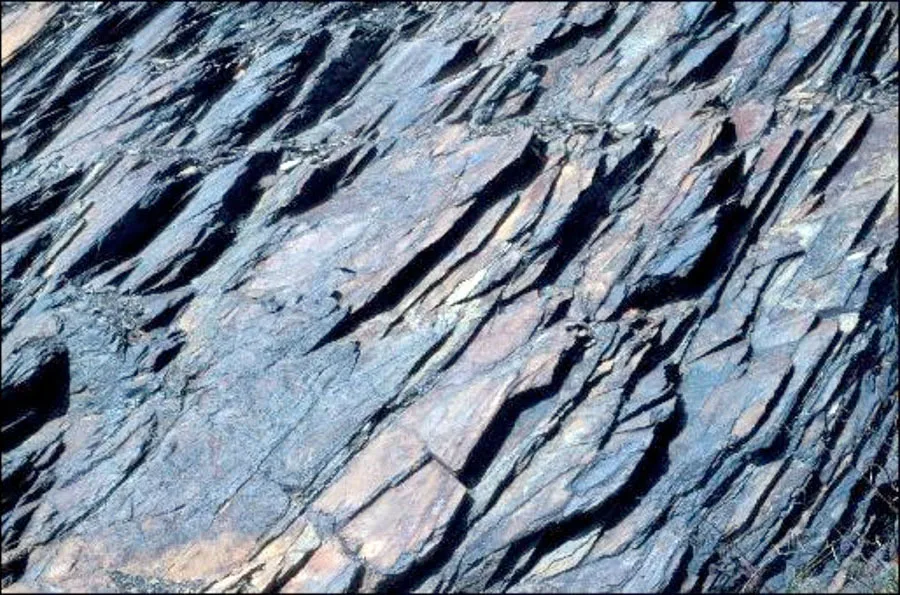
Foliation refers to the planar arrangement of minerals or structural features within a rock, typically caused by differential pressure. When stress acts more strongly in one direction, platy minerals such as mica or chlorite align perpendicular to the direction of maximum compression. This produces a banded or layered appearance.
Foliation is common in regional metamorphism, where large-scale mountain-building events compress and deform the crust.
Types of Foliation
- Slaty Cleavage
- Found in low-grade metamorphic rocks like slate.
- Very fine-grained texture with well-developed cleavage planes.
- Originates from the recrystallization of clay minerals into mica under low temperature and pressure.
- Phyllitic Texture
- Slightly higher grade than slate.
- Characterized by a silky sheen caused by fine-grained mica alignment.
- Appears wavy or crinkled under light.
- Schistosity
- Present in medium-grade metamorphic rocks like schist.
- Coarse-grained, with visible platy minerals such as biotite or muscovite.
- Rocks split easily along foliation planes.
- Gneissic Banding
- Represents high-grade metamorphism.
- Alternating dark (mafic) and light (felsic) mineral bands.
- Common in rocks like gneiss, showing extreme recrystallization and segregation of minerals.
Lineation in Metamorphic Rocks
What Is Lineation?
Lineation describes a linear structure or alignment within the rock. Unlike foliation, which is planar, lineation is a one-dimensional alignment of minerals, stretched objects, or fold axes. It typically forms under directed stress, where rocks deform plastically.
Lineations indicate the direction of tectonic movement and are especially common in ductile shear zones, where rocks have been stretched or elongated.
Common Types of Lineation
- Mineral Lineation
- Caused by the alignment of elongated minerals like amphibole or tourmaline.
- Reflects the flow direction of deformation.
- Stretching Lineation
- Formed when minerals or rock fragments are elongated by tectonic stretching.
- Often seen in quartz and feldspar aggregates.
- Crenulation Lineation
- Appears as small-scale folds within foliated rocks.
- Indicates multiple phases of deformation and metamorphism.
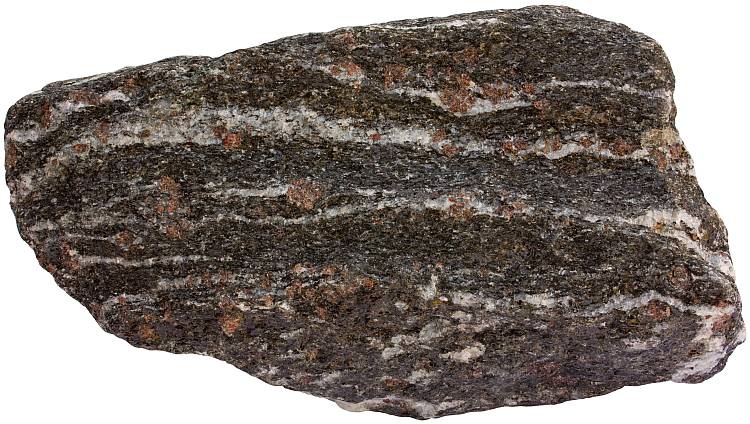
Foliation vs. Lineation: How They Relate
Although distinct, foliation and lineation often coexist and complement each other.
- Foliation results from compression—minerals flatten perpendicular to pressure.
- Lineation results from stretching—minerals elongate parallel to the direction of movement.
Together, these structures allow geologists to reconstruct the strain geometry and tectonic evolution of metamorphic terranes. For example, in a mountain belt, foliation might record crustal thickening, while lineation records lateral flow during uplift.
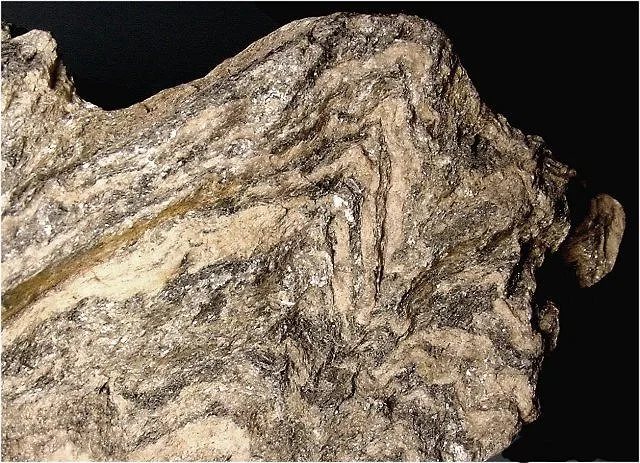
Metamorphic Grades: From Low to High
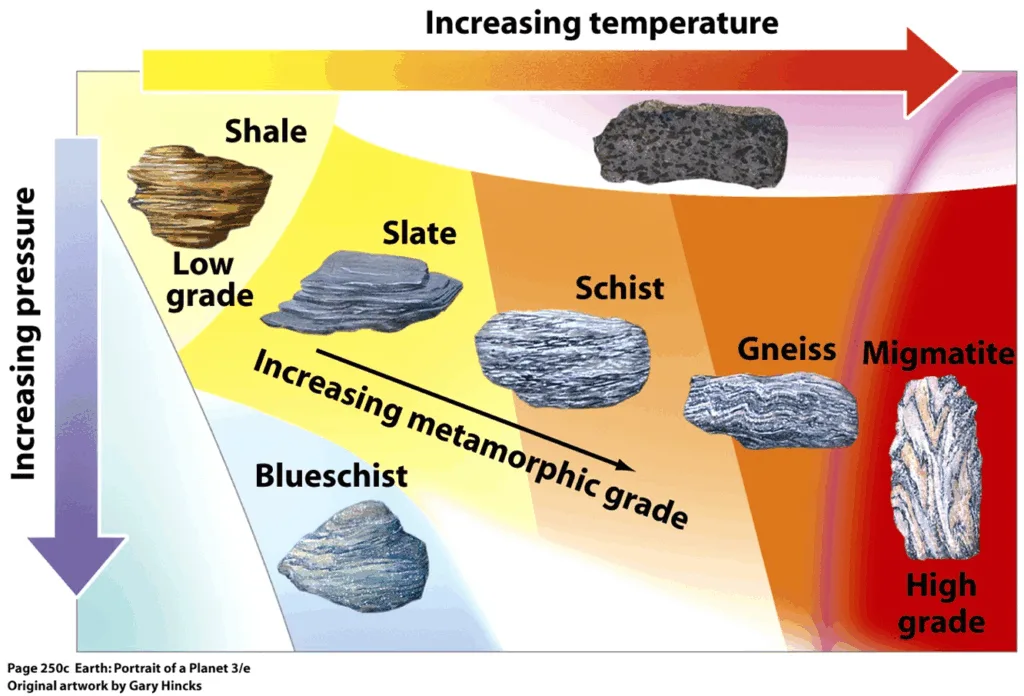
Metamorphic grade describes the intensity of metamorphism, primarily controlled by temperature and pressure. Rocks of different grades form a continuum from low to high:
- Low-Grade Metamorphism
- Temperatures: 200–350°C
- Minerals: chlorite, muscovite, and sericite
- Rocks: slate, phyllite
- Textures: slaty cleavage and fine foliation
- Medium-Grade Metamorphism
- Temperatures: 350–550°C
- Minerals: biotite, garnet, staurolite
- Rocks: schist
- Textures: visible mica, schistosity, and mineral lineation
- High-Grade Metamorphism
- Temperatures: 550–800°C+
- Minerals: sillimanite, kyanite, feldspar
- Rocks: gneiss, migmatite
- Textures: coarse mineral grains, gneissic banding, partial melting
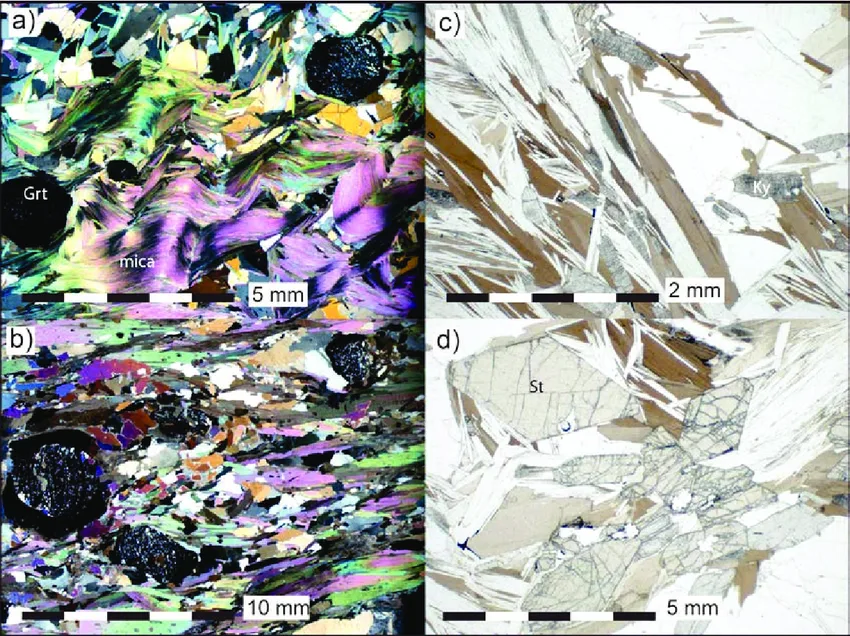
Index Minerals and Their Significance
Certain minerals form only under specific pressure-temperature conditions, serving as index minerals to estimate metamorphic grade:
| Index Mineral | Approx. Grade | Common Rock Type |
|---|---|---|
| Chlorite | Low | Slate, Phyllite |
| Biotite | Low–Medium | Schist |
| Garnet | Medium | Schist |
| Staurolite | Medium–High | Schist |
| Kyanite | High | Gneiss |
| Sillimanite | Very High | Gneiss, Migmatite |
By identifying these minerals, geologists can map metamorphic zones and reconstruct the geothermal history of a region.
Recognizing Metamorphic Structures in the Field
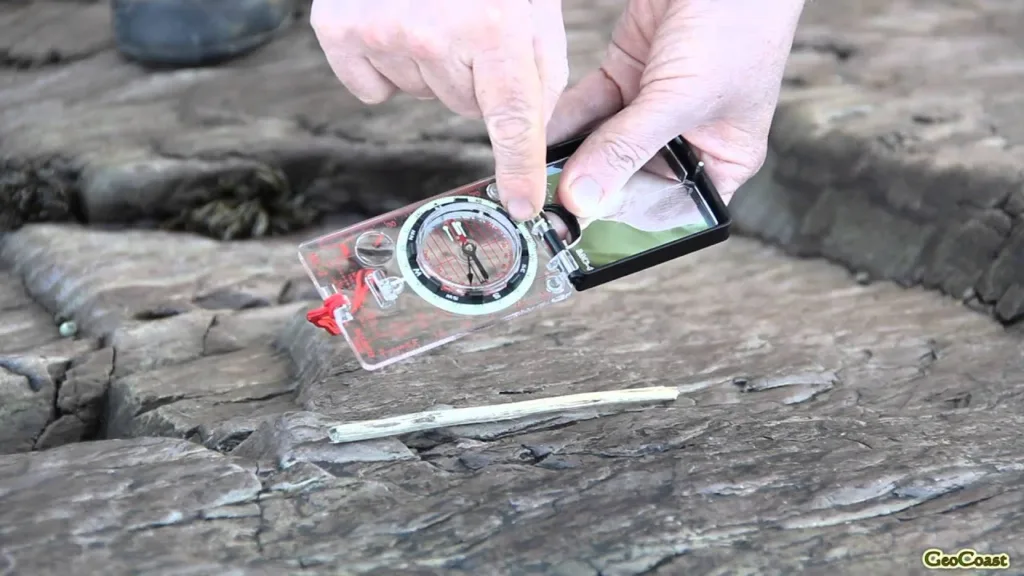
Field geologists rely on the combination of foliation, lineation, and mineral assemblages to interpret deformation and metamorphism.
Key observations include:
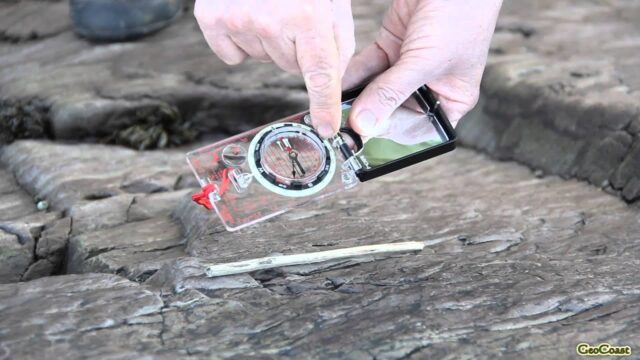
- Orientation of foliation planes and lineation directions
- Mineral assemblages indicating pressure-temperature conditions
- Folding patterns, shear zones, and cross-cutting relationships
These data contribute to structural geology maps and metamorphic facies models, helping to reconstruct past tectonic environments like continental collisions or subduction zones.
Conclusion
Metamorphic rocks preserve an extraordinary record of Earth’s dynamic interior.
Foliation and lineation provide visual evidence of directed pressure and deformation, while metamorphic grade and index minerals indicate the temperature and pressure conditions experienced by the rock.
By studying these features, geologists can read the story of mountain formation, crustal movement, and even the thermal evolution of ancient continental plates.
FAQ Section
Q1: What causes foliation in metamorphic rocks?
Foliation forms when platy minerals like mica align perpendicular to directed pressure, creating a layered texture during regional metamorphism.
Q2: How does lineation differ from foliation?
Foliation is planar (layered), while lineation is linear (aligned in one direction), often showing the stretching direction during deformation.
Q3: What are index minerals?
Index minerals such as chlorite, garnet, and sillimanite indicate specific pressure-temperature ranges, helping determine metamorphic grade.
Q4: Which rocks show the highest metamorphic grade?
Gneiss and migmatite represent high-grade metamorphism, with coarse minerals and gneissic banding.
Q5: Can foliation and lineation occur together?
Yes, they often intersect. Foliation records compressional stress, while lineation records stretching, both forming under ductile conditions.