

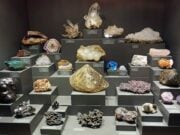


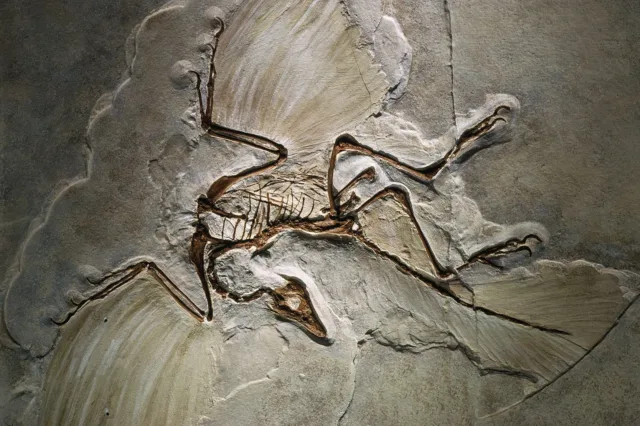
Fossils are more than ancient remains—they are windows into vanished worlds. Each fossil preserves a moment in time, capturing organisms that lived millions of years ago in environments radically different from today. Some fossils reveal evolutionary transitions, showing how life adapted and changed. Others document catastrophic events like mass extinctions or dramatic climate shifts. Together, they form a narrative of life on Earth spanning over 3.5 billion years.
The fossilization process itself is remarkable and rare. Most organisms decompose completely after death, leaving no trace. Only under specific conditions—rapid burial, low oxygen, mineral-rich water—can remains be preserved and gradually replaced by minerals, transforming organic material into stone. The odds against any individual organism becoming a fossil are astronomical, yet Earth’s rock record contains billions of fossils, each representing a successful preservation against those odds.
Some locations preserve fossils with exceptional quality or abundance, creating fossil assemblages that have fundamentally shaped our understanding of life’s history. These are places where paleontology becomes vivid and immediate, where ancient ecosystems are preserved in such detail that scientists can reconstruct not just what organisms looked like, but how they lived, what they ate, and how they interacted.
The following ten locations represent some of the most significant fossil sites on Earth. Each tells a unique story about a specific time period, environment, or evolutionary transition. Together, they span from the earliest evidence of life to the dawn of human existence.
1. Burgess Shale, British Columbia, Canada
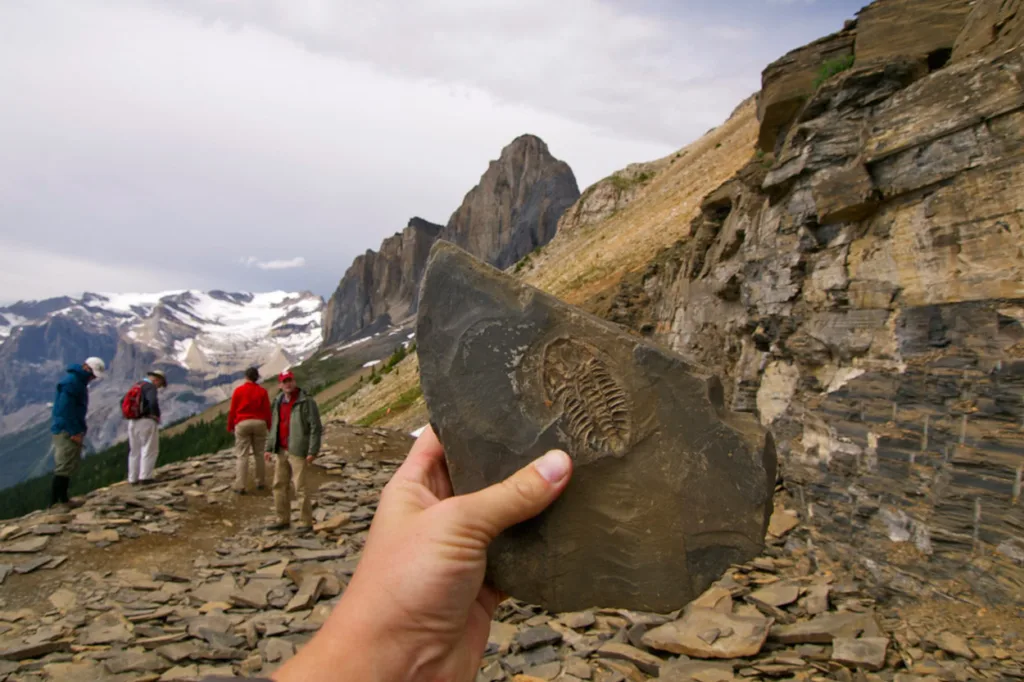
High in the Canadian Rockies, the Burgess Shale preserves one of the most extraordinary snapshots of ancient life ever discovered. Dating to approximately 508 million years ago during the Middle Cambrian Period, these fossils capture life during one of the most important transitions in Earth’s history: the Cambrian Explosion, when most major animal groups appeared in the fossil record within a relatively brief geological timespan.
What Makes It Special
The Burgess Shale is famous for its exceptional preservation of soft-bodied organisms. Most fossils preserve only hard parts—shells, bones, teeth—because soft tissues decay rapidly. But the Burgess Shale preserves complete organisms, including muscles, guts, eyes, and even the last meals in digestive tracts. This level of preservation, called Lagerstätte preservation, provides insights impossible to obtain from typical fossils.
The organisms themselves are bizarre by modern standards. Anomalocaris, reaching over half a meter in length, was the apex predator of its time—a creature with grasping appendages, compound eyes, and a circular mouth surrounded by plates. Hallucigenia puzzled scientists for decades with its odd arrangement of spines and tentacles. Opabinia possessed five eyes and a flexible proboscis tipped with claws. Many Burgess organisms represent extinct body plans that have no living equivalents.
The Geological Context
These organisms lived on the edge of a carbonate platform adjacent to a deep ocean basin. The platform was essentially an ancient reef complex teeming with life. Periodically, underwater landslides swept organisms from the shallow platform into the deep basin, burying them instantly in fine-grained mud. The deep basin had low oxygen levels, preventing scavengers and bacteria from consuming the buried organisms. Over time, minerals replaced the organic tissues, preserving even the most delicate structures.
The Burgess Shale fossils fundamentally changed our understanding of early animal evolution. They revealed that the Cambrian Explosion produced far more diversity than previously imagined, including many experimental body plans that ultimately went extinct. They showed that complex ecosystems with predators, prey, and intricate ecological relationships existed over 500 million years ago.
2. Solnhofen Limestone, Bavaria, Germany
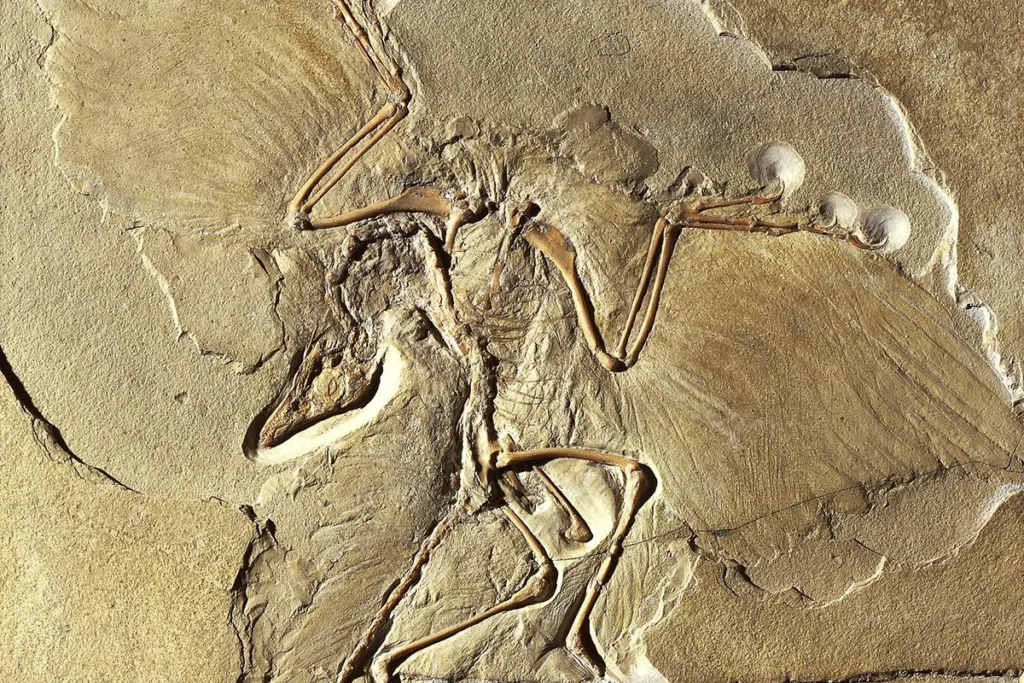
The Solnhofen Limestone of southern Germany preserves a Late Jurassic ecosystem from approximately 150 million years ago. During this time, the region consisted of a series of tropical lagoons separated from the open ocean by coral reefs and islands. These lagoons became death traps for organisms that fell or drifted into their stagnant, hypersaline waters.
What Makes It Special
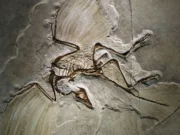
Solnhofen is most famous for preserving Archaeopteryx, one of the most important transitional fossils ever discovered. Archaeopteryx displays a clear mix of reptilian and avian features: teeth and a bony tail like a dinosaur, but feathers and wings like a bird. The Solnhofen specimens preserve these feathers in exquisite detail, providing crucial evidence for the dinosaur-bird evolutionary transition.
Beyond Archaeopteryx, Solnhofen preserves a diverse array of marine and terrestrial organisms: fish with preserved scales and fin rays, pterosaurs with wing membranes intact, dragonflies with delicate wing veins visible, and even soft-bodied organisms like jellyfish. The fine-grained limestone captures details down to millimeter scale, preserving structures that would normally decompose within hours of death.
The Geological Context
The Solnhofen lagoons had unusual chemistry that prevented most decomposition. The waters were hypersaline—saltier than normal seawater—and likely stratified, with a dense, oxygen-poor bottom layer. Organisms that died or were washed into these lagoons sank to the bottom, where the toxic conditions prevented scavengers and bacteria from consuming them. Fine calcareous mud gradually buried the remains, and the lack of water movement meant the mud settled without disturbing the delicate specimens.
The limestone itself is remarkably uniform and fine-grained, which has made it valuable for lithographic printing since the 18th century. Quarrying for lithographic stone led to the discovery of most Solnhofen fossils. The same properties that made the stone excellent for printing—uniform texture, fine grain, easy splitting—also make it excellent for preserving fossils in extraordinary detail.
3. La Brea Tar Pits, California, USA
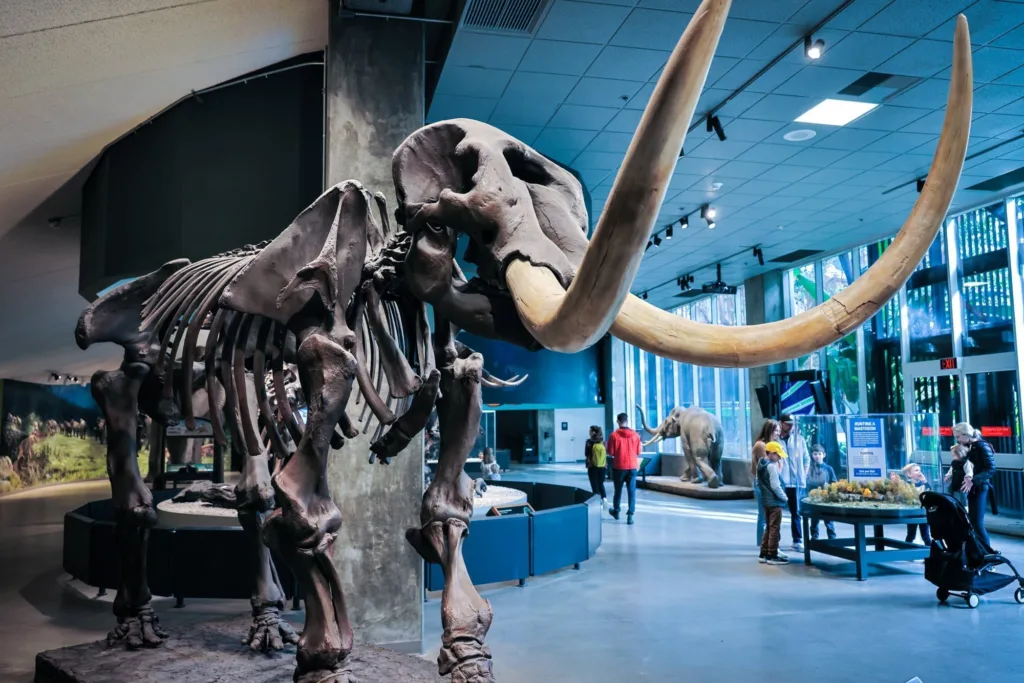
The La Brea Tar Pits in Los Angeles preserve an Ice Age ecosystem from approximately 50,000 to 10,000 years ago. During this time, crude oil seeping to the surface formed pools of sticky asphalt that trapped animals coming to drink from water that collected on the asphalt’s surface. Once trapped, struggling animals attracted predators and scavengers, which became trapped themselves, creating a predator trap that accumulated thousands of specimens.
What Makes It Special
La Brea has yielded over 3.5 million fossils from at least 600 species, making it one of the richest Ice Age fossil sites in the world. The assemblage is dominated by predators and scavengers—an unusual pattern explained by the trap mechanism. Dire wolves are the most common large mammal, with over 4,000 individuals recovered. Saber-toothed cats, American lions, short-faced bears, and giant ground sloths are also abundant.
The fossils preserve not just bones but also plant remains, pollen, insects, and even ancient DNA. This comprehensive preservation allows detailed reconstruction of the Ice Age environment in southern California. The region was cooler and wetter than today, supporting a mix of woodland and grassland inhabited by megafauna that would seem exotic in modern California.
The Geological Context
Natural asphalt seeps have occurred in this area for over 40,000 years, as crude oil from underground deposits migrates upward through fractures. The lighter components evaporate, leaving behind sticky asphalt. During colder periods, water collected in depressions on the asphalt surface, attracting thirsty animals that became mired in the sticky tar beneath.
The asphalt acts as an excellent preservative, protecting bones from weathering and bacterial decay. Some bones are so well preserved they still contain original collagen, allowing for radiocarbon dating and even DNA analysis. The continuous accumulation over tens of thousands of years provides a long-term record of environmental change, documenting how the fauna shifted in response to climate fluctuations.
La Brea is also important for understanding extinction. Many of the large mammals preserved there went extinct approximately 10,000 years ago, at the end of the Pleistocene. The detailed fossil record helps scientists investigate whether these extinctions were caused by climate change, human hunting, or a combination of factors.
4. Messel Pit, Germany
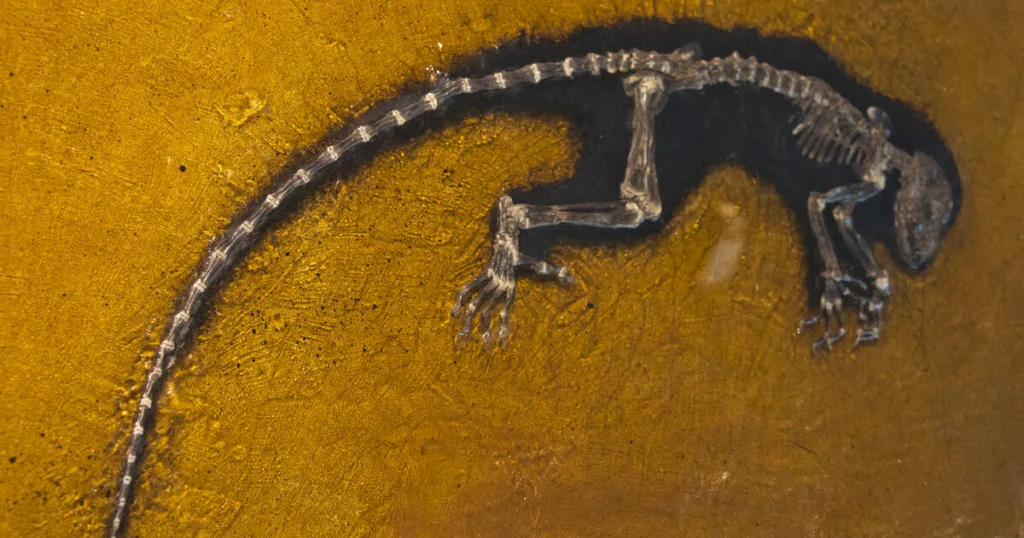
The Messel Pit near Frankfurt preserves a complete rainforest ecosystem from the Eocene Epoch, approximately 47 million years ago. During this time, global temperatures were much warmer than today, and Europe was covered by tropical and subtropical forests. The area that is now Messel was a deep volcanic crater lake surrounded by dense forest.
What Makes It Special
Messel provides exceptionally complete preservation of terrestrial vertebrates. Mammals are preserved with fur, stomach contents, and even individual hair structures visible. Birds retain feathers with color patterns. Reptiles and amphibians show skin texture and scale patterns. The lake sediments also preserve insects with wing venation, leaves with cellular structure, and even pollen grains intact.
One of the most famous Messel fossils is Darwinius masillae, informally known as “Ida”—a nearly complete primate skeleton preserved with soft tissue outlines and stomach contents. Messel horses retain evidence of their last meals, showing they browsed on leaves and fruit. Ancient bats preserve wing membranes showing they were capable of powered flight and likely echolocation.
The Geological Context
The Messel lake formed in a volcanic maar—a broad, shallow crater created by a phreatomagmatic eruption. The lake was deep (probably over 200 meters) and became stratified, with an oxygen-poor bottom layer. This stratification is crucial for preservation: organisms that sank into the deep water entered an anoxic environment where decay was extremely slow.
The lake sediments consist of oil shale—organic-rich rock that formed from algae and bacteria growing in the surface waters. Dead organisms settling through the water column were gradually buried in accumulating organic sediment. The lack of oxygen and scavengers meant even delicate structures could be preserved. Over time, minerals replaced organic tissues, creating fossils that preserve extraordinary detail.
Messel fossils document the recovery of ecosystems after the mass extinction that ended the Age of Dinosaurs. By the Eocene, mammals had diversified into many of the modern orders, and early representatives of horses, bats, primates, and other groups appear in the Messel fauna. The site provides crucial evidence about mammalian evolution and adaptation during a time of warm global climate.
5. Ediacara Hills, South Australia
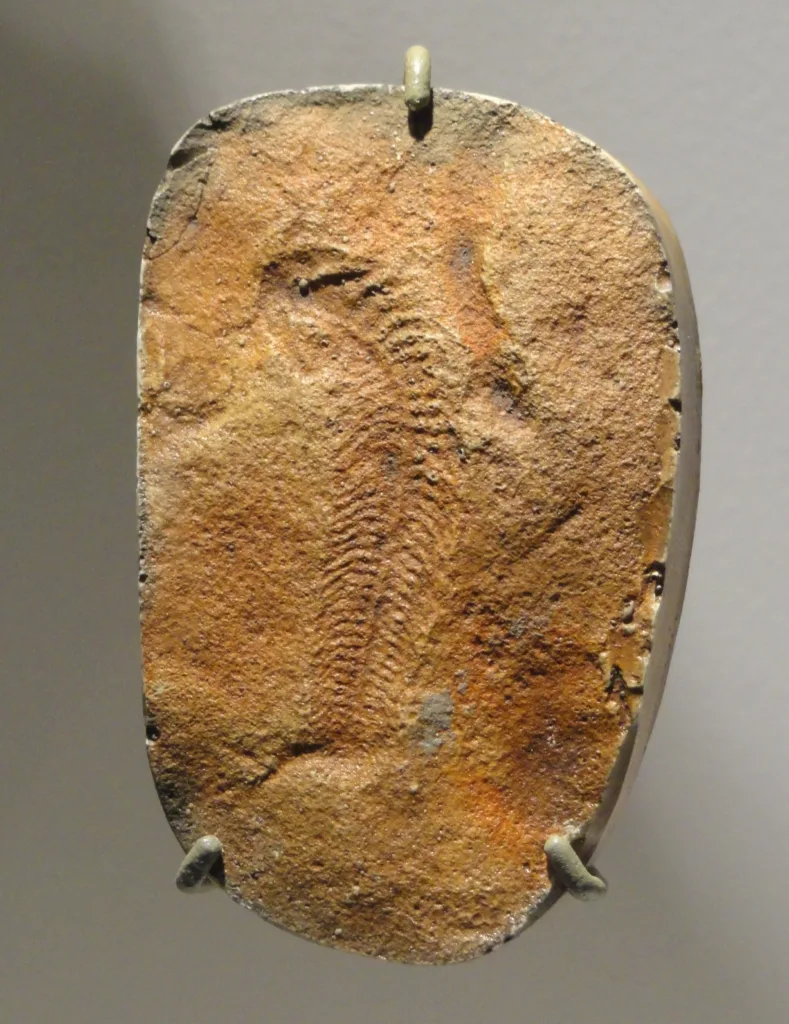
The Ediacara Hills preserve Earth’s oldest known complex multicellular organisms, dating to approximately 570-540 million years ago, just before the Cambrian Explosion. These organisms lived on the seafloor of ancient oceans, in a world without predators, without hard shells, and without most of the complexity that would characterize later life.
What Makes It Special
Ediacaran fossils are unlike anything alive today. Most appear as impressions on sandstone bedding planes, showing organisms that were apparently soft-bodied, with no hard skeletons. Dickinsonia looks like a quilted oval mattress up to a meter long. Charnia resembles a frond anchored to the seafloor. Kimberella may represent an early mollusk-like organism. Many Ediacaran forms are so unlike modern life that their biological affinities remain debated.
These organisms represent some of the earliest experiments in complex multicellular life. They lived before the evolution of most predatory adaptations, before shells and armor became common, in an ocean chemistry different from today. Some may be stem-group representatives of modern phyla; others may represent extinct kingdoms of life.
The Geological Context
Ediacaran fossils are preserved as impressions in sandstone, which is unusual—sand is typically too coarse-grained for fine preservation. The preservation mechanism appears to involve microbial mats that covered the seafloor. When organisms died on these mats, they were quickly covered by sand during storm events. The microbial mats acted as a template, allowing even soft-bodied organisms to leave detailed impressions before decay.
The Ediacaran Period represents a crucial time in Earth history: atmospheric oxygen was rising, glaciations were ending, and complex life was beginning to diversify. The fossils document this transition, showing organisms that were more complex than bacteria but simpler than most later animals. Some Ediacaran organisms may have used photosynthesis or chemosynthesis rather than predation or active feeding.
Discovery of the Ediacaran biota fundamentally changed our understanding of early life. Before these fossils were recognized, the Cambrian Explosion appeared to show complex life arising suddenly with no precursors. The Ediacaran fossils revealed that complex multicellular life had a longer history, experimenting with body plans and ecological strategies that would mostly disappear by the beginning of the Cambrian.
6. Dinosaur Provincial Park, Alberta, Canada
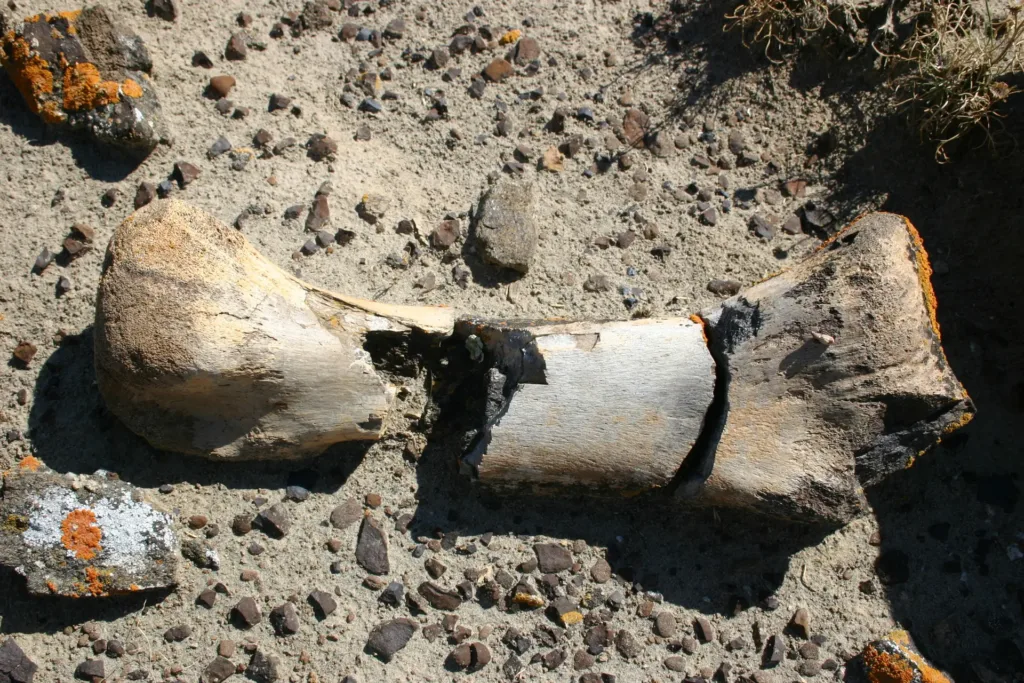
Dinosaur Provincial Park preserves a Late Cretaceous ecosystem from approximately 76 million years ago. During this time, North America was divided by a shallow inland sea, and the park area was a coastal floodplain with rivers, swamps, and forests supporting a diverse dinosaur fauna.
What Makes It Special
The park contains one of the richest dinosaur fossil beds in the world, with over 50 dinosaur species discovered and more than 500 specimens removed to museums. The diversity is remarkable: horned dinosaurs like Centrosaurus in vast bonebeds suggesting herds of hundreds of individuals, armored ankylosaurs, duck-billed hadrosaurs, and predatory tyrannosaurs. The ecosystem also included crocodiles, turtles, fish, and small mammals.
The bonebeds are particularly significant. Some contain thousands of individuals of a single species, preserved together suggesting mass death events—possibly from flooding, drought, or disease. These mass accumulations provide insights into dinosaur behavior and social structure that isolated skeletons cannot offer.
The Geological Context
The fossils are preserved in the Dinosaur Park Formation, a sequence of river channel sandstones and floodplain mudstones. During the Late Cretaceous, this area was a coastal lowland near the Western Interior Seaway. Rivers flowing from mountains to the west deposited sediment that buried dead animals, and the occasional flooding events buried organisms rapidly, improving preservation.
The park’s badlands topography—steep gullies and bare rock exposures—results from ongoing erosion by wind and water. This erosion continuously exposes new fossils, making the park a dynamic site where new discoveries occur regularly. The colorful layers—gray, brown, red—represent different depositional environments and can be traced across the landscape.
Dinosaur Provincial Park fossils provide crucial information about dinosaur diversity and evolution during the Late Cretaceous, just before the extinction event that ended the Age of Dinosaurs. The ecosystem preserved here was thriving and diverse, showing no signs of decline before the asteroid impact 10 million years later.
7. Green River Formation, Wyoming/Utah/Colorado, USA
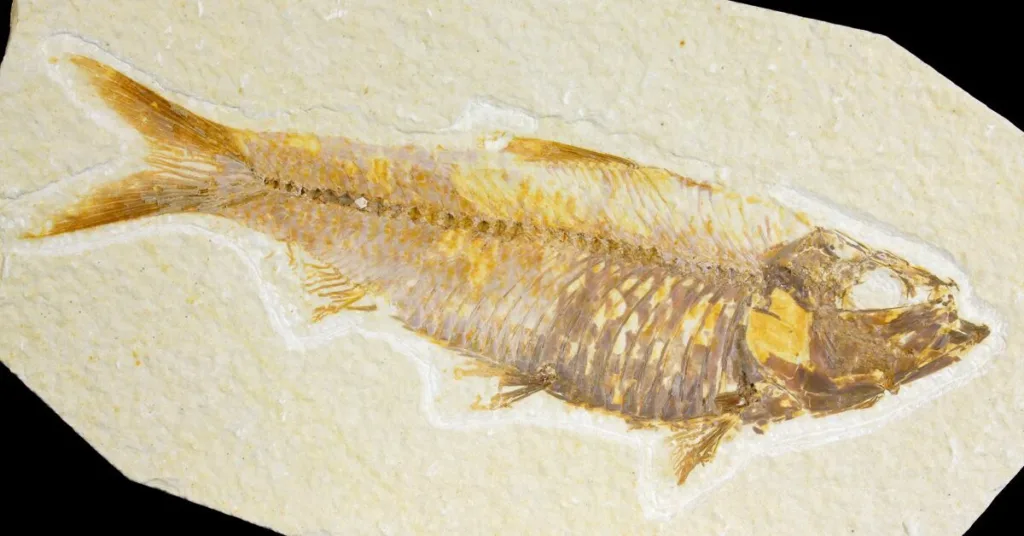
The Green River Formation preserves three large Eocene lakes that existed approximately 50 million years ago in what is now the western United States. These lakes, covering areas comparable to modern Lake Superior, persisted for millions of years, accumulating thick sequences of lake sediments containing exceptionally preserved fossils.
What Makes It Special
The Green River Formation is famous for its preservation of complete fish skeletons, often showing individual scales, fin rays, and even stomach contents. Millions of fish fossils have been collected, representing numerous species from several families. The fish are often preserved in “last gasp” positions—mouths open, bodies arched—suggesting they died rapidly, possibly from anoxic conditions or volcanic gas releases.
Beyond fish, the formation preserves insects with intact wings, birds with feathers, turtles with skin impressions, crocodiles, and early mammals. Plant fossils are abundant, including leaves, seeds, and pollen, allowing detailed reconstruction of the surrounding vegetation. Even ephemeral traces like bird footprints and insect burrows are preserved.
The Geological Context
The lakes formed in a structural basin created by tectonic forces associated with the Laramide Orogeny—the mountain-building event that created the Rocky Mountains. As mountains rose around the basin, rivers drained into a closed basin with no outlet, forming large, long-lived lakes.
The lakes were stratified, with oxygen-depleted bottom waters that prevented scavenging and slowed decay. Organisms dying in surface waters sank into the anoxic depths, where they were buried in fine-grained lake sediments. The sediments themselves contain abundant organic matter, forming oil shale that has been commercially extracted.
The lake sediments show annual layers (varves) in some areas, allowing precise dating and revealing seasonal patterns. Chemical analysis of these layers provides information about ancient climate, showing that the Eocene was much warmer than today, with subtropical conditions extending far north of their current range.
8. Karoo Basin, South Africa
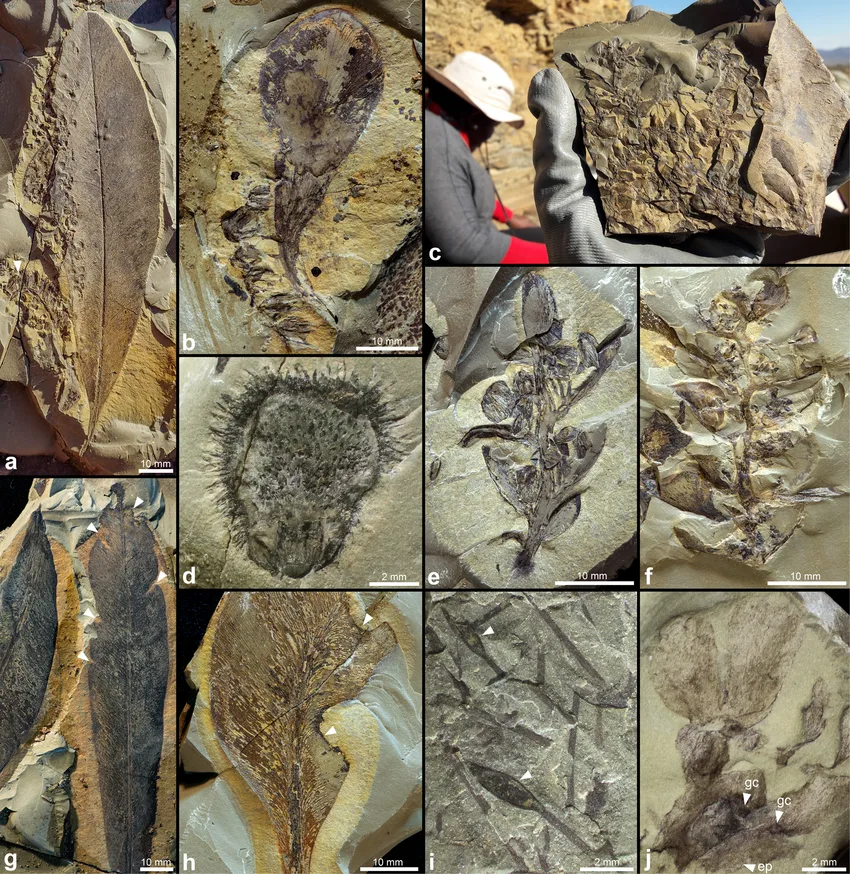
The Karoo Basin preserves a nearly continuous record of life on land from the Carboniferous through the Jurassic, spanning approximately 200 million years. Most importantly, it documents the Permian-Triassic transition, including the largest mass extinction in Earth’s history, which occurred approximately 252 million years ago.
What Makes It Special
The Karoo contains one of the world’s richest records of therapsids—the group of reptiles that eventually gave rise to mammals. The fossils show the gradual evolution of mammal-like characteristics: changes in jaw structure, development of different tooth types, modifications to limb posture, and eventually evidence of hair and lactation in the most derived forms.
The rock sequence documents the Permian-Triassic mass extinction, when approximately 90% of species went extinct. Below the extinction boundary, rocks contain diverse therapsid fauna. Above the boundary, diversity crashes, with only a few disaster taxa surviving. The recovery takes millions of years, documented in the overlying Triassic rocks.
The Geological Context
The Karoo Basin formed as a foreland basin adjacent to mountains created by continental collision. Over tens of millions of years, rivers and deltas deposited thick sequences of sediment, burying organisms and preserving them as fossils. The sediments vary from river channel sandstones to floodplain mudstones, each containing different fossil assemblages reflecting different environments.
The continuous deposition over such a long time makes the Karoo invaluable for understanding long-term evolutionary trends and responses to environmental changes. The rocks record not just individual organisms but entire ecosystems and how they changed through time. Climate shifts, glaciations, volcanic events, and tectonic changes are all recorded in the Karoo sequence.
The therapsid fossils from the Karoo trace one of evolution’s most important transitions: the origin of mammals from reptilian ancestors. By documenting intermediate forms with progressively more mammal-like characteristics, the Karoo provides direct evidence of how this major evolutionary transition occurred over tens of millions of years.
9. Liaoning Province, China
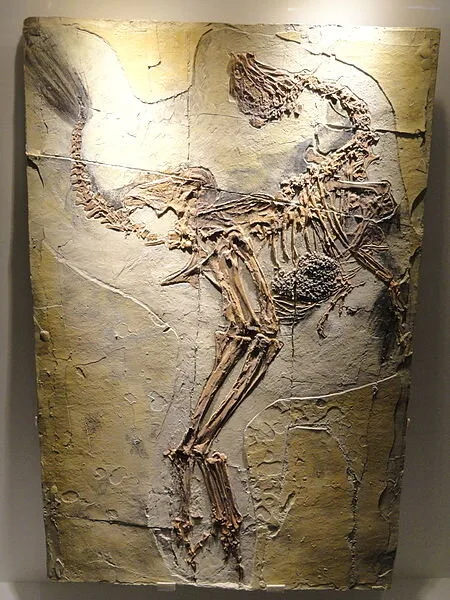
Fossil sites in Liaoning Province, northeastern China, preserve Early Cretaceous ecosystems from approximately 125 million years ago. These sites have revolutionized our understanding of dinosaur biology and the origin of birds, providing evidence that would have been impossible to obtain from typical fossils.
What Makes It Special
Liaoning is famous for feathered dinosaurs. Dozens of species have been discovered with feathers preserved in extraordinary detail, showing that many non-avian dinosaurs were covered in various types of feathers. These fossils demonstrate that feathers evolved long before flight, initially for insulation or display, and were later adapted for flight in the bird lineage.
The preservation quality is exceptional. Feathers show individual barbs and barbules. Soft tissues like skin, muscle, and internal organs leave impressions or chemical traces. Some fossils preserve melanosomes—organelles that contained pigments—allowing scientists to determine the actual colors of dinosaurs’ feathers. Even stomach contents are preserved, showing what these animals ate.
Beyond dinosaurs, Liaoning preserves early birds, pterosaurs, mammals, fish, insects, and plants, all with exceptional detail. The sites document a complete ecosystem during a crucial time in vertebrate evolution.
The Geological Context
The Liaoning fossils are preserved in lake sediments associated with volcanic activity. Explosive volcanic eruptions periodically buried the landscape in ash, killing organisms and burying them rapidly. The fine-grained volcanic ash settled in lake bottoms, creating ideal conditions for preservation. The rapid burial prevented scavenging, and the lake environments had low oxygen, slowing decay.
Multiple eruption and burial events created a series of fossil-bearing layers, each preserving a snapshot of the ecosystem at a particular moment. The volcanic rocks can be precisely dated using radiometric methods, providing accurate ages for the fossils.
The Liaoning fossils have fundamentally changed paleontology. They’ve shown that the line between dinosaurs and birds is blurrier than once thought, with many features previously considered uniquely avian actually present in non-avian dinosaurs. They’ve provided direct evidence of dinosaur behavior, diet, and appearance that was previously only speculation.
10. Olduvai Gorge, Tanzania
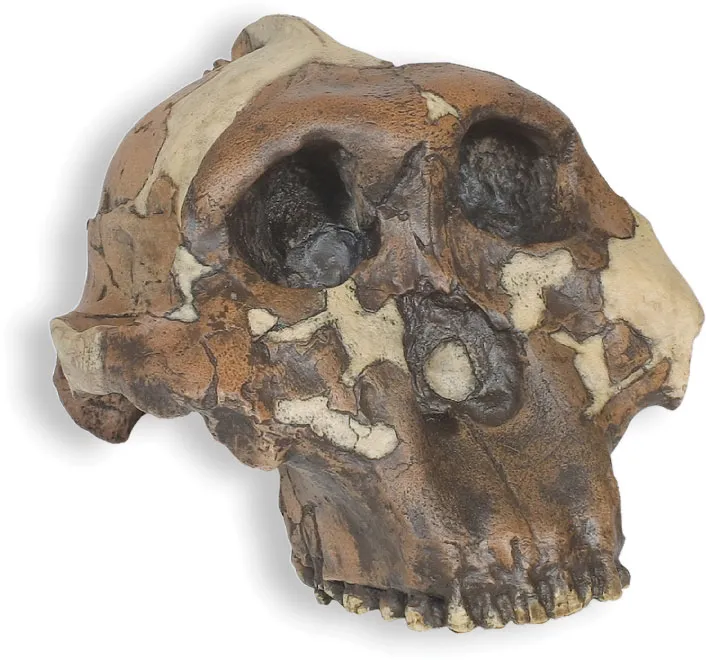
Olduvai Gorge in Tanzania preserves a nearly continuous record of human evolution and environmental change spanning the past 2 million years. The site has yielded thousands of stone tools and fossils of early human ancestors, documenting the emergence of the genus Homo and the development of stone tool technology.
What Makes It Special
Olduvai has produced fossils of several human species, including Homo habilis, Homo erectus, and early Homo sapiens, as well as earlier hominins like Paranthropus boisei. The fossils are associated with stone tools showing progressive sophistication, from simple Oldowan choppers to more refined Acheulean hand axes. The site also preserves ancient footprints, animal bones showing evidence of butchery, and even possible early structures.
The gorge provides crucial evidence about human evolution and behavior. The fossils document physical changes in human ancestors: increasing brain size, changes in tooth size and jaw structure, and modifications to limb proportions. The tools show developing technology and intelligence. The butchered animal bones demonstrate meat-eating. Together, these lines of evidence reveal how our ancestors adapted to changing environments.
The Geological Context
Olduvai Gorge cuts through volcanic and sedimentary rocks deposited over the past 2 million years. The region is part of the East African Rift System, an area of active volcanism and tectonics. Periodic volcanic eruptions deposited ash layers that can be precisely dated, providing a chronological framework for the fossils found between them.
The gorge itself formed through erosion, as seasonal streams cut downward through the accumulated sediments, exposing the fossil-bearing layers. This erosion continues today, gradually revealing new fossils. The exposed rock layers are like pages in a book, each recording a specific time period with its associated environment and inhabitants.
The environmental record shows dramatic changes over time: shifts between wetter and drier conditions, expansion and contraction of lakes, and changes in vegetation from forest to grassland. These environmental changes likely drove human evolution, favoring adaptations like bipedalism, larger brains, and tool use.
Conclusion: Reading Earth’s Story
These ten locations represent some of paleontology’s most significant discoveries, but they are just highlights from a much larger fossil record. Every continent contains fossil sites preserving unique aspects of life’s history. Together, these sites document evolution, extinction, adaptation, and environmental change across billions of years.
Fossils do more than show us extinct organisms—they reveal entire ecosystems, document evolutionary transitions, and record Earth’s environmental history. They demonstrate that life is not static but constantly changing, adapting to new conditions and evolving new forms. They show that extinction is a natural part of life’s history but also that life is remarkably resilient, recovering even from the most catastrophic events.
Understanding fossils requires patience and careful observation. A single bone fragment can reveal information about diet, locomotion, growth rates, and evolutionary relationships. A complete skeleton tells even more: body proportions, posture, and potential behavior. And exceptionally preserved fossils, like those from the sites described here, can reveal details that bring extinct organisms to life: their colors, their fur or feathers, even their last meals.
The fossil record is incomplete—most organisms never fossilize, and many fossils remain undiscovered. Yet even this incomplete record tells a coherent story of life’s long history on Earth. New fossil discoveries continue to fill gaps, answer questions, and sometimes overturn previous ideas. Each new find adds another piece to the puzzle, helping us understand where we came from and how life has changed through deep time.