





There are millions of minerals on Earth, but only a tiny group really steps onto the stage and tears the light apart with some insane optical tricks. These aren’t just pretty stones; they’re natural laboratories showing us how light behaves, how crystal structure fights with photons, and how a tiny defect can become a full-on visual spectacle. Some change color, some show double images, some glow like they’re burning under UV light.
This list is exactly about them:
the 10 crystals that manipulate light in the most extreme ways.
In gemology, geology, and collecting, these minerals always stand in a separate corner. Because an “optical effect” is not only shine — it’s the physical result of atoms, layers, inclusions, spacing, and trace elements working together like a chaotic orchestra.
Below I explain each stone in detail: formation style, why it behaves like this, what kind of optical effect it creates, and where it’s found.
1) Labradorite — A Piece of Northern Lights Trapped in a Stone
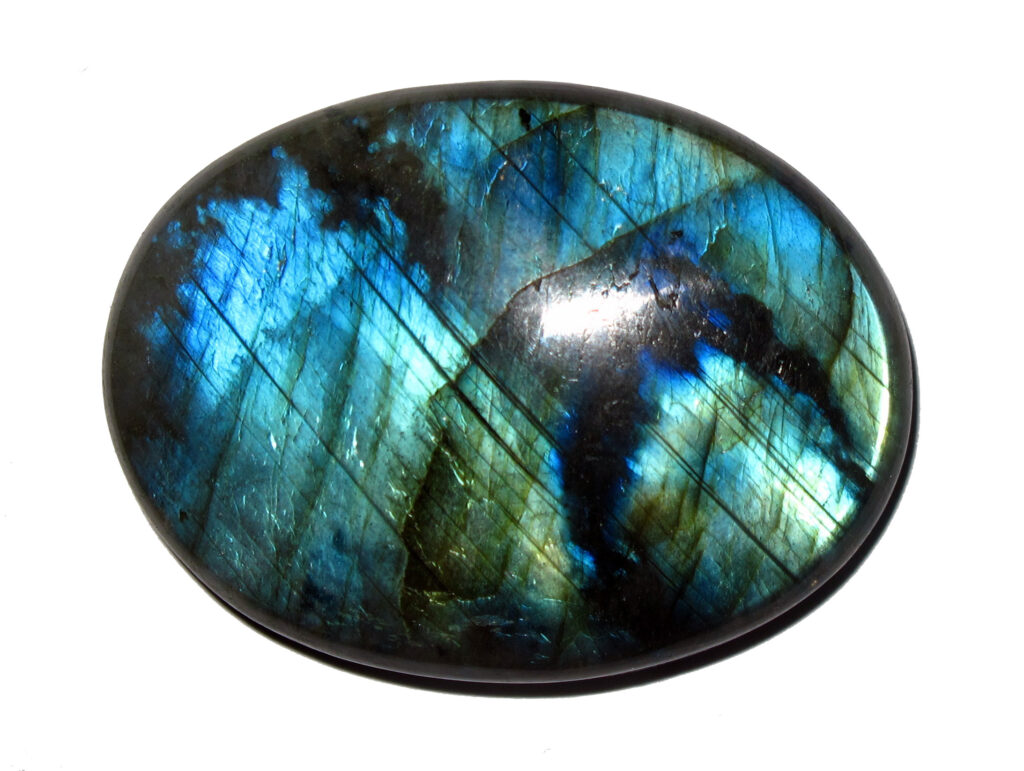
Labradorite has one of the most famous optical effects on Earth: labradorescence. This is not a normal reflection. The crystal has parallel micro-lamellae, and these layers send the light back with a very slight delay. The result? Sudden explosions of blue, green, orange, golden flash on the surface. It only appears at a certain angle, which makes the stone look alive.
The beauty comes from the perfect alignment of these internal layers. The more ordered they are, the stronger the color. Labrador specimens from Canada are especially intense; Madagascar ones show wider color ranges.
In gemology, very strong labradorite is called “spectrolite.” And honestly, the moment you see a strong one, you get hooked. It looks like the night sky suddenly cracked open inside a dark rock.
2) Moonstone — A Floating Glow on the Surface (Adularescence)
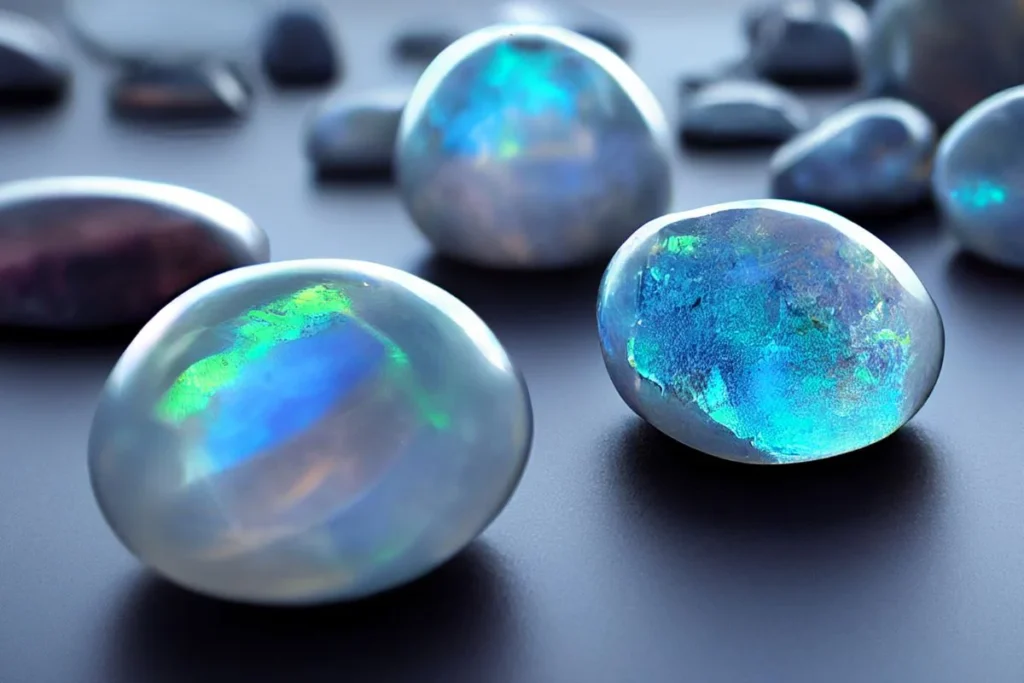
Moonstone is known as a romantic gem but scientifically it’s a tricky optical stone. Thin feldspar layers inside scatter light, and a soft glowing patch slides across the surface. This glowing movement is called adularescence.
It forms because orthoclase and albite layers are arranged in microscopic spacing. Light scatters inside these layers but the classic moon-glow only appears at one specific angle.
Transparent blue-sheen moonstones from Sri Lanka show the strongest effect. Indian ones are more cloudy. The beauty here is simplicity: no crazy rainbow, just a quiet glowing movement.
3) Opal — A Rainbow Created by Microscopic Silica Spheres (Play of Color)
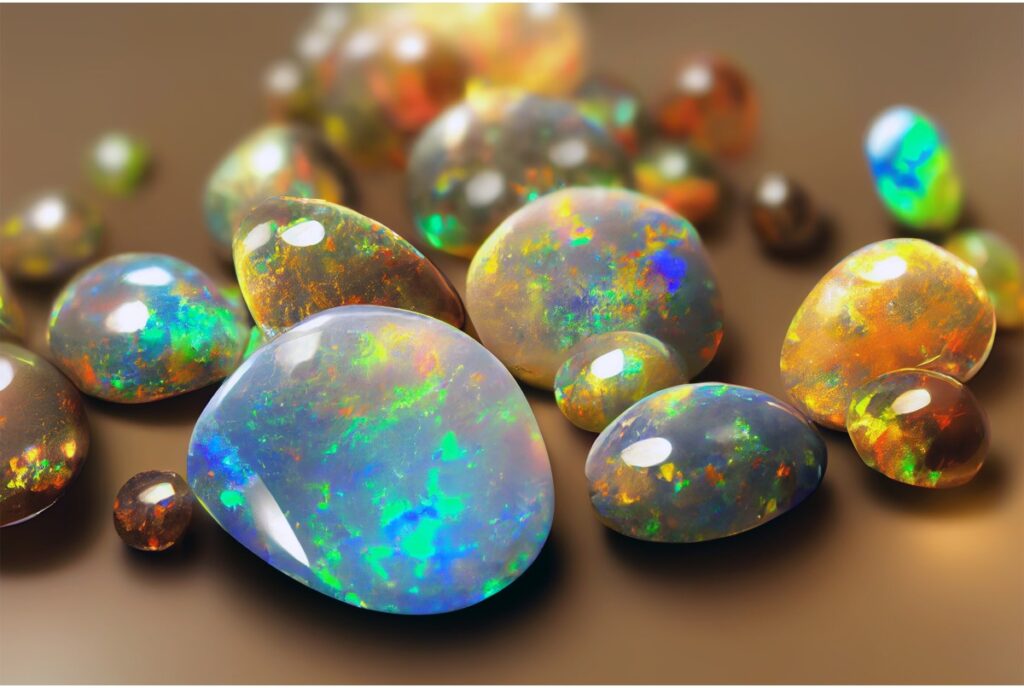
Opal is probably the most “insane” mineral in this list. Inside opal there are perfectly-sized silica spheres, around 150–450 nm. When these spheres line up in an orderly pattern, the stone generates diffraction. Diffraction = bending, scattering, splitting of light… and the result is a rainbow trapped inside a stone.
Black opal is especially wild because the dark background makes the colors explode. Lightning Ridge in Australia produces the best of the best. Ethiopian opals are bright but can absorb water more easily.
The optical effect changes depending on how perfect the structure is:
• highly ordered → broad, strong color patches
• chaotic order → pixel-like sparkles
• clay inclusions → scattered flashes
Every opal is unique. That’s why collectors lose their minds over it.
4) Alexandrite — Green in Daylight, Red in Lamplight
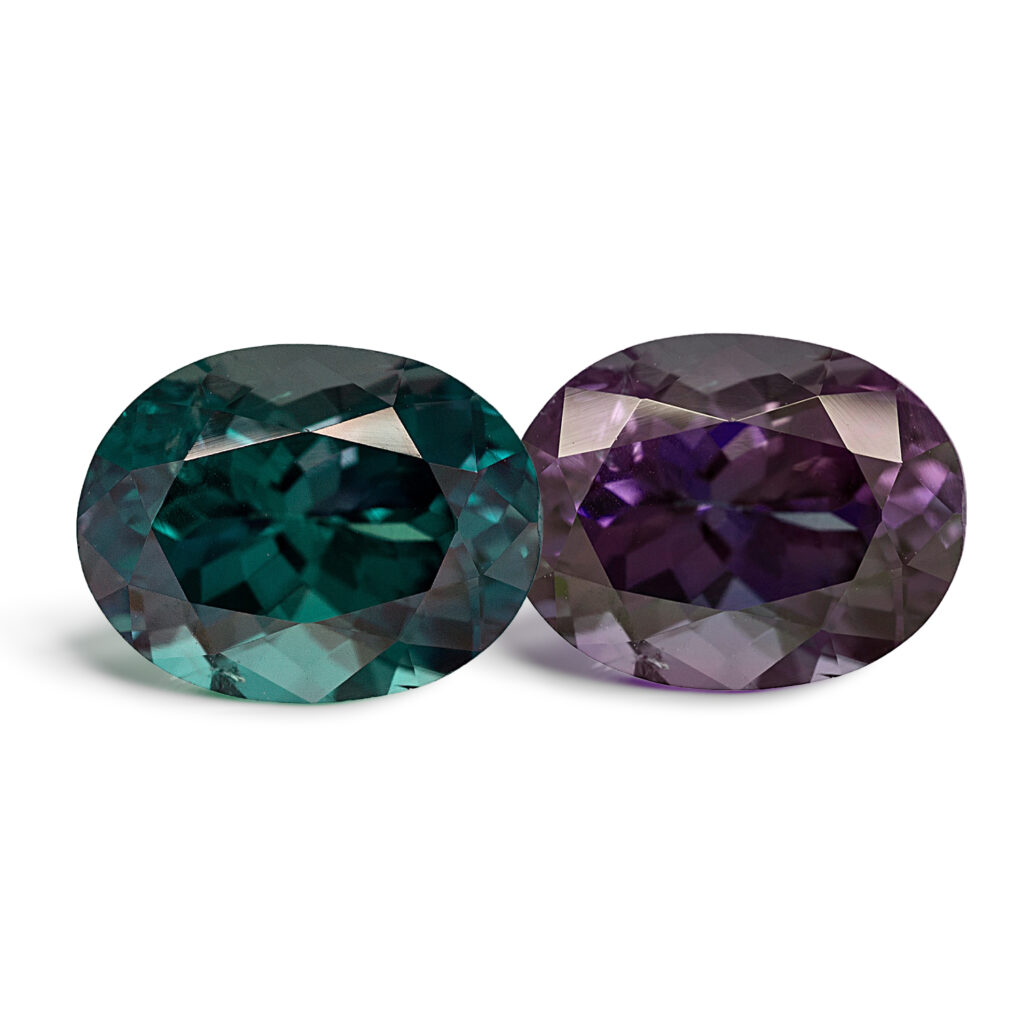
Alexandrite’s color change is one of the most impressive optical behaviors on Earth. Chromium in the crystal absorbs light in such a selective way that when the light source changes, the entire color flips. Daylight has more blue wavelengths → stone looks green. Tungsten light has more red → stone shifts to red-purple.
Good quality alexandrite can look like two completely different stones. This is called the color change effect, and it comes from electronic transitions inside the chromium ions.
Real alexandrite with strong color change is extremely rare. The Ural Mountains produced legendary specimens; Brazil and Sri Lanka have modern sources but usually not with the same intensity.
5) Ulexite — The “TV Stone” That Transmits Images
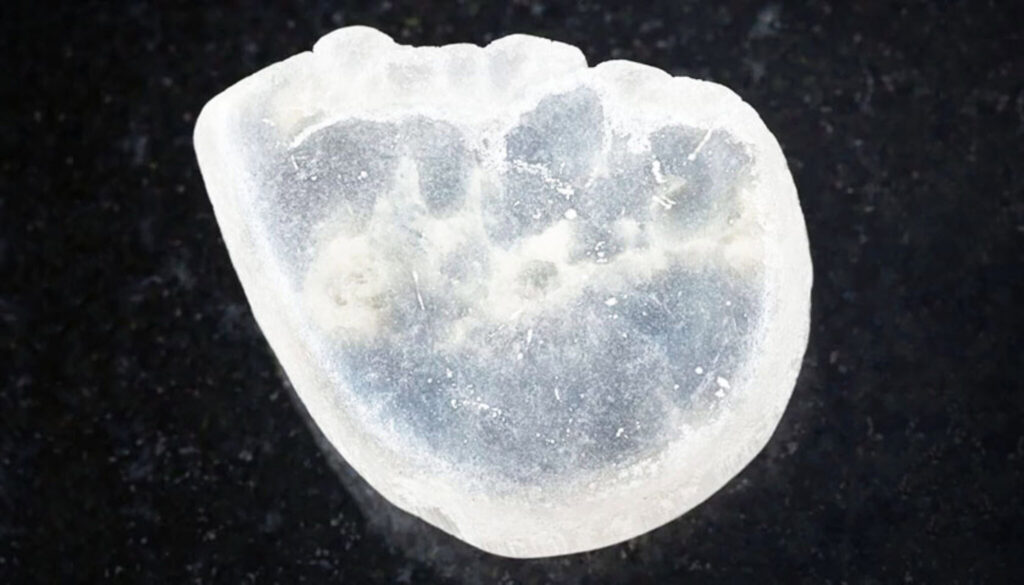
Ulexite is basically nature’s fiber optic cable. Its crystal structure forms long parallel fibers that carry light from one surface to the other. If you put an image beneath the stone, you see it “projected” onto the top — not by reflection, but because the image travelled through the mineral.
This happens due to internal reflection along the fibers. Scientists were shocked when they first observed it since the stone literally behaved like a miniature TV screen.
The best examples come from California’s borate deposits. It’s not valuable as a gem, but it’s one of the most extraordinary optical minerals ever discovered.
6) Iolite — A Crystal Showing Three Different Colors (Pleochroism)
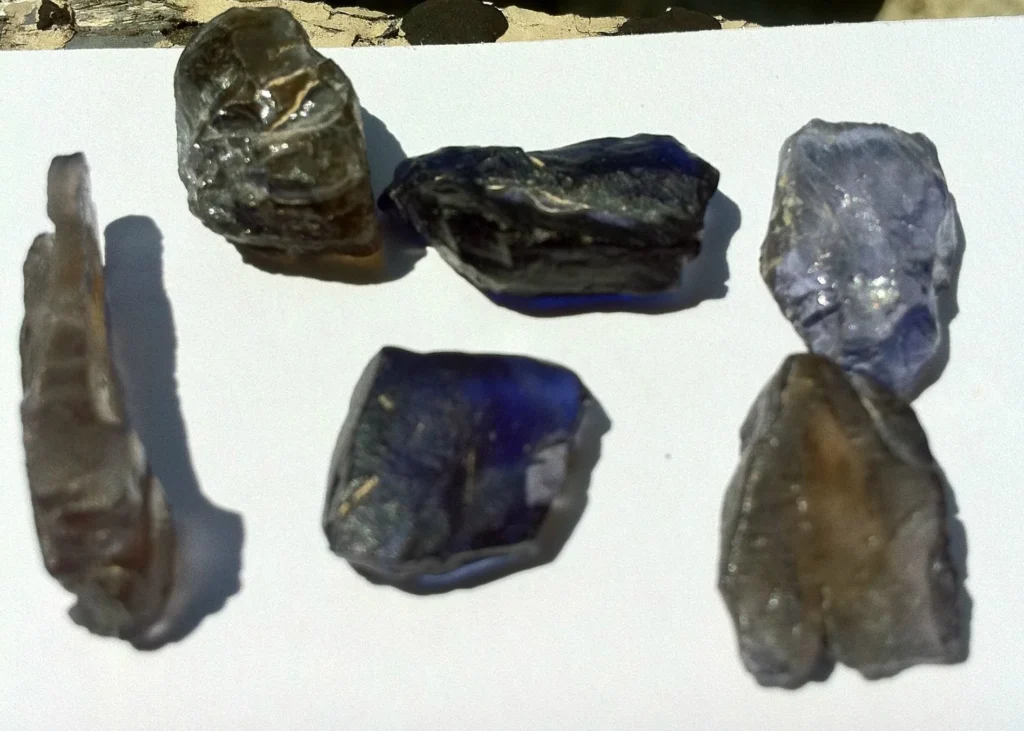
Iolite’s thing is pleochroism. Look at it from different angles, you see completely different colors. It has three main tones: blue, violet-blue, and yellow-grey. This happens because the crystal absorbs light differently on each crystallographic axis.
There’s also a historical myth: Vikings supposedly used iolite as a “sunstone” to find the sun’s position in cloudy weather. Pleochroism made angle-based navigation possible.
High-quality iolite can look like sapphire, but this color-shifting behavior is exactly why collectors love it. The stone is never stable; it constantly transforms.
7) Yooperlite — Looks Normal in Daylight, Explodes Under UV
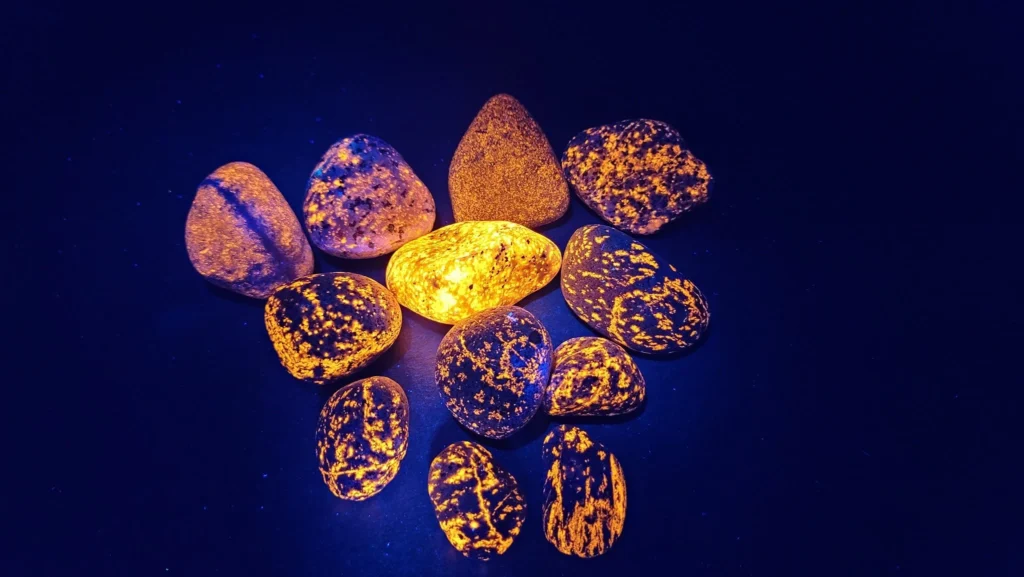
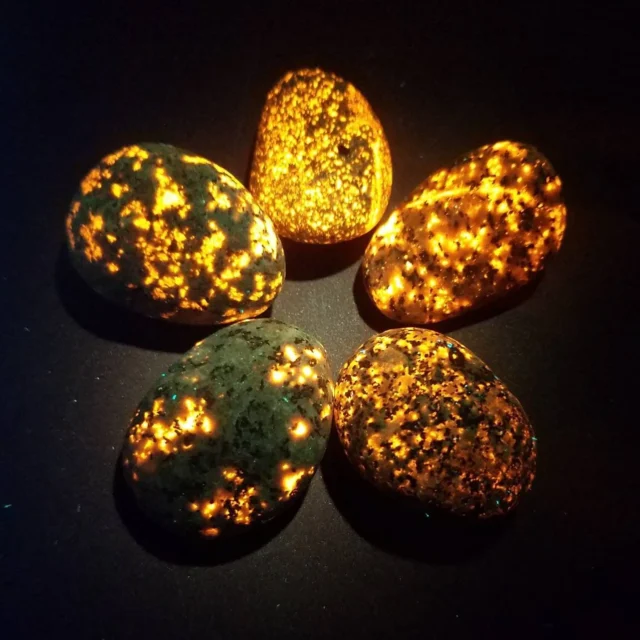
Yooperlite is actually a sodalite-bearing rock, but the insane glowing effect comes from sodalite’s fluorescence. In regular light it’s grey and boring. Under UV light it bursts in orange-yellow flames, like lava running inside the stone.
It was discovered in Michigan in 2017 and instantly became a phenomenon. People literally go to the beach at night with UV flashlights to hunt them.
The fluorescence is caused by chlorine and sulfur ions absorbing UV photons and re-emitting them at lower energy. Scientifically simple, visually insane.
8) Fluorite — Fluorescence, Phosphorescence, Pleochroism… It Does Everything
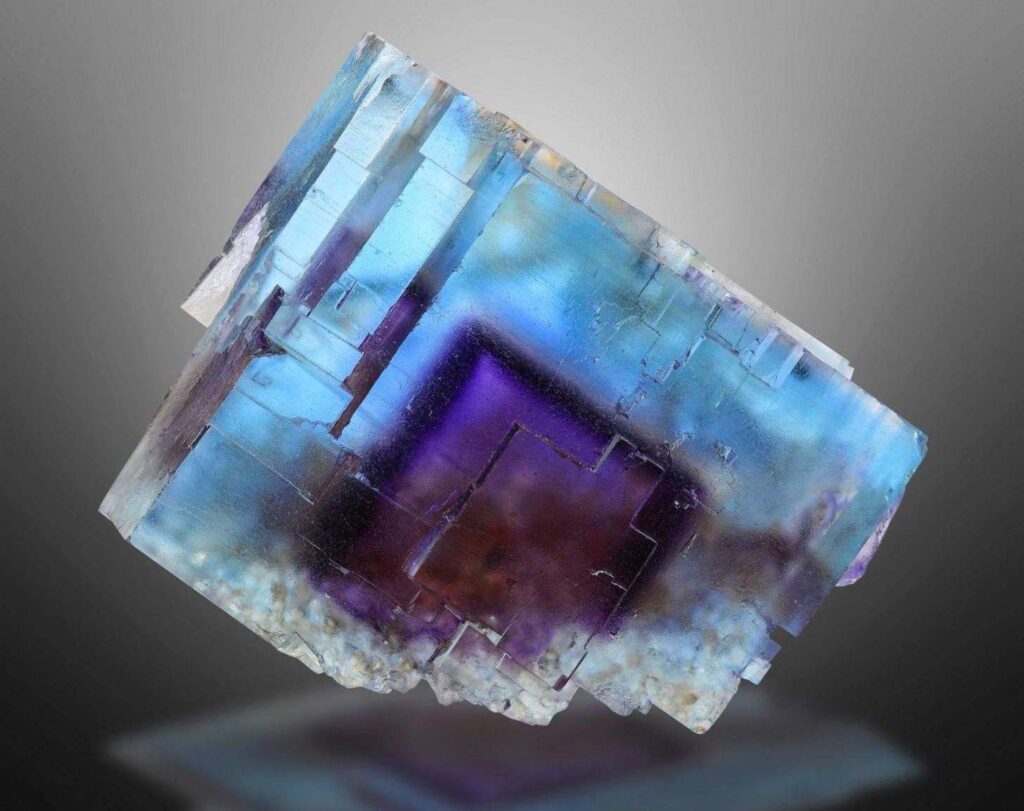
Fluorite is basically an optical playground.
• strong blue or purple fluorescence under UV
• sometimes phosphorescence (it glows even after the light turns off)
• some pleochroism
• double refraction
It just does everything.
Pure fluorite is colorless, but different metal ions create different colors and optical behaviors. Rare-earth elements especially affect its fluorescence. Because of its perfect crystal structure, fluorite reacts strongly to light.
Illinois, England, and China are known for producing top-quality optical fluorite.
9) Calcite — The Textbook Example of Double Refraction
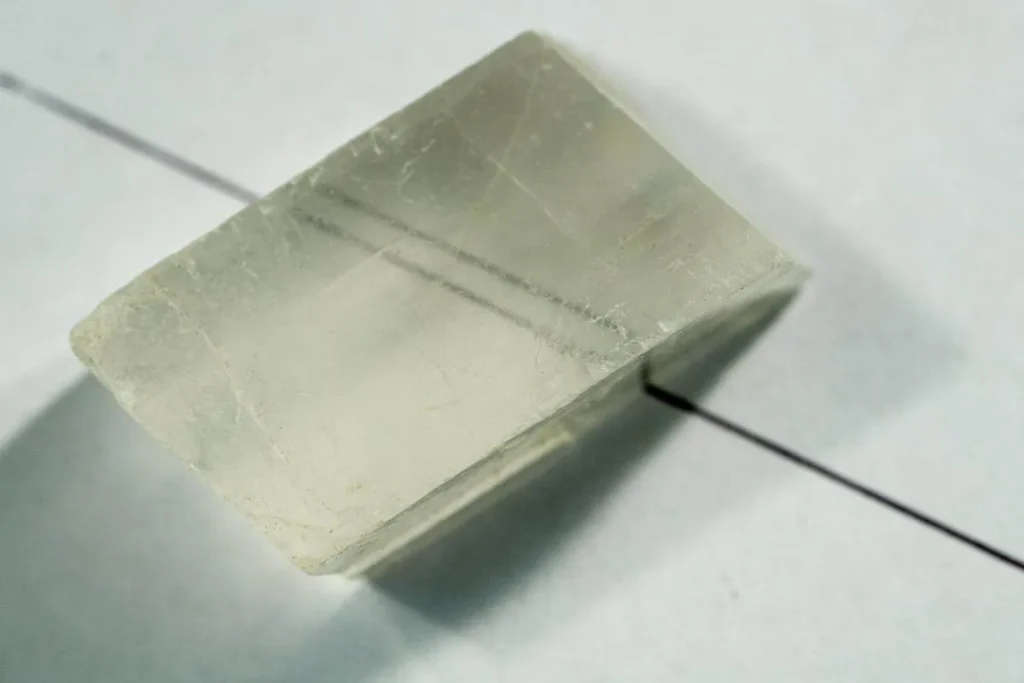
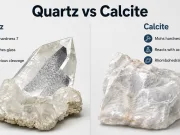
Calcite is the mineral every geology student learns first in optical mineralogy, because its double refraction is extremely obvious. Clear Iceland spar calcite splits text into two separate images.
This happens because light travels through the crystal at two different speeds. The stone sends light into two paths, creating two images. This phenomenon is the basis of polarized light microscopy.
Iceland, Greenland, and Mexico produce excellent clear calcite.
10) Rhodochrosite / Sphaerocobaltite — A Warm Glow from Inside
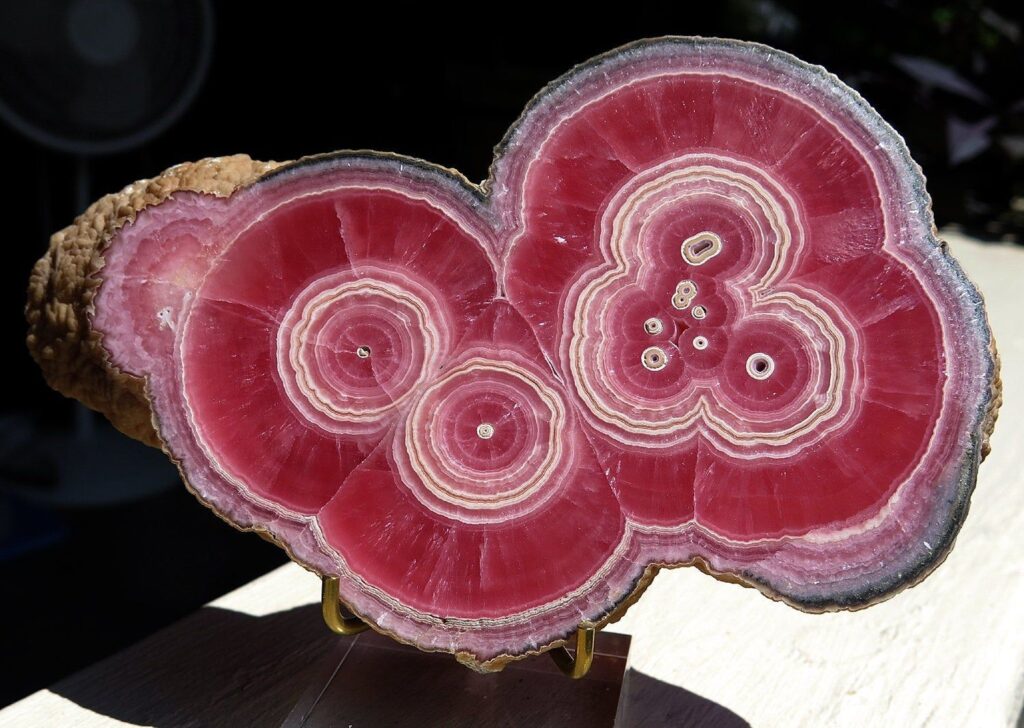
Rhodochrosite already attracts attention with its strong red color, but thin slices often show a deep internal glow. Light passes through and the stone looks like it’s lit from inside. Manganese ions control how the light is absorbed and transmitted, creating a natural warm shine.
Colorado’s “Sweet Home Mine” specimens are legendary. They’re both collector favorites and gem masterpieces.
Conclusion: Nature’s 10 Light-Bending Masterpieces
These ten crystals are not similar to each other; some use lamellar reflections, some electronic transitions, some UV emissions, some nano-scale sphere structures. But they all show the same thing:
Nature’s ability to manipulate light is insane.
Together, they give a small window into optical mineralogy — from nano-structured opal to color-changing alexandrite, from fluorescent fluorite to double-refraction calcite.
If you’re building a collection or preparing a special article for your visitors, these ten stones are the strongest starting point you could ever choose.