





I’ve spent a good part of my life walking around volcanic fields, climbing old lava flows that look like frozen waves, and tapping on rocks just to hear the sound they make. And still, every time someone asks me, “What’s the difference between magma and lava?” I stop for a second and remember how everything starts deep below our feet — in a place none of us will ever see with our own eyes.
People think magma and lava are the same thing. And I understand why. If you look at photos on the internet, all you see is glowing orange liquid rock. But the truth is a little more interesting, a little more layered, and honestly, much more dramatic.
Let me tell you the way I’ve seen it, not in lab terms, but in real-earth, dust-on-your-boots geology.
1. Magma: The Story Begins in the Dark
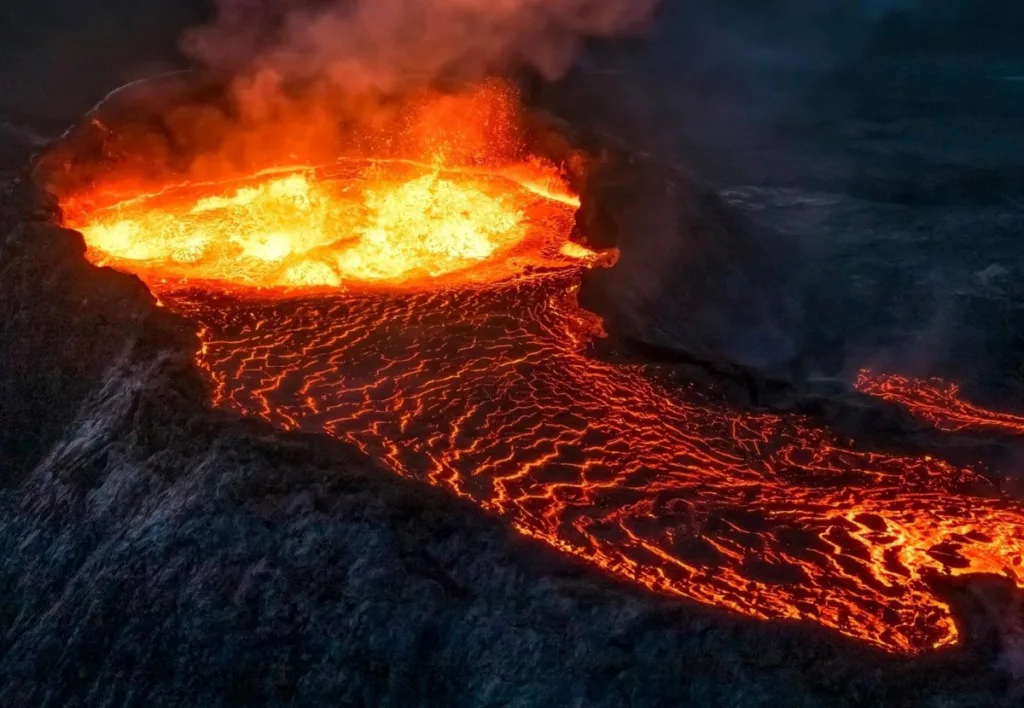
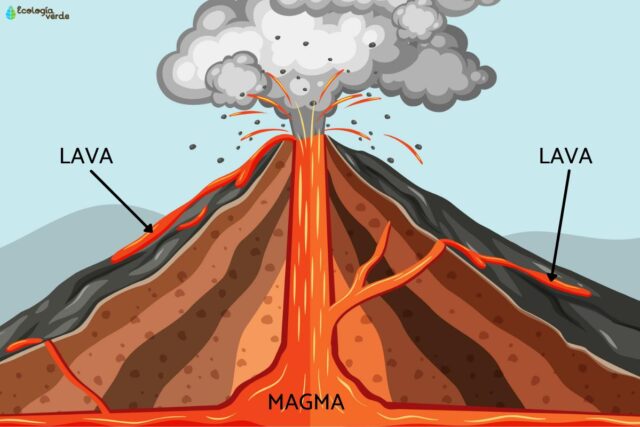
Deep underground, far below the rocks we walk on, the Earth is constantly changing. Sometimes quietly, sometimes violently. And somewhere in that hidden world, magma forms — slowly, patiently, like a secret being cooked under pressure.
The first time I stood on top of a dormant volcano and imagined the magma chamber beneath my feet, it felt like standing above a heartbeat. You can’t hear it, you can’t feel it, but you know it’s there.
Magma is trapped.
That’s the main thing to understand.
It’s hot, it’s under incredible pressure, and it holds a mix of:
- melted rock
- half-formed crystals
- metal ions
- and a lot of gas
The gas part is important. Down there, nothing can escape. Everything is compressed together. It’s like shaking a soda bottle nonstop for a thousand years.
Sooner or later, something will give.
2. Lava: When the Earth Finally Exhales
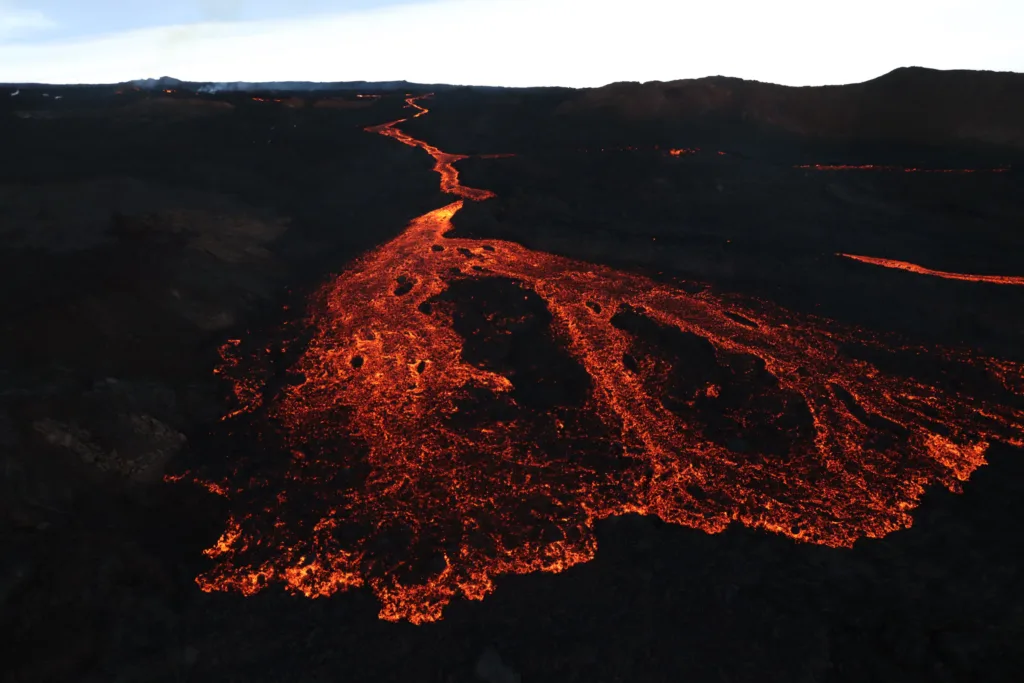
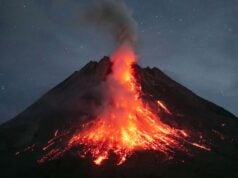
When magma finally finds a way up — through a crack, a fracture, a weak spot — everything changes instantly. It’s like opening the cap on that soda bottle. The pressure drops, the gases burst out, and the molten rock that had been trapped for thousands of years finally breathes.
That’s when we stop calling it magma.
That’s the moment it becomes lava.
Lava behaves nothing like magma anymore. The air cools it. The gases escape. The texture changes, the chemistry shifts, the flow speed depends on how sticky it is.
I’ve seen basaltic lava flow so quietly that you could almost walk beside it (you shouldn’t, but you could). And I’ve seen rhyolitic lava so thick that it barely moves, like a slow, angry animal pushing uphill.
Different lavas tell different stories, but they all come from the same moment:
When the Earth finally opens a door.
3. The Difference That Actually Matters
People expect a complicated explanation, but the real difference is almost poetic:
Magma is inner pressure.
Lava is release.
That’s the heart of it.
If you want the science in simpler words:
- Magma stays underground
- Lava reaches the surface
But what changes is not just the location — it’s the behavior.
Magma cools slowly → big crystals
Lava cools fast → tiny crystals or glass
Magma holds its gases → dangerous pressure
Lava loses its gases → calmer flows (most of the time)
Magma forms granite, diorite, gabbro
Lava forms basalt, andesite, obsidian
These differences shape continents, build islands, destroy towns, create new land, rewrite maps.
4. A Moment I Will Never Forget
There was a day in Iceland when I hiked over an old lava field. The rocks were black, sharp, twisted in shapes that looked like frozen flames. The wind was strong, and everything around me felt ancient. As I stood there, I realized I was literally walking on something that used to be magma — buried deep, invisible, untouchable — until one day it burst onto the surface and turned into the ground beneath my feet.
You don’t forget moments like that.
It teaches you humility.
Because magma is the Earth’s memory, and lava is the Earth speaking out loud.
5. Why Magma Creates Explosions and Lava Creates Landscapes
Magma explodes because it can’t release its pressure. Lava shapes landscapes because it already has.
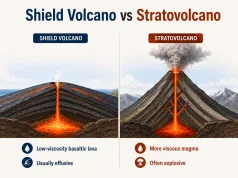
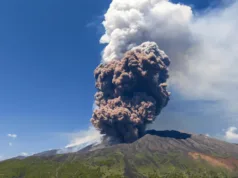
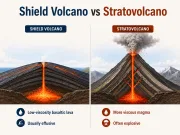
When magma rises, the gas inside expands rapidly. If the melt is thick and gooey (like rhyolite), the gas can’t escape, and the explosion is violent — you get ash clouds, pyroclastic flows, and all the dramatic footage you see in documentaries.
But if the magma is runny (like basalt), the gas escapes easily, and the eruption becomes a quiet, glowing river of lava.
Knowing this difference saves lives.
Volcanologists predict eruption styles by examining magma chemistry, not lava flows.
6. A Simple Table for the Curious Mind
| Feature | Magma | Lava |
|---|---|---|
| Where it is | Underground | On the surface |
| Gas | Trapped inside | Mostly escaped |
| Pressure | Very high | Much lower |
| Cooling | Slow | Fast |
| Crystals | Large | Small / none |
| Rocks | Granite, gabbro | Basalt, andesite |
| Danger | Hidden | Visible |
7. And in the End…
The story of magma and lava is really the story of pressure and release — the Earth holding something inside for thousands of years and then letting it go all at once.
Every volcano, every lava field, every granite mountain you see is part of this cycle.
Same material.
Two different worlds.
And a whole planet shaped in the space between them.