












Why Some Volcanoes Are Far More Dangerous Than Others
When people imagine a volcano, they usually picture slow-moving red lava gently flowing down a mountainside. In reality, only a small portion of the world’s volcanoes behave this peacefully. Many are capable of producing explosive blasts, superheated clouds of ash and gas, or sudden mudflows that travel faster than a car on a highway. Some have millions of people living directly in their shadow, while others lie quiet for centuries before waking up with almost no warning.
What makes a volcano “dangerous” is not its size or the height of its cone, but a combination of factors:
- the chemistry and thickness of its magma
- the type of eruptions it produces
- the amount of trapped gas
- the stability of its slopes
- the likelihood of sudden dome collapses
- the presence of water or ice
- nearby population density
- the potential to trigger tsunamis, ashfall, or lahars
This ranking is based on scientific assessments such as the Volcano Disaster Risk Index, Smithsonian Global Volcanism Program, and numerous geological hazard studies. These are not simply the “biggest volcanoes”—they are the ones whose risk level is exceptionally high today.
Below are 10 of the most dangerous volcanoes on Earth, ranked by eruption style, explosive history, tectonic setting, and the number of people who would be affected if they were to erupt.
1. Mount Vesuvius (Italy) – Europe’s Most Immediate Volcanic Threat
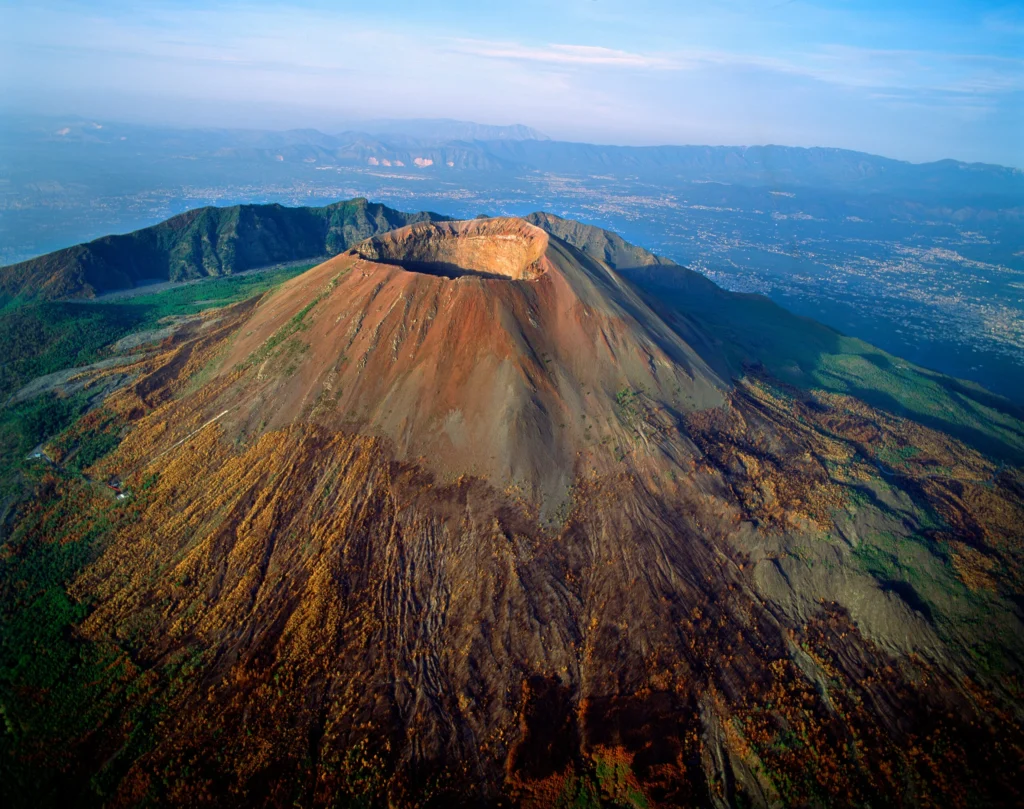
Nearly everyone knows Vesuvius for its catastrophic A.D. 79 eruption that buried Pompeii and Herculaneum. But the real danger is not ancient history—it’s the present. Today, more than 3 million people live within range of Vesuvius, including the entire city of Naples.
Why is Vesuvius so dangerous?
- Its magma is thick, gas-rich, and capable of Plinian explosions.
- The volcano has a history of violent eruptions every few centuries.
- The modern metropolitan area is directly exposed to ashfall and pyroclastic flows.
Potential eruption scenarios
- Moderate ash-producing eruption:
Could shut down airports, roads, and daily life across southern Italy. - Dome collapse:
Dangerous pyroclastic flows could race down the slopes within minutes. - Large Plinian eruption:
Similar to the A.D. 79 disaster—fast-moving 500°C flows could devastate populated districts.
Vesuvius is constantly monitored because it remains one of the world’s most time-critical volcanic hazards.
2. Mount Rainier (USA) – The Silent Giant Above Seattle
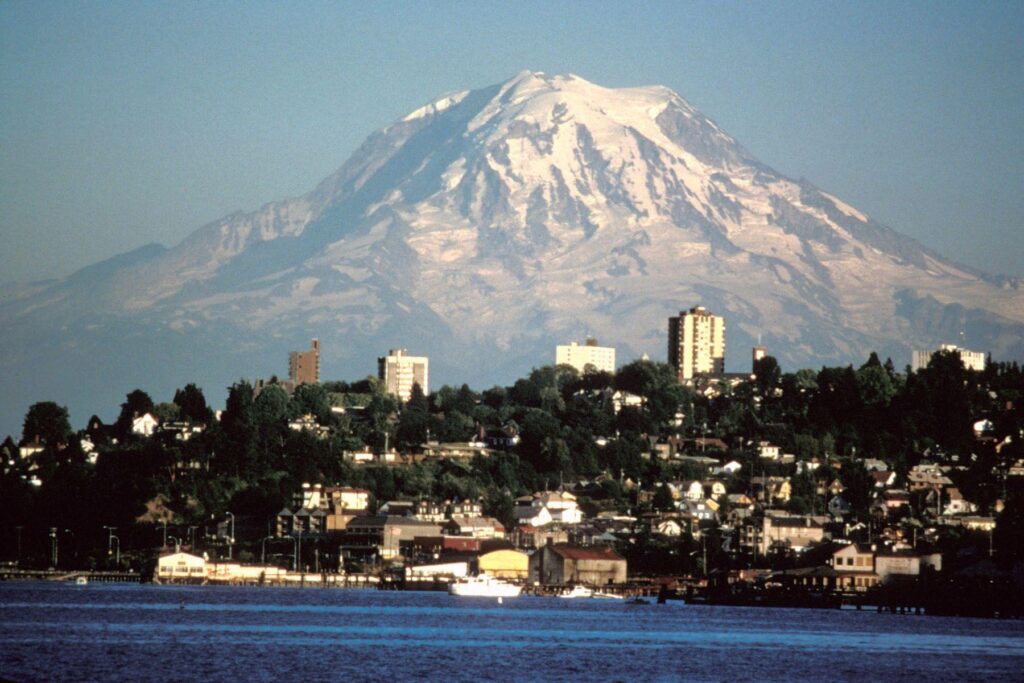
Mount Rainier is not the most explosive volcano on the list, but it is one of the most dangerous. That’s because it carries a massive load of ice—over 130 square kilometers. If an eruption or even warming of the mountain causes rapid melting, it could generate enormous lahars (volcanic mudflows).
Why Rainier ranks so high
- Entire river valleys, including those near Tacoma and Seattle, are built on old lahar deposits.
- Lahars can travel over 80 km/h, filling valleys with concrete-like mud.
- Rainier has produced lahars without even erupting—simply from slope failures.
What could happen in a future event?
- 500,000+ people may need evacuation.
- Bridges, highways, and towns could be buried in minutes.
- Large cities lie directly downslope of the hazard zones.
According to the USGS, Rainier is the #1 volcanic threat in the United States.
3. Yellowstone Supervolcano (USA) – A Global-Scale Threat
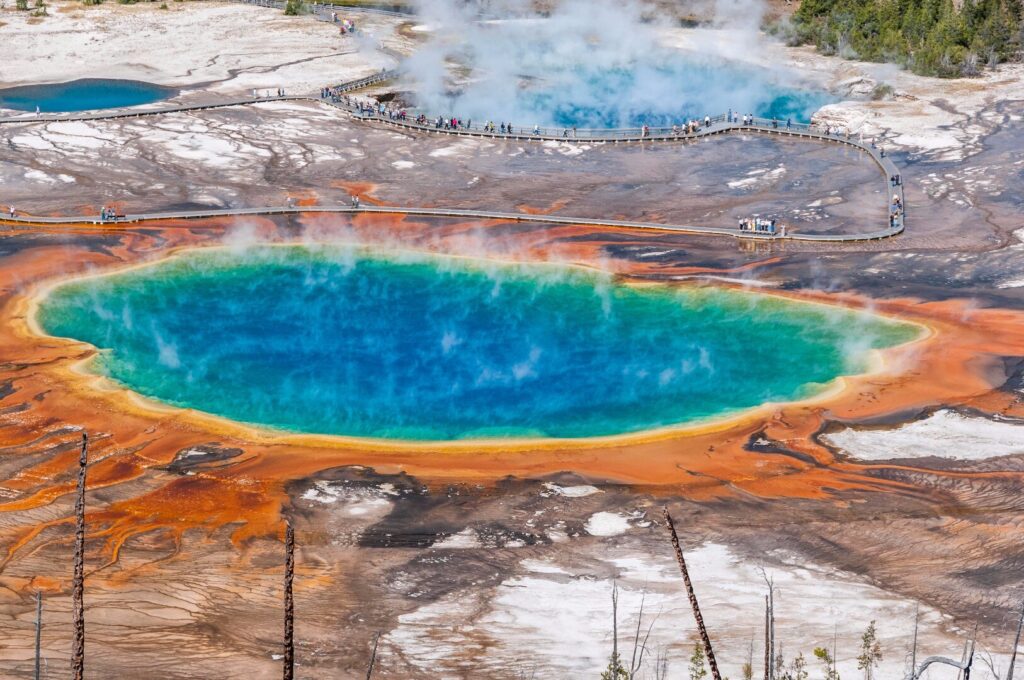
Yellowstone doesn’t look like a typical volcano because the entire region is the volcano. It is a massive caldera, fed by one of the largest magma systems on Earth.
Its explosive history
- 2.1 million years ago – massive eruption
- 1.3 million years ago – massive eruption
- 640,000 years ago – massive eruption
Each of these produced ash layers that spread over most of North America.
Consequences of a super-eruption
- Metres of ash over huge areas of the United States
- Severe agricultural collapse
- Months of aviation shutdown
- Global temperature drop of 1–3°C
- Potential “volcanic winter”
A supereruption is not expected anytime soon—but the potential impact keeps Yellowstone on every global hazard list.
4. Sakurajima (Japan) – One of the World’s Most Watched Volcanoes
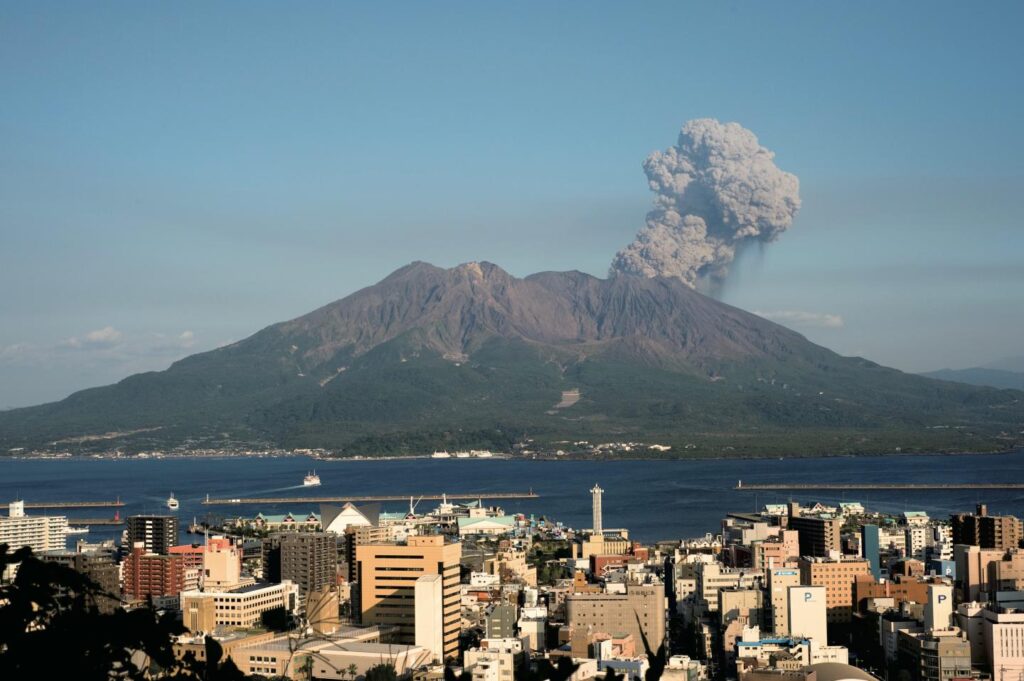
Few volcanoes erupt as frequently and as close to a major city as Sakurajima does. Located only 8 km from Kagoshima, this volcano produces hundreds of small eruptions each year.
Why Sakurajima is extremely dangerous
- It has the capacity for sudden, violent Plinian eruptions.
- Historical eruptions have created new land by filling the sea with lava.
- Millions live within ashfall range.
Possible hazards
- Pyroclastic flows could reach populated districts in minutes.
- Large ash clouds frequently disrupt transport.
- Explosions can occur with almost no warning.
Sakurajima is constantly monitored with seismic, thermal, and gas sensors—more densely than almost any other volcano.
5. Popocatépetl (Mexico) – A Highly Active Volcano Near 30 Million People
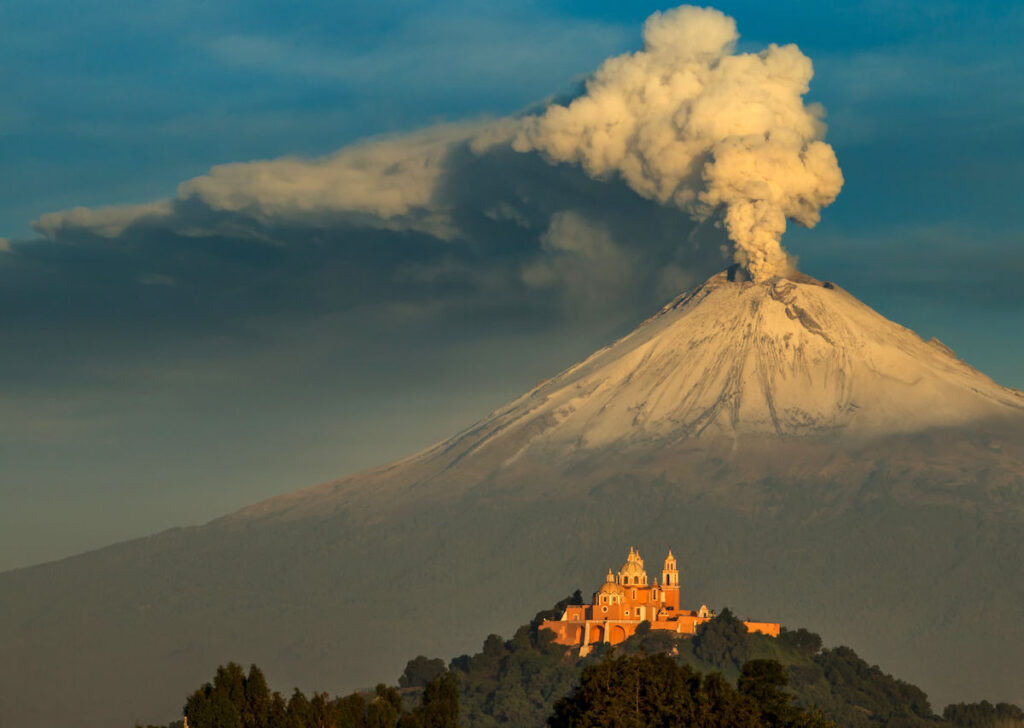
Popocatépetl, often called “El Popo,” is one of the most active volcanoes in the Americas. Its location near one of the largest metropolitan regions on Earth—Mexico City—makes it extraordinarily risky.
Geological behavior
- Thick andesite–dacite magma
- Frequent lava-dome growth and collapse
- Strong explosive potential
Real-world impacts
- Repeated airport closures due to ashfall
- 40,000+ people evacuated in 2000
- Lahars and pyroclastic flows threaten multiple valleys
A major eruption could disrupt daily life for tens of millions of people.
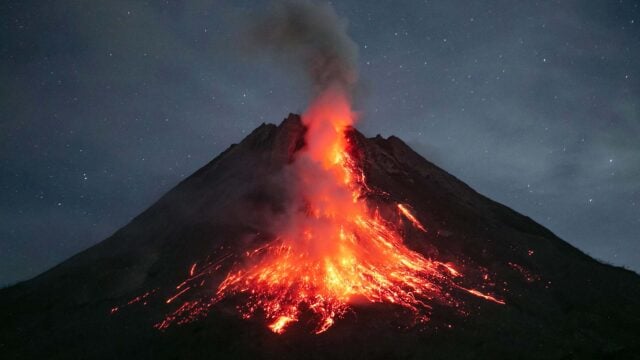
6. Mount Merapi (Indonesia) – One of the World’s Most Active and Deadly Volcanoes
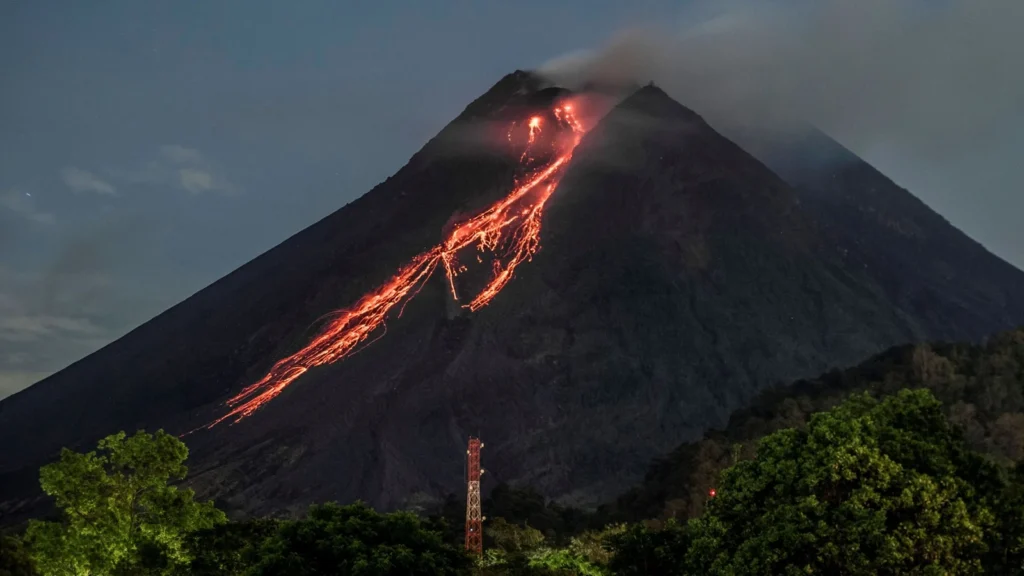
Merapi erupts very often—sometimes every few years. Its eruptions are not only explosive but also unpredictable.
Why Merapi is so dangerous
- Rapid lava-dome growth leading to sudden collapses
- Extremely fast pyroclastic flows
- 4+ million people living nearby
- Long history of deadly eruptions
Historical disasters
- 2010 – Over 350 deaths
- 1930 – Around 1,300 deaths
- 1872 – Major regional destruction
Merapi may not be the largest volcano, but its activity level and population exposure make it one of the top volcanic threats on Earth.
7. Mount Etna (Italy) – Europe’s Most Active Volcano
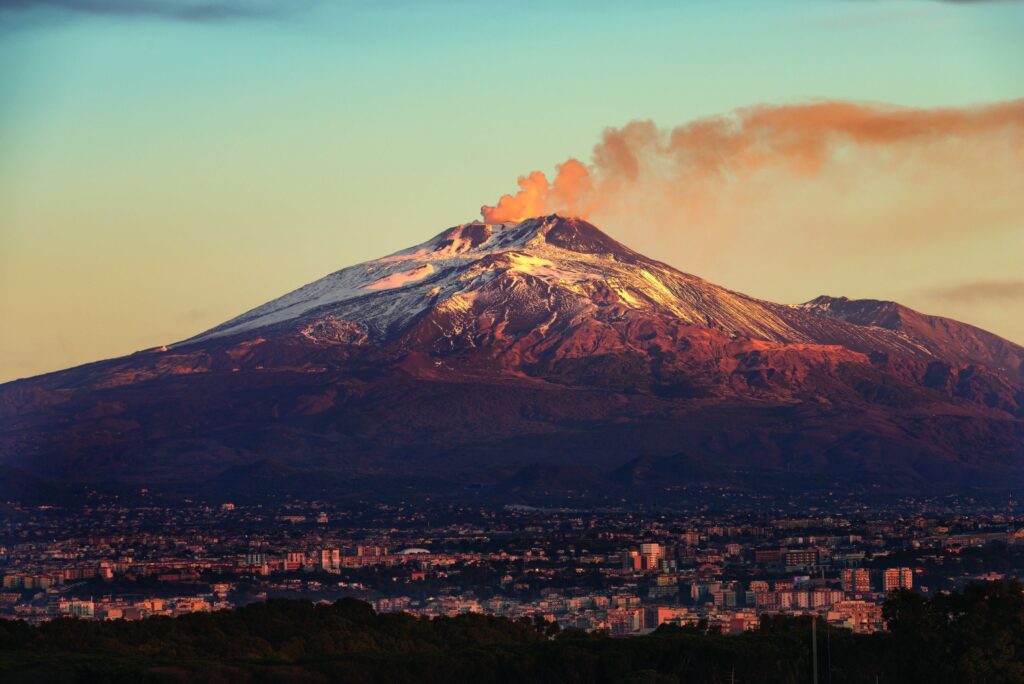
Etna erupts so frequently that people sometimes forget how hazardous it can be. But its location near major settlements and flight routes makes it an ongoing risk.
What makes Etna dangerous
- Large, unpredictable ash clouds
- Lava flows threatening towns and infrastructure
- Continuous seismic activity
- Dense population around the volcano
Etna’s eruptions are often spectacular to watch, but its explosive episodes can cause large-scale disruptions.
8. Taal Volcano (Philippines) – A Lake Volcano with Deadly Potential
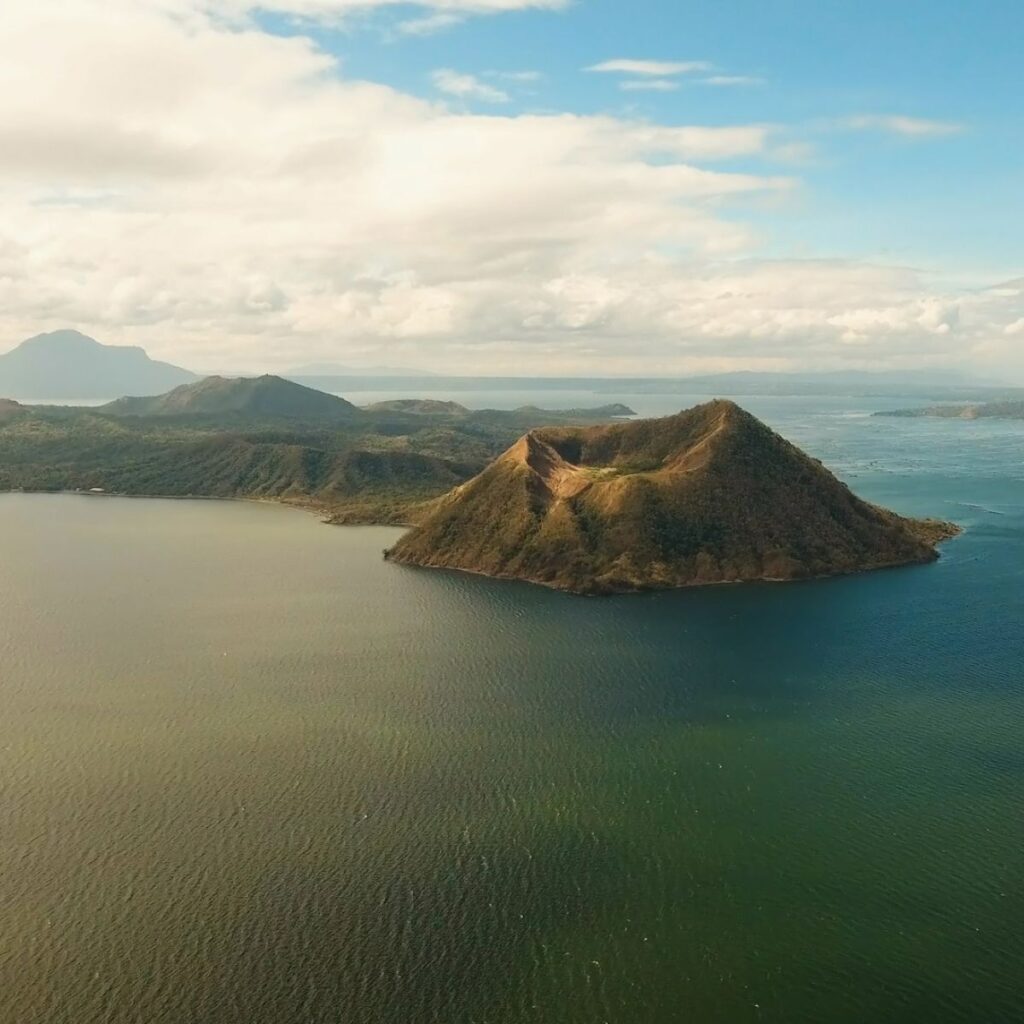
Taal is deceptively small, but its geology makes it incredibly dangerous. The volcano sits within a lake, and the interaction of magma and water creates powerful phreatomagmatic explosions.
Risk factors
- Highly explosive water-magma interactions
- Very rapid eruption onset
- Manila (25+ million people) within ashfall range
- Potential for lake tsunamis
The 2020 eruption
- 300,000+ evacuated
- Ashfall reached Manila
- Entire lake showed signs of seismic disturbance
Taal is classified as “very high risk” due to its geography and population exposure.
9. Nevado del Ruiz (Colombia) – One of the Deadliest Volcanoes in History
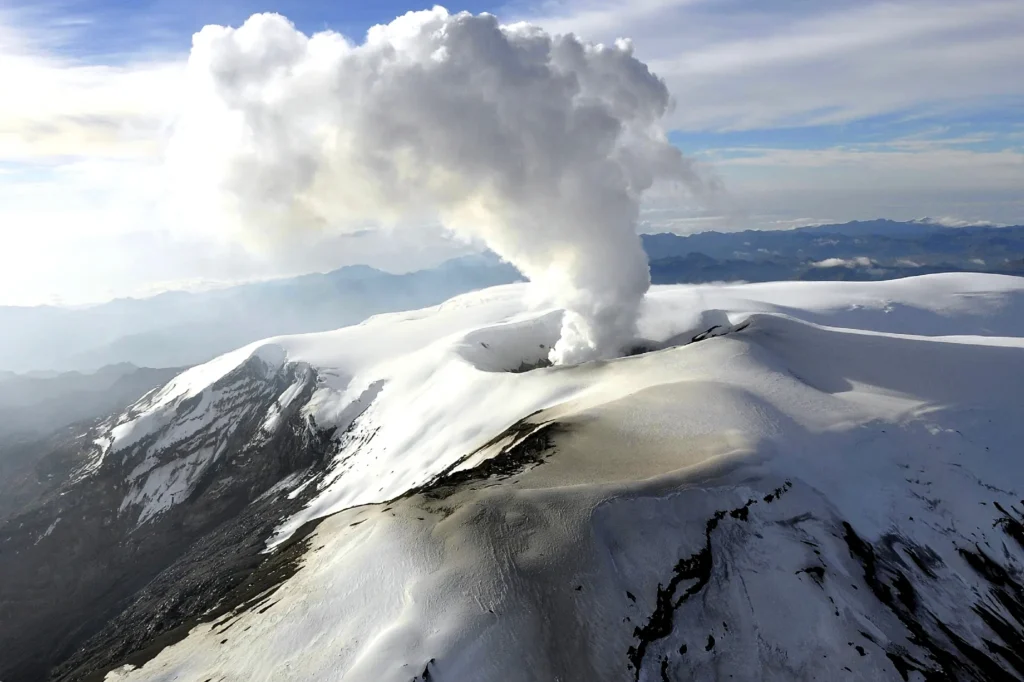
Nevado del Ruiz combines ice and explosive magma—one of the most dangerous combinations on Earth.
Why it’s so risky
- Thick glacier coverage
- Even small eruptions can melt ice and generate lahars
- Settlements lie directly in lahar paths
The 1985 Armero tragedy
- Over 23,000 deaths
- Town completely buried in volcanic mud
- Warnings were issued but not acted upon in time
Today, monitoring has improved, but the hazard still remains.
10. Mauna Loa (Hawaii) – The Largest Volcano on Earth
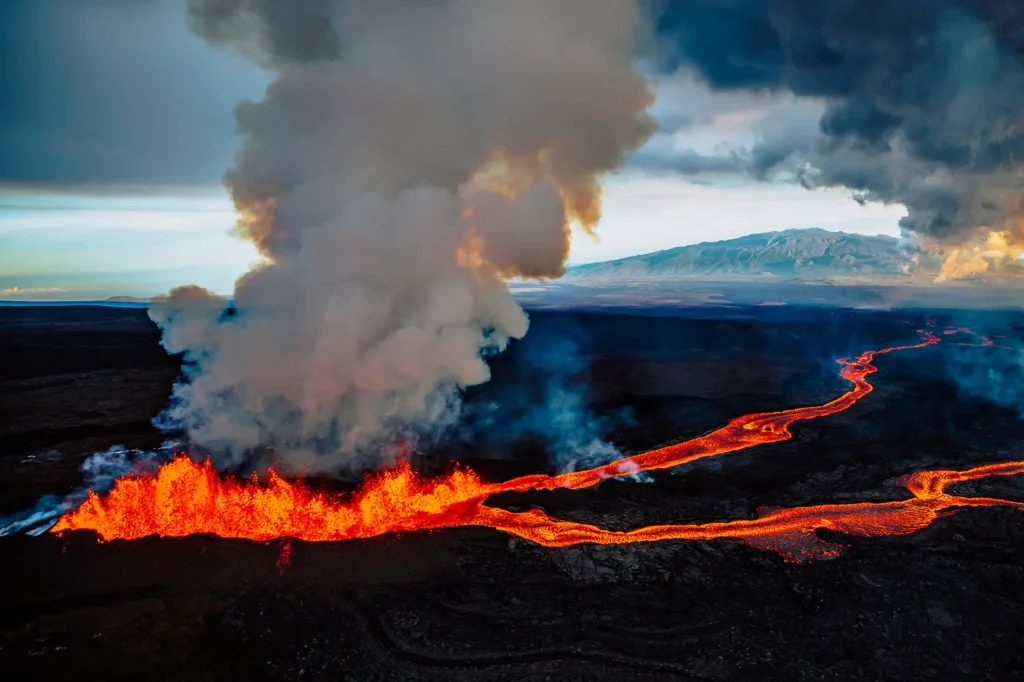
Mauna Loa is not known for explosive eruptions, but it makes this list due to its size and speed of lava flows. When it erupts, lava can travel long distances very quickly.
Risk details
- 1984 eruption nearly reached Hilo
- 2022 eruption covered highways with lava
- Lava can cut off communities in hours
Geological setting
Mauna Loa is fed by a huge magma supply from the Pacific hot spot. This constant replenishment makes eruptions inevitable over long timeframes.
Conclusion: Volcanic Danger Comes from Population + Eruption Style, Not Size
The world’s most dangerous volcanoes are not always the most famous or the tallest. Real risk comes from:
- explosive magma
- rapid, unpredictable eruption styles
- large populations nearby
- water or ice interacting with magma
- the possibility of lahars, tsunamis, and ashfall
- weak monitoring systems
- limited evacuation routes
A small volcano near a megacity (like Taal or Popocatépetl) can be far more dangerous than a massive cone in a remote place.
Monitoring these volcanoes—and understanding how they behave—is crucial not only for local communities but for global stability as well.