





When geologists study igneous rocks, the first thing they look at is not color or composition, but texture — the size, arrangement, and relationship of crystals, glass, vesicles, or fragments inside the rock. Igneous texture is the physical recording of how magma cooled, how fast it crystallized, how much gas it carried, whether it erupted explosively, and whether minerals formed together or separately.
Texture is the story of the magma itself.
A granite with its coarse, visible crystals tells you it cooled slowly underground.
A basalt with tiny, microscopic crystals tells you it cooled quickly at the surface.
An obsidian flows like lava but freezes into volcanic glass.
A pumice stone is so full of gas bubbles that it can float on water.
A welded tuff records the violence of an explosive eruption.
Every igneous texture is a signature. Below is a complete, natural explanation of these textures and what they reveal about magmatic history.
1) Why Texture Matters in Igneous Petrology
Texture is the single most important indicator of:
- cooling rate
- depth of formation (intrusive vs extrusive)
- crystallization sequence
- gas content of the magma
- whether the rock formed from lava or pyroclastic material
- whether magma mixing or fractional crystallization occurred
Composition tells you what minerals form, but texture tells you how the magma evolved through time.
2) Crystal Size Textures
Texture begins with the size of crystals. Cooling rate controls this more than anything else.
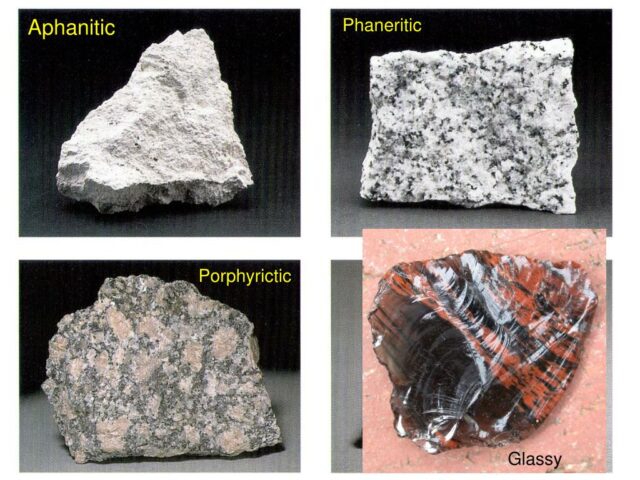
A) Phaneritic Texture — Coarse-Grained, Slow Cooling
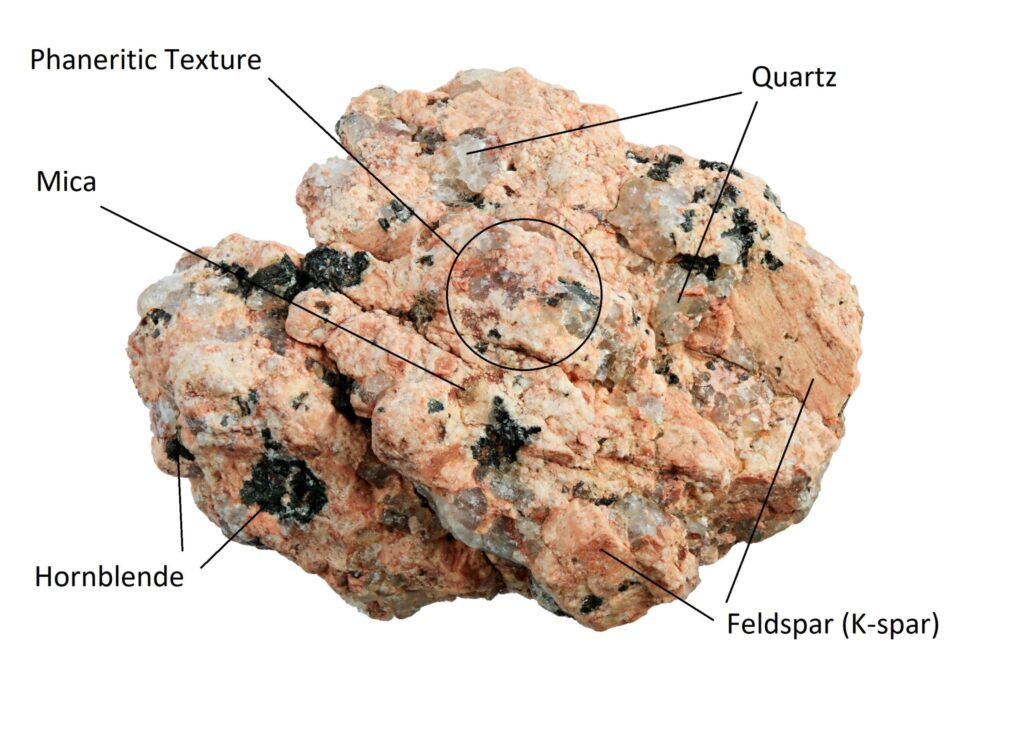
Phaneritic rocks have large crystals, all visible to the naked eye. This indicates the magma cooled slowly, giving atoms enough time to migrate into the crystal lattice and grow.
Common examples:
- Granite
- Diorite
- Gabbro
A phaneritic rock always signals one thing:
It formed deep underground, in a plutonic environment.
Crystals may be roughly equal in size, showing steady cooling conditions.
B) Aphanitic Texture — Fine-Grained, Rapid Cooling
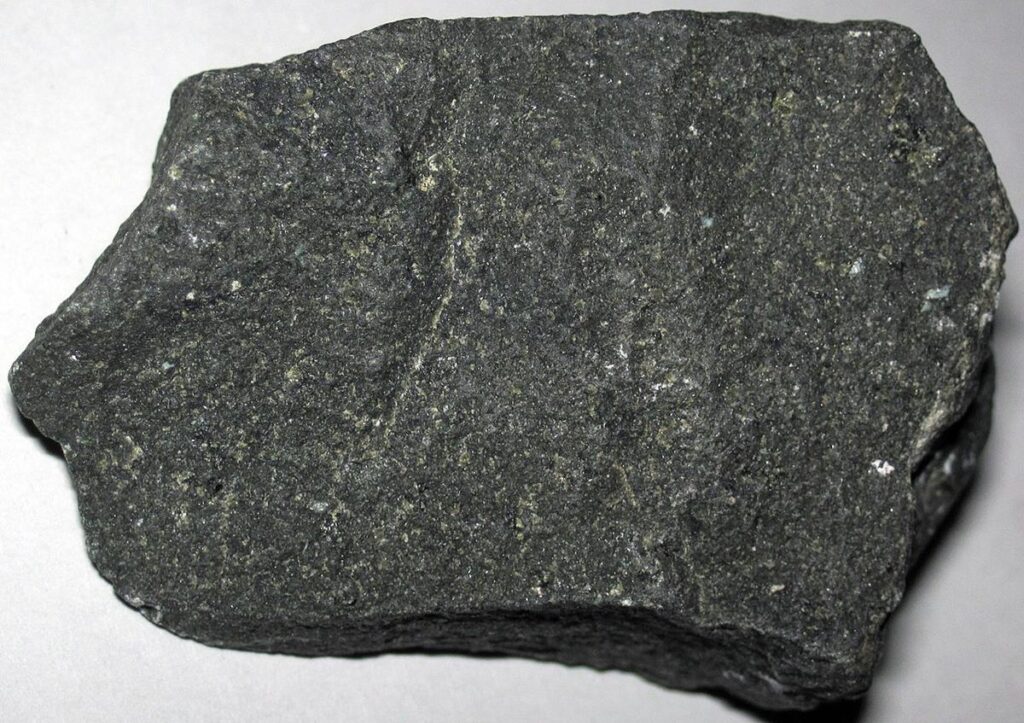
Aphanitic rocks have crystals too small to see without a microscope. This texture forms when lava cools rapidly at or near the Earth’s surface. Crystals nucleate, but they do not have time to grow.
Examples:
- Basalt
- Andesite
- Rhyolite
Aphanitic textures mean:
The rock is volcanic and cooled quickly.
C) Porphyritic Texture — Mixed Grain Sizes, Two-Stage Cooling

One of the most important textures in igneous petrology is the porphyritic texture.
It indicates a two-stage cooling history:
- Slow cooling at depth → large crystals (phenocrysts) form.
- Rapid cooling at shallow depth or at the surface → fine-grained or glassy matrix.
Porphyritic rocks clearly show that magma did not cool under one simple condition — it moved, rose, or experienced changes in temperature or pressure.
Examples:
- Porphyritic andesite
- Porphyritic basalt
- Porphyritic rhyolite
This texture records the complex dynamics inside volcanic systems.
3) Glassy Textures — Instant Cooling, No Crystals
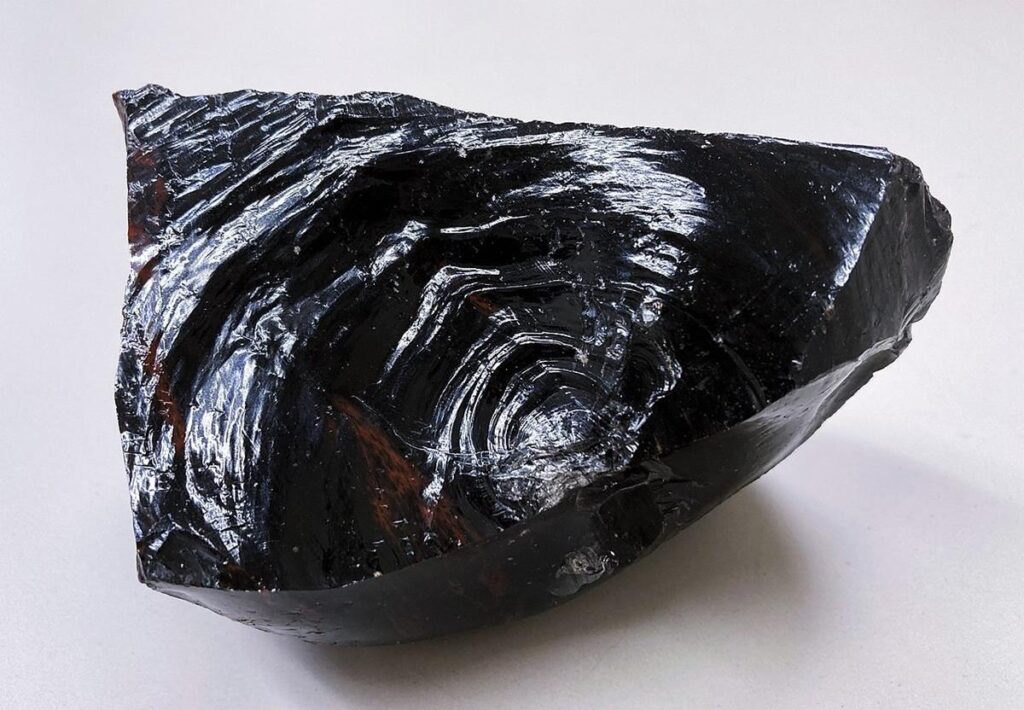
Glassy igneous rocks form when lava cools so rapidly that atoms cannot arrange themselves into a crystal lattice.
The result is amorphous volcanic glass.
Most common example:
- Obsidian
Obsidian is jet-black, sharp, smooth, and lacks any crystal structure. Under the microscope it appears completely glassy.
A glassy texture always means:
Cooling was nearly instantaneous.
This usually happens along the edges of lava flows, domes, or volcanic bombs.
4) Vesicular and Amygdaloidal Textures — Gas Bubbles Preserved in Stone
Magmas often contain dissolved water vapor, CO₂, SO₂ and other volatiles. When pressure drops during eruption, these gases form bubbles within the lava.
A) Vesicular Texture

Vesicles are circular or elongated cavities left by trapped gas bubbles.
Common vesicular rocks:
- Scoria
- Pumice
- Vesicular basalt
Pumice is so intensely vesicular that it can float.
A vesicular texture means:
The lava was gas-rich and cooled before bubbles could escape.
B) Amygdaloidal Texture
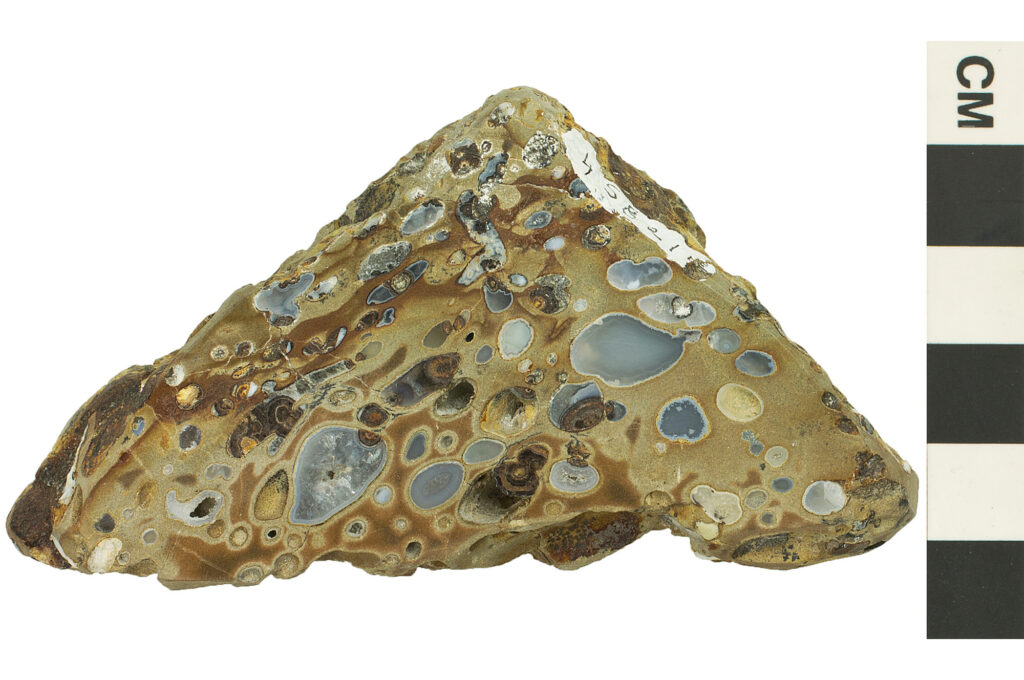
If vesicles later fill with minerals deposited by hydrothermal fluids—such as calcite, zeolite, quartz—they become amygdales.
An amygdaloidal texture marks:
Gas-rich lava + later mineral infilling.
It is typical in old basalt flows that interacted with circulating groundwater.
5) Pyroclastic Textures — The Signature of Explosive Eruptions
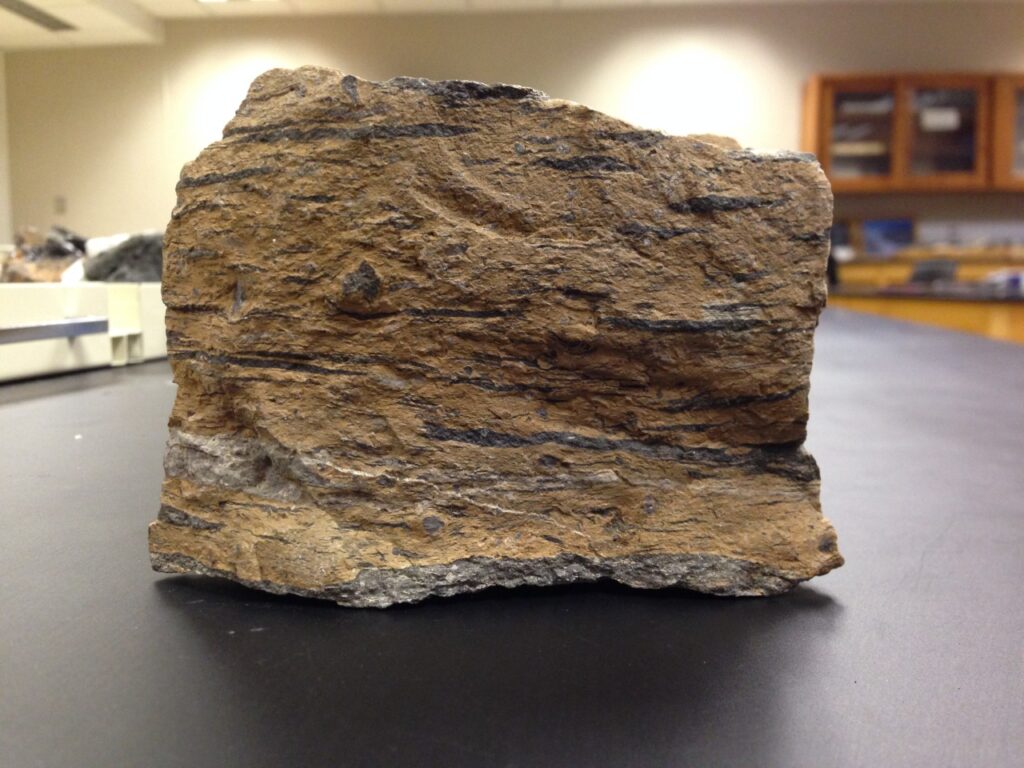
Pyroclastic textures are unique to fragmented volcanic materials produced during explosive eruptions. They include:
- volcanic ash (fine)
- lapilli (2–64 mm)
- volcanic bombs (>64 mm)
- broken crystals
- lithic fragments
When these materials weld together while still hot, the rock becomes welded tuff.
Pyroclastic textures tell you:
This rock was formed by an explosive eruption, not by simple lava flow.
Examples:
- Tuff
- Welded tuff
- Volcanic breccia
If you see angular fragments in a fine matrix, you are looking at a pyroclastic igneous rock.
6) Cumulate Textures — Crystals That Settled Out of Magma
In some magma chambers, early-forming minerals grow large and dense, then sink or float, forming layers.
These rocks are called cumulates, and their textures are evidence of crystal accumulation, not normal cooling.
Examples:
- Olivine cumulates
- Pyroxene cumulates
- Layered gabbros
- Dunite (almost pure olivine)
Cumulate texture means:
This rock formed from mineral settling or flotation inside a magma chamber.
It is a key feature of layered mafic intrusions like the Bushveld Complex.
7) Fine-Scale Textures: Intergranular, Intersertal & Diktytaxitic
These textures are common in basaltic rocks and preserve the microscopic details of final-stage crystallization.
A) Intergranular Texture
Small pyroxene or olivine crystals fill the spaces between plagioclase laths.
B) Intersertal Texture
Spaces between plagioclase are filled with glassy material or very tiny crystals.
C) Diktytaxitic Texture
Plagioclase laths form boundaries around irregular, polygonal open spaces.
These textures give information about magma viscosity and rates of late-stage cooling.
8) Spherulitic Texture — Radiating Crystal Growth

Spherulites appear when minerals grow outward in radiating, spherical patterns. This tends to occur in quickly cooled, silica-rich volcanic rocks.
Typical host rocks:
- Rhyolite
- Obsidian
Spherulitic textures represent:
Rapid nucleation & simultaneous radial crystal growth.
Under the microscope, they appear as circular bursts of intergrown quartz and feldspar fibers.
9) Poikilitic and Ophitic Textures
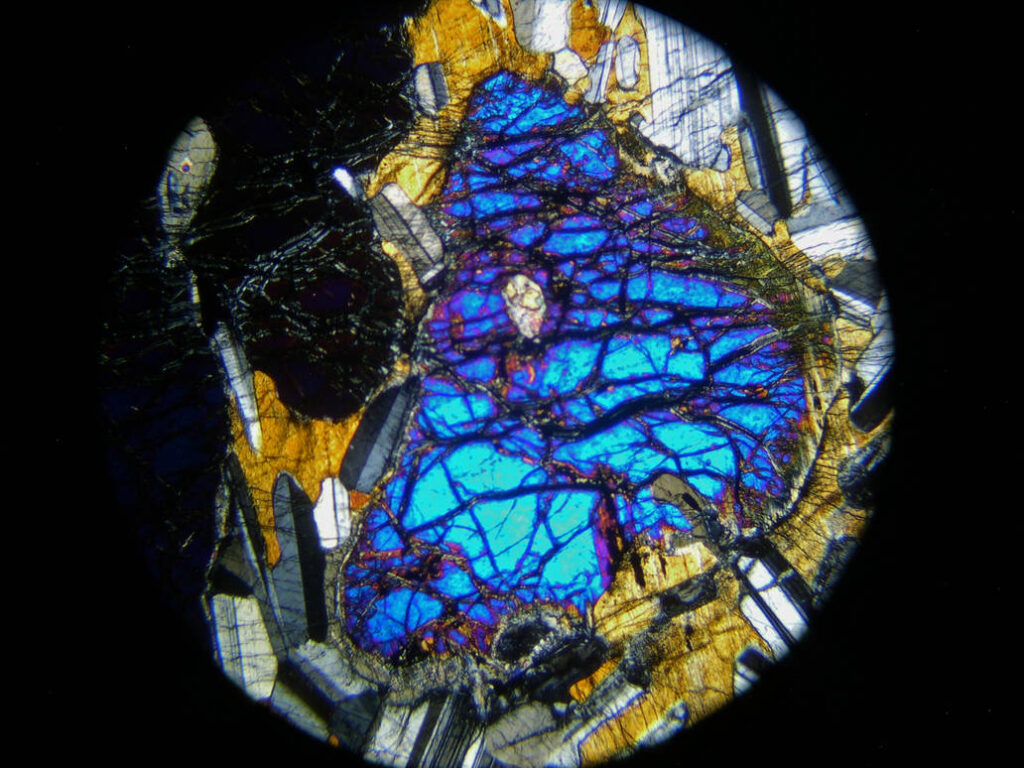
A) Poikilitic Texture
Small crystals are enclosed within a single, much larger crystal.
The larger host crystal grows later, trapping earlier-formed minerals.
B) Ophitic Texture
A specialized form of poikilitic texture found in mafic rocks.
In ophitic textures:
- Plagioclase laths form first
- Large clinopyroxene crystals grow around them, enclosing them
Most common in:
- Dolerite
- Diabase
The texture records:
Plagioclase first, pyroxene second.
10) Granophyric and Graphic Textures
These textures involve intricate intergrowths of quartz and feldspar, often forming patterns that resemble ancient writing or runes.
Graphic Texture
Large-scale intergrowths forming “cuneiform-like” lines.
Granophyric Texture
Finer, microscopic graphic intergrowth.
These textures form during:
Late-stage, rapid crystallization in silica-rich magmas.
Common in:
- Granites
- Pegmatites
11) Intrusive vs Extrusive Textures — The Big Picture
Intrusive igneous rocks typically show:
- phaneritic texture
- poikilitic texture
- cumulate texture
These form deep underground.
Extrusive igneous rocks typically show:
- aphanitic texture
- glassy texture
- vesicular texture
- pyroclastic texture
These form at or near the surface.
Texture is the clearest indicator of where the rock formed in the crust.
12) How Petrologists Study Texture
Geologists examine textures at three levels:
1) Hand specimen level
Crystal size
Vesicles
Glassy zones
Phenocrysts
2) Thin section (microscope)
Crystal boundaries
Intergrowths
Late-stage melt pockets
Fragmentation features
3) Analytical methods
Chemical zoning
Texture-related mineral chemistry
Crystallization temperatures
Texture is both a field tool and a lab tool.
Conclusion
The textures of igneous rocks are far more than patterns—they are the record of magmatic processes frozen in stone. Coarse granite crystals speak of slow, deep cooling. Aphanitic basalt whispers of rapid lava chills. Obsidian flashes the instant when magma froze into glass. Pumice captures bursting gas bubbles. Tuffs preserve explosive volcanic violence. Cumulate layers reveal ancient magma chambers sorting themselves by density.
To understand igneous rocks, you follow their textures like clues.
To understand a volcano, you read the textures like a diary.
Texture is not decoration.
Texture is history.