





Basalt and granite are among the most common and important igneous rocks on Earth. Both form from molten magma, but under very different conditions.
Basalt solidifies rapidly at the surface, while granite forms slowly deep underground. This difference in cooling rate changes everything — crystal size, texture, composition, and color.
These rocks not only shape Earth’s crust but also reveal crucial information about plate tectonics, magma chemistry, and continental formation. Understanding how they differ helps geologists interpret the planet’s geological history and processes.
2. What is Basalt?
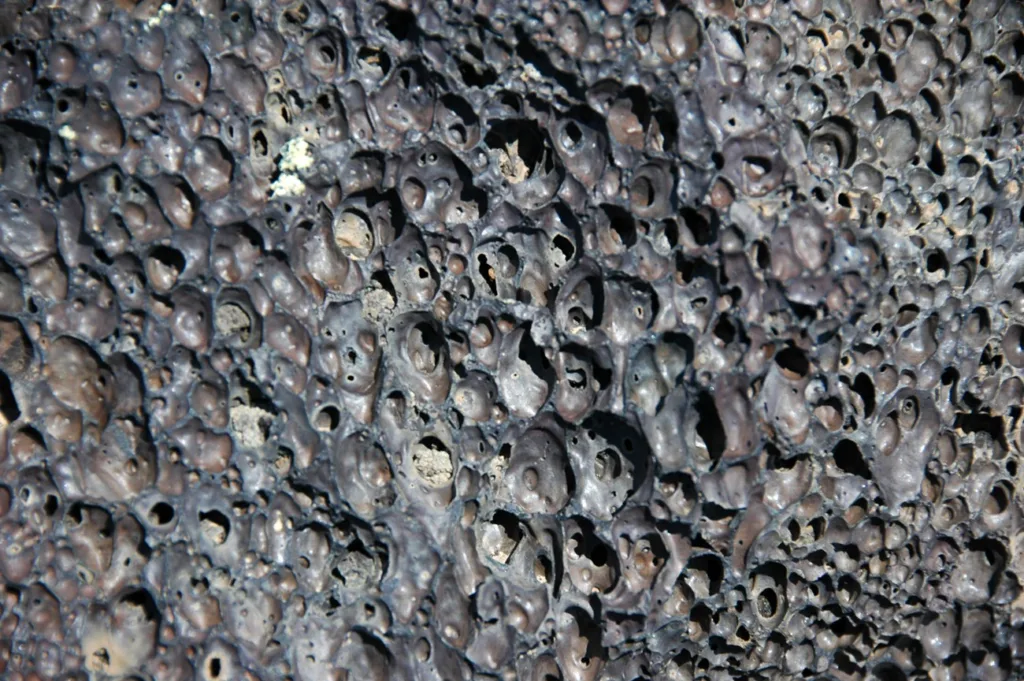
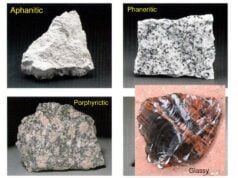
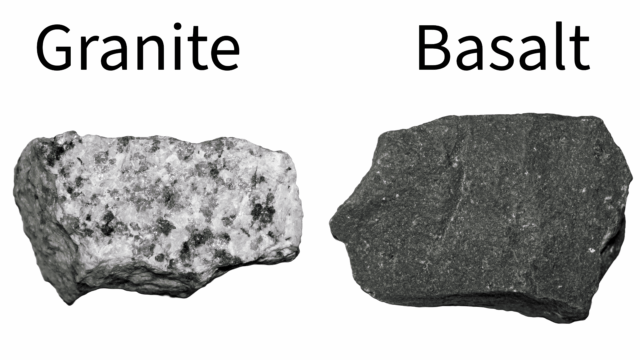
Basalt is a dark-colored, fine-grained extrusive igneous rock. It forms when lava reaches the surface during a volcanic eruption and cools quickly. Because of this rapid cooling, crystals remain very small and often invisible to the naked eye.
? Main Characteristics:
- Color: Dark gray to black
- Texture: Aphanitic (fine-grained), sometimes vesicular (with gas holes)
- Silica content: 45–55%
- Dominant minerals: Pyroxene, plagioclase feldspar, olivine
- Formation: Volcanic eruptions, mid-ocean ridges, hotspots
- Density: 2.8–3.0 g/cm³
Basalt composes most of the oceanic crust and covers vast areas such as the Deccan Traps (India), Iceland, and Hawaii.
3. What is Granite?
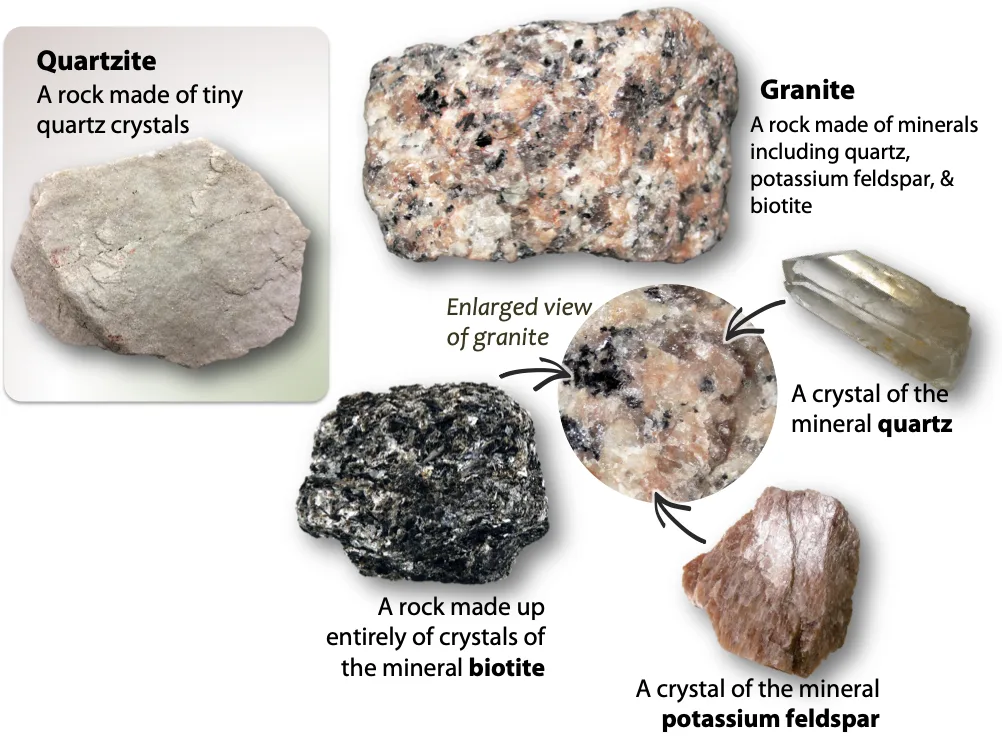
Granite is a light-colored, coarse-grained intrusive igneous rock. It forms deep below Earth’s surface where magma cools slowly, allowing large crystals to grow.
? Main Characteristics:
- Color: White, pink, or light gray
- Texture: Phaneritic (coarse-grained)
- Silica content: 65–75%
- Dominant minerals: Quartz, feldspar, mica, amphibole
- Formation: Slow crystallization of magma beneath continental crust
- Density: 2.6–2.7 g/cm³
Granite is abundant in the continental crust and forms massive bodies known as batholiths, like the Sierra Nevada (USA) and Scottish Highlands.
4. Formation Process Step by Step
Although both rocks originate from magma, their cooling histories differ drastically.
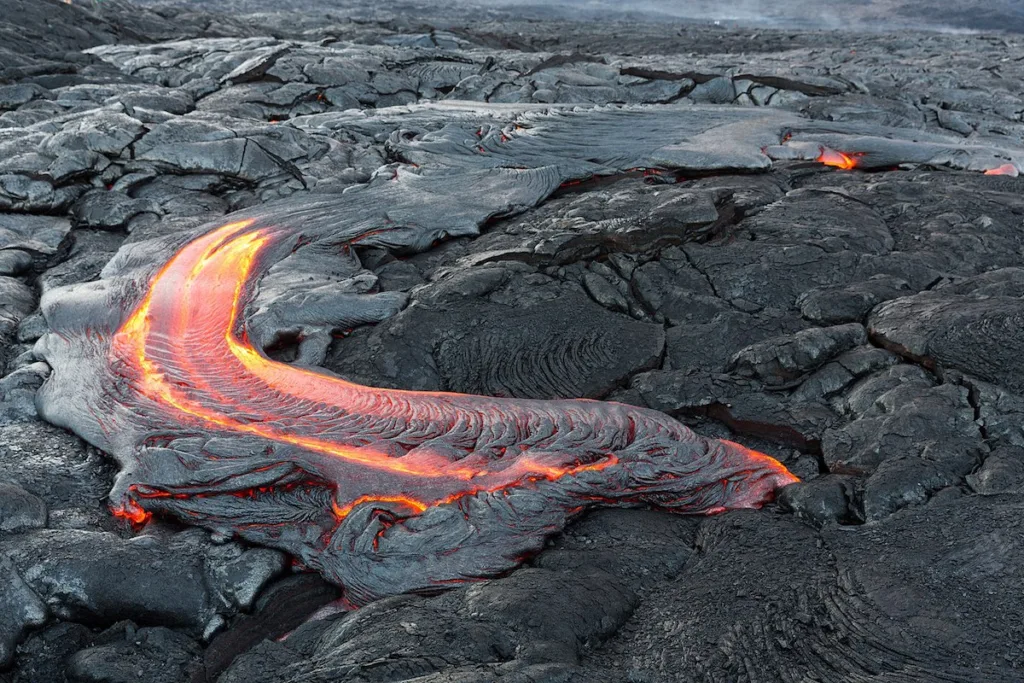
Basalt Formation:
- Magma rises from the mantle at divergent plate boundaries or hotspots.
- Lava erupts onto the surface.
- Rapid cooling prevents large crystals from forming.
- Result: fine-grained, dark-colored basalt.
Granite Formation:
- Magma forms by the partial melting of continental crust.
- It intrudes into deeper crustal levels.
- Cooling takes thousands of years.
- Result: coarse-grained, light-colored granite with visible crystals.
5. Geochemical and Mineralogical Differences
| Property | Basalt | Granite |
|---|---|---|
| Type | Extrusive | Intrusive |
| Color | Dark gray or black | Light gray, pink, white |
| Silica (SiO₂) | 45–55% | 65–75% |
| Minerals | Pyroxene, plagioclase, olivine | Quartz, feldspar, mica |
| Texture | Fine-grained (aphanitic) | Coarse-grained (phaneritic) |
| Formation temperature | 1000–1200 °C | 650–800 °C |
| Iron & Magnesium | High | Low |
| Sodium & Potassium | Low | High |
| Density | 2.9 g/cm³ | 2.65 g/cm³ |
| Typical environment | Oceanic crust, volcanoes | Continental crust, mountains |
Geochemically, basalt is mafic (rich in Fe, Mg), while granite is felsic (rich in Si, Al, Na, K).
This makes basalt darker and denser, while granite is lighter in both color and weight.
6. Tectonic Setting and Occurrence
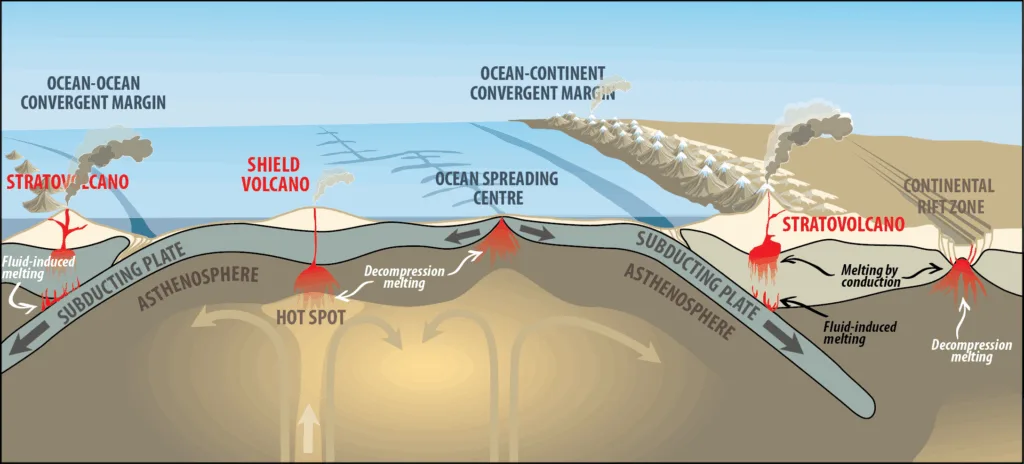
? Basalt is common at:
- Mid-ocean ridges
- Hotspot volcanoes (Hawaii, Iceland)
- Oceanic islands and rift zones
? Granite occurs at:
- Continental collision zones
- Subduction-related mountain ranges
- Deep continental interiors
Together, these two rocks form the foundation of Earth’s crustal dichotomy:
? Oceanic crust → mainly basalt
? Continental crust → mainly granite
7. Physical and Chemical Properties
| Property | Basalt | Granite |
|---|---|---|
| Hardness (Mohs) | 6 | 6–7 |
| Porosity | Often vesicular | Low porosity |
| Magnetism | May contain magnetite | Usually non-magnetic |
| Weathering rate | Fast (forms fertile soil) | Slow (resistant to erosion) |
| Chemical type | Mafic | Felsic |
Basalt weathers quickly, producing iron-rich fertile soils, such as in volcanic regions of Hawaii. Granite, being more resistant, forms rugged landscapes and mountain cores.
8. Field Identification Tips
? How to identify them outdoors:
- Color: Basalt = dark, Granite = light
- Texture: Basalt = smooth, fine-grained; Granite = coarse-grained
- Crystal visibility: Granite crystals visible with naked eye
- Weight: Basalt feels heavier in hand
- Vesicles: Basalt may show gas holes; granite never does
? Under the microscope:
- Basalt → very fine plagioclase laths, pyroxene, olivine
- Granite → quartz grains, feldspar twinning, mica flakes
9. Uses and Economic Importance
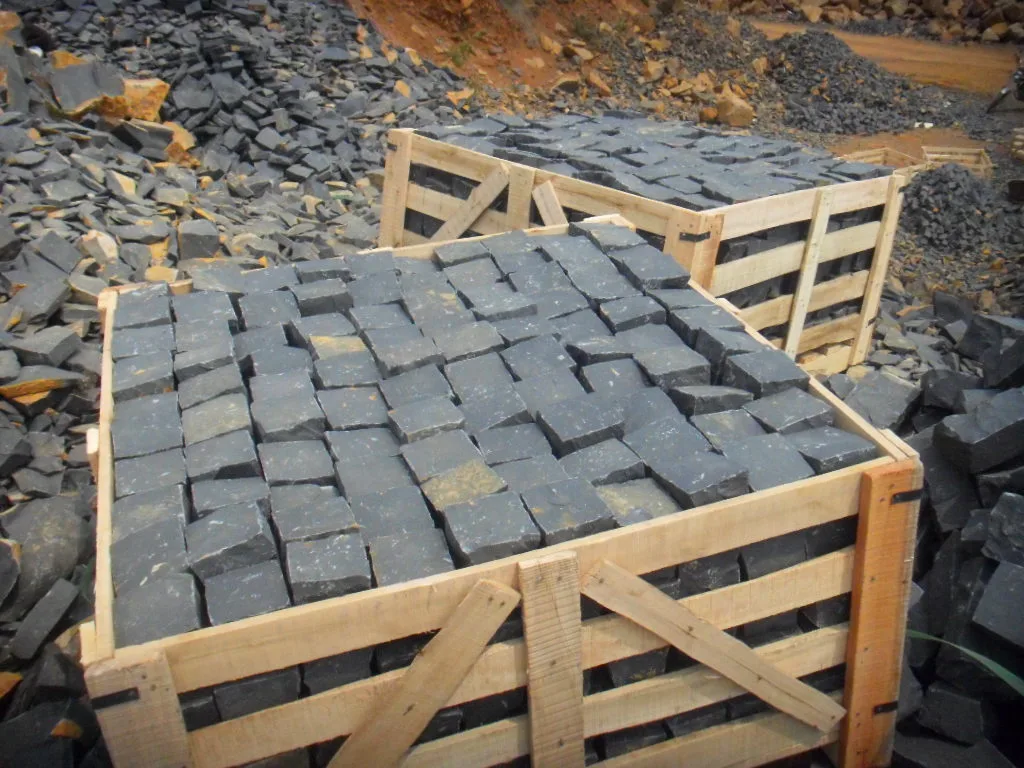
?️ Basalt Uses:
- Road base, railway ballast, and concrete aggregate
- Basalt fiber and insulation material
- Sculptures, tiles, and monuments
- Crushed stone for construction
? Granite Uses:
- Dimension stone, countertops, and flooring
- Monuments and building facades
- Decorative architectural and interior design
- Crushed stone for strong foundations
Granite’s aesthetic appeal and strength make it valuable for architecture, while basalt’s durability suits industrial and infrastructure projects.
10. Global Examples
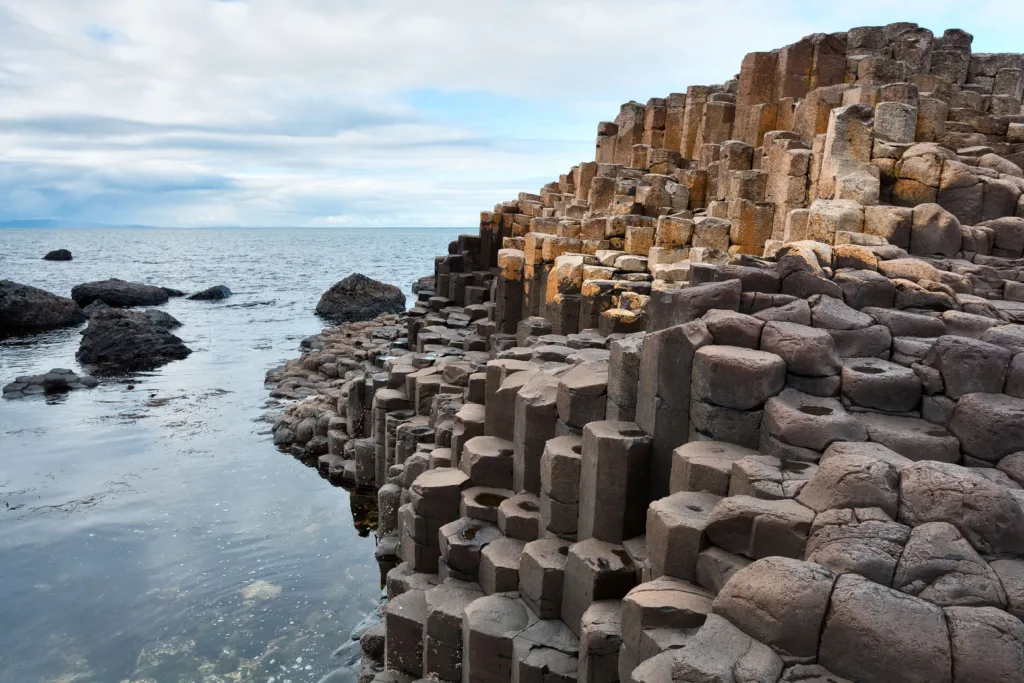
? Famous Basalt Locations:
- Deccan Traps, India
- Columbia River Basalt, USA
- Giant’s Causeway, Northern Ireland
- Hawaii and Iceland volcanic fields
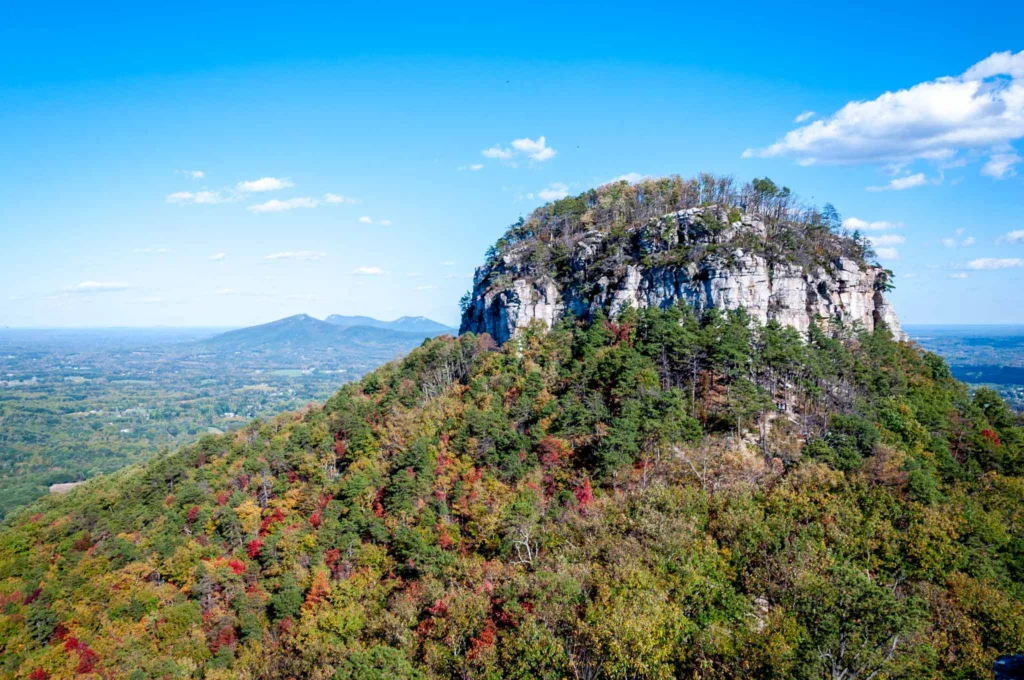
⛰️ Famous Granite Locations:
- Yosemite National Park, USA
- Mount Airy, North Carolina
- Scottish Highlands
- Western Australia batholiths
These examples show the geological diversity and global significance of both rock types.
11. Summary Table (Quick Overview)
| Feature | Basalt | Granite |
|---|---|---|
| Formation | Rapid lava cooling | Slow magma cooling |
| Environment | Surface (extrusive) | Underground (intrusive) |
| Composition | Mafic (Fe-Mg) | Felsic (Si-Al) |
| Color | Dark | Light |
| Crystal size | Small | Large |
| Density | Higher | Lower |
| Occurrence | Oceanic crust | Continental crust |
12. FAQ – Basalt vs Granite
1. Which is more common on Earth?
Basalt. It covers most of the ocean floor and forms more than 70% of Earth’s crust.
2. Is basalt harder than granite?
Both are hard, but granite’s coarse grains make it more durable against weathering.
3. Can basalt turn into granite?
No direct transformation. They originate from different magma compositions.
4. Which rock has more silica?
Granite has higher silica (65–75%) compared to basalt (45–55%).
5. Where can I find them in nature?
Basalt – volcanoes and oceanic crust; Granite – mountain roots and continental interiors.