





Granite is one of the most recognizable and most used intrusive igneous rocks on Earth. It is hard, resistant to weathering, aesthetically attractive, and available in large blocks — which is why you see it in buildings, bridges, monuments, kitchen countertops, even in paving. But behind this popularity there is a very clear geological story: granite forms slowly, deep in the crust, from silica-rich magma. That slow cooling lets large crystals grow, and the minerals that appear — mostly feldspar and quartz — are exactly the ones that give granite its strength and durability.
This article takes a practical look at granite: how it forms, what it is made of, which properties matter for engineers and architects, and when granite is not the right choice.
What Is Granite?
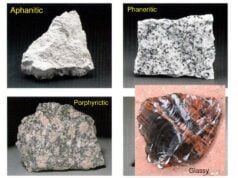
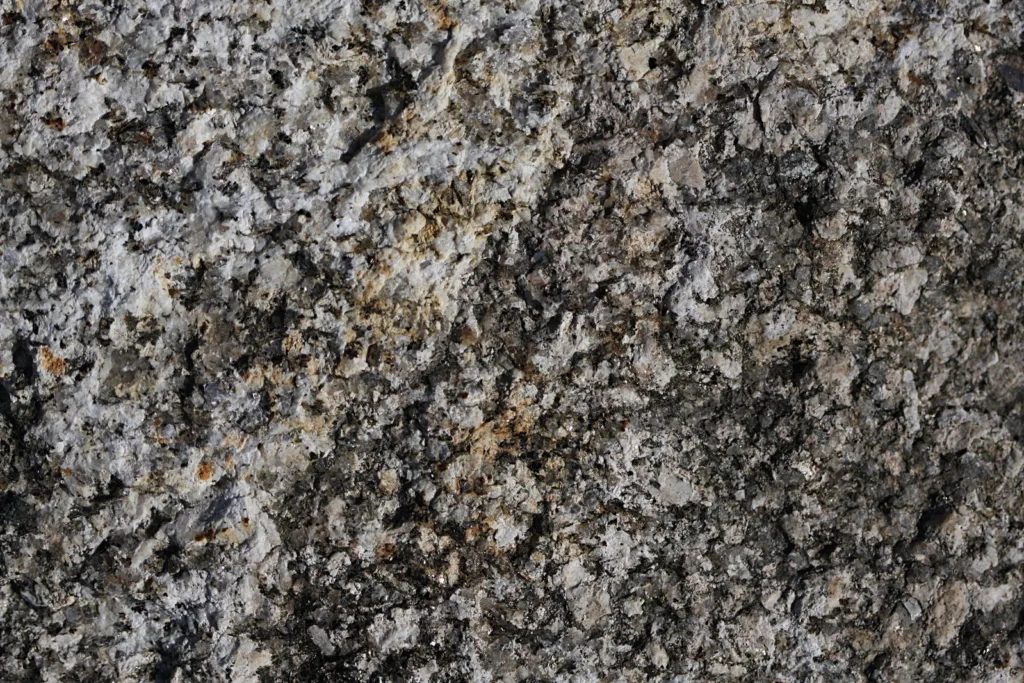
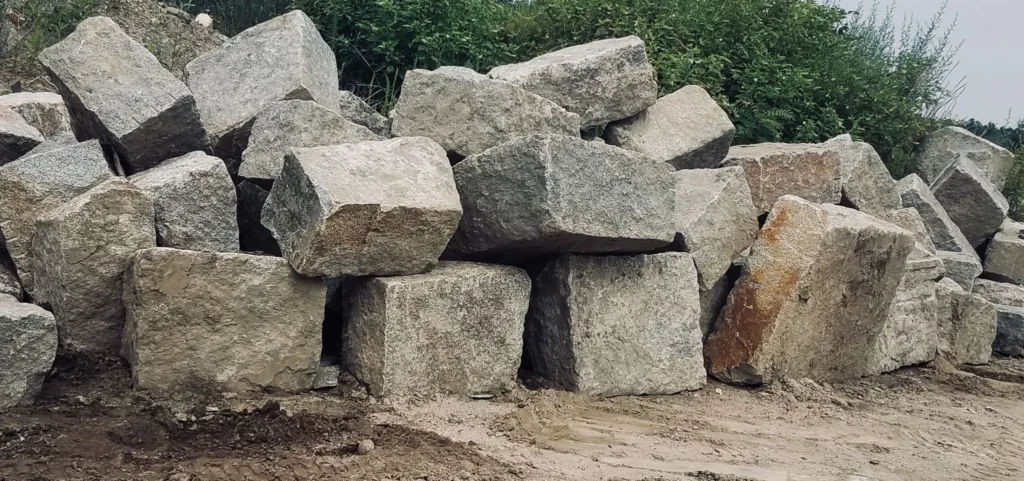
Granite is a coarse-grained, light-colored, felsic igneous rock composed mainly of alkali feldspar, quartz, and plagioclase feldspar, with minor amounts of biotite or muscovite. In fresh hand specimen you can easily see the individual mineral grains. The overall color ranges from pinkish and cream to light gray, depending on the feldspar type and the amount of dark minerals.
What makes granite different from many other rocks is its intrusive origin. It crystallizes slowly at depth (plutonic environment). No rapid cooling, no glassy textures — just big, well-formed mineral grains. That texture is important, because it controls mechanical behavior: massive, interlocking crystals → good strength.
Geological Formation and Tectonic Setting
Granite usually forms in continental crustal settings where silica-rich magmas are generated. Typical environments include:
- Orogenic belts (continental collision zones): crust thickening, partial melting
- Batholiths in old mountain chains
- Post-orogenic intrusions
- Anatexis of crustal rocks (S-type granites)
- Magmatic differentiation of mantle-derived melts (I-type granites)
This matters to engineers and economic geologists because large granite bodies (batholiths, stocks) form predictable, laterally continuous rock masses — often ideal for quarrying dimension stone and for placing large foundations.
Mineral Composition and Textures
Typical modal composition of granite:
- Quartz: 20–40%
- Alkali feldspar (orthoclase, microcline): 35–60%
- Plagioclase: 10–25%
- Micas (biotite, muscovite): 2–10%
- Accessory minerals: zircon, apatite, magnetite, tourmaline (rare)
Why this is important:
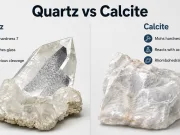
- Quartz → high hardness (Mohs 7), chemical resistance
- Feldspar → main framework, but more susceptible to weathering
- Mica → can create planar weaknesses if abundant
When the rock is rich in potassium feldspar it tends to be pinkish; when plagioclase dominates, it is more whitish or light gray. Darker flecks are the biotite or hornblende.
Physical and Mechanical Properties
For construction, the rock name alone is not enough. Engineers need numbers. Below is a typical range (values are representative, check local quarry test reports before design):
| Property | Typical Range for Granite | Why It Matters |
|---|---|---|
| Density / Specific Gravity | 2.60 – 2.75 g/cm³ | Dead load, transport, dimension stone |
| Compressive Strength (dry) | 100 – 250 MPa (sometimes >300 MPa) | Foundations, columns, cladding anchors |
| Flexural / Bending Strength | 10 – 25 MPa | Slabs, floorings, façade panels |
| Porosity | 0.4 – 2% (usually low) | Weathering, freeze-thaw, polish retention |
| Water Absorption | <0.5% | Exterior use, frost resistance |
| Mohs Hardness | 6 – 7 | Wear resistance, flooring, steps |
| Thermal Expansion | 7–9 × 10⁻⁶ /°C | Outdoor panels, fire exposure |
Because porosity is low and strength is high, granite performs very well in harsh climates, urban pollution, salt spray and freeze–thaw cycles — which is why many historical buildings with granite façades still look good after 100+ years.
Weathering and Durability

Granite is often called a “permanent” stone, but that is only partly true. Chemically, feldspars can alter to clay minerals under long-term weathering (hydrolysis), especially in humid, warm climates. Biotite can oxidize. Micro-cracks can open due to temperature changes. The good news is: because quartz is abundant and porosity is low, granite weathers much more slowly than sedimentary stones like limestone or poorly cemented sandstone.
For external cladding and monuments, choose:
- fine to medium grain (polish lasts longer),
- low iron content (to avoid rust-like staining),
- low water absorption (<0.5%),
- no visible open fractures.
Engineering and Construction Uses
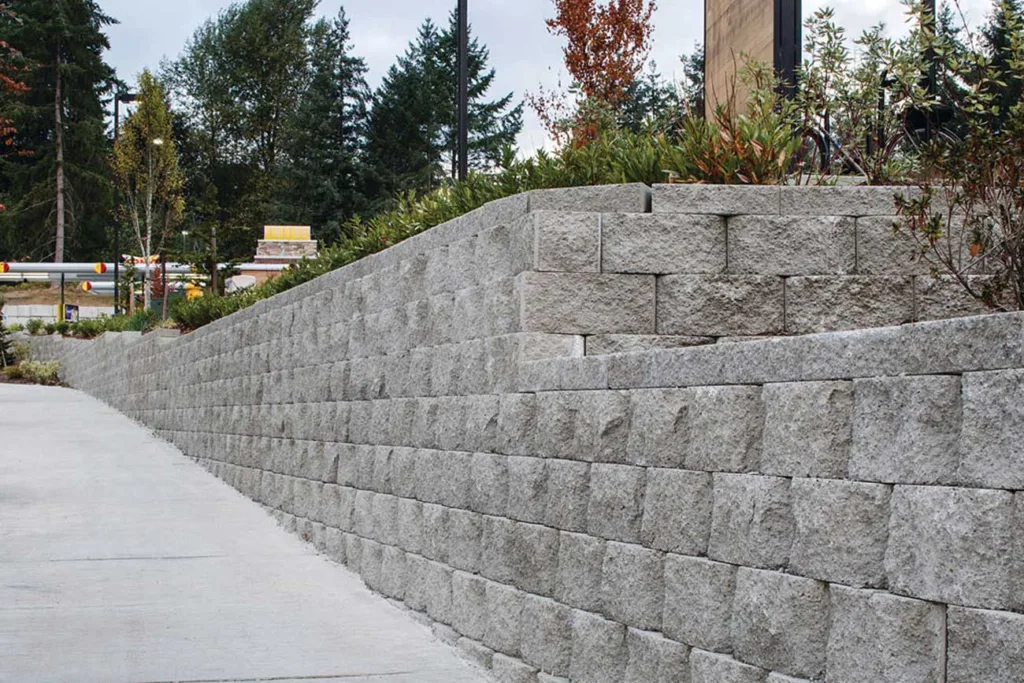
Granite is used in construction in four main ways:
- Dimension stone / cladding: polished or flamed surface, façade panels, stairs, flooring, wall coverings
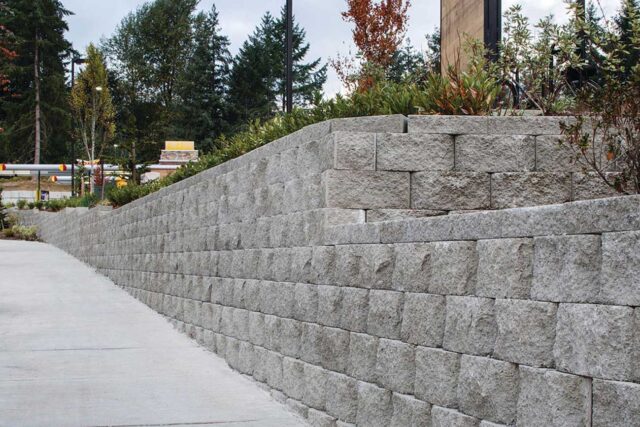
- Massive construction: bridge piers, retaining walls, foundations on rock
- Paving and curbstones: because of high wear resistance
- Crushed stone / aggregate: for concrete or road base, when a high-quality igneous aggregate is needed
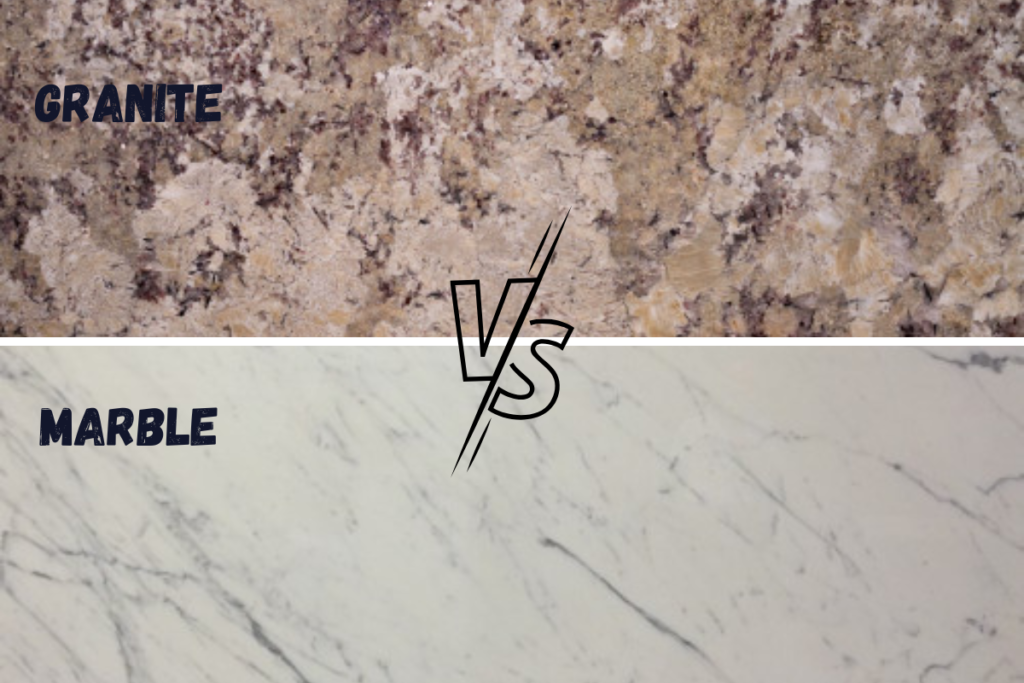
Granite vs. Marble (for architects)
- Granite → harder, more scratch-resistant, better for kitchen tops, exterior use
- Marble → easier to shape and polish, but more sensitive to acids and outdoor weathering
Granite in Geotechnical Context
When a structure is founded directly on granite bedrock, engineers like it because:
- bearing capacity is very high,
- settlements are minimal,
- rock mass is usually massive.
But: weathered granite (saprolite) can look like soil and have very low strength. So site investigation must clearly distinguish between fresh granite, slightly weathered granite, and completely decomposed granite.
Decorative and Commercial Uses
Because granite comes in many colors (pink, red, black, blue-gray, speckled), it is popular for:
- kitchen countertops
- memorials and tombstones
- urban furniture (benches, fountains, bollards)
- sculpture bases
Here the key property is not only strength, but polishability and color stability. Some granites lose shine faster because of micro-porosity or mica content; some show “flashing” in sunlight (labradorite-bearing rocks) and are sold at higher price. This bölümü kısa tutup görsellerle desteklersen Discover’da daha iyi görünür.
Environmental and Health Aspects
Granite may contain trace amounts of uranium and thorium in accessory minerals such as zircon and monazite. In some cases, this can lead to low-level radon emission indoors. For most commercial granites, this is not a problem, but many building codes now suggest testing locally sourced stones. Eğer bu makaleyi Google’dan trafik almak için yazıyorsan, bu bölümü 1–2 paragraf eklemen iyi olur: insanlar “is granite countertop safe” diye çok arıyor.
Conclusion
Granite is not just a “nice looking hard rock.” It is a silica-rich, slowly cooled, structurally strong intrusive rock that combines what designers, engineers and geologists all want: strength, durability, availability and aesthetics. When its mineralogy is right (quartz-feldspar rich, low porosity) it becomes one of the most reliable natural building materials. When it is deeply weathered or fractured, it can be risky — so site investigation and material testing should always accompany design.