





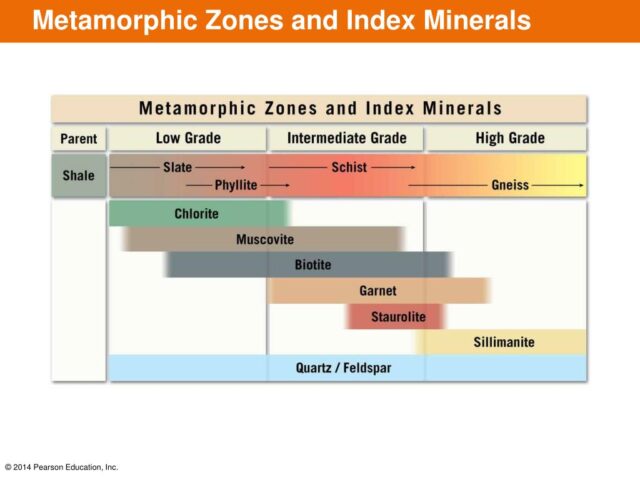
What Are Index Minerals?
Metamorphic rocks record the physical and chemical changes that occur deep within Earth’s crust. Among the most important clues to these changes are index minerals — special minerals that form only under certain pressure–temperature (P–T) conditions.
Geologists use index minerals to determine the metamorphic grade of rocks and to reconstruct the pressure and temperature history of metamorphic terrains. The presence or absence of these minerals provides a natural thermometer and barometer for Earth’s dynamic processes.
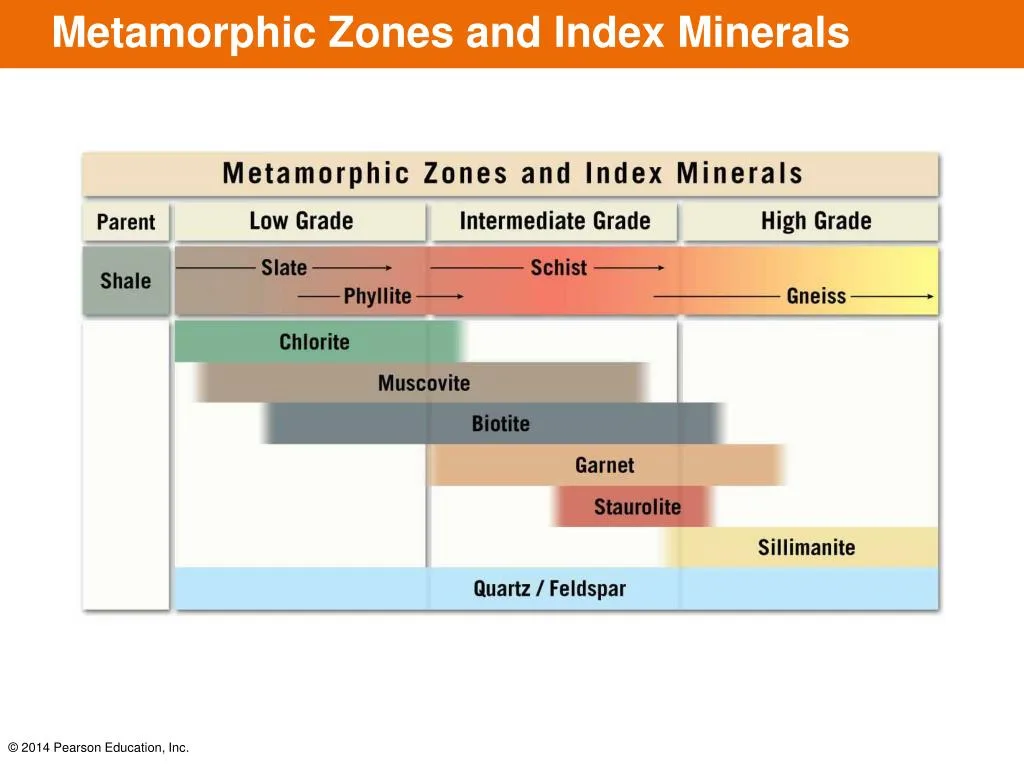
How Index Minerals Form
During metamorphism, pre-existing rocks (called protoliths) are subjected to new conditions of temperature, pressure, and chemical environment. As these factors change, unstable minerals break down and new ones form.
However, not all minerals respond in the same way. Some appear only under a limited range of P–T conditions. These are known as index minerals, and their stability defines the boundaries of metamorphic isograds—lines that mark the first appearance of a particular index mineral in the field.
By mapping these isograds across a region, geologists can identify metamorphic zones, each characterized by a specific index mineral.
Common Index Minerals and Their Grades
The best examples of index minerals are found in pelitic rocks—those derived from shale or mudstone—because their chemical composition allows a wide variety of mineral reactions to occur during metamorphism.
| Index Mineral | Approx. Metamorphic Grade | Typical Rock Type | Chemical Composition / Group |
|---|---|---|---|
| Chlorite | Very Low | Slate, Phyllite | Hydrous Fe–Mg silicate |
| Biotite | Low to Medium | Schist | Mica group |
| Garnet | Medium | Schist, Gneiss | Silicate (Fe, Mg, Mn, Ca)₃Al₂(SiO₄)₃ |
| Staurolite | Medium to High | Schist | Fe–Al silicate |
| Kyanite | High Pressure, Medium to High | Schist, Gneiss | Al₂SiO₅ polymorph |
| Sillimanite | High Temperature, High | Gneiss | Al₂SiO₅ polymorph |
| Andalusite | Low Pressure, High Temperature | Contact metamorphic rocks | Al₂SiO₅ polymorph |
Each of these minerals marks a specific set of metamorphic conditions. For example, the transition from chlorite-bearing rocks to those containing biotite signals an increase in temperature and grade. Similarly, the appearance of sillimanite indicates the highest-grade metamorphism in regional settings.
Barrovian Zones and Regional Metamorphism
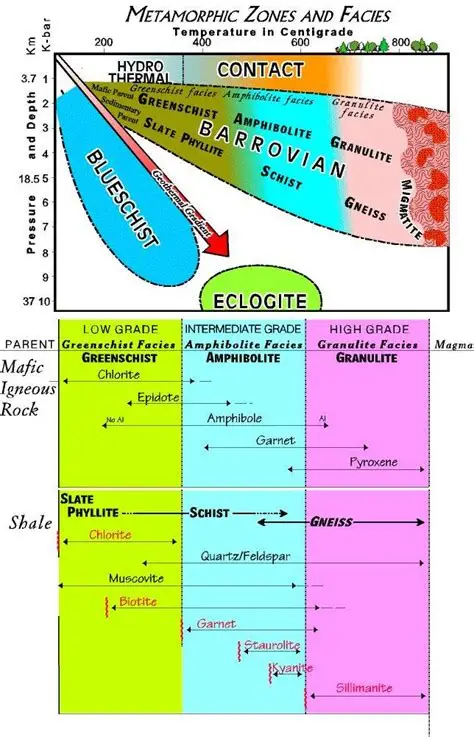
The concept of index minerals was first developed by George Barrow in the Scottish Highlands in the late 19th century. Barrow noticed that as one moves across certain regions, distinct minerals appear in a consistent order — now known as the Barrovian sequence.
| Barrovian Metamorphic Zones | Characteristic Index Mineral |
|---|---|
| 1️⃣ Chlorite Zone | Chlorite |
| 2️⃣ Biotite Zone | Biotite |
| 3️⃣ Garnet Zone | Garnet |
| 4️⃣ Staurolite Zone | Staurolite |
| 5️⃣ Kyanite Zone | Kyanite |
| 6️⃣ Sillimanite Zone | Sillimanite |
Each boundary between zones represents an isograd, a line where a new index mineral first appears. This sequential pattern reflects increasing temperature and pressure during regional metamorphism.
Field Example:
In the Scottish Highlands, rocks near the low-grade margins contain chlorite and biotite, while those closer to the core of the metamorphic belt contain garnet, staurolite, and sillimanite — evidence of higher-grade conditions deeper in the crust.
Al₂SiO₅ Polymorphs as P–T Indicators
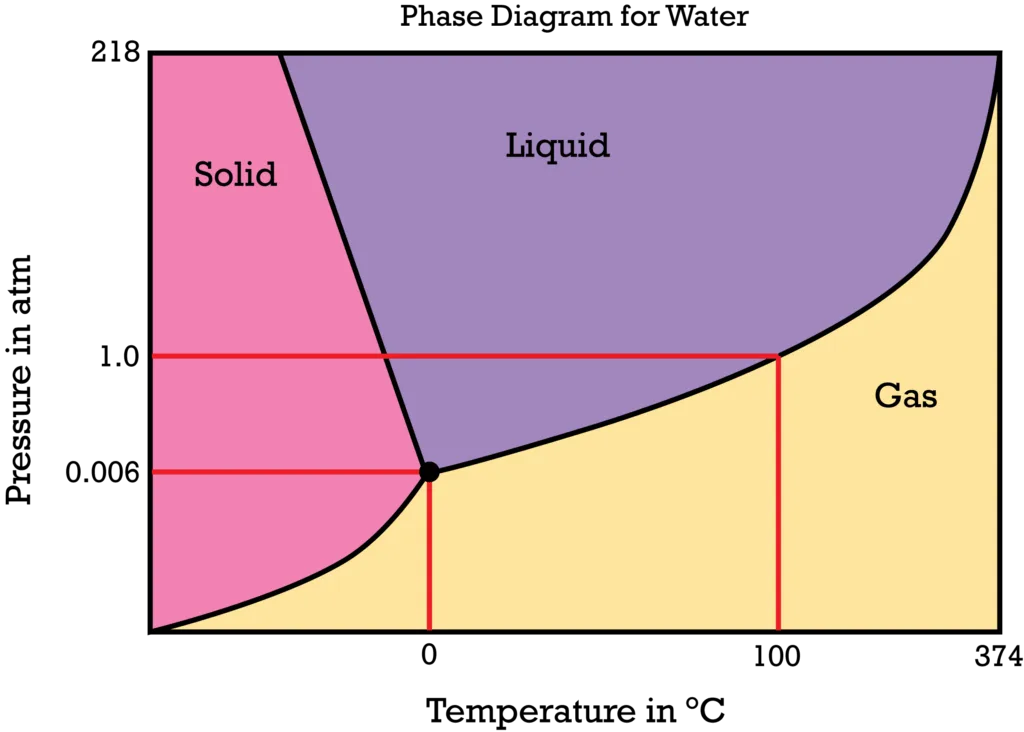
Three minerals — kyanite, andalusite, and sillimanite — share the same chemical formula (Al₂SiO₅) but differ in crystal structure. These minerals, called polymorphs, are powerful indicators of the pressure and temperature conditions at which a rock formed.
| Polymorph | Temperature | Pressure | Typical Setting |
|---|---|---|---|
| Andalusite | Low to Moderate | Low | Contact metamorphism (near igneous intrusions) |
| Kyanite | Low to High | High | Regional metamorphism at great depth |
| Sillimanite | High | Moderate to High | High-grade regional metamorphism |
These minerals meet at the triple point in a P–T diagram — a unique set of conditions where all three can coexist. The stability fields of these polymorphs help geologists estimate whether metamorphism occurred under high-pressure (barrovian) or low-pressure (andalusite-type) conditions.
Applications in Field Geology
Index minerals are more than academic curiosities — they are essential tools for understanding crustal evolution.
Field geologists rely on them to:
- Map metamorphic zones across large areas.
- Estimate depth and temperature of metamorphism.
- Reconstruct tectonic settings, such as mountain-building events or contact aureoles.
- Correlate metamorphic belts in different regions.
For instance, the presence of kyanite in schists from the Himalayas indicates rocks that were buried to great depths before being uplifted, while andalusite around granitic intrusions in Spain marks zones of contact metamorphism caused by local heating.
Summary Table: Index Minerals by Metamorphic Grade
| Metamorphic Grade | Typical Minerals | Rock Type |
|---|---|---|
| Very Low | Chlorite, Muscovite | Slate |
| Low | Biotite, Quartz, Albite | Phyllite |
| Medium | Garnet, Staurolite, Biotite | Schist |
| High | Kyanite, Sillimanite, Feldspar | Gneiss |
| Contact (Thermal) | Andalusite, Cordierite | Hornfels |
Field and Petrographic Identification
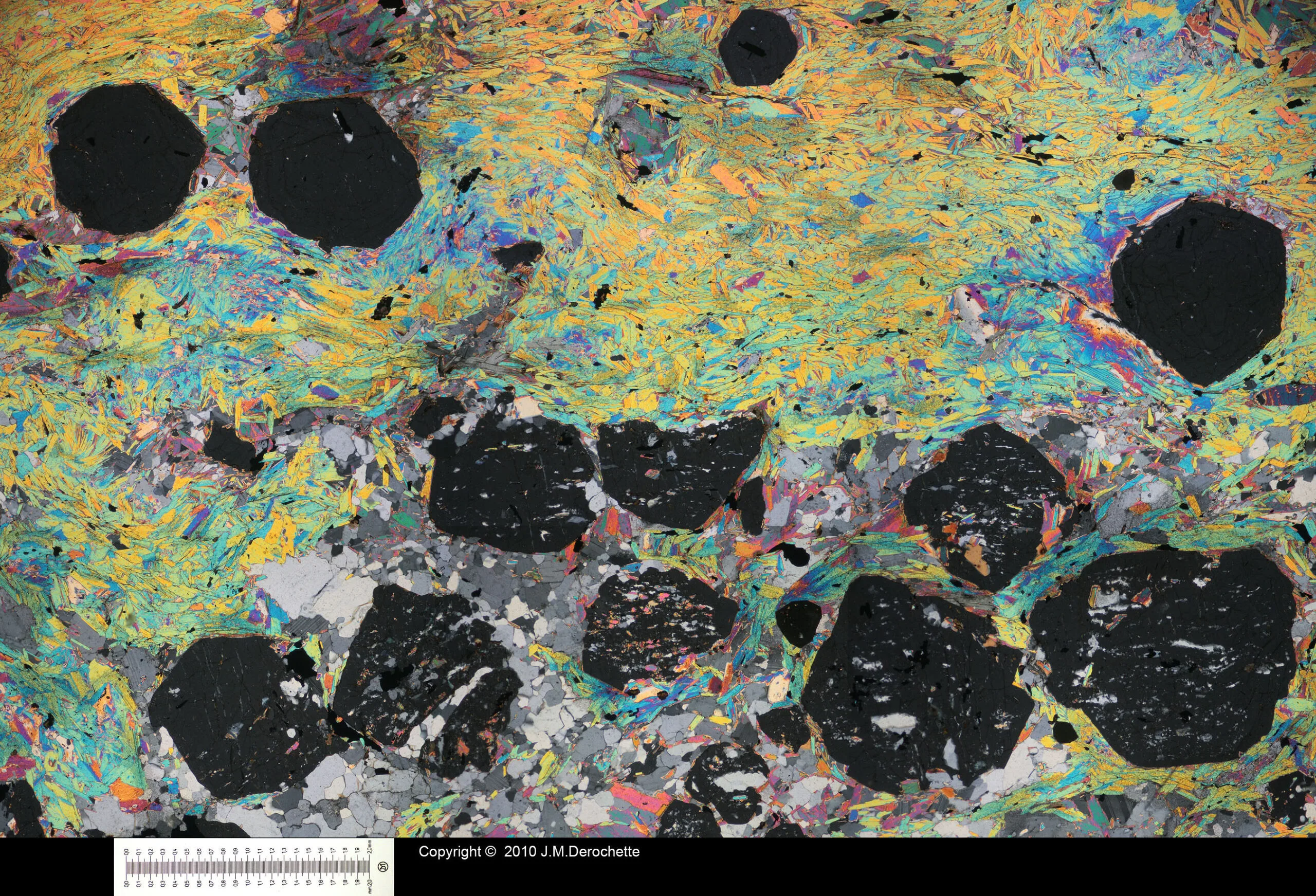
Index minerals are often visible in hand samples or under a petrographic microscope.
- Chlorite appears green and flaky.
- Biotite is brown to black and platy.
- Garnet forms red to brown porphyroblasts.
- Staurolite may show cross-shaped twins.
- Kyanite forms bladed blue crystals, while sillimanite occurs as fine fibrous aggregates (fibrolite).
These characteristics, combined with field mapping, allow geologists to reconstruct a complete metamorphic story of the region.
Geological Significance

The sequence of index minerals reveals the metamorphic history and progression of a rock body.
By analyzing these minerals, scientists can:
- Determine temperature gradients in orogenic belts.
- Understand metamorphic facies transitions.
- Identify tectonic environments, such as subduction zones (high-pressure, low-temperature) versus continental collisions (high-temperature, moderate-pressure).
Index minerals therefore provide one of the most direct links between mineralogy and plate tectonics.
FAQ
Q1: What are index minerals?
Index minerals are minerals that form under specific pressure and temperature conditions, helping geologists determine the metamorphic grade of rocks.
Q2: How do index minerals indicate metamorphic grade?
Each index mineral is stable within a particular range of P–T conditions. The first appearance of these minerals marks boundaries (isograds) between metamorphic zones.
Q3: What are the three Al₂SiO₅ polymorphs?
Kyanite, andalusite, and sillimanite — all have the same composition but form under different pressure–temperature conditions.
Q4: Which rock types best show index minerals?
Pelitic rocks, derived from shale or mudstone, are the most suitable because they undergo extensive mineral changes during metamorphism.
Q5: What is an isograd?
An isograd is a line on a map marking the first appearance of an index mineral, representing a boundary between two metamorphic zones.