








Petrology
The Science of Rocks, Their Origin, Evolution, and Geological History
Petrology is one of the core fields of geology. It focuses on rocks — how they form, how they change, what minerals they contain, and what pressure–temperature conditions they have experienced over geological time. Every rock on Earth carries a memory. A single sample may record a volcanic eruption, a mountain being pushed upward, an ocean closing, a buried sediment being transformed deep inside the crust, or a slow cooling magma chamber that crystallized over millions of years.
A petrologist’s job is to read that memory. By examining minerals, textures, chemical signatures, and deformation features, petrologists reconstruct the full history of a rock: where it formed, what happened to it, what fluids interacted with it, how hot it became, how deep it was buried, and how it eventually reached the surface again. Petrology is both a laboratory science and a field science — combining microscopes, geochemistry, geophysical data, and real-world observations.
1. What Is Petrology?
Petrology is the branch of geology that studies rocks and the processes that create and transform them. It asks fundamental questions:
- What minerals make up this rock?
- Under what conditions did it form?
- What do textures and structures reveal about its history?
- What tectonic environment produced it?
- How did heat, pressure, fluids, and time change it?
Rocks are not static materials. They are dynamic products of melting, crystallization, weathering, sediment transport, burial, deformation, and metamorphism. Every grain, every layer, every crystal is a physical record of Earth’s evolution.
2. The Three Main Branches of Petrology
Petrology is divided into three major subfields:
A) Igneous Petrology
Studies rocks formed from magma or lava, including:
- magma generation
- partial melting
- crystallization
- fractional crystallization
- magma mixing
- volcanic eruptions
- intrusive bodies
- igneous textures and chemistry
B) Sedimentary Petrology
Studies rocks formed from sediments or chemical precipitation, including:
- weathering and erosion
- transport and deposition
- sedimentary structures
- diagenesis
- porosity and permeability
- organic matter and hydrocarbons
C) Metamorphic Petrology
Studies rocks altered by heat, pressure, and fluids:
- mineral reactions
- metamorphic facies
- P–T paths
- contact vs regional metamorphism
- foliations and lineations
- recrystallization
Together, these three branches explain Earth’s entire crustal evolution.
3. Igneous Petrology: Magma, Lava, and Crystallization
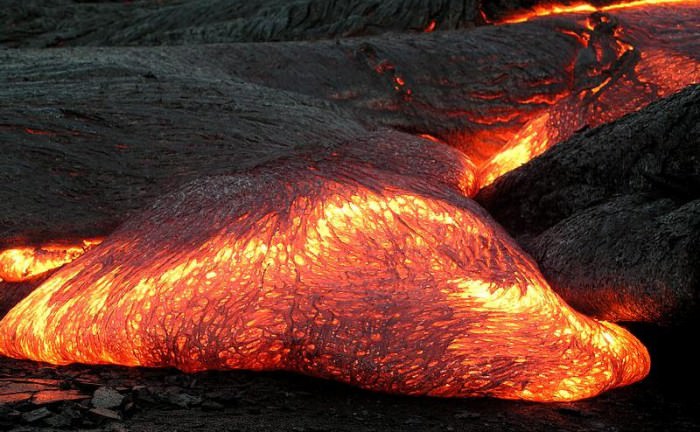
Igneous rocks form when molten material cools and crystallizes. They provide direct evidence of Earth’s interior processes.
Magma Types and Chemistry
Magma chemistry determines eruption style and mineral composition:
- Basaltic magma → low silica, fluid, forms basalt & gabbro
- Andesitic magma → intermediate, forms andesite & diorite
- Rhyolitic magma → high silica, viscous, explosive, forms rhyolite & granite
Silica controls viscosity: more silica = thicker magma = more explosive eruptions.
Bowen’s Reaction Series
A core concept of igneous petrology, showing the order in which minerals crystallize:
Discontinuous series:
Olivine → Pyroxene → Amphibole → Biotite
Continuous series:
Calcium-rich plagioclase → Sodium-rich plagioclase
Final minerals:
Potassium feldspar → Muscovite → Quartz
This sequence explains why different igneous rocks contain different minerals.
Igneous Textures
Texture reveals cooling history:
- Phaneritic: large crystals, slow cooling (plutonic)
- Aphanitic: fine-grained, rapid cooling (volcanic)
- Porphyritic: two-stage cooling
- Vesicular: gas bubbles
- Glassy: extremely rapid cooling (obsidian)
Volcanic vs Plutonic Igneous Rocks
- Volcanic (extrusive): basalt, andesite, rhyolite
- Plutonic (intrusive): gabbro, diorite, granite
Plutonic bodies (dikes, sills, batholiths) show deep crustal processes.
4. Sedimentary Petrology: Earth’s Surface in Stone
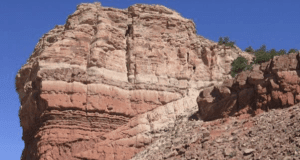
Sedimentary rocks form at or near Earth’s surface, where weathering, erosion, transport, and deposition shape the landscape.
A) Clastic Sedimentary Rocks
Formed from fragments of older rocks:
- Conglomerate → rounded gravel
- Breccia → angular fragments
- Sandstone → sand-sized grains
- Shale → clay particles
Grain size reflects transport energy. Sorting shows depositional conditions.
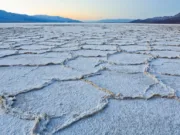
B) Chemical Sedimentary Rocks
Formed by precipitation of minerals from water:
- Limestone (calcite)
- Dolostone
- Halite (rock salt)
- Gypsum
- Travertine
Often linked to lakes, shallow seas, or evaporative basins.
C) Organic Sedimentary Rocks
Formed from biological material:
- Coal → plant material
- Chalk → microscopic marine organisms
- Reef limestone → corals, shells
D) Diagenesis
After deposition, sediments undergo:
- compaction
- cementation
- mineral transformation
These processes determine porosity and permeability — crucial in petroleum geology and hydrogeology.
Sedimentary petrology reconstructs ancient environments: rivers, deserts, deltas, reefs, deep seas, glacial plains, and more.
5. Metamorphic Petrology: Rocks Under Heat and Pressure
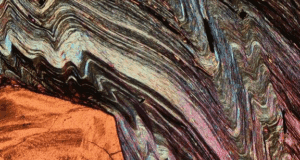
Metamorphism transforms rocks without melting them. Instead, minerals recrystallize in solid state.
Metamorphic Processes
Driven by:
- Temperature (150–900°C)
- Pressure (2–15+ kbar)
- Fluids (catalyze mineral reactions)
- Deformation (stress orientation creates foliation)
Metamorphic Textures
- Foliation: alignment of minerals
- Schistosity: micas aligned in layers
- Gneissic banding: light–dark mineral bands
- Granoblastic: equidimensional grains (marble, quartzite)
Common Metamorphic Rocks
- Slate
- Phyllite
- Schist
- Gneiss
- Marble
- Quartzite
- Amphibolite
- Blueschist
- Eclogite
Metamorphic Facies (Pressure–Temperature Indicators)
Each facies corresponds to specific P–T conditions:
- Zeolite
- Greenschist
- Amphibolite
- Granulite
- Blueschist
- Eclogite
For example, blueschist and eclogite form only in subduction zones, indicating high pressure and relatively low temperature.
P–T Paths
Rocks follow a burial–heating–uplift path. These paths reveal:
mountain building
continental collision
exhumation rates
tectonic history
Metamorphic petrology is essential for reconstructing ancient orogens.
6. Tools Petrologists Use
Petrology is highly analytical and combines fieldwork with advanced lab methods.
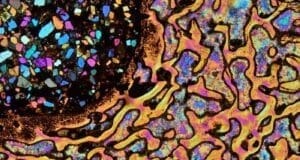
1. Thin Section Petrography
Microscope analysis reveals:
- mineral identification
- optical properties
- grain boundaries
- deformation textures
- alteration patterns
2. Geochemical Analysis
Techniques include:
XRF (X-ray fluorescence)
ICP-MS (mass spectrometry)
Electron microprobe
Isotope geochemistry
These reveal magma sources, metamorphic reactions, and sediment provenance.
3. Geothermobarometry
Uses mineral chemistry to calculate the temperature–pressure conditions of formation.
4. Experimental Petrology
Recreates deep Earth conditions using high-pressure presses and furnaces.
5. Petrological Modeling
Programs simulate:
- magma mixing
- fractional crystallization
- metamorphic reactions
- mineral stability fields
These tools help scientists reconstruct processes that cannot be observed directly.
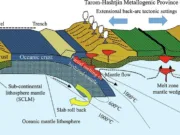
7. Petrology and Plate Tectonics
Every tectonic setting has characteristic rocks:
Divergent Boundaries (Ridges & Rifts)
- Basalt
- Gabbro
- Peridotite
- Hydrothermal alteration minerals
Subduction Zones
- Andesite
- Diorite
- Blueschist
- Eclogite
Continental Crust
- Granite
- Rhyolite
- High-grade metamorphic rocks
Hotspots
- Basalt (Hawaii)
- Rhyolite (Yellowstone)
Petrology is the bridge between rocks and tectonics.
8. Why Petrology Matters
Petrology is not abstract. It has real-life applications:
- mineral & ore exploration
- petroleum geology
- geothermal energy
- volcanic hazard assessment
- earthquake-prone region analysis
- engineering geology
- groundwater studies
- environmental remediation
- planetary geology (meteorites, Mars rocks)
Rocks tell the story of Earth — petrology is how we read it.
Conclusion
Petrology explains the entire evolution of Earth’s crust. Igneous rocks reveal melting and magma processes. Sedimentary rocks store information about surface environments, climate, and ancient life. Metamorphic rocks reveal pressure–temperature histories, mountain building, and deep crustal processes. Together, they show how Earth formed, how it changes, and why its landscapes look the way they do today.
To understand Earth, you must understand its rocks — and petrology is the science that reveals their story.