








Natural Crystal Wonders and Formation
Amethyst geodes when looked from outside do not look like something special. Mostly they are hard, rounded and ordinary rock pieces. Many people if they see them on the ground do not even look again.
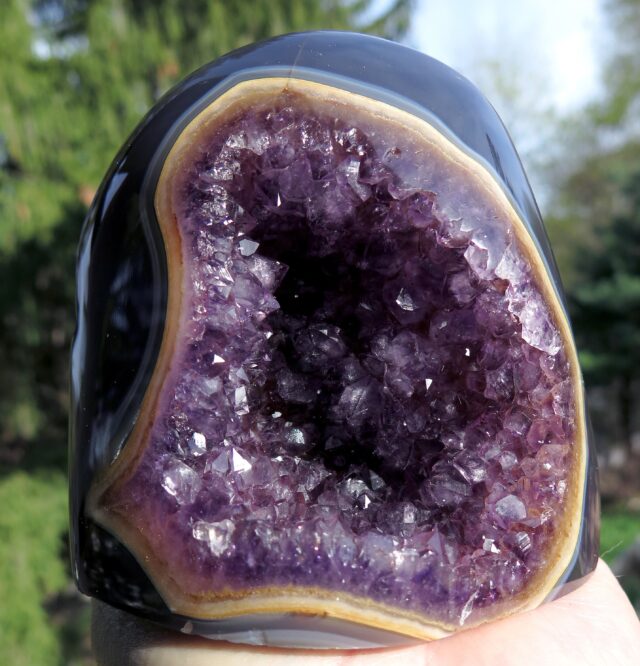
But when a geode is broken, a very different image appears. The inside part is full of purple crystals. These crystals when they take light shine in different tones. Light purple, dark purple and sometimes colors close to grey are seen together. This image comes surprising to people.
These structures are not only beautiful. At the same time they are result of long geological processes. Empty spaces inside rocks become filled with minerals in time. These minerals slowly crystallize. In the end geodes fully covered with amethyst crystals are formed.
So why these crystals are always inside geodes? How do empty spaces inside rocks form and how do amethyst crystals fill these spaces?
Formation of Amethyst Geodes
The formation of amethyst geodes does not happen in one step. First, empty spaces form inside rocks. These spaces sometimes remain from gases inside lava, sometimes they appear because minerals dissolve with time. So at the beginning there is no crystal, there is only an empty space.
Later, fluids enter these empty spaces. These fluids carry silica. At the same time they contain other materials like iron. The fluids do not fill the space quickly, they move slowly. They reach the empty space by passing through small cracks inside the rocks.
As time passes, these fluids attach to the inner surface of the space. Minerals settle. Crystals start to form. These crystals do not grow suddenly. They grow very slowly. Sometimes it takes thousands of years, sometimes it takes much longer time. Crystals extend toward the inside.
At the end, the empty space becomes filled with crystals. Something that looks like an ordinary rock from outside actually becomes a geode that carries regular amethyst crystals inside. Because of this, amethyst geodes are accepted as result of long geological processes.
Structure and Features

The internal structure of an amethyst geode is a study in geological artistry. These formations typically have a rough, unassuming exterior, often coated with a layer of weathered rock or calcite. Breaking open a geode reveals a stunning inner cavity lined with shimmering amethyst crystals.
Key structural features include:
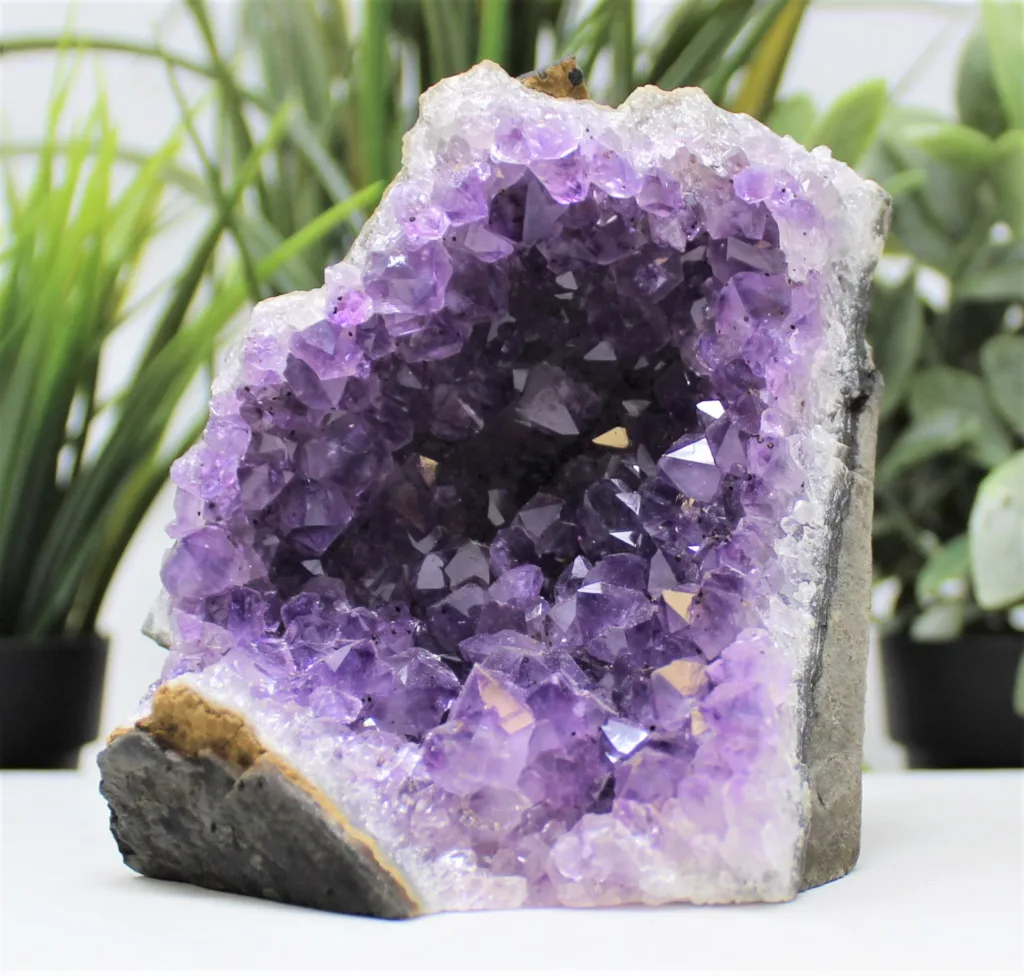
- Crystalline Growth: The crystals grow radially inward from the cavity walls, creating a dense array of pointed terminations. Each crystal’s shape and size are influenced by the cavity’s size, the availability of mineral-rich solutions, and the rate of crystal growth.
- Zoning: Color zoning is common, with deeper hues often concentrated near the base of the crystals. This zoning can provide insights into changes in environmental conditions during the crystal’s formation.
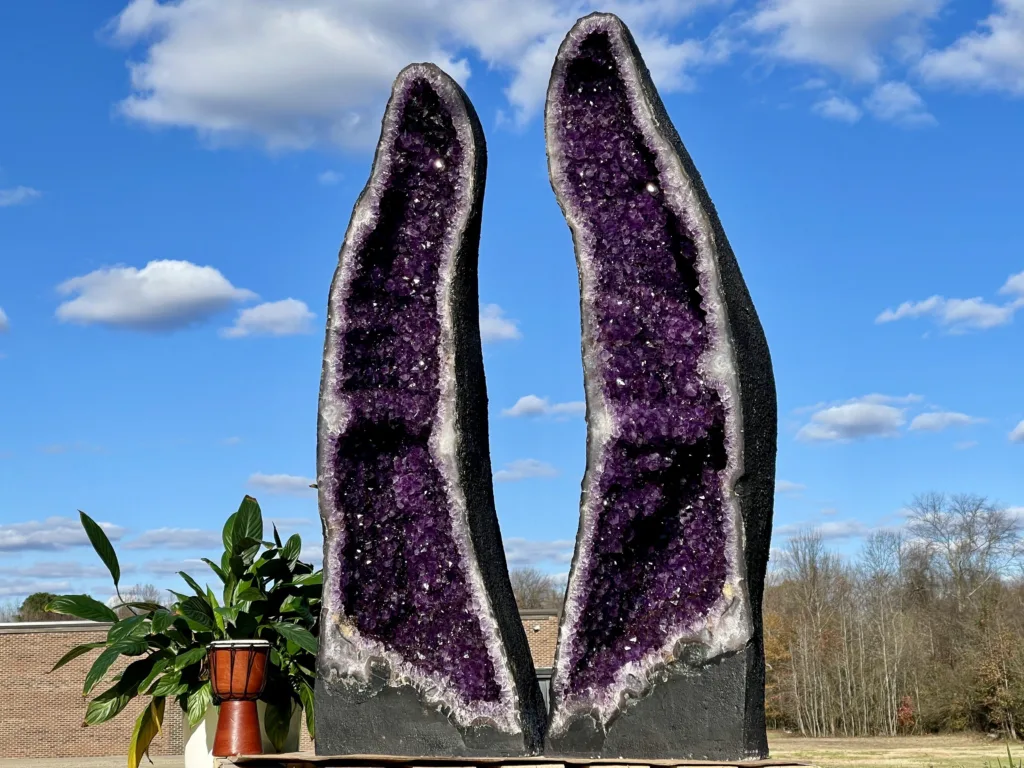
- Size Variability: Geodes can range in size from a few centimeters to several meters in diameter. Some of the largest amethyst geodes, such as the “Empress of Uruguay,” can weigh several tons and feature thousands of perfectly formed crystals.
Distribution and Mining

Amethyst geodes are found worldwide, with notable deposits in Brazil, Uruguay, Mexico, Namibia, and parts of the United States. The geodes from each region exhibit unique characteristics influenced by local geological conditions:
- Brazil: Known for large, deeply colored geodes with uniform crystal structures. The basaltic flows of southern Brazil, particularly in the Rio Grande do Sul region, host some of the most extensive deposits.
- Uruguay: Produces high-quality geodes with exceptional clarity and color intensity, often featuring a bluish undertone. These geodes are prized for their aesthetic value.
- Mexico: Features geodes with distinctive banding and crystal formations, often surrounded by layers of agate or chalcedony.
- Namibia: Offers smaller geodes with strikingly vibrant hues, often associated with desert environments where unique conditions prevail.
- United States: Notable deposits in Arizona and Oregon include geodes with amethyst cores surrounded by other quartz varieties, creating multi-hued specimens.
Mining amethyst geodes involves careful extraction to preserve the delicate crystal structures. Techniques vary depending on the host rock and the depth of the deposit, but the process often includes hand tools and controlled excavation to prevent damage. Modern geode mining also emphasizes sustainable practices to minimize environmental impact.
Cultural and Economic Importance
Amethyst geodes have held cultural significance for millennia. In ancient Greece, amethyst was believed to prevent intoxication, leading to its name derived from the Greek word “amethystos,” meaning “not drunk.” This belief gave rise to amethyst’s use in drinking vessels and protective amulets. In the Middle Ages, the stone was associated with royalty and spirituality, often adorning religious artifacts and regalia.
Today, amethyst geodes are valued for their aesthetic appeal and metaphysical properties. They are believed to promote calmness, enhance spiritual growth, and purify negative energies, making them popular in meditation practices and alternative healing. Their vibrant colors and unique formations also make them highly sought after for home decor, jewelry, and collections.
Economically, the trade of amethyst geodes supports mining communities and contributes significantly to the gemstone and mineral market. High-quality specimens are particularly sought after by collectors, museums, and interior designers, commanding premium prices based on size, color, and clarity.
Scientific Research and Educational Value
Beyond their beauty, amethyst geodes provide valuable insights into geological processes. Studying these formations helps scientists understand:
- Mineral Formation: The role of temperature, pressure, and chemical conditions in crystal growth, offering clues about the Earth’s internal processes.
- Geochemical Cycling: The movement and concentration of elements within Earth’s crust, which can inform broader studies of resource distribution.
- Volcanic History: Insights into the volcanic activity that created the initial cavities, contributing to our understanding of regional and global geological history.
- Radiation Effects: The study of how natural irradiation influences crystal coloration, with implications for material science and radiation exposure studies.
Amethyst geodes are also used in educational settings to teach students about mineralogy, crystallography, and geology. Their stunning appearance and scientific intrigue make them ideal specimens for public exhibits in museums and science centers.
Preservation and Conservation
The increasing popularity of amethyst geodes poses challenges for preservation. Overmining and illegal extraction can deplete natural deposits and damage ecosystems. Efforts are underway to promote ethical sourcing, where mining practices respect environmental and social standards. Collectors and enthusiasts are also encouraged to support certified vendors and educate themselves about the origins of their specimens.
Conclusion
Amethyst geodes are remarkable products of Earth’s dynamic processes, combining natural artistry with scientific intrigue. From their formation deep within volcanic rock to their vibrant display in homes and museums, these geodes tell a story of patience, chemistry, and beauty. Whether appreciated for their cultural significance, aesthetic appeal, or geological importance, amethyst geodes remind us of the complex and awe-inspiring mechanisms that shape our planet. Their enduring allure ensures that they will continue to captivate and inspire future generations.