



Emerald is the green gemstone variety of beryl (Be₃Al₂Si₆O₁₈), a hexagonal cyclosilicate mineral colored mainly by chromium and/or vanadium. Emerald has Mohs hardness 7.5–8 and commonly forms six-sided prismatic crystals in hydrothermal and metamorphic mineral deposits. Its formation requires the unusual geological association of beryllium-bearing fluids with chromium- or vanadium-bearing rocks.
Emerald occurs as transparent gemstones, strongly included crystals and green prisms embedded in host rock. The gem’s fracture patterns, internal inclusions, crystal shape and growth environment are important for identifying natural material and evaluating commercial treatments.
What Does Natural Emerald Look Like?
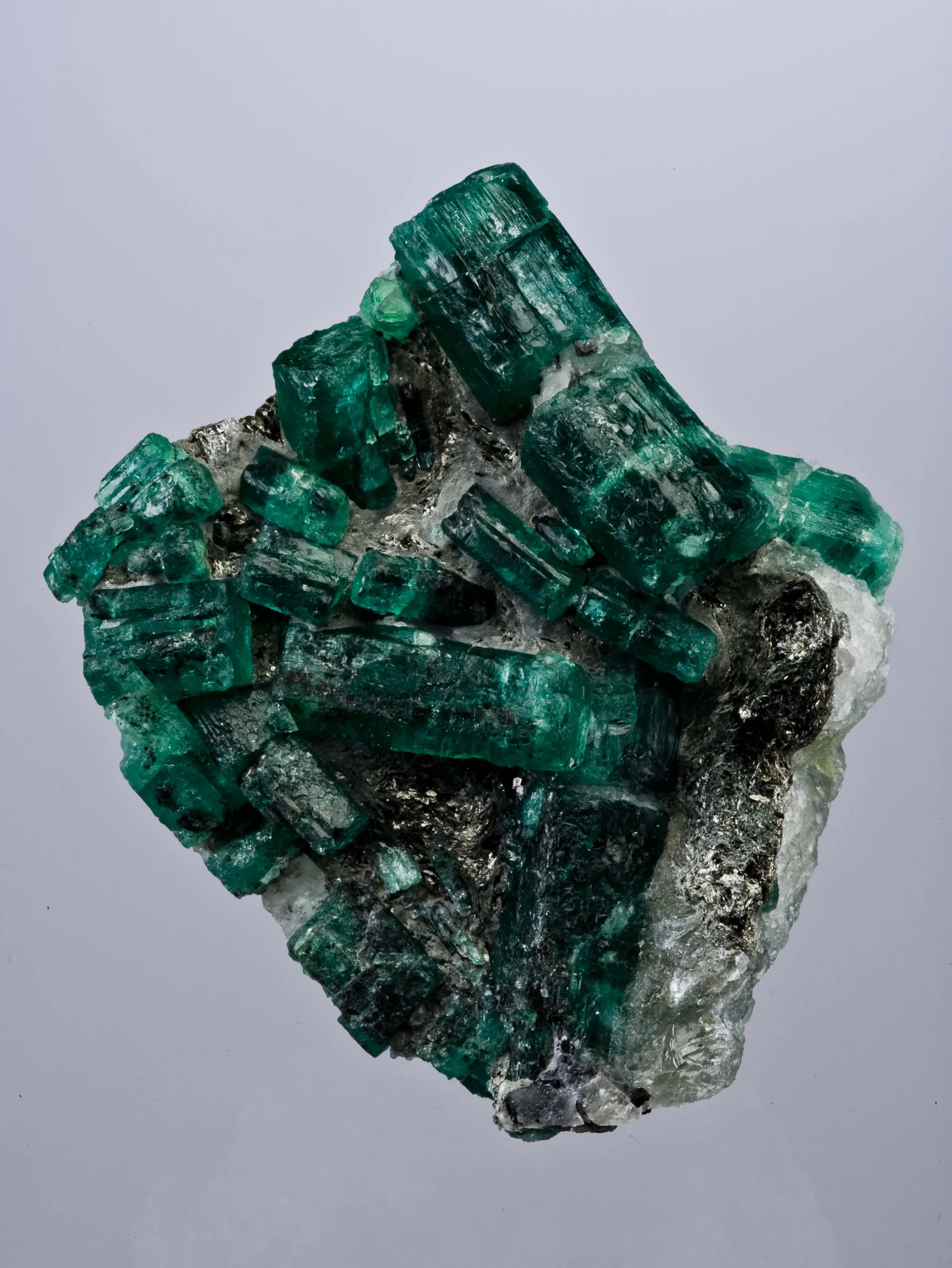
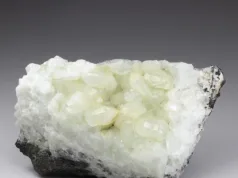
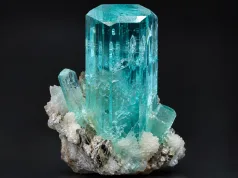
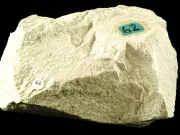
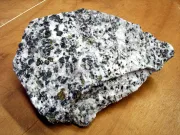
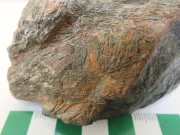
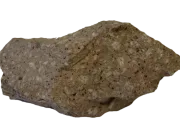
Emerald may occur as vivid green crystals in pale quartz, calcite, mica-rich rocks or dark metamorphic material. Well-formed examples have a characteristic hexagonal outline, flat prism faces and longitudinal growth markings. Some crystals are nearly opaque because of inclusions and internal fissures, whereas others transmit light strongly enough for faceting. Their hue ranges from bluish green through green to yellowish green.
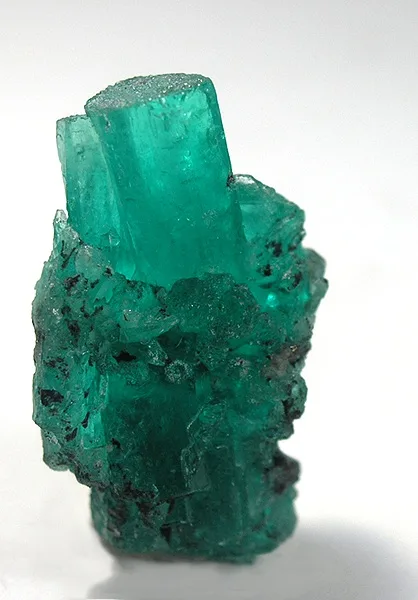
Gem-quality color is not the same thing as crystal transparency. An opaque specimen can still be a mineralogically excellent emerald; a perfectly transparent pale green beryl may be classified differently depending on its color and chromophores. Chromium and vanadium contribute emerald coloration, while iron can modify color. The commercial boundary between emerald and ordinary green beryl varies by gemological criteria.
Emerald Mineral Properties
| Property | Description |
|---|---|
| Species and variety | Green variety of beryl |
| Formula | Be₃Al₂Si₆O₁₈ |
| Mineral group | Cyclosilicate (ring silicate) |
| Crystal system | Hexagonal |
| Habit | Six-sided prisms and occasionally massive aggregates |
| Color | Green, bluish green or yellowish green |
| Main chromophores | Chromium and/or vanadium, with iron influence |
| Mohs hardness | 7.5–8 |
| Specific gravity | Approximately 2.67–2.78 |
| Refractive index | Approximately 1.565–1.602, varying by chemistry |
| Luster | Vitreous |
| Cleavage | Imperfect basal cleavage |
| Fracture | Uneven or conchoidal, often with preexisting fissures |
| Transparency | Transparent to opaque |
| Streak | White |
Hardness represents scratch resistance, not overall toughness. Emerald may resist abrasion but be susceptible to chipping because of natural fractures. For jewelry, filler stability and fracture position are often more relevant to durability than Mohs hardness alone.
Crystal Structure and Chemical Composition
Beryl is an aluminum beryllium silicate with rings of interconnected SiO₄ tetrahedra. Its hexagonal crystal structure contains channels that may host water and certain ions. Trace substitutions in the crystal lattice change absorption of visible light and account for the differences between emerald and other beryl varieties such as aquamarine and morganite.
The six-sided outline of a well-formed crystal is the external manifestation of hexagonal symmetry. Growth zoning, etching, fractures and included minerals can modify its appearance. Mineralogical identification should not rely on color alone, particularly for stones that have been cut and polished.
Why Is Emerald Green?
Chromium and vanadium ions replace some aluminum in the beryl structure and cause selective light absorption. Iron can alter the hue and intensity of the resulting green. The exact ratio of chromophores differs between geological occurrences; it may be examined through chemical and optical spectroscopy. A photographic color match cannot prove a locality or the absence of treatment.
Color is affected by lighting, cut, thickness and any clarity enhancement. Extremely dark green stones can transmit relatively little light, while pale material may have less saturated coloring. Natural color zoning can reflect changes in the chemistry of crystal-forming fluids. See GIA: Emerald Description for a gemological overview.
How Emerald Forms in Nature
Emerald is geologically uncommon because beryllium is concentrated in settings unlike those where chromium and vanadium are typically abundant. Fluid circulation, metamorphism and metasomatic reactions can bring these ingredients together. Two major geological settings illustrate why emerald deposits differ substantially.
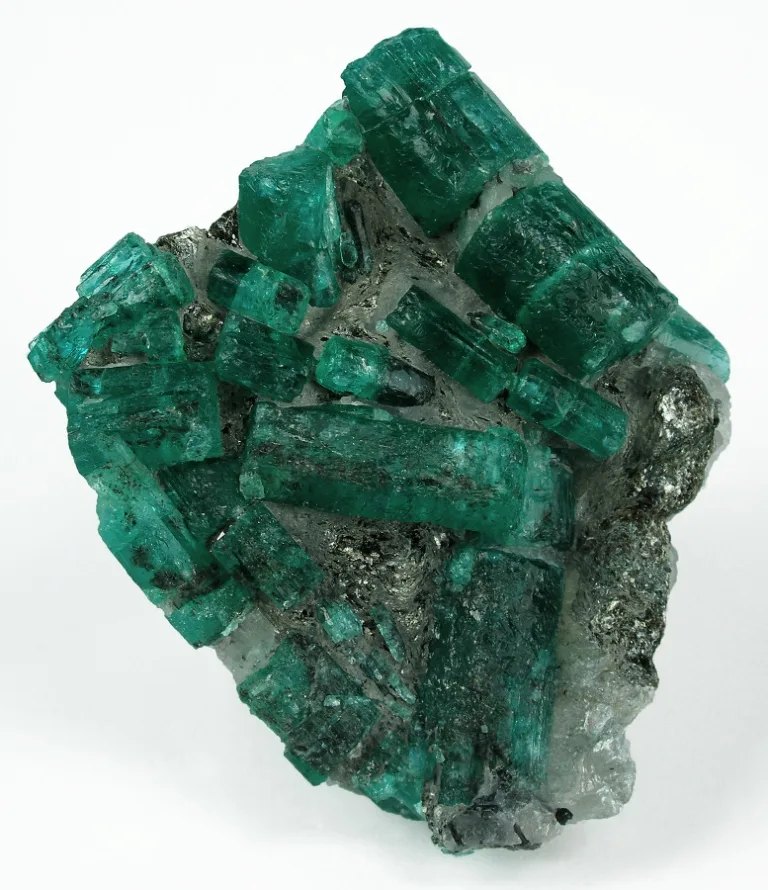
Pegmatite-related and schist-hosted deposits: Beryllium-bearing granitic bodies or fluids interact with suitable mafic, ultramafic or metamorphic host rocks containing chromium or vanadium. Reaction zones, mica-rich schists and hydrothermal veins may host emerald. Zambian deposits, including the Kagem area, show the importance of these processes. Not every pegmatite produces emerald; the host-rock chemistry is crucial.
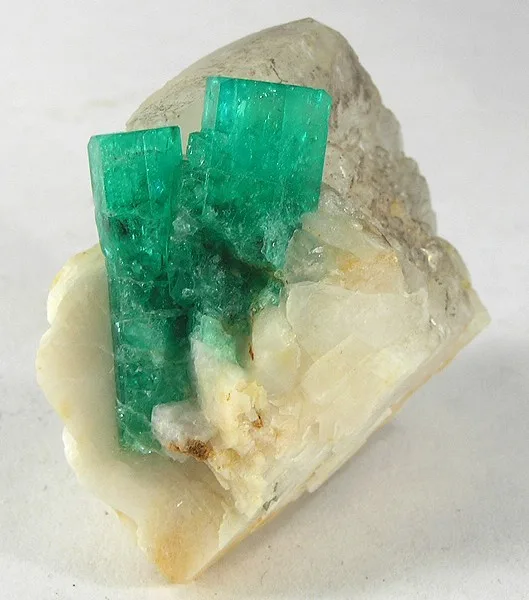
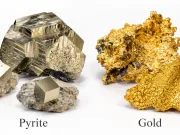
Sedimentary-hosted hydrothermal deposits: Colombian emeralds occur in veins cutting sedimentary rocks, including organic-rich shales and carbonates. Saline hydrothermal fluids circulated through fractures and faults and deposited emerald with calcite, pyrite and other minerals. The Colombian setting demonstrates that emerald formation need not involve an exposed pegmatite.
Metamorphic and structurally controlled occurrences: Several emerald districts involve fault zones, metamorphism, metasomatism and long-lived fluid movement. Structural mapping, fluid inclusions, stable isotopes and mineral chemistry help reconstruct their evolution. The scientific review Emerald Deposits: A Review and Enhanced Classification describes the major deposit types.
Inclusions, Fissures and the Emerald Jardin
Natural emerald often contains trapped minerals, microscopic fluid inclusions, growth tubes and fissures. Networks of inclusions can create a moss-like appearance called jardin, from the French for garden. They help gemologists understand mineral growth and can affect apparent clarity and mechanical stability.
Three-phase inclusions containing liquid, vapor and a solid crystal are well known in some Colombian emeralds, but they are not proof of Colombian origin by themselves. Various occurrences produce overlapping inclusion types. Microscopy, spectroscopy, chemistry and comparison with well-documented reference stones are more dependable than a single inclusion feature.
Emerald vs Green Beryl, Peridot, Tourmaline and Fluorite
| Mineral | Distinguishing characteristic | Approximate hardness |
|---|---|---|
| Emerald | Chromium/vanadium-colored green beryl, hexagonal crystals | 7.5–8 |
| Green beryl | Green beryl not classified as emerald; sometimes primarily iron-colored | 7.5–8 |
| Green tourmaline | Different borosilicate mineral; commonly striated prisms | 7–7.5 |
| Peridot | Green olivine, often yellowish and comparatively softer | 6.5–7 |
| Green fluorite | Cubic crystals and perfect octahedral cleavage | 4 |
| Green glass | Amorphous, potential bubbles and manufacturing features | Variable |
Natural emerald is often distinguished with refractive-index tests, examination of inclusions, spectra and chemical analysis. A green stone should not be sold as emerald merely because its color looks similar to a photograph. For an expensive gem, an independent gemological report should address species, natural or laboratory-grown origin and any enhancement.
Where Are Emeralds Found?
Colombia: Muzo, Chivor and Coscuez are historic emerald localities associated with hydrothermal veins in sedimentary rocks. Individual stones vary widely in color and clarity.
Zambia: The Kafubu region, including Kagem, hosts important emerald deposits associated with metamorphic and metasomatic mineralization.
Brazil: Emerald occurs in several districts where beryllium-rich fluids and favorable metamorphic rocks interacted.
Zimbabwe: Sandawana is a notable historic source of emeralds.
Afghanistan and Pakistan: Mountain districts have emerald occurrences related to structural and fluid-rock processes.
Other localities: Emeralds are known from several more regions, including Ethiopia. An occurrence should not be confused with a commercially productive mine or a demonstrated high-grade resource.
Crystal Habit and Natural Specimens
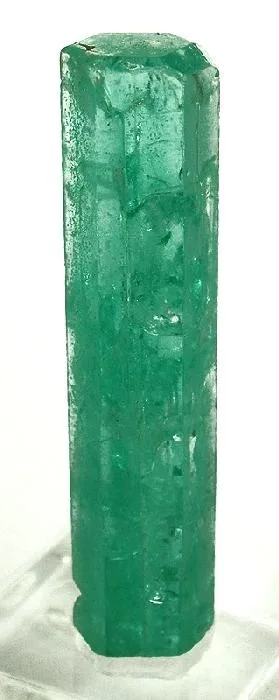
A slender prism with a hexagonal outline is characteristic of many emerald crystals. Fine striations, stepped terminations, fractures and small mineral inclusions reveal episodes of growth and later geological disturbance. Specimens preserved with a matrix retain more geological context than loose polished gems, though transported gravel stones may still carry useful inclusion evidence.
Mining and Geological Exploration
Exploration combines regional geological interpretation with detailed mapping of structures, altered host rocks, veins and mineral associations. Geochemical sampling, petrography, geophysics and drilling can identify prospective zones and evaluate continuity. Gem-quality material can occur irregularly even within a mineralized body; a high beryllium content alone does not prove that emerald gemstones are present.
Mining methods vary from underground and open-pit extraction to smaller-scale operations. Environmental and social considerations include worker safety, water management, land disturbance and supply-chain documentation. Responsible-sourcing claims should be based on evidence about the particular operation.
Emerald Quality, Cutting and Market Value
Color is often the dominant gem value factor: a balanced green hue, attractive saturation and appropriate tone are highly prized. Clarity, cut and carat weight matter too, but naturally occurring inclusions are common and expected. A heavily included crystal may still be valuable as a mineral specimen.
The rectangular step cut with clipped corners is called an emerald cut, but the shape is also used for many other gemstones. Lapidaries orient rough stones to balance color, retained weight and vulnerability to fractures. Cabochons and other cuts may be suitable for material with different clarity.
Large, transparent, saturated gems with low visible enhancement can command substantial prices. However, no reliable fixed price per carat can be given without specifying grade, treatment, certification and current comparable sales. Origin reports provide informed opinions, not absolute proof based on color.
Clarity Enhancement, Synthetic Emerald and Imitations
Oiling and resin filling: Surface-reaching fissures can be filled with oils or resins to make them less visible. This is a common emerald treatment. Reputable disclosure should identify the presence and, where practical, degree and type of enhancement. Fillers may deteriorate or be affected by heat, solvents and some cleaning methods.
Laboratory-grown emerald: Synthetic emerald is real beryl produced in controlled conditions, commonly through hydrothermal or flux growth. Its material properties can resemble natural emerald closely, so professional laboratory identification matters. Synthetic does not mean the same thing as a glass imitation.
Imitations: Green glass, composite gems, coatings and other green stones can imitate emerald. Natural origin, whether treated or untreated, should never be asserted from photographs alone. GIA’s mine-to-market account documents commercial fracture-filling practices.
Emerald Care and Cleaning
Clean conservatively with lukewarm water, a small amount of mild soap and a soft brush when treatment and setting are known. Avoid ultrasonic and steam cleaners, prolonged soaking, abrupt temperature changes and strong solvents, which may affect fracture fillings or fragile specimens. Consult a qualified jeweler for valuable, heavily included or uncertain stones.
Store emerald away from harder gems and protect it from impacts. A high Mohs hardness does not prevent chipping at an open fracture. The GIA emerald care guidance offers practical maintenance advice.
History and Cultural Context
Emeralds have been used in jewelry and ornaments for thousands of years and have strong cultural associations with renewal, wealth and power. Past societies attributed healing or supernatural properties to emeralds; these are historical beliefs, not experimentally verified medical benefits.
Frequently Asked Questions
What mineral is emerald? Emerald is a green gemstone variety of beryl, a beryllium aluminum silicate with formula Be₃Al₂Si₆O₁₈.
What gives emerald its green color? Chromium and/or vanadium are the principal coloring elements; iron can influence hue.
How hard is emerald? Its Mohs hardness is approximately 7.5–8, but natural fractures can affect durability.
Is every green beryl an emerald? No. Color origin and gemological classification distinguish emerald from some other green beryl.
Are natural emeralds usually included? Yes. Inclusions and fissures are common and may record growth conditions.
Are all emeralds untreated? No. Many commercial stones receive oil or resin clarity enhancement, which should be disclosed.
Can emerald be synthetic? Yes. Laboratory-grown emerald is beryl and should be identified and disclosed as synthetic.
Where is emerald mined? Important localities include Colombia, Zambia, Brazil, Zimbabwe and several Asian and African regions.
Scientific References and Image Credits
GIA — Emerald Description. Mineral identity, color and gemological characteristics.
GIA — Emerald Care and Cleaning. Fragility and treatments.
GIA — Geology of Corundum and Emerald Gem Deposits. Formation environments.
Minerals — Emerald Deposits: A Review and Enhanced Classification. Deposit classification.
Minerals — Emeralds from the Most Important Occurrences. Mineral chemistry and spectroscopy.
The existing cover photograph from the Muzo region was retained; the original photograph attribution is not documented in the earlier post. Five additional images of real emerald specimens have individual photographer and license credits.