



The Story of Copper Beneath the Earth
Copper is one of humanity’s oldest and most essential metals. It conducts our electricity, shapes our technology, and colors our minerals with striking green, blue, and red hues.
But copper doesn’t exist in pure metallic form underground — it’s locked inside minerals.
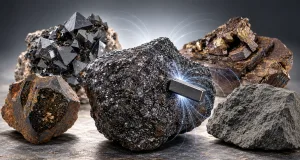
Among hundreds of copper-bearing minerals, only a handful are truly common and economically significant. These are the rock-forming copper minerals, the natural sources that built human civilization and continue to drive the modern world.
What Are Copper Minerals?
Copper minerals are naturally occurring inorganic compounds that contain copper as a major element.
They form under various geological conditions — from deep magmatic processes to near-surface oxidation zones.
Copper minerals can belong to several chemical classes: sulfides, oxides, carbonates, silicates, and native copper.
The most important industrial copper minerals belong to the sulfide group, as they are rich in copper and easily smelted to metal.
Major Groups of Copper Minerals
| Mineral Group | Representative Minerals | Main Environment |
|---|---|---|
| Sulfides | Chalcopyrite, Bornite, Chalcocite, Covellite | Hydrothermal veins, porphyry deposits |
| Oxides | Cuprite, Tenorite | Secondary oxidation zones |
| Carbonates | Malachite, Azurite | Weathered and oxidized ores |
| Silicates | Chrysocolla, Dioptase | Secondary enrichment zones |
| Native Copper | Copper (Cu) | Basalt cavities, hydrothermal veins |
1. Chalcopyrite (CuFeS₂)

The Most Common and Economically Important Copper Mineral
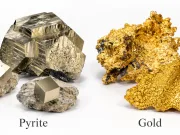
Chalcopyrite is a brassy yellow copper-iron sulfide, often mistaken for gold due to its metallic luster.
It is the primary ore of copper worldwide, accounting for more than half of global production.
- Chemical Formula: CuFeS₂
- Crystal System: Tetragonal
- Hardness: 3.5–4 (Mohs)
- Formation: Hydrothermal veins, porphyry copper deposits
- Associated Minerals: Pyrite, Sphalerite, Quartz
Chalcopyrite forms in both igneous and metamorphic environments, particularly in large porphyry copper systems in Chile, Peru, and the United States.
When exposed to air and water, it alters to malachite, azurite, or chalcocite, creating colorful oxidation zones.
2. Bornite (Cu₅FeS₄)

The “Peacock Ore”
Bornite, often called peacock ore due to its vivid purple, blue, and red tarnish, is a copper-iron sulfide mineral found in hydrothermal deposits.
Though less abundant than chalcopyrite, it’s a valuable secondary ore in many copper mines.
- Color: Brownish to iridescent blue/purple
- Hardness: 3
- Specific Gravity: 5.0
- Formation: High-temperature hydrothermal veins and contact metamorphic zones
Bornite alters readily to chalcocite and covellite, enriching copper grades in the upper zones of ore bodies.
3.Chalcocite (Cu₂S)
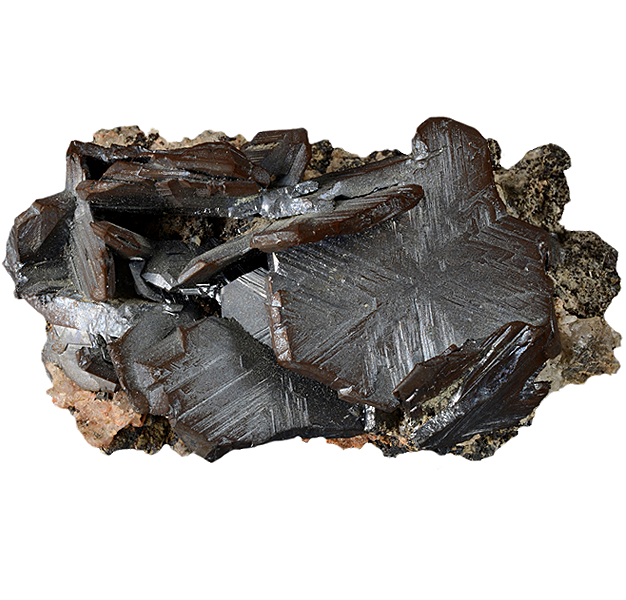
High Copper Content – Major Ore in Enriched Zones
Chalcocite is a dark-gray to black copper sulfide that contains nearly 80% copper by weight, making it one of the richest copper minerals.
- Chemical Formula: Cu₂S
- Crystal System: Monoclinic
- Hardness: 2.5–3
- Formation: Secondary enrichment zones in porphyry deposits
It forms through the replacement of chalcopyrite and bornite during the supergene enrichment process — when copper-bearing fluids migrate downward and redeposit metal.
Major deposits occur in the USA (Arizona), Chile, Zambia, and the DRC.
4. Malachite (Cu₂CO₃(OH)₂)
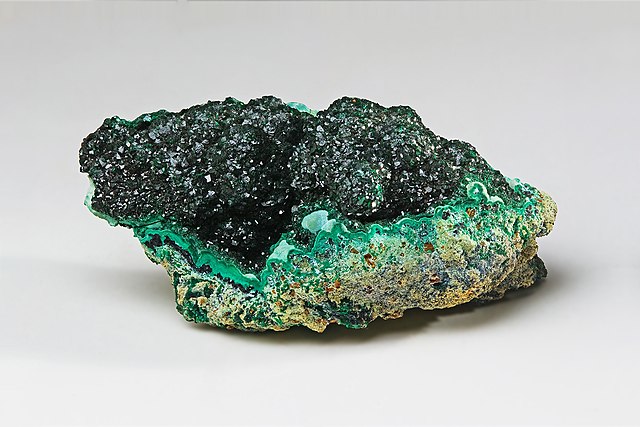
The Green Face of Copper
Malachite is perhaps the most recognizable copper mineral due to its vibrant green color and banded patterns.
It’s a secondary carbonate mineral formed by the weathering and oxidation of primary sulfides.
- Crystal System: Monoclinic
- Hardness: 3.5–4
- Environment: Near-surface oxidation zones
- Uses: Ornamental stone, pigment, minor copper ore
Malachite often forms together with azurite, creating beautiful blue-green mineral assemblages found in old oxidized mine zones.
5. Cuprite (Cu₂O)

This is a copper oxide mineral that contains up to 88% copper by weight. It is often found in association with other copper minerals, such as chalcocite and native copper, and is a minor source of copper production.
6. Native Copper (Cu)

The Metal in Its Pure Form
Native copper occurs as metallic red-orange masses or wires.
Although rare in large quantities, it has historical importance — especially in the Keweenaw Peninsula (Michigan, USA), where early humans mined it thousands of years ago.
- Hardness: 2.5–3
- Luster: Metallic
- Formation: Basalt cavities, hydrothermal veins, volcanic gas bubbles
Native copper is both a geological curiosity and a symbol of humanity’s early metallurgy.
7. Azurite (Cu₃(CO₃)₂(OH)₂)

The Blue Twin of Malachite
Azurite is a deep-blue copper carbonate that frequently coexists with malachite.
It forms under similar conditions — in the oxidation zone of copper deposits — but is less stable and eventually alters into malachite.
- Hardness: 3.5–4
- Color: Azure-blue
- Formation: Oxidized copper ores and limestones
Azurite has been used since ancient times as a pigment and decorative stone.
8. Covellite (CuS)

Covellite is a rare, indigo-blue copper sulfide that often appears as a secondary mineral coating other sulfides.
It’s an indicator of oxidation and alteration in copper deposits.
- Color: Deep blue to purple
- Luster: Metallic
- Formation: Secondary oxidation zones, often replacing chalcocite or bornite
While not a major ore, its presence signals copper mobility within hydrothermal systems.
9. Chrysocolla (Cu₂H₂Si₂O₅(OH)₄·nH₂O)
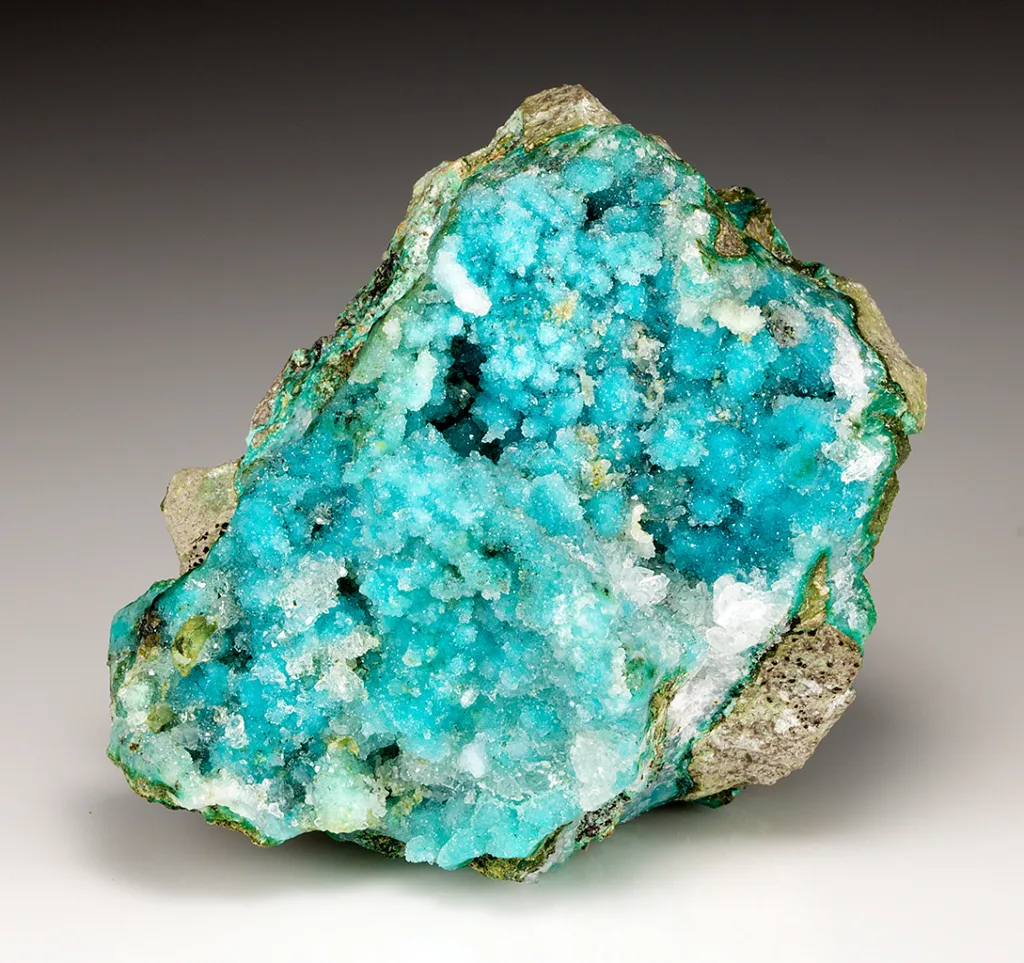
The Silicate Copper Mineral
Chrysocolla is a hydrated copper silicate known for its sky-blue to turquoise color.
Though not a major ore, it contributes copper in secondary zones and is widely used as a decorative gemstone.
- Texture: Waxy to vitreous
- Hardness: 2–4
- Formation: Secondary oxidation zones with quartz, malachite, and azurite
It’s often mistaken for turquoise but can be distinguished by its softer texture and silica-rich composition.
Formation Environments of Copper Minerals
Copper minerals form in a variety of geological settings:
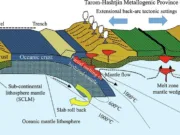
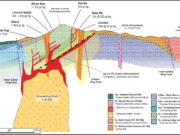
- Porphyry Copper Deposits – deep magmatic systems with large but low-grade mineralization.
- Skarn Deposits – contact zones between intrusive and carbonate rocks.
- Volcanogenic Massive Sulfide (VMS) deposits – submarine hydrothermal vents.
- Sediment-hosted Deposits – copper-bearing shales and sandstones.
- Supergene Enrichment Zones – near-surface zones enriched by oxidation and secondary deposition.
Economic and Industrial Importance
| Mineral | Approx. Copper Content (%) | Industrial Use |
|---|---|---|
| Chalcopyrite | 34 | Primary source of copper worldwide |
| Bornite | 63 | Major copper ore in hydrothermal deposits |
| Chalcocite | 80 | Richest ore in supergene zones |
| Malachite | 57 | Decorative and minor ore |
| Cuprite | 89 | High-grade oxide ore |
| Chrysocolla | 37 | Jewelry and ornamental use |
Copper extracted from these minerals supports renewable energy systems, electric vehicles, and global infrastructure.
Environmental and Sustainable Aspects (2025 Outlook)
Modern mining must balance economic demand and environmental responsibility.
In 2025, exploration focuses on:
- Eco-friendly extraction techniques (bioleaching, solvent extraction)
- Recycling of copper waste
- Deep-sea mineral exploration with strict environmental limits
- Monitoring of acid mine drainage caused by sulfide oxidation
Sustainable copper mining ensures continued use of this vital resource without compromising ecosystems.
Summary Table: Common Copper Minerals
| Mineral | Type | Formula | Typical Color | Environment |
|---|---|---|---|---|
| Chalcopyrite | Sulfide | CuFeS₂ | Brass yellow | Hydrothermal veins |
| Bornite | Sulfide | Cu₅FeS₄ | Iridescent purple | Contact metamorphic zones |
| Chalcocite | Sulfide | Cu₂S | Dark gray | Supergene enrichment |
| Covellite | Sulfide | CuS | Indigo blue | Oxidation zones |
| Malachite | Carbonate | Cu₂CO₃(OH)₂ | Green | Surface oxidation |
| Azurite | Carbonate | Cu₃(CO₃)₂(OH)₂ | Deep blue | Oxidized ores |
| Cuprite | Oxide | Cu₂O | Red | Oxidation zone |
| Chrysocolla | Silicate | Cu₂H₂Si₂O₅(OH)₄·nH₂O | Blue-green | Secondary enrichment |
| Native Copper | Element | Cu | Metallic red | Basalt cavities |
References
- Geology.com – Copper Minerals and Ore Types
- USGS – Copper Deposits of the World
- Klein, C., & Dutrow, B. (2012). Manual of Mineral Science.
- Nesse, W. D. (2017). Introduction to Mineralogy.
- Mindat.org – Copper Mineral Data
- Encyclopedia Britannica – Copper (Element and Minerals)
- Mineralogical Society of America – Handbook of Copper Sulfides
- Economic Geology Journal (2024) – New Insights into Porphyry Copper Systems
- IGS – Copper Ore Mineral Identification
- OpenGeology – Sulfide Minerals and Ore Formation