





There are rocks on this planet that make you stop for a second and say, “How is this even possible?” Some of them look like they were dropped from another world, some look like they defy gravity, and some look like a sculptor spent months carving them. But behind every bizarre shape, there are slow, patient geological processes—wind erosion, chemical weathering, frost cycles, volcanic cooling, hydrothermal minerals, glacial transport… all happening over millions of years.
This article walks through 10 of the strangest, most unbelievable rock formations on Earth, each explained with real geology but written in a natural, easy way.
Every one of them is proof that nature has a serious sense of creativity.
1. Kummakivi Balancing Rock (Finland) – A Giant Boulder That Forgot Gravity
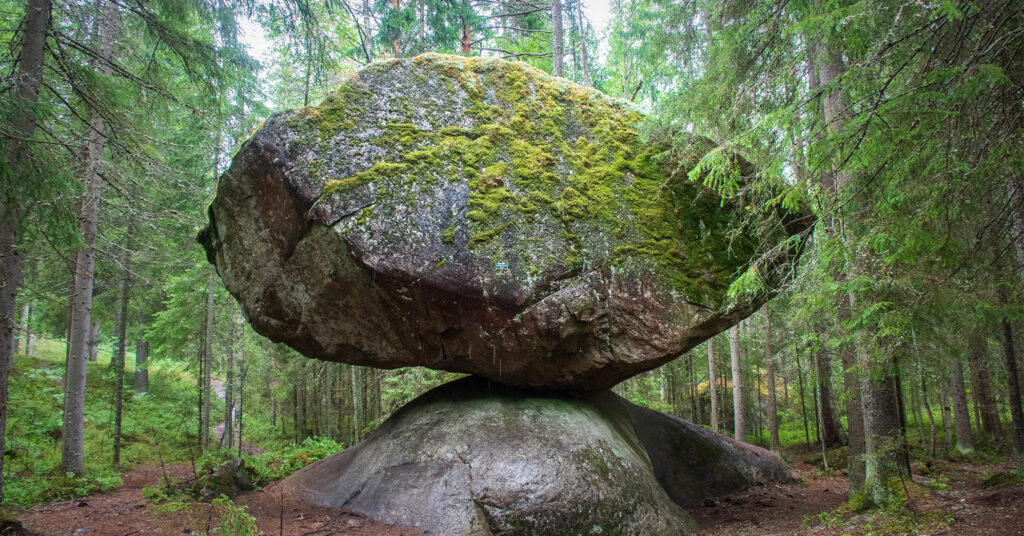
At first glance, it looks like someone glued a multi-ton boulder onto a tiny curved rock. The upper block barely touches the lower one, yet it doesn’t move—not even a millimeter.
The real creator was the ice age.
- During the last glaciation, massive glaciers dragged giant stones over long distances.
- When the climate warmed, the ice melted suddenly.
- One of these boulders landed perfectly on a natural balance point.
- The contact surface below provides just enough friction.
It’s not magic or glue—just glaciers doing slow-motion engineering.
2. Giant’s Causeway (Ireland) – Thousands of Natural Hexagonal Columns
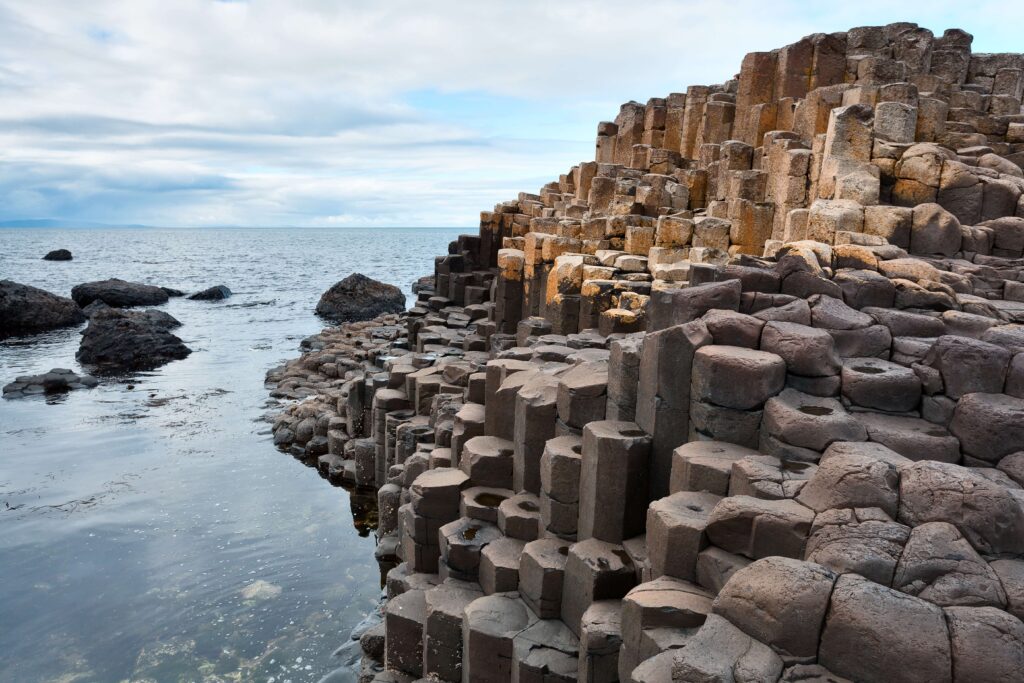
The Giant’s Causeway looks too perfect to be natural. Thousands of hexagonal basalt columns locked together like a giant stone puzzle.
It all comes from cooling lava.
- Around 60 million years ago, intense volcanic eruptions flooded the region with basalt.
- As the lava cooled, it contracted, creating stress.
- Like drying mud cracking, the lava formed a pattern of polygonal fractures—mostly hexagons.
- These fractures deepened into vertical columns.
- Later erosion removed the upper layers, exposing the geometric wonder we see today.
Nature basically built a giant stone staircase.
3. The Devil’s Marbles (Australia) – Huge Granite Spheres Split in Half
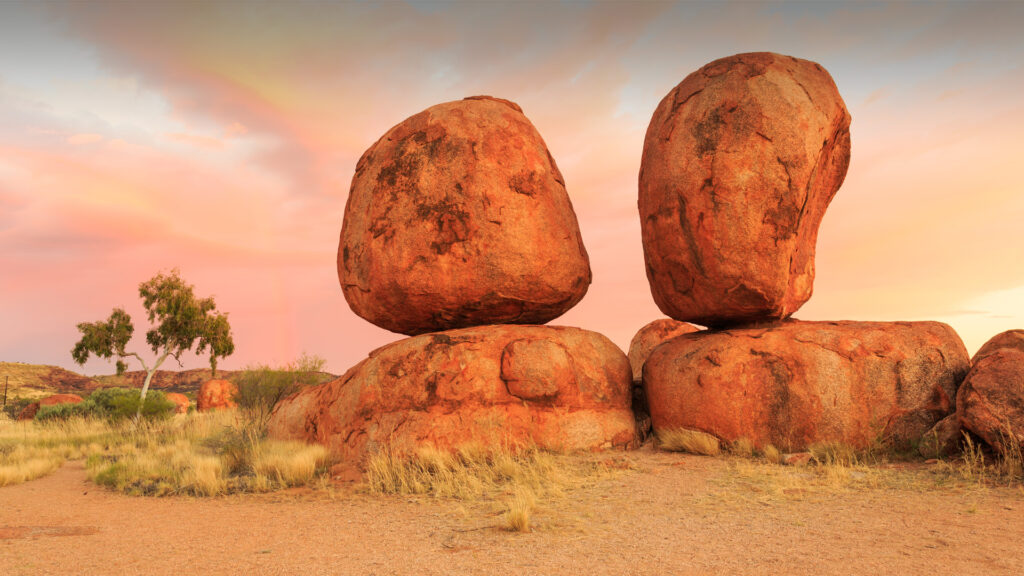
Scattered across the desert are dozens of reddish, perfectly rounded granite boulders. Some look like giant eggs cracked open. The scene is surreal.
The process is all about chemical weathering + pressure release.
- Deep underground, granite forms as massive solid blocks.
- Water seeps into cracks and begins to chemically alter the minerals.
- Corners and edges wear down first—making the blocks rounder.
- When erosion exposes the rounded boulders at the surface, temperature stress takes over.
- Hot days + cold nights = the rock expands and contracts, eventually splitting cleanly.
They look intentionally cut, but nature did it with time and temperature.
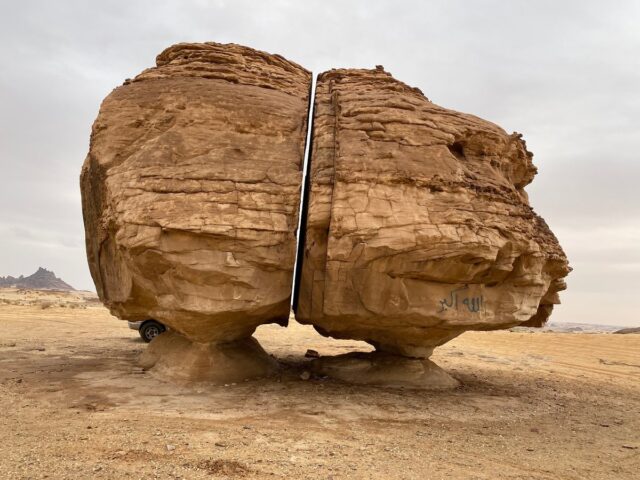
4. Al Naslaa Rock (Saudi Arabia) – A Boulder Split With Surgical Precision
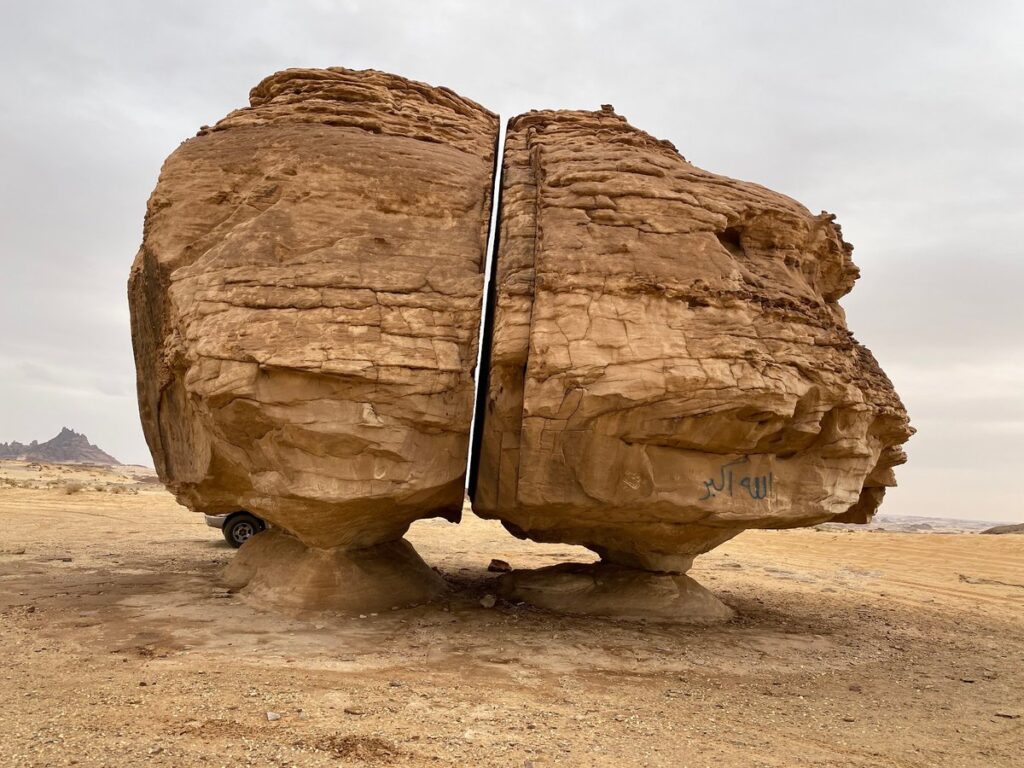
Two huge rocks sit side by side, separated by a razor-sharp, perfectly straight crack. It looks like someone sliced the rock with a laser.
The real cause: thermal expansion in desert conditions.
- A tiny pre-existing fracture was already inside the sandstone.
- Extreme day–night temperature swings widened this fracture little by little.
- The outer layers expanded and contracted differently from the inner ones.
- Over thousands of years, the fracture grew into a clean, beautiful split.
- Wind removed loose sand below, leaving both blocks balanced like statues.
No lasers—just brutal desert heat doing precise work.
5. Moqui Marbles (USA) – Nature’s Iron Spheres
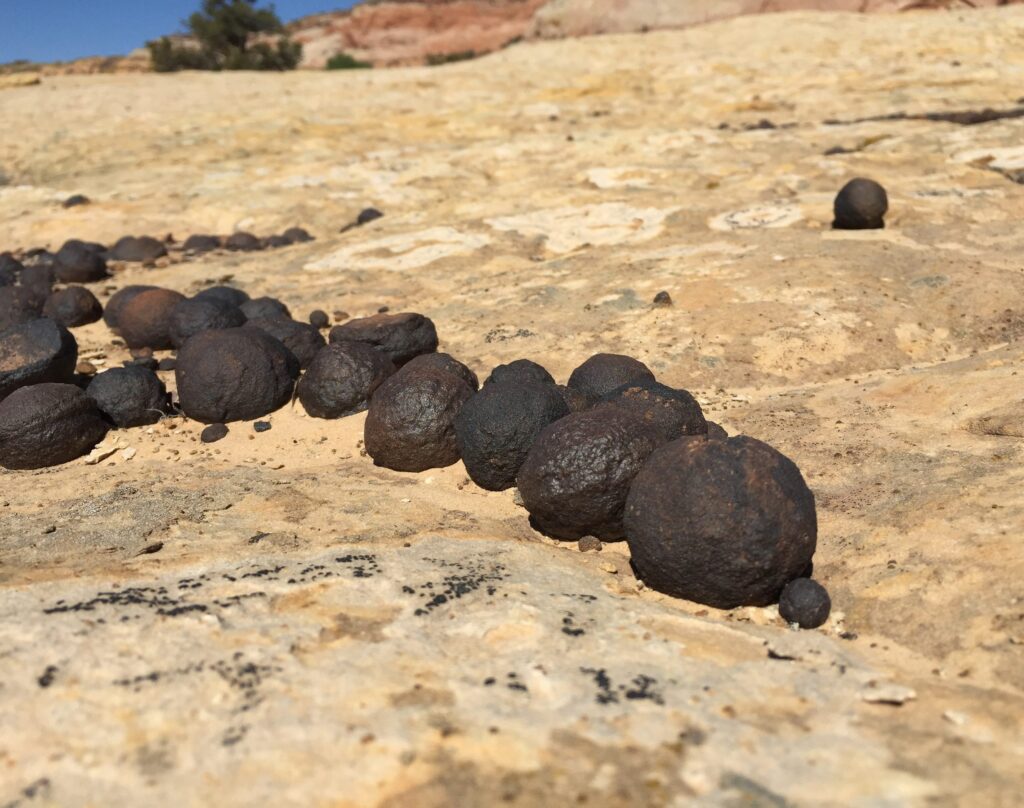
These dark, smooth, metallic-looking marbles appear artificial, like metal ball bearings. But they’re entirely natural.
The secret is iron-rich groundwater.
- Groundwater flowing through sandstone carried dissolved iron.
- Iron oxide precipitated around sand grains.
- Layer by layer, a spherical concretion grew outward.
- When erosion removed the surrounding sandstone, the iron balls remained behind.
Mars has similar concretions too—NASA studied them while searching for signs of past water.
6. Brimham Rocks (England) – Nature’s Giant Lego Set
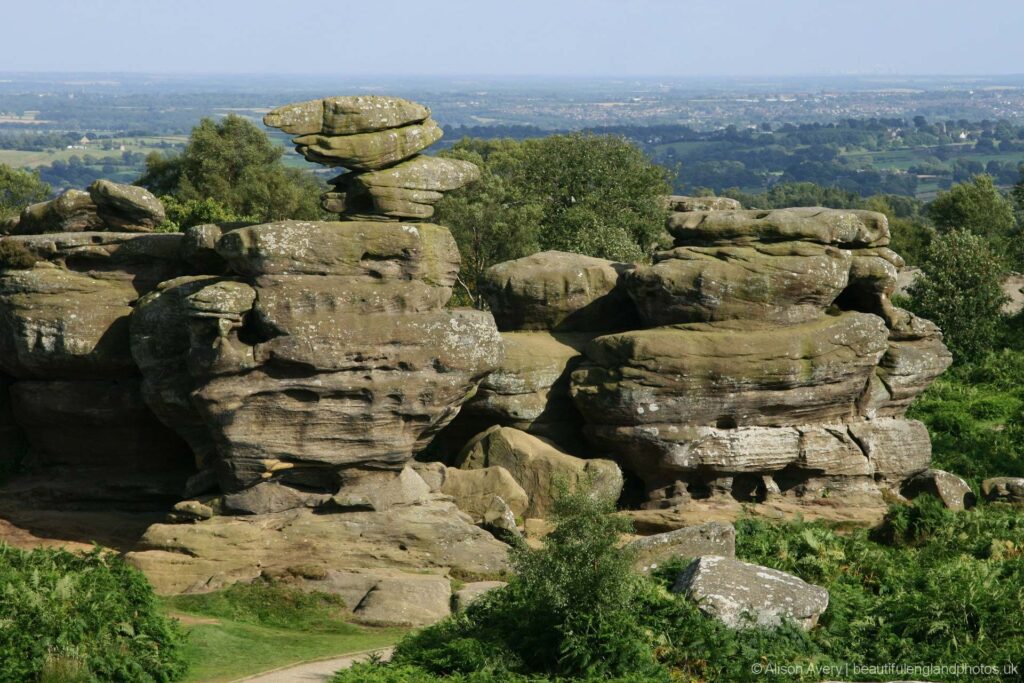
Brimham Rocks looks like a place where some giant played with stone blocks. Some rocks balance on tiny points; others lean at impossible angles.
Wind, ice, and pressure did all of it.
- The Permian sandstone was already layered and fractured.
- Freeze–thaw cycles chipped away at edges.
- Wind selectively removed weaker zones.
- Pressure release caused slabs to detach and stack in strange shapes.
It’s as if every rock in the area decided to become a different sculpture.
7. Goblin Valley Hoodoos (Utah, USA) – Rock Creatures Frozen in Place
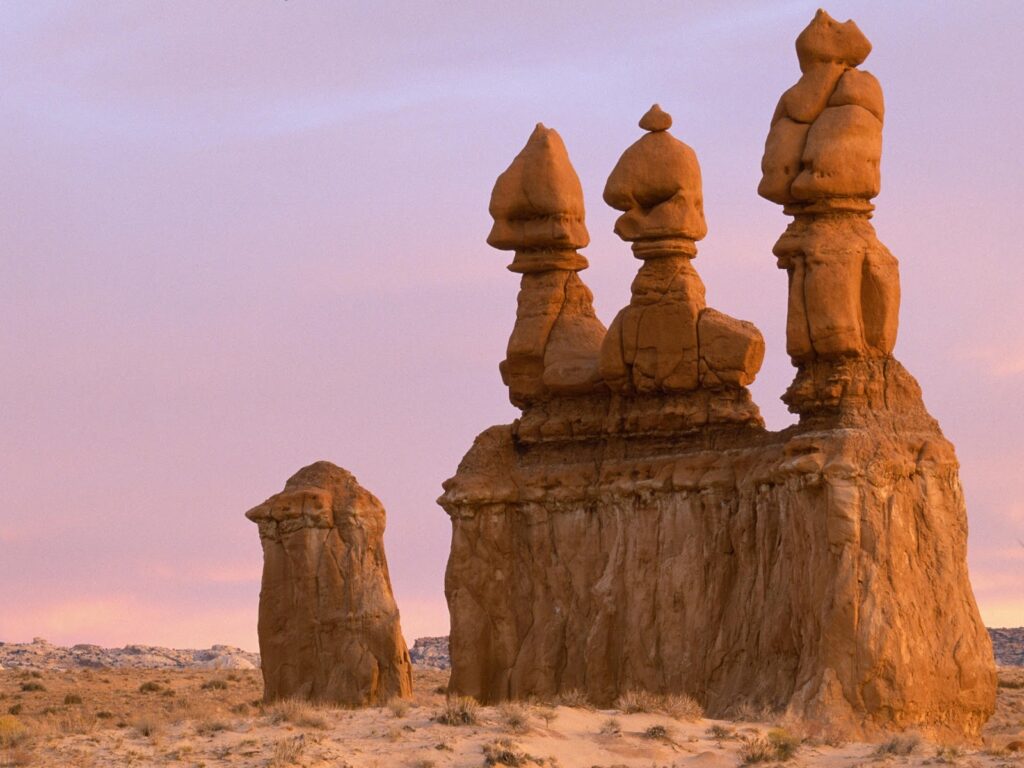
These formations look like little creatures—round heads, short bodies, strange silhouettes. The whole valley feels like a stone fairy tale.
The shape is created by two very different rock types.
- The lower layers are soft mudstone—easy to erode.
- The upper cap is a thin layer of tougher sandstone.
- Flash floods and strong winds erode the mudstone rapidly.
- The harder sandstone protects the top, forming a “head.”
- Iron oxide gives the rocks that deep red Martian color.
It’s Earth, but it looks like another planet.
8. Pedestal Rocks (Namibia) – Huge Tops, Skinny Bases
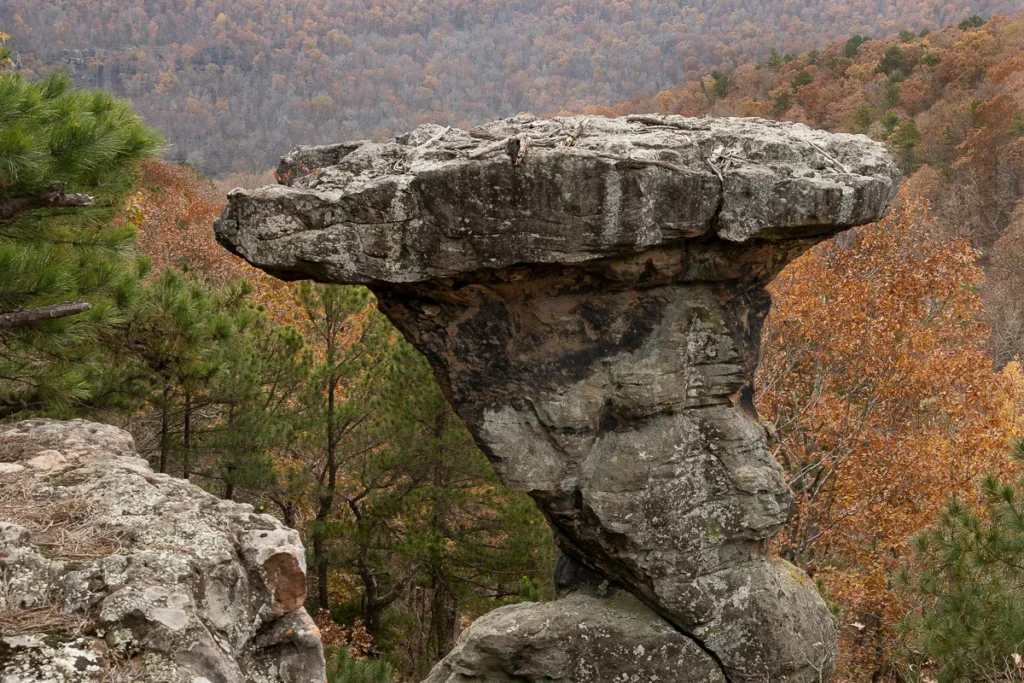
Across Namibia’s arid landscapes you find rocks that look physically impossible—massive boulders perched on thin pedestals.
Wind is the sculptor here.
- Wind speed is strongest near the ground.
- Blowing sand acts like natural sandpaper.
- The lower part erodes quickly, the upper part remains untouched.
- Over time, the rock becomes a perfect mushroom or pedestal shape.
A real-life example of erosion doing fine artwork.
9. Pancake Rocks (New Zealand) – Dozens of Thin Stone Layers Stacked Like Breakfast
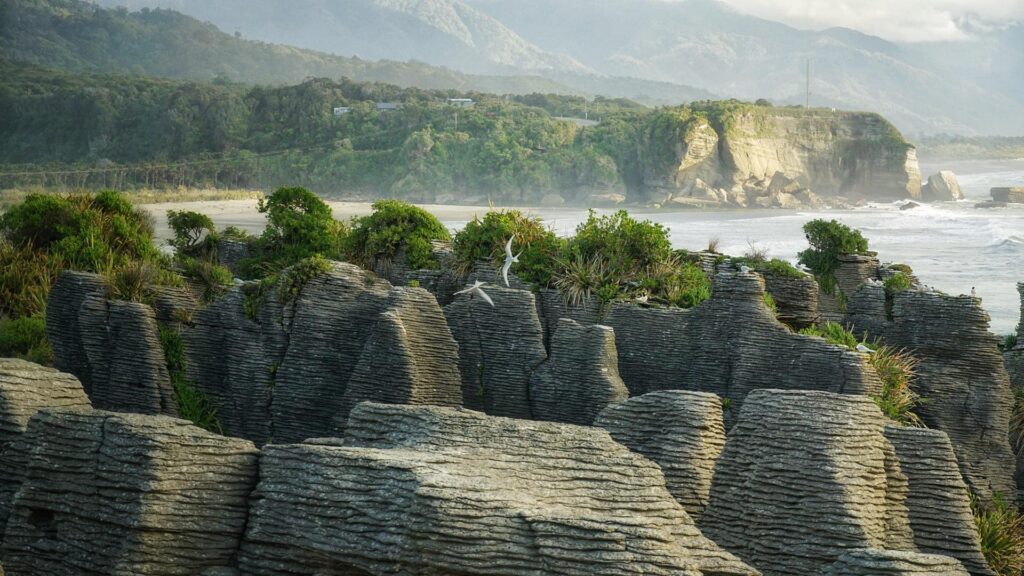
These formations look like giant piles of stone pancakes. Layer after layer, perfectly separated, stretching along the coast.
The cause: thin limestone layers + wave erosion.
- Limestone and mud were deposited in hundreds of thin sheets.
- Compression made these layers even more distinct.
- Coastal wave action carved the cliffs and exposed the layers.
- Softer layers weathered faster, giving the rock its “stacked pancakes” look.
There is no other place on Earth with layering this crisp.
10. Toadstool Hoodoos (Nebraska/Utah) – Cartoon-Like Stone Mushrooms
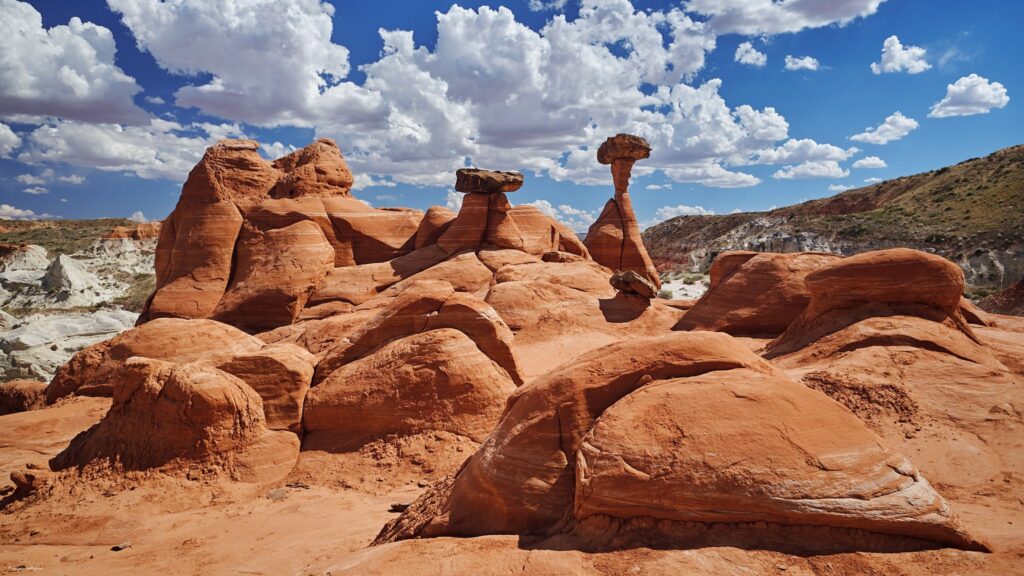
These formations look like something out of an animated movie—wide mushroom caps sitting on skinny stems, colored in soft yellows and whites.
The recipe: soft mudstone + hard sandstone + rapid erosion.
- The lower part is fragile mudstone—it erodes easily.
- The top is durable sandstone, acting like a protective umbrella.
- Rain and wind carve away the base much faster.
- Eventually, a classic mushroom shape emerges.
It’s one of the most photogenic places in the entire American West.
Conclusion – Nature Doesn’t Just Build; It Performs
These 10 rock formations show something important:
Geology isn’t just science—it’s Earth’s long-term artwork.
When you combine:
- time
- pressure
- erosion
- temperature cycles
- volcanic activity
- and the unstoppable patience of nature
…you get landscapes that look impossible but are completely real.
Every rock tells a story, and some of them tell truly bizarre ones.
Earth is full of surprises—you just need to know where to look.