









When a volcano erupts, most people imagine a familiar scene: a mountain peak releasing dark ash, bright lava flowing down the slopes, exploding rocks, and a tall orange column shooting into the sky. But there are volcanoes that don’t behave like this at all. Some volcanoes don’t erupt in a narrow plume—they collapse. Some don’t produce lava flows—they release enough ash to affect entire continents. Some don’t even have a recognizable summit anymore because that summit disappeared millions of years ago.
These unusual giants are called supervolcanoes, and the name is not exaggerated. If you take the power of a typical volcanic eruption as a baseline, the energy released by a supervolcano can be hundreds or even thousands of times greater.
There are a few known supervolcanoes on Earth today: Yellowstone in the United States, Toba in Indonesia, Taupo in New Zealand, Aira in Japan… These are not ordinary volcanoes. They are geological systems powerful enough to influence the entire planet.
So how do these massive systems work? Why are they so big? Why do they behave so differently from normal volcanoes? And do they pose a real threat to humanity?
In this article, I’m explaining how supervolcanoes form, how they erupt, why they collapse, and what makes them some of the most fascinating (and frightening) geological structures on Earth.
1. What Is a Supervolcano? (Much More Than a Bigger Volcano)
A supervolcano is not simply “a very large volcano.”
It has an entirely different eruption mechanism.
To classify a volcanic system as a supervolcano, its eruption must release at least 1,000 cubic kilometers of material—ash, pumice, and rock fragments.
This number is absurdly large.
- Vesuvius (Pompeii): ~3 km³
- Mount St. Helens: ~1 km³
- Krakatoa: ~25 km³
- Toba Supereruption: ~2,800 km³
The comparison alone is enough to bend your mind.
Key features of supervolcanoes:
They usually don’t have tall volcanic cones.
They don’t erupt from a narrow summit vent.
Their eruptions occur across huge surface areas.
They can appear inactive for hundreds of thousands of years.
And when they erupt, they leave behind a massive collapsed caldera—50 to 100 kilometers wide.
2. The “Magma Sea” Beneath Supervolcanoes
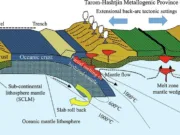
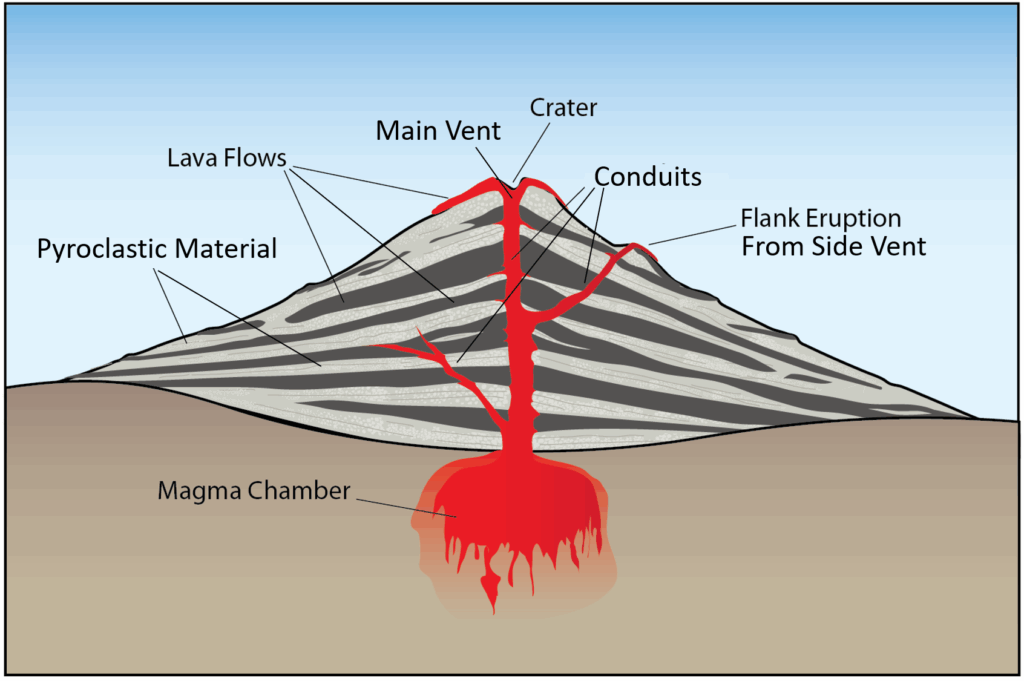
Underneath supervolcanoes lies a magma chamber that is nothing like the ones in typical volcanoes.
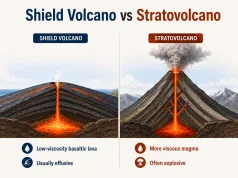
Normal volcanoes have deep, narrow magma pathways.
Supervolcanoes, on the other hand, contain shallow, sprawling, massive magma reservoirs—almost like underground lakes.
This magma is:
- less dense,
- able to hold more dissolved gases,
- and highly viscous (meaning it flows slowly).
Because of these properties, when it erupts, it creates explosive ash storms rather than rivers of lava.
3. Why Do Supervolcanoes Erupt?
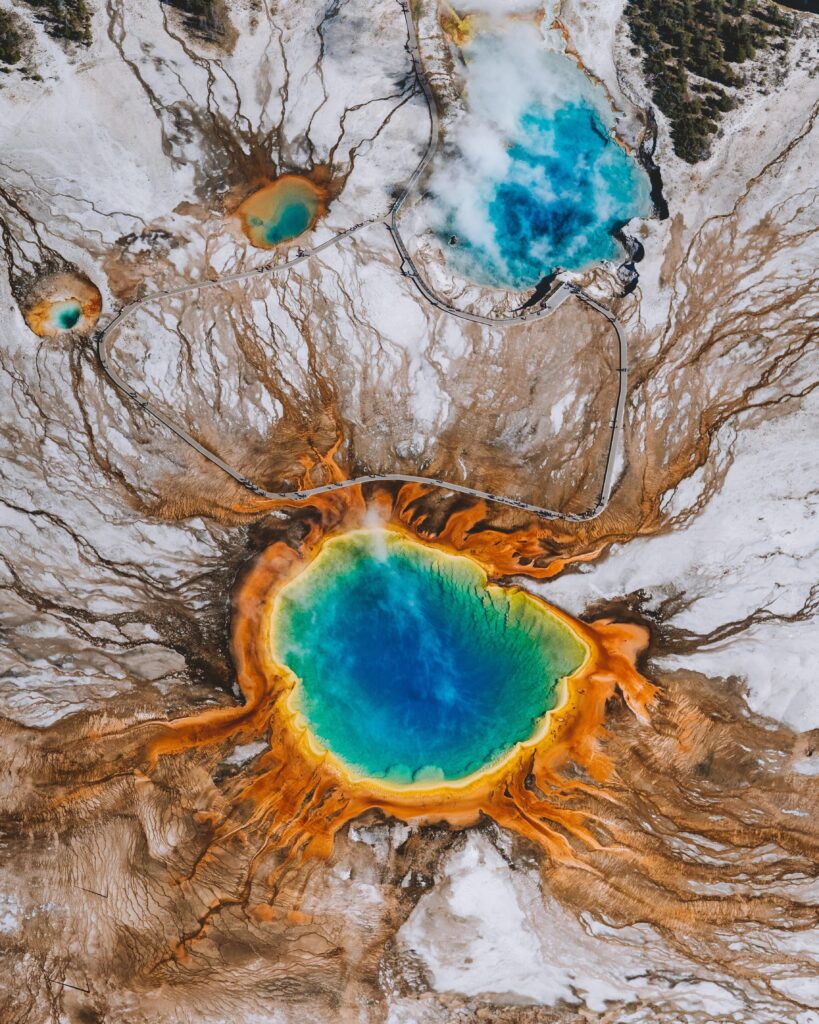
The main driving force is pressure buildup, but not the kind seen in regular volcanoes.
Magma rises but cannot escape.
The overlying rock layer is huge and stable. It blocks magma from creating a classic volcanic vent.
Gases accumulate in the chamber.
Water vapor, CO₂, sulfur compounds—these gases cannot escape and increase internal pressure.
The ground slowly swells.
Scientists call this ground uplift.
In Yellowstone, the ground has risen by up to 70 cm in some years.
Eventually, the crust can no longer withstand the pressure.
A small fracture is enough to destabilize the entire roof of the magma chamber.
Finally, the collapse comes.
The whole surface collapses inward, the chamber empties violently, and an ash tsunami spreads over enormous distances.
Unlike a typical eruption that shoots upward, a supervolcano eruption spreads horizontally because the chamber is so large.
4. What Is a Caldera? The Signature of Supervolcanoes
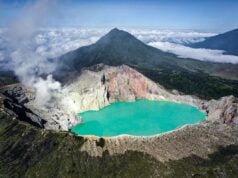
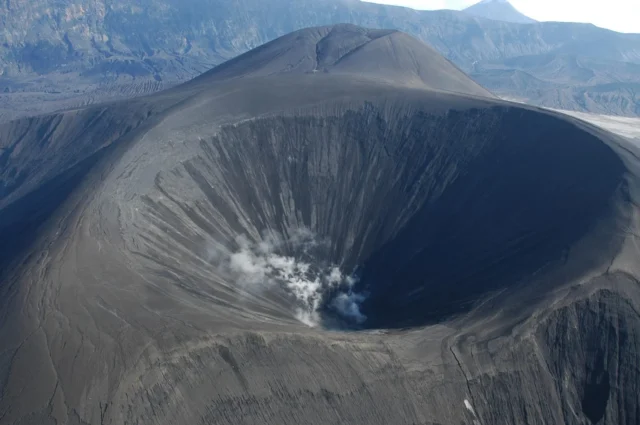
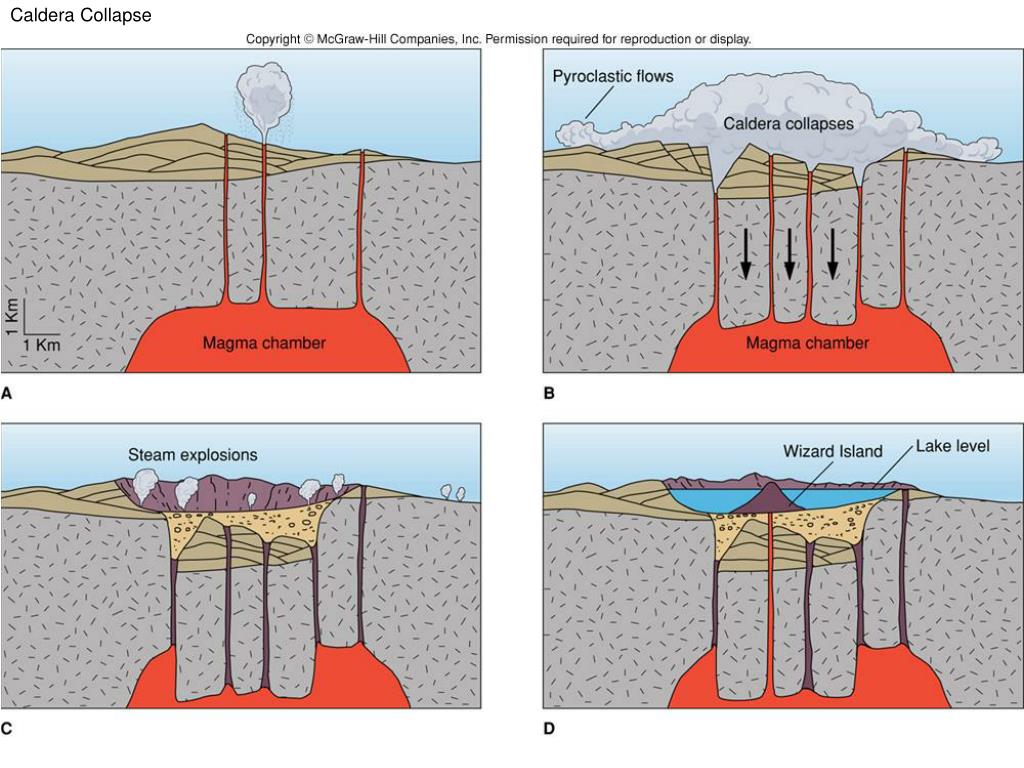
When a supervolcano erupts, the surface above collapses into the emptied chamber, forming a caldera.
A caldera is not a crater. It is a gigantic structural bowl, formed when the roof of the magma chamber loses support.
Caldera formation occurs like this:
- The rock above the magma chamber is held up by magma pressure.
- An eruption empties the chamber.
- There is no longer anything supporting the roof.
- The roof collapses → creating an enormous depression.
Caldera sizes:
- Yellowstone: 70 × 45 km
- Toba: 100 × 30 km
- Taupo: 35 km
- Aira: 17 km
These are not mountain-sized features—they are region-sized.
5. Effects of a Supervolcano Eruption
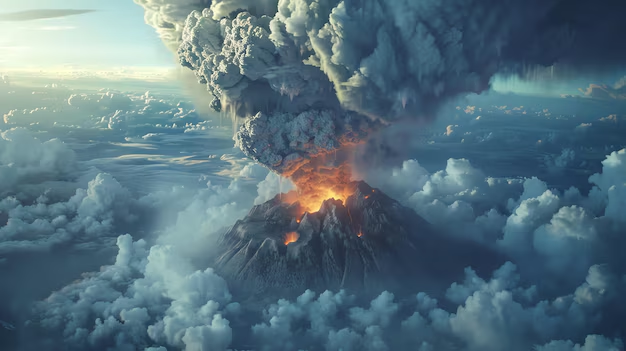
A supereruption produces global-scale geological and climate impacts.
Continental ash fallout
Ash can fall more than a thousand kilometers away, disrupting everything from agriculture to air quality.
Volcanic winter
Sulfur aerosols in the atmosphere block sunlight.
Global temperatures may drop for 1 to 10 years.
Human population impacts
The Toba eruption may have reduced early human populations dramatically—some estimates say below 10,000 individuals.
Ocean chemistry changes
Ash alters acidity and nutrient levels.
Ecosystem collapse
Plants, animals, water systems—everything changes.
Supervolcanoes are not regional hazards.
They are planetary events.
6. The Biggest Supervolcanoes on Earth
Yellowstone (USA)
Probably the most famous one.
Last major eruption: 640,000 years ago.
Ground uplift, small quakes, and gas emissions are normal, not signs of an imminent eruption.
Toba (Indonesia)
One of the most violent eruptions in Earth’s history.
Eruption volume: ~2,800 km³
Today, Toba Lake sits inside the caldera.
Taupo (New Zealand)
Extremely explosive.
The AD 232 eruption was the largest of the past few thousand years.
Aira (Japan)
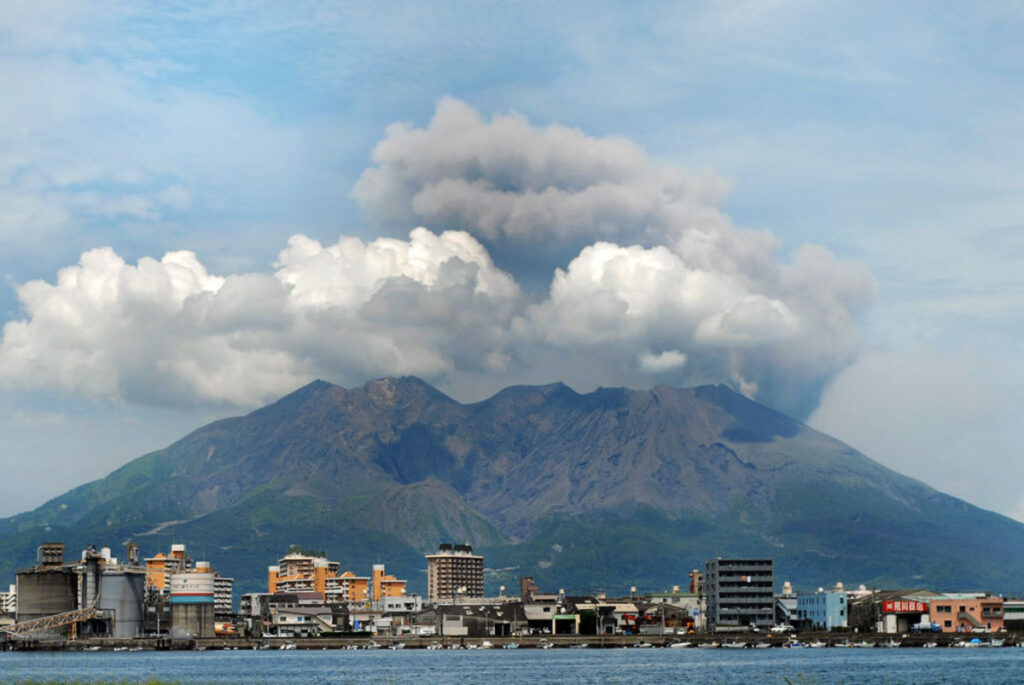
Includes the active Sakurajima volcano.
Heavily monitored.
7. Will Supervolcanoes Erupt Soon? Should People Worry?
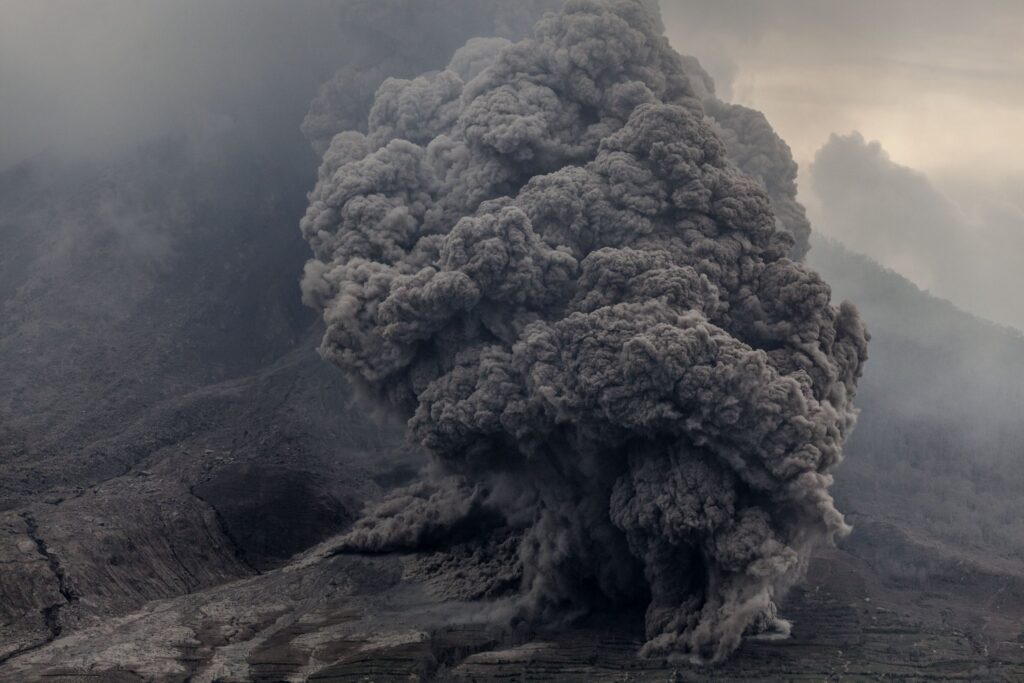
You’ve probably seen those ridiculous headlines:
“Yellowstone could erupt tomorrow!”
Not true.
The scientific consensus:
No supereruption is expected anytime soon—certainly not in the next several thousand years.
Reasons:
- The magma chamber is mostly solid, not liquid.
- Ground deformation is cyclical.
- Gas output is within normal geothermal levels.
- Earthquake activity does not show collapse patterns.
8. Key Differences Between Supervolcanoes and Normal Volcanoes
Supervolcanoes differ from ordinary volcanoes in several fundamental ways.
Their eruptions are hundreds of times larger.
Their magma chambers are shallow and widespread.
Their eruptions collapse the entire region, not just a summit.
They form calderas, not cones.
Their impacts are global, not local.
They remain quiet for tens of thousands of years.
Many don’t even look like volcanoes on the surface.
Conclusion: Supervolcanoes Are Earth’s Quietest but Most Powerful Forces
Supervolcanoes are the “silent giants” of geology.
They don’t roar often.
Most of the time they sit quietly, hidden beneath peaceful landscapes.
But under those forests, lakes, and plains lies magma capable of reshaping climate, ecosystems, and even human evolution.
A supervolcano eruption:
- can affect continents,
- can alter global temperatures,
- can destroy landscapes,
- can influence life on Earth for centuries.
They are not ticking time bombs.
They are slow, patient systems that act on timescales longer than human history.
But when they do erupt, they remind us of something simple and terrifying:
The Earth is alive, and its greatest forces do not always announce themselves.