

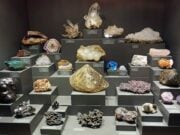


Opal is one of the most visually extraordinary gemstones on Earth. Some specimens flash with brilliant rainbow colors that appear to move and shift under light, creating an effect unlike almost any other natural material.
Unlike crystalline gemstones such as diamond or quartz, opal forms from microscopic silica spheres arranged in delicate internal patterns. As light passes through these tiny structures, it creates the famous “play-of-color” effect that made opal legendary among collectors and jewelers.
Some opals glow with blue, green, orange, or red fire, while rare black opals can display intense flashes that seem almost unreal.
Its unusual beauty, water-rich composition, and constantly changing colors made opal one of the world’s most fascinating gemstones.
What Is Opal?

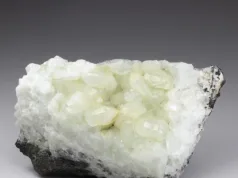
Opal is a hydrated amorphous form of silica composed mainly of silicon dioxide and water. Unlike true minerals, opal does not possess a regular crystalline atomic structure, which is why it is classified as a mineraloid rather than a mineral.
The amount of water inside opal may vary significantly, sometimes reaching more than 20% by weight.
Opal forms in cracks, cavities, and spaces within rocks when silica-rich water slowly deposits microscopic silica particles over long periods of time.
Its spectacular optical effects and wide range of colors helped opal become one of the most famous gemstones in the world.
How Opal Forms
Opal forms when water rich in dissolved silica moves through rocks and underground cavities.
As water gradually evaporates, tiny silica particles remain behind and begin accumulating layer by layer. Over time, these microscopic silica spheres organize into internal structures capable of interacting with light.
Opal commonly forms in:
- sedimentary rocks
- volcanic rocks
- fractures and veins
- fossil cavities
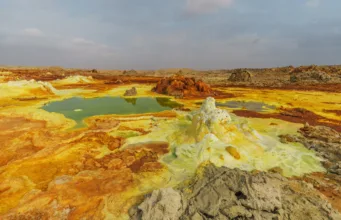
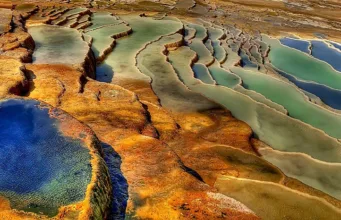
- hot spring environments
Some opals require millions of years to fully develop.
Australia is the world’s most important opal-producing region, especially for precious black opal varieties.
Why Opal Displays Rainbow Colors
One of the most remarkable features of opal is its “play-of-color” effect.
This phenomenon occurs because microscopic silica spheres inside the opal are arranged in highly organized patterns. When light enters the stone, it bends and diffracts between these tiny spheres.
Different wavelengths of light separate and scatter, producing flashes of:
- blue
- green
- yellow
- orange
- red
- violet
As the viewing angle changes, the colors appear to move and shift across the surface.
No two opals display exactly the same internal color patterns.
Some specimens appear almost alive under light because of their constantly changing flashes.
Types of Opal
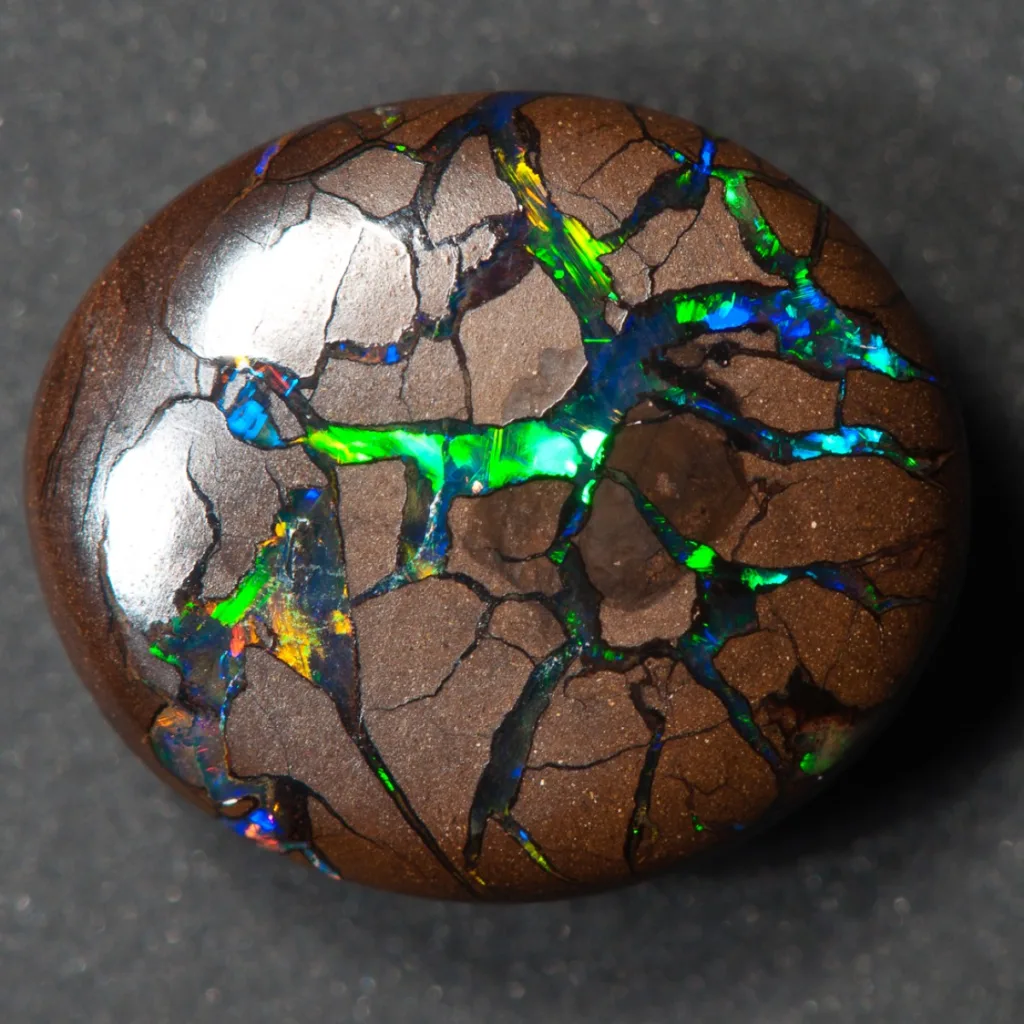
Opal exists in many different varieties, each with unique colors and internal structures.
Black Opal
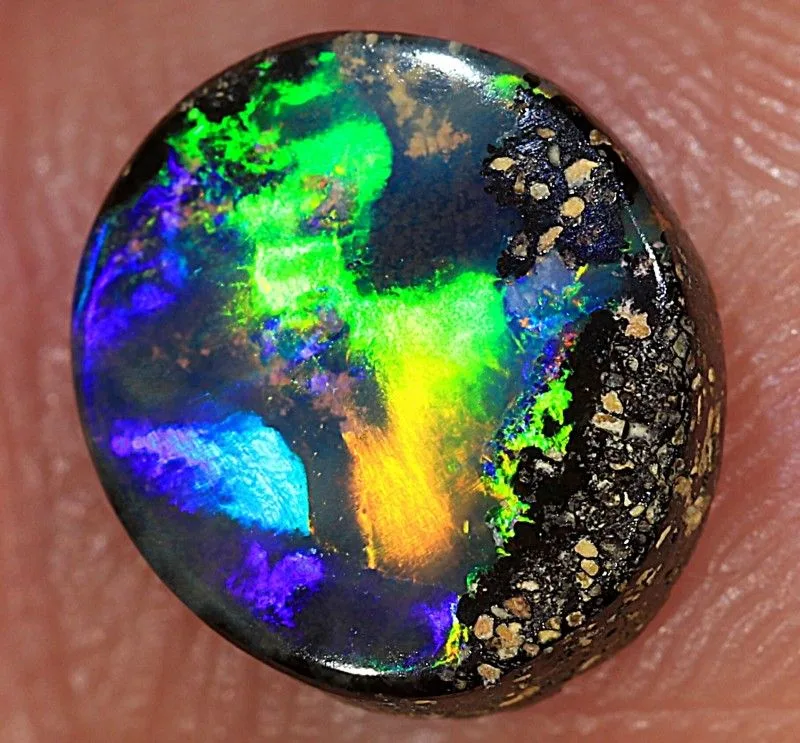
Black opal is considered the rarest and most valuable opal variety. Its dark body color creates strong contrast that makes rainbow flashes appear extremely intense.
Australia produces many of the world’s finest black opals.
Fire Opal
Fire opal is famous for its bright orange, yellow, or red body color.
Unlike black opal, fire opal may or may not display strong play-of-color effects. Mexican fire opals are especially well known.
White Opal
White opal has a pale or milky background color with softer rainbow flashes.
This is one of the most common precious opal varieties.
Boulder Opal
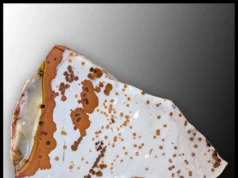
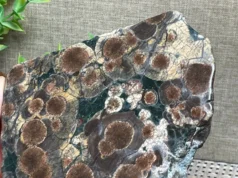
Boulder opal forms within ironstone host rocks and often displays dramatic natural patterns where opal remains attached to the surrounding rock matrix.
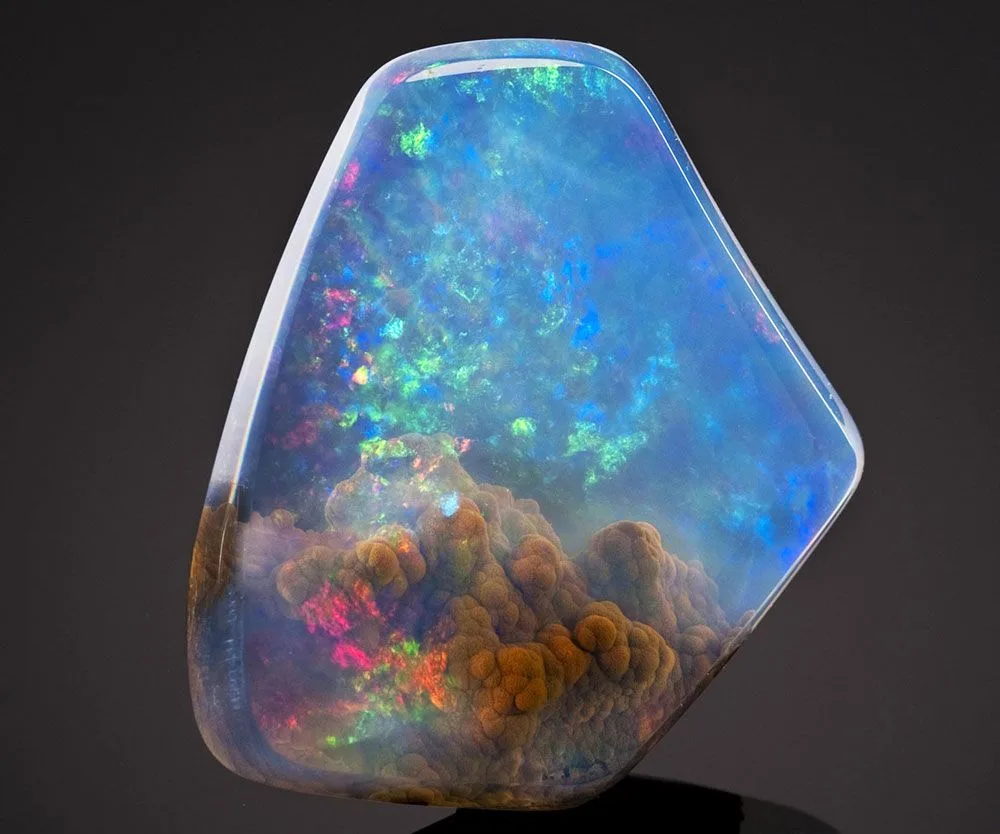
Crystal Opal
Crystal opal is transparent or semi-transparent and may display intense internal color flashes under light.
Some crystal opals appear almost luminous.
Physical and Chemical Properties of Opal
| Property | Value |
|---|---|
| Composition | Hydrated Silica |
| Chemical Formula | SiO₂·nH₂O |
| Mineral Group | Mineraloid |
| Hardness | 5.5 – 6.5 |
| Crystal System | Amorphous |
| Luster | Vitreous to Waxy |
| Transparency | Transparent to Opaque |
| Specific Gravity | ~1.98 – 2.25 |
| Fracture | Conchoidal |
Because opal contains water and lacks a crystalline structure, it is generally softer and more delicate than many gemstones such as sapphire or quartz.
Is Opal a Mineral or Mineraloid?
Scientifically, opal is classified as a mineraloid rather than a true mineral.
True minerals possess an organized crystalline atomic structure. Opal lacks this crystal lattice because its silica particles remain amorphous.
This difference makes opal structurally unique compared to crystalline gemstones like quartz, emerald, or diamond.
Its unusual internal structure is also responsible for its famous optical effects.
Opal and Water Content
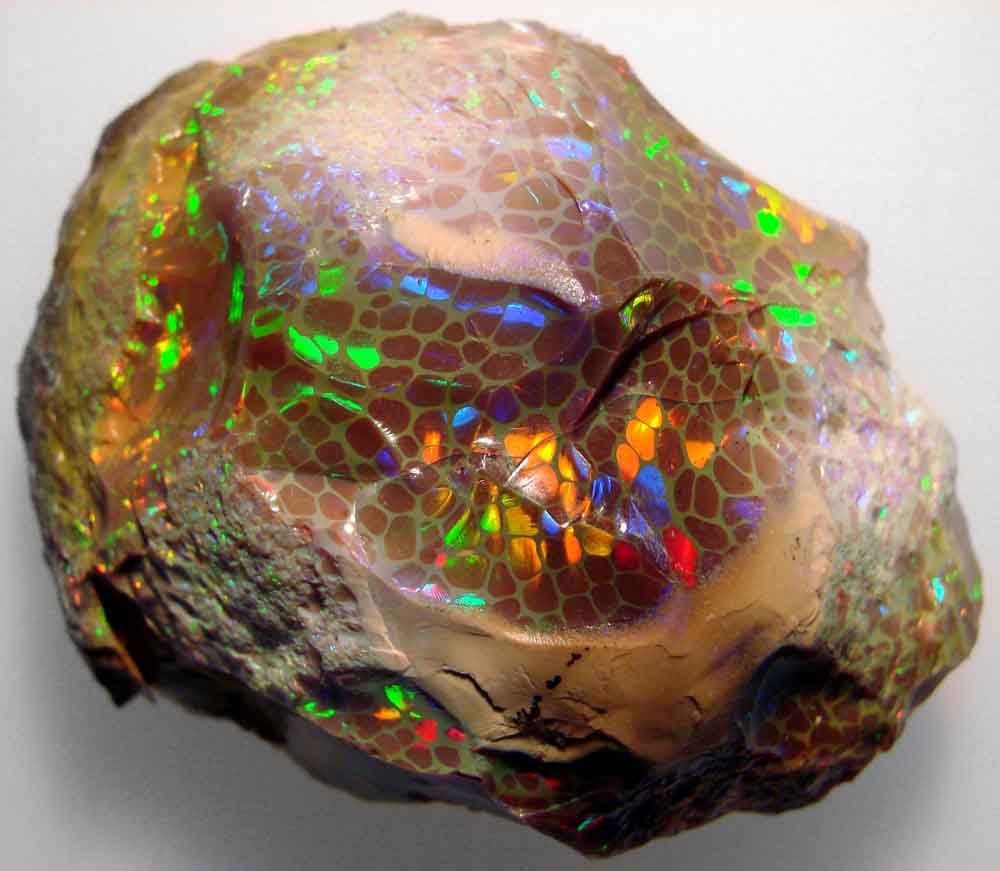
One of the most unusual characteristics of opal is its water content.
Natural opal may contain anywhere from 3% to over 20% water trapped inside its structure.
Because of this, some opals are sensitive to:
- dehydration
- temperature changes
- sudden impacts
If opal loses too much moisture, small fractures called crazing may develop.
Proper storage and stable environmental conditions help preserve opal over long periods of time.
Opal in Jewelry
Opal has been used in jewelry for thousands of years because of its constantly shifting colors and unusual appearance.
It is commonly cut into:
- cabochons
- pendants
- rings
- earrings
- collector gemstones
Jewelry designers often prefer opal because every stone displays completely unique color patterns.
Some high-quality black opals are among the most expensive gemstones in the world.
Opalized Fossils
In rare cases, silica-rich solutions may replace organic material and preserve ancient fossils in opal form.
Examples include:
- opalized wood
- opalized shells
- opalized bones
- opalized dinosaur fossils
Australia is famous for spectacular opalized fossils that preserve ancient biological structures in extraordinary detail.
Geological Importance of Opal
Opal provides important information about groundwater movement, silica deposition, and low-temperature geological processes.
Scientists study opal to understand:
- sedimentary environments
- hydrothermal activity
- fossil preservation
- silica transport
- mineral precipitation
Opal also demonstrates how microscopic structures can create remarkable optical effects in natural materials.
Opal vs Quartz
Although both contain silica, opal and quartz are very different materials.
| Opal | Quartz |
|---|---|
| Mineraloid | True Mineral |
| Amorphous Structure | Crystalline Structure |
| Contains Water | Usually No Water |
| Softer | Harder |
| Play-of-Color | Usually No Play-of-Color |
This structural difference explains why opal behaves differently from quartz physically and optically.
Uses and Application of Opal
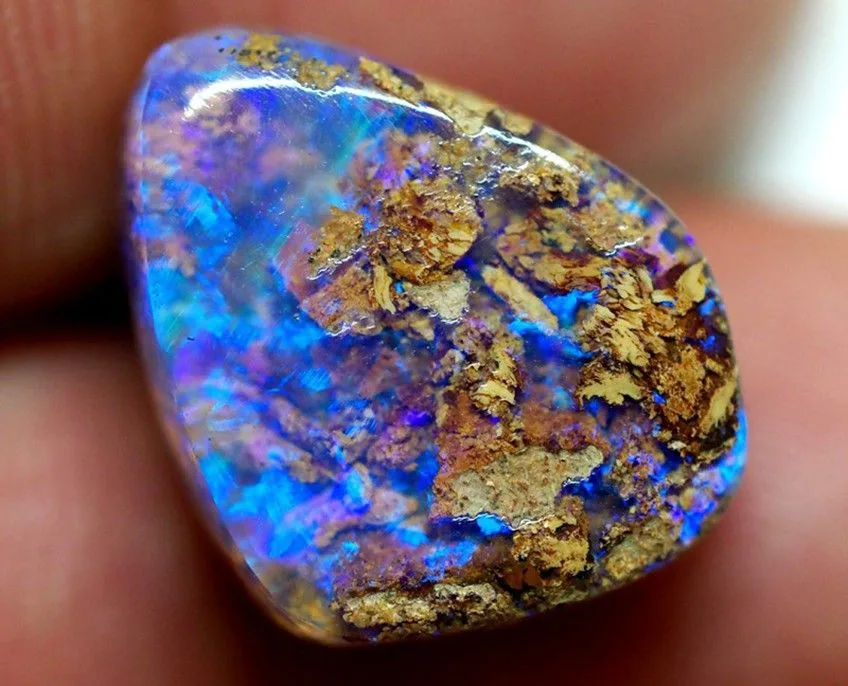
Opals are prized gemstones with a wide range of uses and applications, primarily in the realm of jewelry and ornamental items. Their unique play of color and enchanting appearance make them a popular choice for various purposes:
1. Jewelry:
- Rings: Opal rings are a popular choice for both engagement and fashion jewelry. They can feature different opal types and settings to suit various styles and preferences.
- Necklaces: Opal pendants and necklaces showcase the gemstone’s beauty and are often worn as statement pieces.
- Earrings: Opal earrings come in various designs, from simple studs to more intricate dangle and drop earrings.
- Bracelets: Opal bracelets incorporate opals into their designs, either as a focal point or as accent stones.
- Brooches: Opals are used in brooches and pins to add a touch of elegance and color to clothing.
2. Gemstone Collecting:
- Opals, especially precious opals with exceptional play of color, are sought after by gemstone collectors. Collectors appreciate the rarity and individuality of opals, and some may focus on acquiring opals from specific regions or with unique characteristics.
3. Art and Decorative Items:
- Opals are used in the creation of decorative items, sculptures, and art pieces. Their vibrant colors and iridescence can enhance the visual appeal of these items.
4. Religious and Spiritual Significance:
- In some cultures, opals are associated with spiritual and healing properties. They may be used as talismans, amulets, or prayer beads.
5. Birthstone Jewelry:
- Opals are the traditional birthstone for the month of October. Jewelry featuring opals is often given as birthday gifts to individuals born in this month, as it is believed to bring good luck and positive energy.
6. Custom and Artisan Jewelry:
- Many jewelry designers and artisans incorporate opals into their unique, handcrafted creations. This allows for custom and one-of-a-kind pieces that cater to specific tastes and preferences.
7. Opal Inlays and Mosaics:
- Opals are sometimes used in the creation of intricate inlay work and mosaics in decorative objects, including furniture, tiles, and musical instruments.
8. Ethical and Sustainable Jewelry:
- With growing awareness of ethical and sustainable sourcing, some jewelers offer opals from responsible mining practices and fair trade sources, appealing to consumers who prioritize ethical gemstone choices.
9. Engagement and Wedding Rings:
- Opals are chosen for engagement and wedding rings by couples who appreciate their unique and romantic appearance. However, it’s important to note that opals are relatively soft compared to traditional engagement stones like diamonds, so they require special care to prevent damage.
10. Carvings and Cameos: – Opals are sometimes carved into intricate designs and cameos, showcasing the artisan’s skill and creativity.
It’s important to note that while opals are undoubtedly stunning gemstones, they are relatively soft and require careful handling to avoid scratching or damage. Opal jewelry should be stored and worn with care to ensure its longevity and continued beauty.
Famous Opals
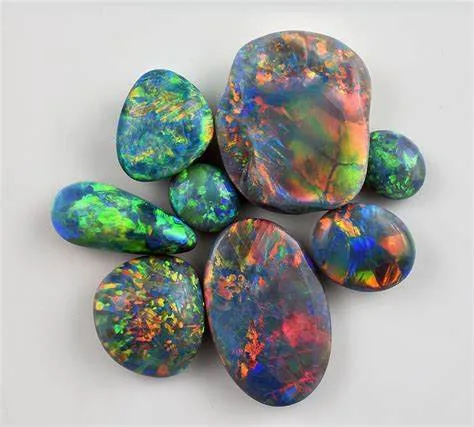
Famous opals, notable discoveries, and opal-adorned jewelry pieces have captured the fascination of people around the world for their exquisite beauty and unique play of color. Here are some notable examples:
Famous Opals:
- Aurora Australis: The Aurora Australis is one of the world’s most famous black opals. Discovered in Lightning Ridge, New South Wales, Australia, in 1938, it is renowned for its intense play of color, including vivid reds and blues. It weighs approximately 180 carats and is considered one of the most valuable opals in existence.
- Andamooka Opal: Found in South Australia in 1932, the Andamooka Opal is another legendary black opal. It displayed remarkable play of color and weighed over 200 carats in its rough state. It was later cut into several smaller stones, with the largest known as the “Queen’s Opal.”
- The Olympic Australis: Discovered in 1956, the Olympic Australis is one of the largest and most valuable opals ever found. It weighs around 17,000 carats and was named in honor of the 1956 Olympic Games held in Melbourne, Australia. Its play of color is exceptional, featuring a wide spectrum of hues.
Notable Opal Discoveries:
- Lightning Ridge, Australia: Lightning Ridge, located in New South Wales, is renowned for its black opals. The town’s opal fields have yielded many exceptional gems, including the world-famous Aurora Australis and Andamooka Opal.
- Coober Pedy, Australia: Coober Pedy is another major opal mining area in South Australia. It is known for producing white opals and crystal opals, often used in high-quality jewelry.
- Welo, Ethiopia: In recent years, Ethiopia has emerged as a significant opal-producing region. The Welo opal fields have yielded vibrant and colorful opals, including precious and crystal opals.
- Virgin Valley, Nevada, USA: Nevada is known for producing valuable black and fire opals. Virgin Valley, in particular, has been a source of stunning opals, including the Rainbow Ridge Opal and the Bonanza Opal.
Famous Opal Jewelry Pieces:
- The Burning of Troy Tiara: This exquisite tiara, made by Castellani in the 19th century, features opals among other gemstones. It is a part of the British royal collection and is known for its intricate design and historical significance.
- The Empress Eugénie Tiara: Commissioned by Emperor Napoleon III of France for his wife, Empress Eugénie, this tiara features opals and diamonds in a delicate floral motif. It remains one of the most famous opal tiaras in history.
- The Grand Opal Tiara: Created by Boucheron for Queen Isabella II of Spain, this tiara features several opals surrounded by diamonds. It is now part of the Spanish royal jewelry collection.
- The Queen’s Opal Brooch: The largest stone cut from the Andamooka Opal, known as the “Queen’s Opal,” was set into a brooch and presented to Queen Elizabeth II of the United Kingdom during her visit to Australia in 1954.
These famous opals and opal-adorned jewelry pieces showcase the allure and beauty of these gemstones, which have captivated the hearts of collectors, royalty, and jewelry enthusiasts throughout history. Opals continue to be treasured for their enchanting play of color and timeless appeal.
Conclusion
Opal is one of the most unusual and visually fascinating gemstones ever discovered.
Its microscopic silica structures create shifting rainbow colors unlike almost any other natural material on Earth. Combined with its water-rich composition, geological rarity, and extraordinary beauty, opal became one of the world’s most admired gemstones.
Whether studied scientifically or appreciated for its appearance, opal remains one of nature’s most remarkable creations.
Key Points:
- Opals are composed of hydrated silica and have an amorphous structure.
- They exhibit a play of color or opalescence due to the diffraction and interference of light with microscopic silica spheres.
- Opals come in various types, including precious opals (e.g., white, black, crystal, boulder) and common opals (e.g., white common, Mexican fire).
- Opals are used in jewelry, art, collectibles, religious items, and more.
- Famous opals like the Aurora Australis and the Olympic Australis are highly valuable and renowned for their beauty.
- Notable opal discoveries have been made in Lightning Ridge and Coober Pedy, Australia, as well as in Ethiopia and the United States.
- Opals have adorned famous jewelry pieces, including tiaras and brooches, and have historical and royal significance.
Future of Opals:
The future of opals is promising but also faces challenges:
- Sustainability: Ethical and sustainable sourcing of opals will likely become increasingly important as consumers prioritize responsible practices in the gemstone industry.
- Technology: Advancements in gemstone treatment and enhancement techniques may impact the opal market. Disclosure and transparency in gemstone treatment will be critical.
- Fashion Trends: Opals are likely to continue to be sought after for their unique play of color and artistic appeal, especially in custom and artisan jewelry pieces.
- Scientific Research: Ongoing research into the geological processes and formation of opals can provide valuable insights and may lead to new discoveries.
In conclusion, opals will remain a beloved gemstone for their enchanting beauty and symbolic significance. Their future will be shaped by evolving consumer preferences, sustainable practices, and ongoing scientific exploration.
References
- Bonewitz, R. (2012). Rocks and minerals. 2nd ed. London: DK Publishing.
- Mindat.org. (2019). Opal: Mineral information, data and localities.. [online] Available at: https://www.mindat.org/ [Accessed. 2019].
- Wikipedia contributors. (2019, June 13). Opal. In Wikipedia, The Free Encyclopedia. Retrieved 00:37, June 20, 2019, from https://en.wikipedia.org/w/index.php?title=Opal&oldid=901668208