






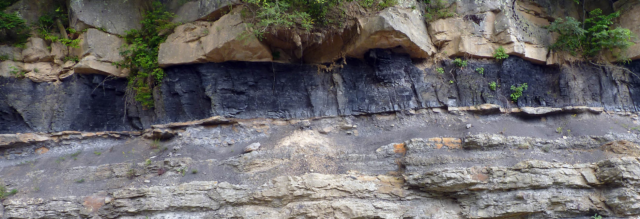
When rock breaks what do you expect to happen? For most people answer is simple: irregular pieces, random cracks, uncontrolled breaking. Yet in nature this doesn’t always happen like this. Some rocks display surprising order at moment they break. They separate along smooth surfaces, parallel lines emerge, rock opens layer by layer. This separation is so clear that at first glance only one question comes to person’s mind: Why did this rock separate exactly from here?
This question is not just about visual curiosity. How rock breaks directly reflects how it formed in past, what physical and chemical conditions it passed through and how its internal structure is organized. Rock separating layer by layer is actually result of long geological process reflecting to surface. This separation is clear indicator of order, weaknesses and oriented structures hidden inside rock.
In other words, rock doesn’t behave randomly when it breaks. It behaves according to what it experienced in past.
What Does Layered Separation Mean?
In geology, rock’s separation along certain planes generally indicates presence of structural weaknesses. These weaknesses emerge while rock is forming or during processes it goes through later. Layered separation is mostly these weak surfaces being exposed under physical stress.
This separation is not always same thing. In some rocks distinct layers separate in visibly way, in some rocks this structure is finer and more regular. Sometimes this separation is result of natural accumulation order, sometimes rock has been exposed to pressure, temperature or deformation afterwards.
Important point is this: Layered separation shows that rock’s internal structure is directional. Meaning rock doesn’t show same resistance in every direction.
Origin of Layered Separation in Sedimentary Rocks
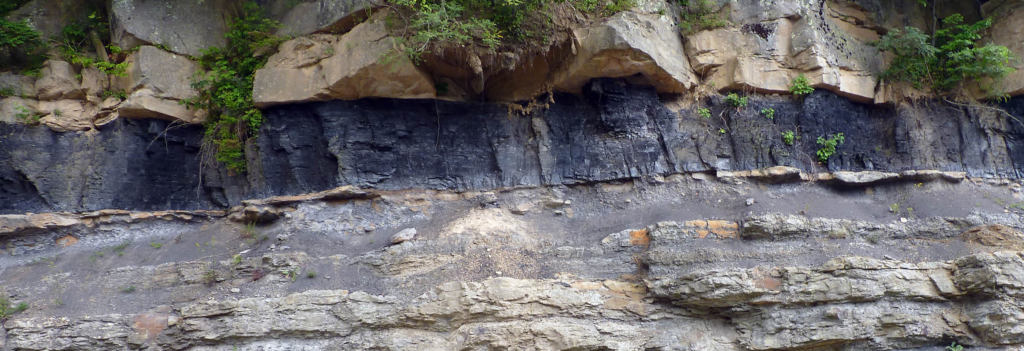
When layered structures are mentioned, first rock group that comes to mind is sedimentary rocks. Reason for this is simple: sedimentary rocks already form in layers.
Sediments like sand, clay, silt; are transported by water, wind or ice and settle over time. This sedimentation doesn’t happen in single time. It happens in different periods, in different energy conditions. One day fast flowing river leaves coarse-grained sand, another day fine clay settles in calm environment. These differences accumulate on top of each other.
Over time these sediments compress, lose water and become rock by cementing. However in this process layers don’t completely fuse. Boundaries between them remain as relatively weak planes inside rock. When rock faces external force, easiest places it can separate are these layer boundaries.
For this reason many sedimentary rocks like shale, sandstone and limestone separate in smooth layers when they break. This separation is direct result of sedimentary past.
Not Every Layered Rock Is Sedimentary
There’s common mistake made here. Rock’s separation layer by layer doesn’t necessarily mean it’s sedimentary.
Metamorphic rocks can also show very distinct layered separation. In fact in some cases this separation is much more regular than in sedimentary rocks. Reason for this is formation of new structural order inside rock during metamorphism.
During metamorphic processes rock reshapes under high pressure and temperature. Minerals dissolve, recrystallize and often become oriented. This orientation creates weakness along certain planes inside rock.
This type of separation is generally called foliation.
Foliation: Hidden Order of Metamorphic Rocks
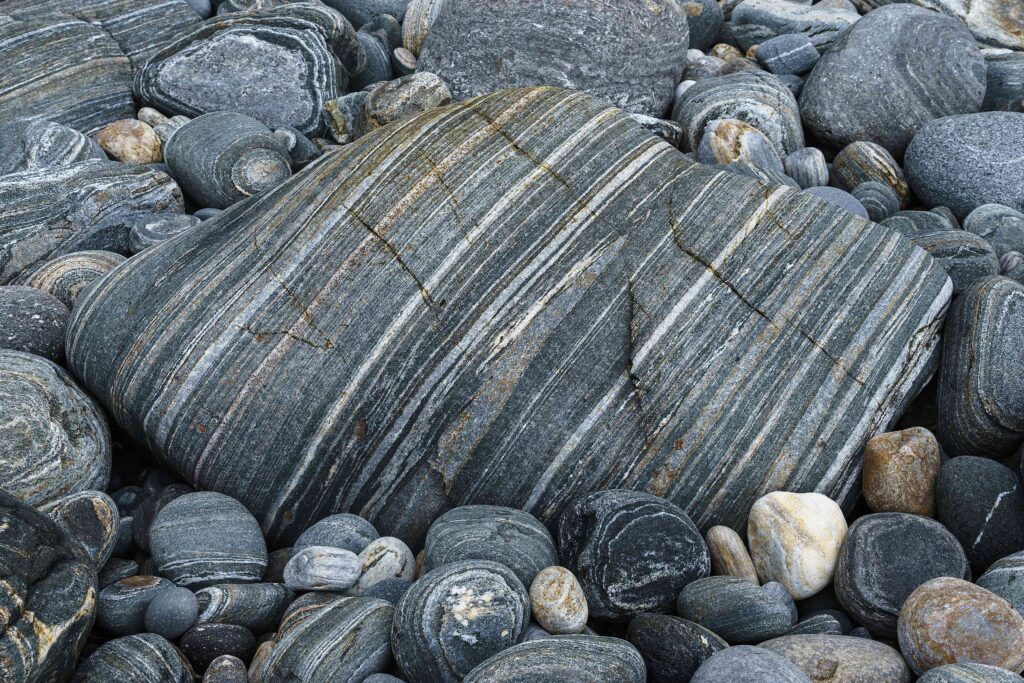
Foliation is structural feature formed by alignment of minerals in certain direction in metamorphic rocks. This structure starts at microscopic scale inside rock but shows itself at macroscopic scale, meaning in way visible to naked eye.
For example in rocks like schist, mica minerals align perpendicular to pressure direction. These minerals consist of thin, leaf-like crystals and become parallel to each other. When rock breaks, separation occurs along planes where these leaf-like minerals are aligned.
For this reason schists generally separate sheet by sheet. Although this separation resembles sedimentary layers, its origin is completely different. Here what determines separation is not accumulation but deformation and recrystallization process.
How Do Pressure and Stress Layer Rock?

Rock changes shape not only while forming but also after it forms. Earth’s crust is not static. Continents move, plates collide, mountains rise. During these movements rocks are exposed to serious pressure and stresses.
These stresses can create micro cracks inside rock. If these cracks concentrate in certain direction, rock starts developing weak planes. Over time these planes become distinct and rock becomes more prone to separate along these surfaces.
These type of structures don’t always form visible layers. However when rock breaks, these hidden weaknesses reveal themselves.
Natural Separation Planes and Rock Strength
In geology one of most important factors determining how rock will break is natural separation planes. These can be sedimentary layers, foliation surfaces, cracks or crystal boundaries.
Rock doesn’t show same resistance in every direction. While quite solid in some directions, it can separate easily along some surfaces. For this reason two rocks of same size give different reactions to forces applied from different directions.
This feature is extremely important from engineering perspective too. During tunnel opening, road construction or foundation excavations, if this directional resistance of rocks is not taken into account serious problems can emerge.
Is Layered Separation Possible in Igneous Rocks?
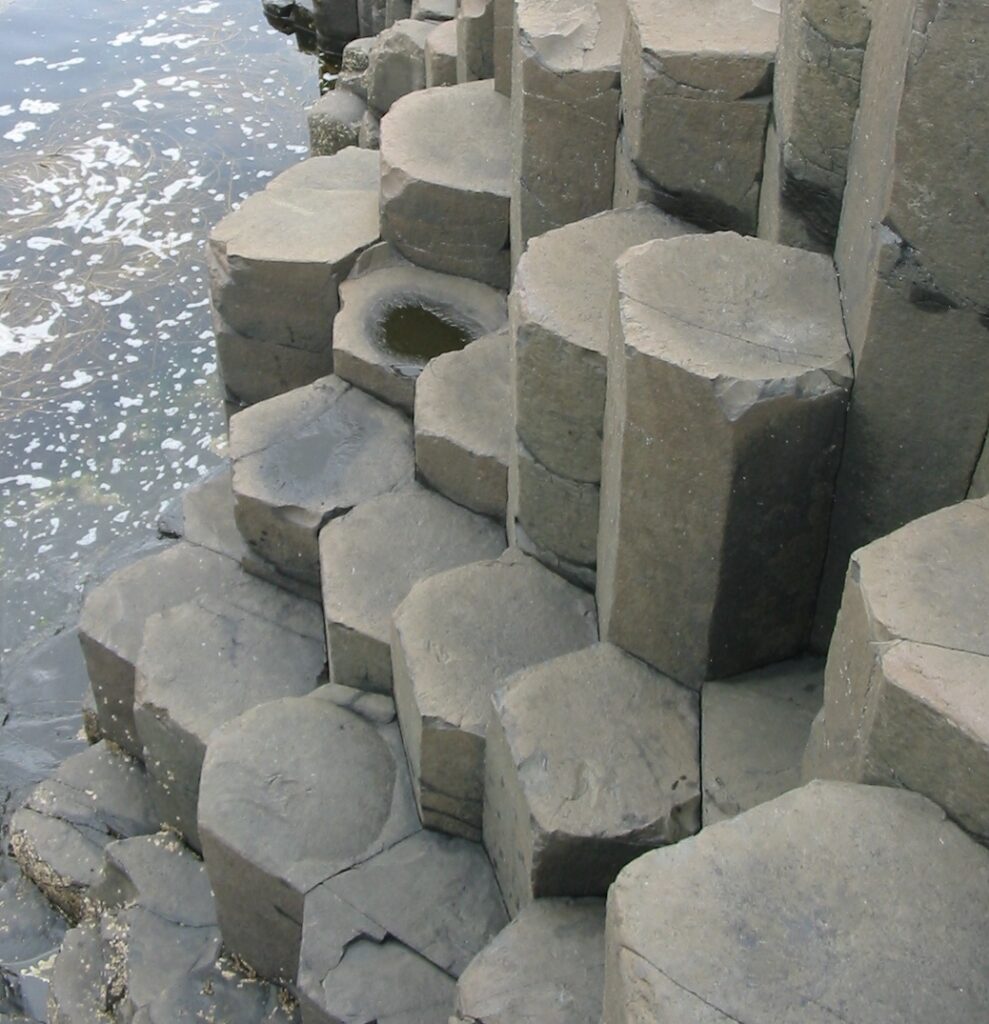
Igneous rocks are generally thought as homogeneous. However this is not always true. Some igneous rocks can also develop layered or directional structures under certain conditions.
Especially in large igneous masses, mineral differentiation occurs while magma cools. Minerals with different densities crystallize at different levels. This situation can create structures called igneous layering.
Also crack systems developing during cooling can create regular separation surfaces inside rock. These type of separations can resemble sedimentary or metamorphic layering but their origins are different.
What Does Layered Separation Tell Us?
Rock’s separation layer by layer is not just physical feature. This separation carries many clues about rock’s past.
This structure can tell us:
In what environment did rock form?
From which directions did it see pressure?
How did minerals align?
What deformations did it go through over time?
For geologists, breaking pattern of rock is often more instructive than even mineral composition. Because this breaking is summary of process rock lived through.
Why Do Some Rocks Separate, Some Don’t?
In conclusion, not every rock separates layer by layer. Reason for this is that every rock’s past is different. Homogeneous, well-crystallized rocks not containing oriented structures generally break irregularly. In contrast, rocks whose internal structure is oriented, layered or contains weak planes show regular separation.
This difference shows that nature works not randomly but extremely systematically. When rock breaks, it actually tells its past.
Conclusion: Layers Are Not Coincidence
Some rocks’ separation layer by layer is not coincidence. This feature is natural result of rock formation, deformation and mineral order. Sedimentary accumulations, metamorphic pressures and igneous processes; each can create different types of layered structures inside rock.
However rock behaved when it broke, millions of years of geological past also surfaces that way. Layers are not just physical boundaries, they’re traces of time.