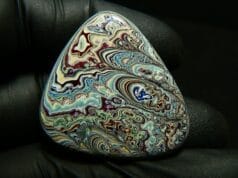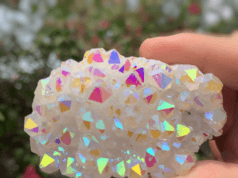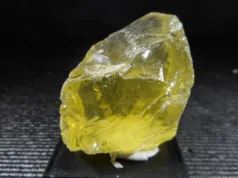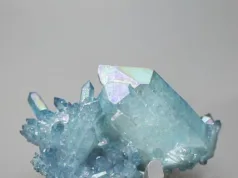




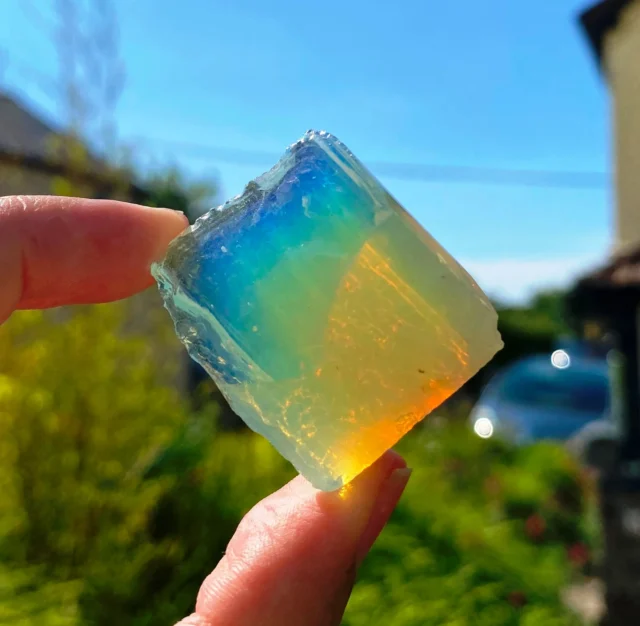
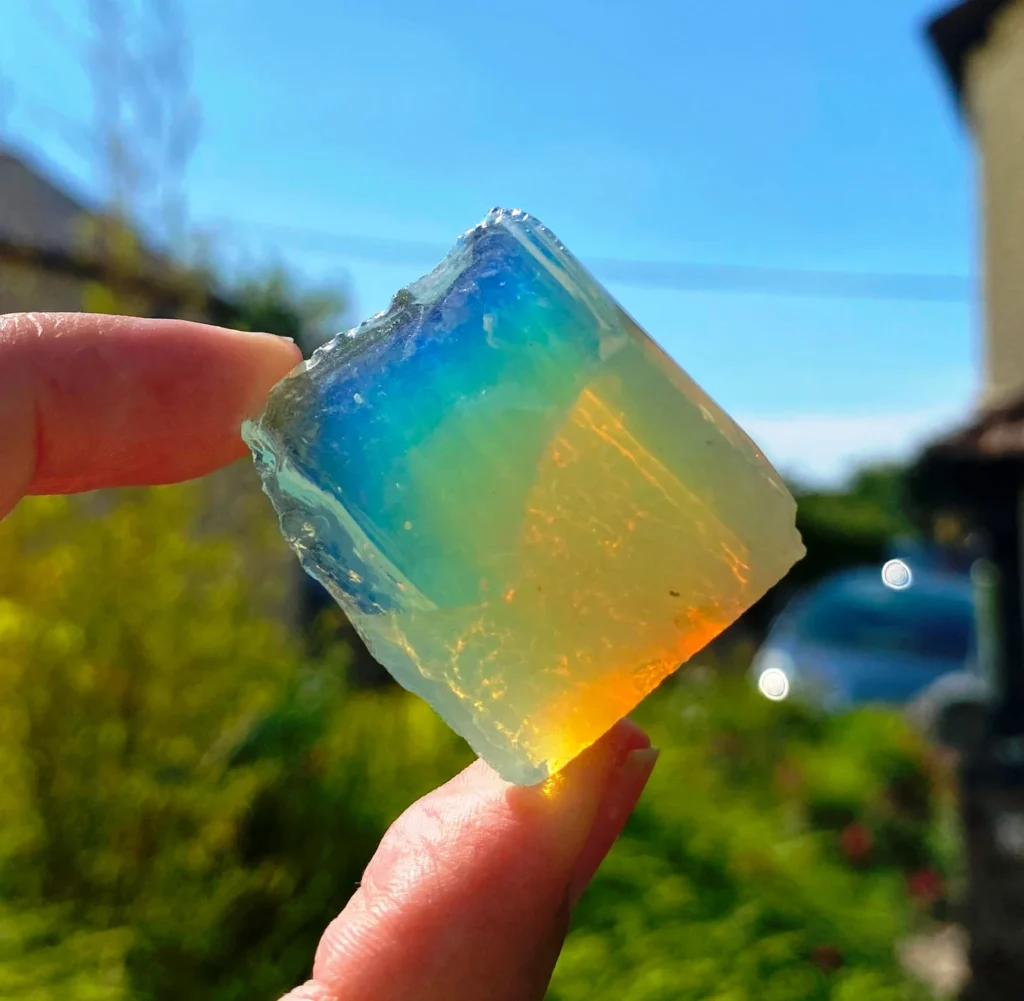
Opalite has become one of the fastest-spreading stones in recent years, appearing in social media, jewelry boutiques, energy stone communities, and even among people who have nothing to do with geology. The soft blue glow when it catches the light, the warm orange reflections inside, the shifting tones when you turn it in your hand… All of these make this material, which looks like opal but is not exactly opal, extremely popular.
And the most interesting part is this:
Most people assume opalite is a “natural stone.”
Some call it a “type of opal.”
And others add mystical explanations on top of it and make the confusion even bigger.
But the real story is very different, very clear, and honestly surprisingly simple.
Opalite is, in most cases, man-made glass.
Yes, literal glass.
But not ordinary glass. It is a special type of glass enriched with minerals, shaped under controlled temperatures, and designed to bend light in a very specific way. That is why it gained so much popularity.
In this article, the background of opalite, how it appeared, why it is easily confused with natural opal, why it is loved so much in jewelry, and why people still believe it is natural will be explained in the clearest way.
1. What Is Opalite? – The Star of the “Not Natural but Beautiful” Category
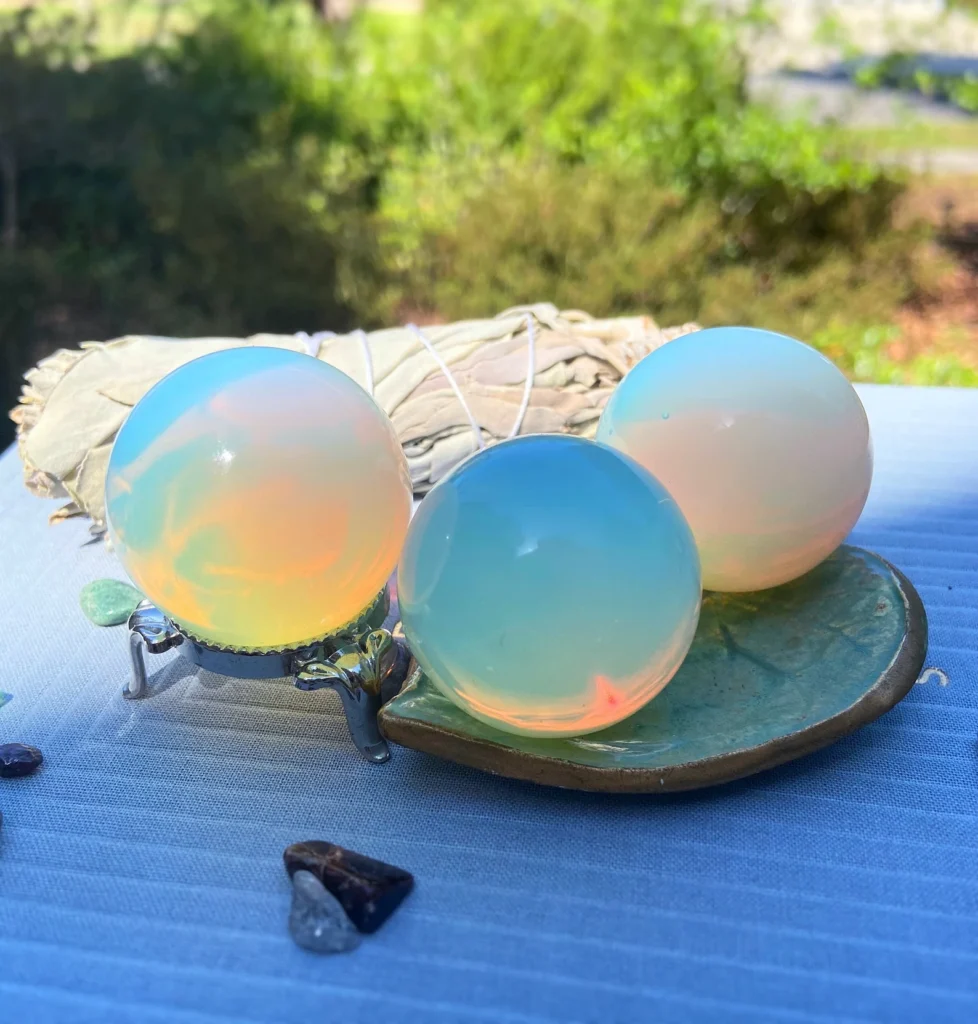
Opalite is often sold in shops under names like “moonstone,” “opal,” “aura stone,” or “dragon’s breath,” but technically it is a laboratory-produced glass material. Some manufacturers add:
- metal oxides
- fluorine
- kaolin
- quartz powder
- sodium-calcium glass mixture
to enhance its color effect.
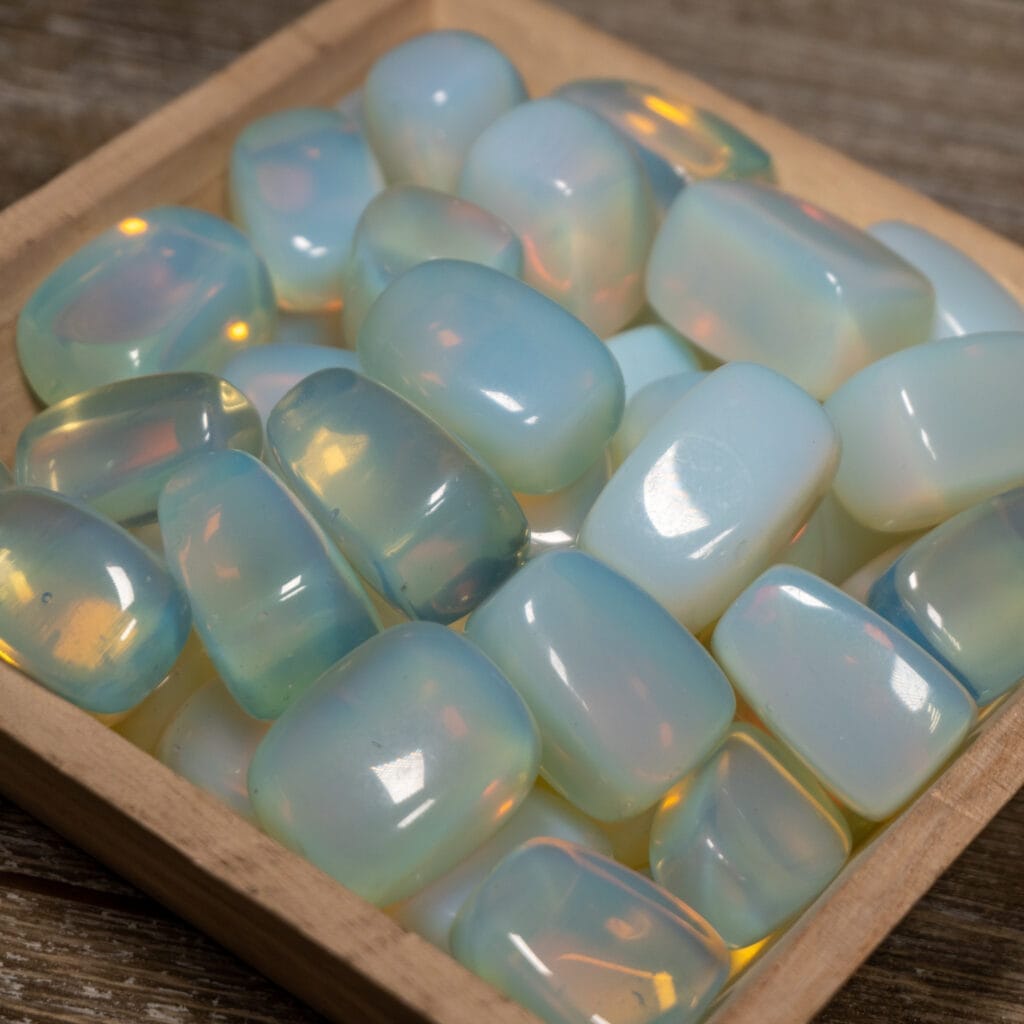
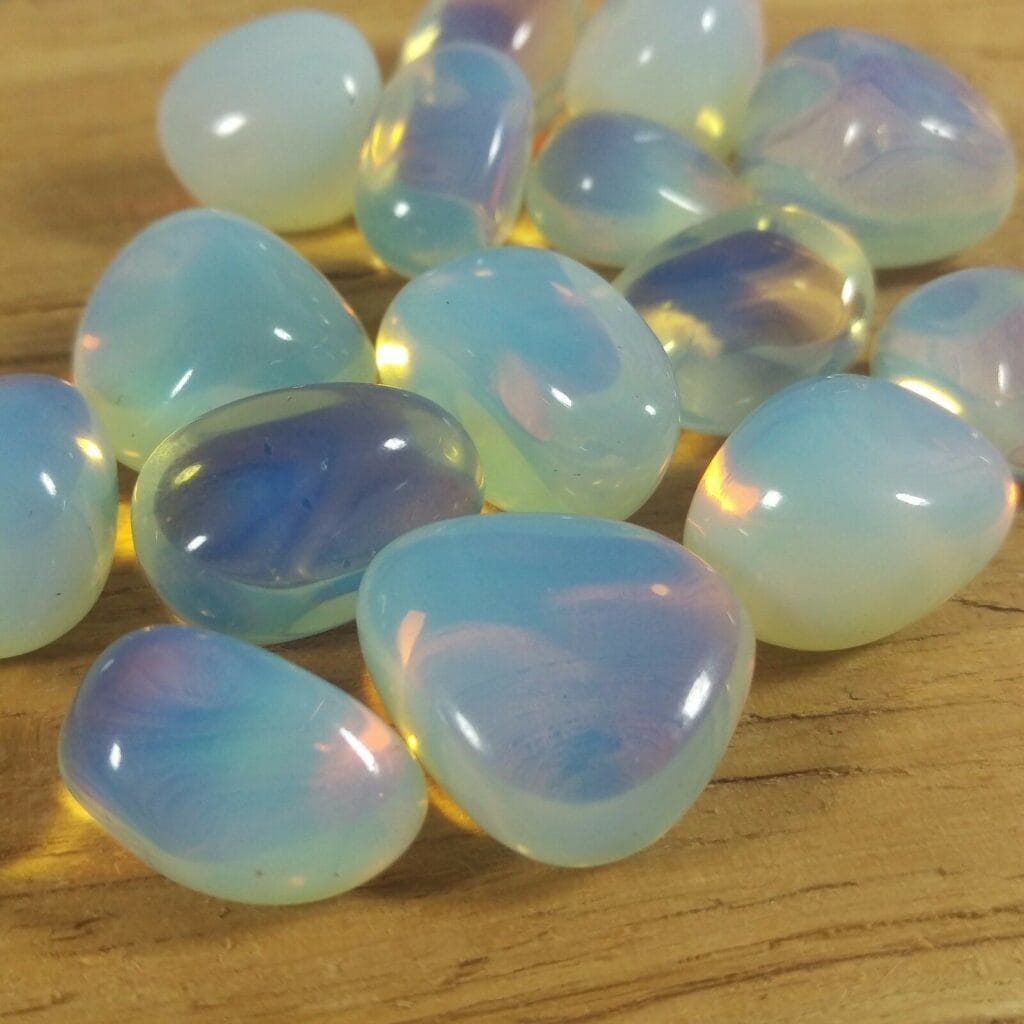
The most recognizable look of opalite:
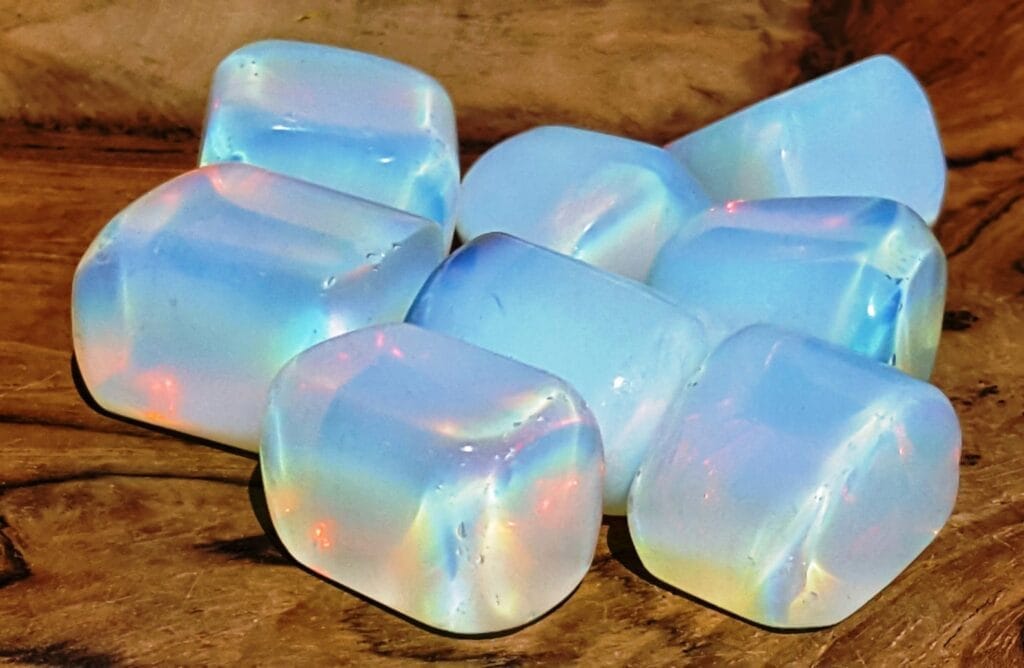
- soft blue glow
- warm orange internal reflection when light hits from below
- perfectly smooth surface
- glassy shine
- a slightly misty look similar to certain opals
Because of this, people often confuse it with precious opals.
But there is one clear difference:
Opalite does not have the play-of-color found in real opal.
That rainbow effect caused by nanometer-sized silica spheres… opalite does not have that structure.
2. The Origin of Opalite – Where Did This Material Come From?
The history of opalite is not as old as people think.
Since the 1950s, with the development of glass processing techniques, synthetic materials resembling opal began appearing. Natural opal is expensive, fragile, and difficult to cut, so jewelry manufacturers wanted an alternative that was:
- stronger
- brighter
- cheaper
- easier to work with
Opalite was created to fill exactly that need.
Today opalite is mainly produced in China and several other countries. Large furnaces melt silica-based glass at high temperatures, the ratio of metal oxides is adjusted, and the process continues until the opal-like glowing effect appears.
Modern opalite production exceeds natural opal mining by a huge margin because the color tone, brightness, and transparency can be controlled exactly as desired.
3. Why Is Opalite Confused with Opal?
There are several reasons:
1. Visual similarity
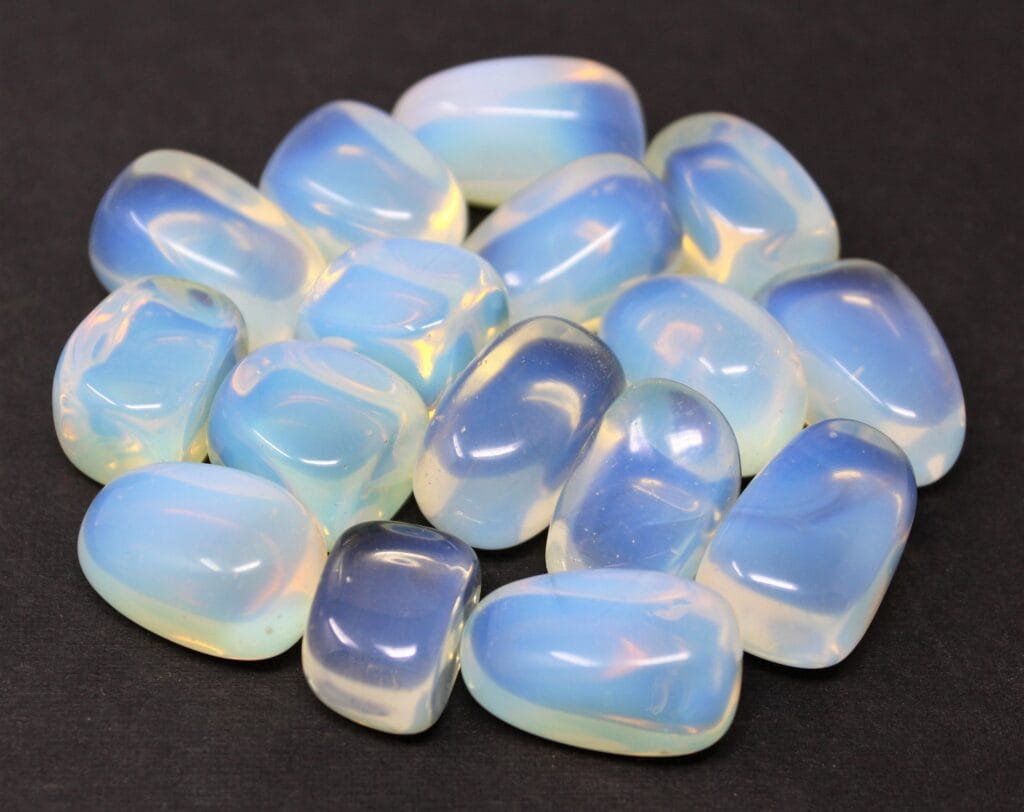
The blue-orange glow of opalite can resemble milky opal or common opal from a distance.
2. Smooth perfection
Natural opal is rarely perfectly smooth. Opalite is factory-polished, so it looks flawless. People often associate “flawless” with “valuable.”
3. Confusing names
Some sellers market it as “opalite opal,” which makes no sense and confuses buyers.
4. Energy-stone trends
In products marketed for spiritual use, people usually do not question whether something is natural.
5. Social media lighting
Phone lighting exaggerates opalite’s colors, making it appear as colorful as precious opals.
And the simple truth:
People love to believe colorful things are natural.
4. How Is Opalite Made? (Simplified Technical Explanation)
The production of opalite is not like opal forming over millions of years. It is the opposite: it is created in glass-melting furnaces.
General stages:
1. Silicate-based glass mixture is prepared.
Quartz sand, soda ash, and lime.
2. Materials that produce the opal-like look are added:
- fluorine → soft blue opalescence
- metal oxide → brightness
- kaolin → slight cloudiness
- sodium → light refraction
3. Heated to around 1500°C in a furnace.
4. Cooled slowly in a controlled process.
The slower the cooling, the softer the color transition becomes.
5. Cut and polished.
There is no silica-sphere stacking like in real opal.
Opal is a mineraloid.
Opalite is glass, nothing like opal structurally.
5. Is Opalite a Real Stone?
Geologically:
No.
Opalite is not a natural mineral or mineraloid.
Therefore:
- It has no place in geological classification.
- Its Mohs hardness is the same as glass (around 5.5).
- It has no crystal structure.
- It has no silica sphere arrangement.
But in everyday speech, people often call anything shiny a “stone,” which creates confusion.
6. Opalite as an Energy Stone
Even though it is technically glass, many people like giving opalite symbolic meaning.
In energy-stone communities, opalite is believed to:
- calm the mind
- strengthen intuition
- reduce indecision
- balance emotional fluctuations
These claims are not scientifically proven.
But in the spiritual community, opalite is a popular meditation stone.
People value how a stone makes them feel, not whether it is natural.
7. Physical Properties of Opalite
- Structure: Amorphous glass
- Hardness: 5–5.5 Mohs
- Density: About 2.1
- Luster: Glassy
- Transparency: Translucent
- Light Effect: bluish-orange glow inside
These make opalite easy to work with and visually attractive.
8. Where Is Opalite Used the Most?
✔ Jewelry
Necklaces, rings, earrings, bracelets.
Its soft blue glow makes it very desirable.
✔ Decoration objects
Figurines, massage stones, ornaments.
✔ Meditation
Used frequently as a calming stone.
✔ Interior design
Candle holders, table decorations, small lamps.
✔ Collection pieces
Since natural opal is expensive, opalite is an accessible alternative.
9. How Is Opalite Valued?
Since opalite is not natural, its value depends on:
- color uniformity
- strength of inner glow
- clarity
- cut quality
- size
- production quality (cheap ones have bubbles)
It is always much cheaper than natural opal.
10. Can Opalite Imitate Real Opal?
Some opalite pieces may create a soft opalescent effect.
But it can never imitate:
- black opal
- fire opal
- Ethiopian opal
- boulder opal
because real opal’s play-of-color comes from nanoscopic silica sphere structures that glass cannot reproduce.
11. How to Distinguish Opalite from Real Opal
1. Too smooth → likely opalite
Natural opal has imperfections.
2. Only blue-orange glow
Real opal has multi-colored flashes.
3. Bubbles inside → it’s glass
Glass production often leaves bubbles.
4. Price check
A $20 “black opal” is impossible.
12. Why Is Opalite Getting So Popular?
Reasons:
- Aesthetic look
- Low price
- Social media influence
- Energy-stone trend
- Easy to shape
- Looks good in any light
People see it as a “safe” alternative to real opal.
Conclusion – Opalite Is Not Natural, but Its Value Comes From People
Opalite is a man-made glass, not a natural stone.
But that does not make it useless or inferior. It is:
- affordable
- easy to cut
- durable
- aesthetically appealing
Its value comes from the meaning people attach to it.
That’s why today millions of people around the world have an opalite stone on their desk, their wrist, their neck, or in their collection.