




The Story of How Burning Magma Can Be This Light
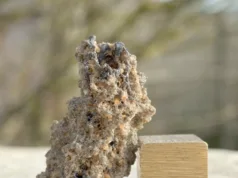
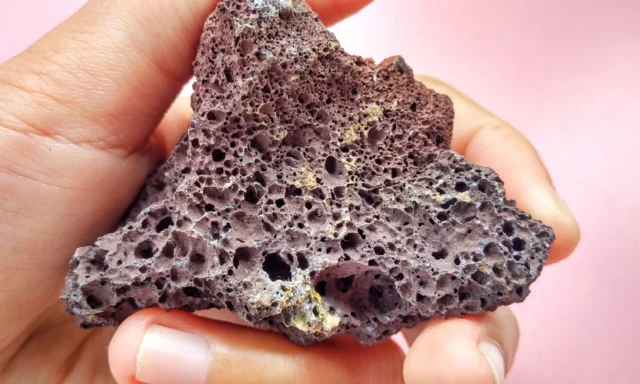
You pick up a stone. It’s porous. Like a sponge. And then you notice: It’s much lighter than you expected.
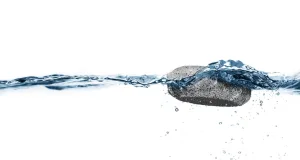
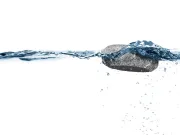
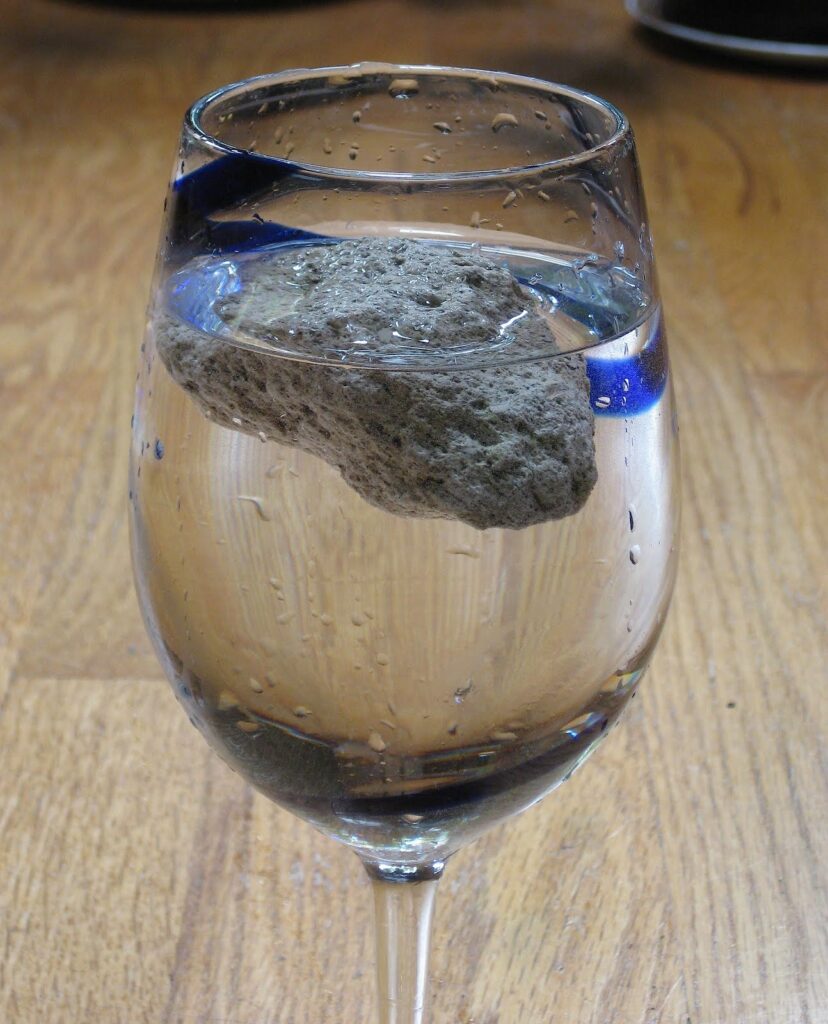
You even drop it in water sometimes… It doesn’t sink.
That’s when a question appears in your head: How does a rock float?
Pumice stone is one of geology’s most striking paradoxes. Despite being rock, it’s light. It has volcanic origins but is often related not to an explosion, but to a frozen moment. It’s hard but easily eroded. It’s natural but we encounter it in industry, cosmetics, construction, and even personal care.
This article won’t dismiss pumice stone as just “a light volcanic rock.” It will explain step by step how it forms, why it’s so porous, under what eruption conditions it emerges, and why it behaves so differently from other volcanic rocks on Earth.
Because pumice is actually the frozen breath of an explosion.
What Is Pumice Stone?
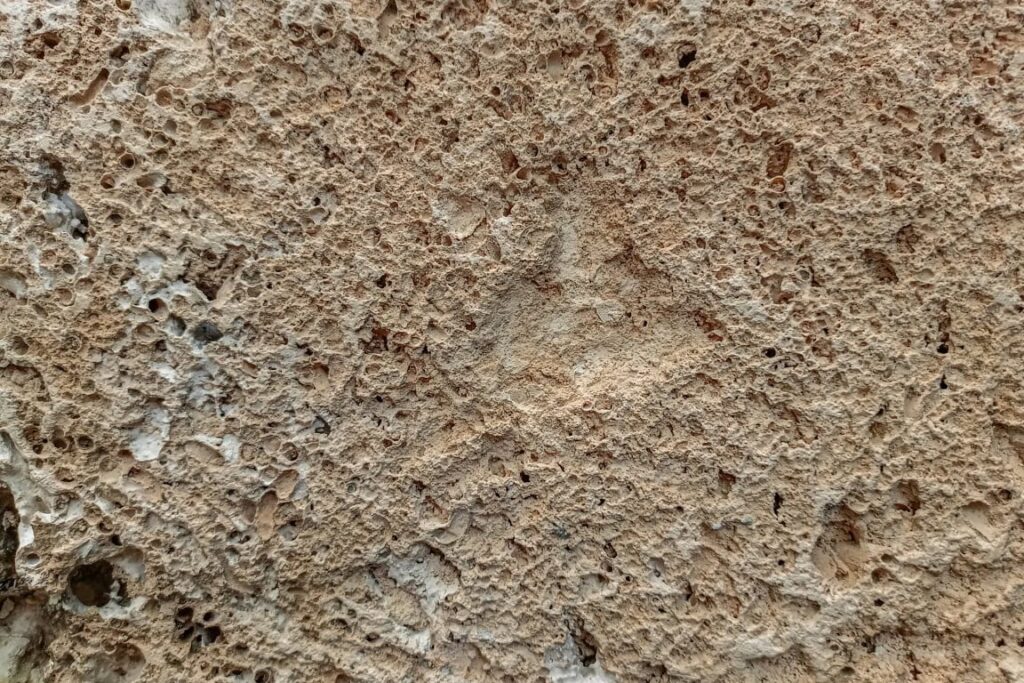
Pumice stone is a volcanic rock that forms as a result of silica-rich magma with high gas content foaming and solidifying through sudden pressure drop.
Its most basic characteristics are:
- It’s extremely porous
- Its density is very low
- It can show a glassy structure
- It’s often light-colored (white, cream, light gray)
All of these characteristics are direct results of the volcanic environment where it forms. Pumice isn’t born from slowly cooling lavas; it comes from violent, gas-loaded eruptions.
So pumice isn’t the product of a lava flow; it’s the instantaneous record of an explosion.
How Does Pumice Form? (This Is Where the Real Story Is)
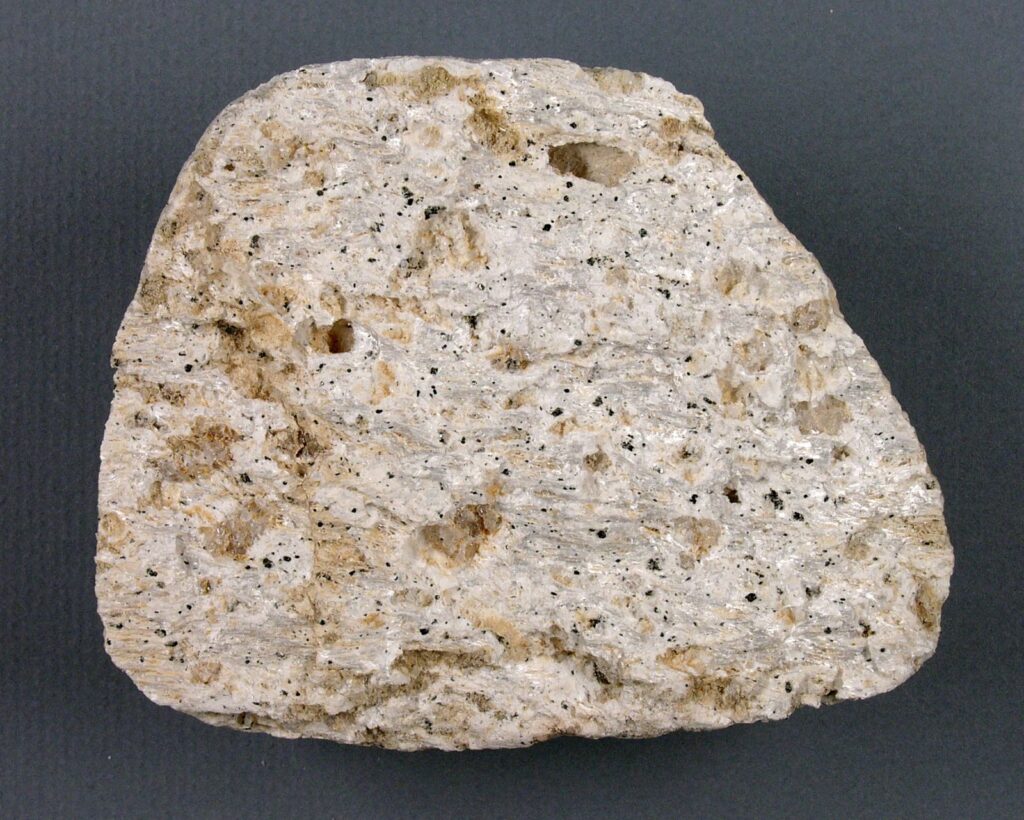
To understand pumice, you first need to look at magma.
Some magmas:
- Are rich in silica
- Have high viscosity
- Have high gas-holding capacity
These types of magmas can’t easily release the gas inside them as they rise toward the surface. Gases compressed under pressure remain dissolved within the magma.
Until…
The magma reaches the surface and pressure suddenly drops.
At this point, the gases are suddenly released. The magma literally foams. Just as a carbonated drink overflows when suddenly opened, magma behaves according to the same physical principle.
This foam structure cools and freezes within seconds. The gas voids can’t escape. They stay inside.
Result: 👉 An extremely light volcanic rock filled with pores.
Pumice is actually:
- Frozen gas bubbles
- A structure caught at the moment of explosion
- Magma in its most “air-filled” state
Why Is Pumice This Light?
Pumice’s lightness comes not so much from its mineralogical composition as from its physical structure.
Of a piece of pumice’s volume:
- 60–90% can be empty space
These voids:
- Can be interconnected
- Or can be found as closed micro-pores
Its density is often even lower than water. That’s why some pumice pieces float in water. However, they can sink over time as the pores fill with water.
This characteristic is one of the things that makes pumice rare in geology. Because most rocks:
- Are made of crystals
- Have low void ratios
- Have high density
Pumice, however, is an exception. It looks like a rock but behaves like foam.
The Difference Between Pumice and Other Volcanic Rocks
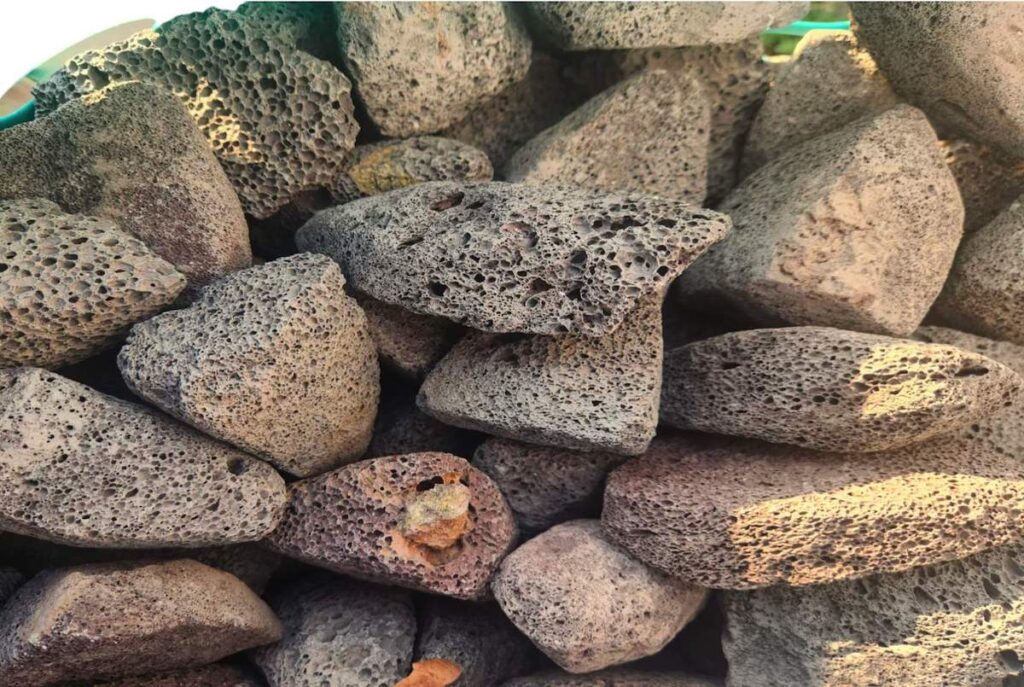
Pumice is often confused with obsidian, tuff, and scoria. But there are important differences between them.
Pumice vs Scoria
- Scoria is darker colored
- Its pores are larger but its density is greater
- Scoria generally forms from basaltic magma
Pumice, however:
- Is light colored
- Has a high silica ratio
- Is much lighter
Pumice vs Obsidian
- Obsidian is like glass, non-porous
- Cools very quickly but contains no gas
Pumice, however:
- Can be glassy but is full of gas
- Even if they come from the same magma type, they form under different conditions
This difference shows us: What separates volcanic rocks isn’t just magma, it’s eruption conditions.
In What Volcanic Environments Does Pumice Form?
Pumice is most often associated with:
- Rhyolitic
- Dacitic
magma types.
These magmas:
- Contain high silica
- Are not fluid
- Have high gas-holding capacity
That’s why pumice generally emerges in:
- Explosive stratovolcanoes
- Major eruptions that form calderas
- Plinian and sub-Plinian explosions
The quieter a volcano flows, the lower the chance of producing pumice. The more explosive a volcano is, the higher the pumice probability.
Is Pumice a Rock or Glass?
Geologically, pumice is:
- A rock predominantly made of volcanic glass
The crystal ratio is low. Because cooling is very rapid. There’s no time for crystals to grow.
This gives pumice:
- A brittle structure
- An irregular surface
- Glassy shine (in some specimens)
But the thing to remember is: Even if pumice looks like glass, it’s a natural rock. It’s not an industrial product.
Where Is Pumice Found?
Pumice deposits are generally found:
- In old volcanic explosion areas
- Around calderas
- Together with volcanic ash and tuff layers
Worldwide:
- Italy
- Turkey
- Greece
- Iceland
- USA (especially western regions)
have areas rich in pumice.
Turkey, especially in Central Anatolia, has pumice reserves that are important on a world scale. This has made the industrial use of pumice widespread.
Physical Properties of Pumice Stone
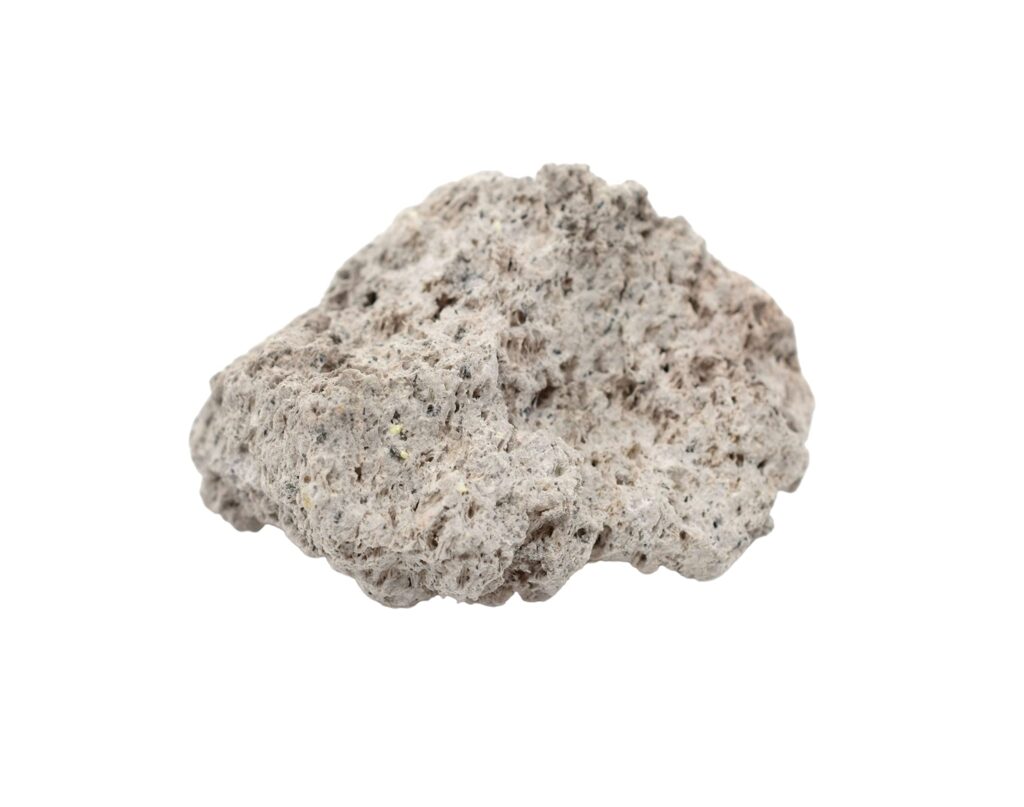
What truly separates pumice stone from all other rocks is not so much its mineralogical composition as its physical structure. The lightness you notice the moment you pick it up is actually the result of millions of tiny gas voids.
Pumice is not solidified lava; it’s frozen foam.
This foamy structure causes both open and closed pores to exist within the rock. Some of the pores are interconnected, while others are isolated. This situation directly determines pumice’s:
- density
- water absorption capacity
- insulation properties
Physical Properties of Pumice Stone – Table
| Property | Value / Range | Explanation |
|---|---|---|
| Color | White, cream, light gray | Related to high silica content |
| Density | 0.25 – 0.9 g/cm³ | Some specimens are lighter than water |
| Porosity | 60% – 90% | Frozen state of gas bubbles |
| Hardness (Mohs) | 5 – 6 | Results from glassy structure |
| Crystallization | Very low | Due to rapid cooling |
| Texture | Vesicular (porous) | Distinctive basic feature |
| Fracture | Irregular / conchoidal | Volcanic glass effect |
| Water absorption | High | Due to open pores |
This table clearly shows: Pumice cannot be explained with classic rock logic. The density–hardness–durability relationship is out of the ordinary.
Chemical Properties of Pumice
Chemically, pumice stone belongs to the acidic volcanic rocks group. This shows that it’s rich in silica (SiO₂).
Typical pumice composition:
- Silicon dioxide (SiO₂) → dominant
- Aluminum oxide (Al₂O₃)
- Potassium and sodium oxides
- Low amounts of iron, magnesium, and calcium
Average Chemical Composition (approximate)
| Component | Percentage (%) |
|---|---|
| SiO₂ | 65 – 75 |
| Al₂O₃ | 12 – 15 |
| Na₂O + K₂O | 6 – 8 |
| FeO / Fe₂O₃ | 1 – 3 |
| CaO | <2 |
| MgO | <1 |
This high silica ratio:
- Increases magma’s viscosity
- Causes gases to become trapped
- Makes the explosion more violent and explosive
So pumice’s physical lightness is a direct result of its chemical composition.
Why Does Pumice Float? (From a Geological Perspective)
Pumice floating in water isn’t a “curious feature,” it’s a situation completely explained by the laws of physics.
- Air is trapped in closed pores
- Average density drops below water
- The rock stays on the surface with buoyant force
However, this situation isn’t permanent. Over time:
- Open pores fill with water
- Density increases
- Pumice sinks
That’s why floating pumice islands are sometimes seen in oceans. After major volcanic explosions, pumice layers extending for kilometers can drift on the ocean surface for months.
Where Is Pumice Used? (Areas of Use)
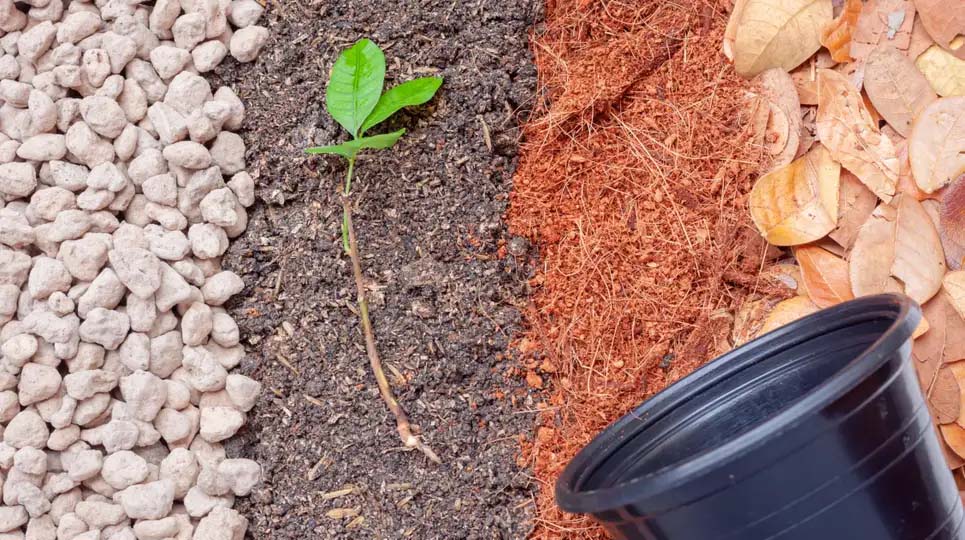
The reason pumice is so widely used isn’t a single property; it’s a combination of properties.
1. Construction Sector
Pumice:
- Is light
- Provides thermal insulation
- Provides sound insulation
- Reduces concrete weight
That’s why it’s preferred in areas such as:
- Lightweight concrete
- Block and brick production
- Thermal insulation panels
Especially in earthquake zones, pumice aggregate provides great advantages for reducing structural load.
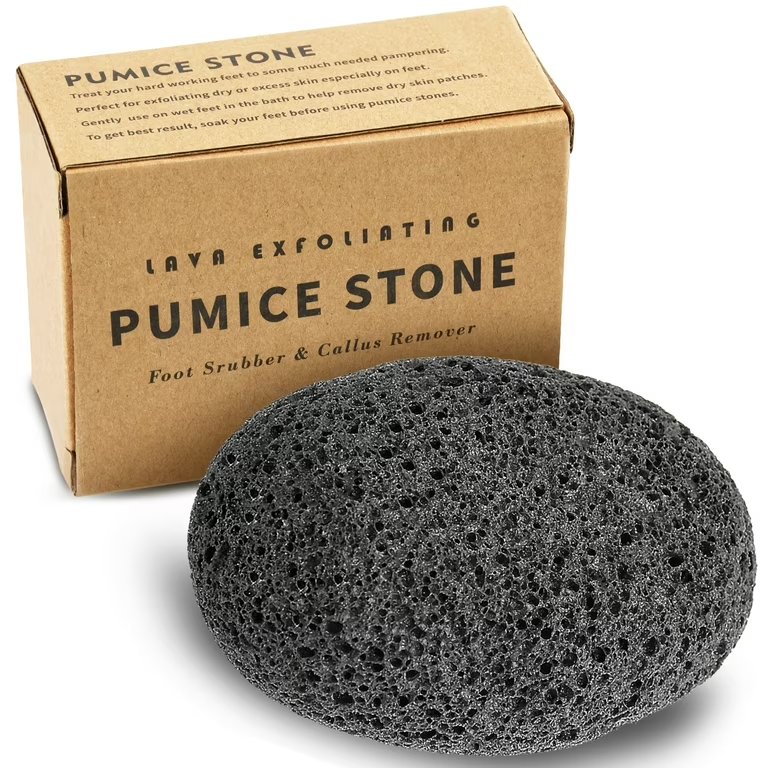
2. Cosmetics and Personal Care
Pumice’s abrasive property is controlled. It’s hard but not sharp.
That’s why it’s ideal for:
- Heel stones
- Skin peeling products
- Natural exfoliants
Compared to synthetic abrasives, it’s considered more natural and environmentally friendly.
3. Agriculture and Horticulture
Pumice isn’t directly a “nutrient” in agriculture. But it changes the physical structure of soil.
Soil with added pumice:
- Aerates better
- Retains water in balance
- Reduces root rot
That’s why it’s widely used in areas such as:
- Potted plants
- Greenhouses
- Bonsai cultivation
4. Industry and Filtration
Thanks to its porous structure, pumice is also used as:
- Filter material
- Carrier surface
- Support material in chemical processes
Why Is Pumice So Widespread?
Because pumice:
- Is natural
- Is easy to process
- Doesn’t require energy
- Has low environmental impact
So beyond being a geological product, it’s also economically and environmentally sustainable.
Misconceptions: Does Pumice Form in Every Volcanic Eruption?
No.
Pumice:
- Doesn’t form from basaltic lavas
- Isn’t seen in fluid lava explosions
- Isn’t associated with quiet, lava-flowing volcanoes
What’s essential for pumice is:
- Gas-loaded
- High-silica
- Explosive eruption
That’s why pumice is the product of the most extreme conditions of volcanism.
Conclusion: Pumice Is Not a Rock, It’s a Monument
Pumice stone, geologically, is not a record of a process but of a moment. It’s the frozen state of those few seconds when gas couldn’t escape, magma foamed, and pressure suddenly dropped.
That’s why it:
- Is light
- Is porous
- Is different
It looks like a rock but is actually the breath of an explosion.