












Oxide Minerals
Oxide minerals form a distinctive and essential class of minerals in which oxygen (O²⁻) bonds directly with one or more metal (or semi-metal) cations, producing compounds that often crystallize in igneous environments, during metamorphism or as weathering products at Earth’s surface. These include well-known species such as hematite (Fe₂O₃), magnetite (Fe₃O₄), corundum (Al₂O₃) and chromite (FeCr₂O₄). Because of their relatively simple chemistry compared to silicates and their varied formation settings, oxide minerals provide crucial clues about temperature, oxidation state, fluid history and tectonic processes. They are also directly tied to major ore deposits — for example iron ores, chromium ores and aluminium ores often occur as oxides. In this category you’ll explore how oxide minerals form, how their crystal structures and physical properties reflect those formation conditions, where they occur in the field (or in the subsurface) and why as a geologist, engineer or site-practitioner you should pay attention to them for everything from exploration to material behaviour and geotechnical risk.

Scheelite
Scheelite is a calcium tungstate mineral that is commonly found in various geological environments. It is an important ore of tungsten, which is a...
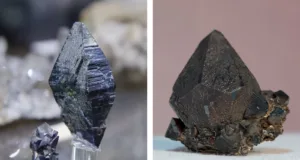
Anatase
Anatase is one of the three primary mineral forms of titanium dioxide (TiO2), the other two being rutile and brookite. It is a tetragonal...

Taaffeite
Taaffeite is a rare and highly prized gemstone known for its exquisite beauty and exceptional rarity. It belongs to the beryl family of minerals...

Musgravite
Musgravite is a rare and precious gemstone that belongs to the oxide mineral family. It is a member of the taaffeite family, which also...

Padparadscha Sapphire
Padparadscha sapphire is a rare and highly sought-after variety of the mineral corundum, which is composed of aluminum oxide with trace elements that give...
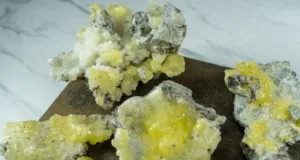
Brucite
Brucite is a mineral that is composed of magnesium hydroxide (Mg(OH)2). It belongs to the class of minerals known as hydroxides, which are compounds...
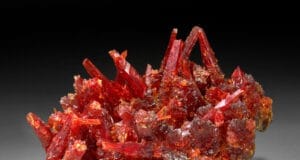
Zincite
Zincite is a mineral composed primarily of zinc oxide (ZnO), often with trace amounts of manganese and other elements. It typically occurs in bright...
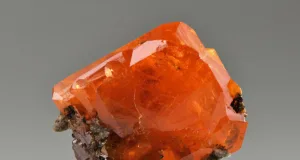
Wulfenite
Wulfenite is a lead molybdate mineral with the chemical formula PbMoO4. It is known for its striking crystal formations, which are typically square or...

Adamite
Adamite is a mineral that belongs to the arsenate class of minerals. Its chemical formula is usually written as Zn<sub>2</sub>(AsO<sub>4</sub>)(OH), indicating its composition of...

Pink Star Sapphire
Pink star sapphires are a captivating variety of sapphire known for their stunning pink hues. Sapphires are a type of corundum mineral, with their...
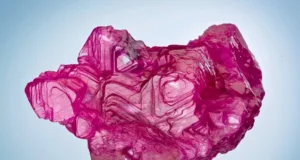
Mogok Ruby
Mogok, often referred to as the "Valley of Rubies," is a renowned region located in the northern part of Myanmar (Burma). It holds immense...

Powellite
Powellite is a mineral that belongs to the broader group of minerals known as molybdates and tungstates. It is specifically classified as a calcium...