










Oxide Minerals
Oxide minerals form a distinctive and essential class of minerals in which oxygen (O²⁻) bonds directly with one or more metal (or semi-metal) cations, producing compounds that often crystallize in igneous environments, during metamorphism or as weathering products at Earth’s surface. These include well-known species such as hematite (Fe₂O₃), magnetite (Fe₃O₄), corundum (Al₂O₃) and chromite (FeCr₂O₄). Because of their relatively simple chemistry compared to silicates and their varied formation settings, oxide minerals provide crucial clues about temperature, oxidation state, fluid history and tectonic processes. They are also directly tied to major ore deposits — for example iron ores, chromium ores and aluminium ores often occur as oxides. In this category you’ll explore how oxide minerals form, how their crystal structures and physical properties reflect those formation conditions, where they occur in the field (or in the subsurface) and why as a geologist, engineer or site-practitioner you should pay attention to them for everything from exploration to material behaviour and geotechnical risk.
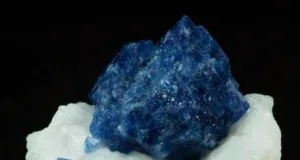
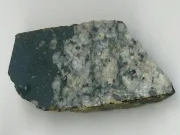
Gahnospinel
Gahnospinel is a mineral belonging to the spinel group, which is a class of minerals with the general formula AB₂O₄. In gahnospinel, A represents...
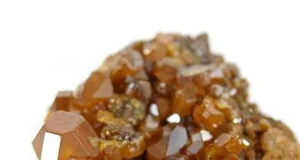
Stolzite
Stolzite is a mineral that belongs to the tungstate mineral group. Its chemical formula is PbWO4, which indicates that it is composed of lead...
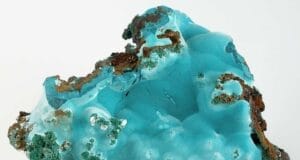
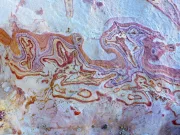
Rosasite
Rosasite is a secondary mineral that typically forms in oxidized zones of copper-zinc ore deposits. It is chemically composed of copper zinc carbonate hydroxide,...

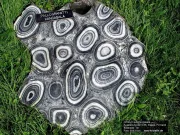
Psilomelane
Psilomelane is a barium manganese oxide mineral, typically presenting as black or dark gray with a submetallic to dull luster. It often forms botryoidal...

Gahnite
Gahnite is a mineral belonging to the spinel group, specifically a zinc aluminum oxide with the chemical formula ZnAl2O4ZnAl_2O_4ZnAl2O4. It is typically found in...

Crocoite
Crocoite is a rare mineral classified as a lead chromate (PbCrO₄). It is well-known for its vibrant orange-red color and distinctive crystal formations, which...
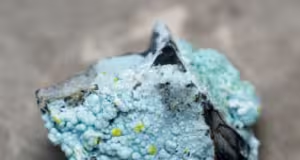
Gibbsite
Gibbsite is a naturally occurring mineral form of aluminum hydroxide with the chemical formula Al(OH)₃. It belongs to the hydroxides and oxides mineral class...