





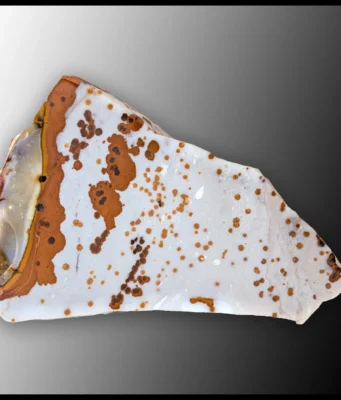
Pearl

A pearl is a hard, shiny object produced in living tissue such as a crustacean mollusk or fossil conulariids. It is generally composed of calcium carbonate and mainly aragonite.
Coral
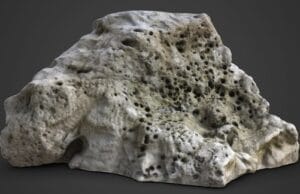
Coral is skeletal material produced by marine animals. Coral is organic and created by living organisms. When coral polyps die, the hardened skeleton remains and this material is used as a gemstone. Most corals are white, but nature can create coral in many other colors, including the popular orange to red forms. Usually its compound is calcium carbonate.
Turquoise
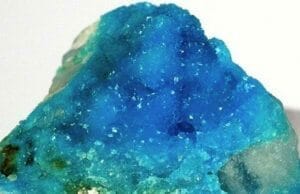
Turquoise is a
member of phosphate mineral with chemical the formula CuAl6 (PO4)4(OH) 8·4H2O.
Turquoise is an opaque, blue-to-green mineral that is a hydrated phosphate of
copper...
Chrysoberyl

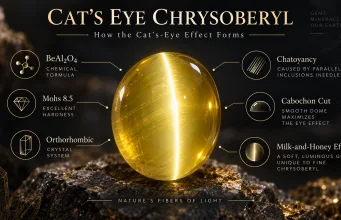
Chrysoberyl is a member of oxide mineral or gemstone with the formula: BeAl2O4.In spite of the similarity in their names, chrysoberyl and beryl are absolutely extraordinary stones, despite the fact that both include beryllium. Chrysoberyl is the third most commonplace herbal stone and is found at 8.5 at the Mohs
Spodumene
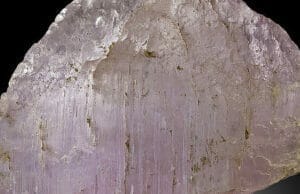
Spodumene is a pyroxene member of inosilicate mineral with chemical formula is LiAl(SiO3)2, lithium aluminium. It can also be pink, lilac, or green. Crystals are prismatic, flattened, and typically striated along their length. Gem varieties of the mineral usually exhibit strong pleochroism.
Beryl

Beryl is a member of cyclosilicate minerals with composed of beryllium aluminium. Chemical formula: Be3Al2Si6O18. Few people have ever heard of the mineral beryl but almost everyone has heard of its principal gemstone varieties emerald and aquamarine.
Rutile
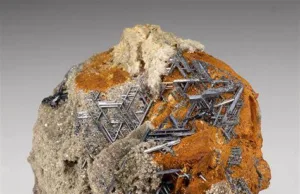
Rutile is oxide group mineral with formula: titanium dioxide (TiO2). It often appears as pale golden, needlelike crystals inside quartz. When not enclosed in quartz, it is usually yellowish or reddish brown, dark brown, or black.
Diopside
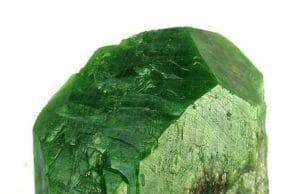
Diopside is a member of pyroxene group mineral with formula is MgCaSi2O6. Specimens can be colorless but are more often bottle green, brownish green, or light green in color. It has two distinct prismatic cleavages at 87 and 93° typical of the pyroxene series. Diopside occurs in the form of equant to prismatic crystals that are usually nearly square in section.
Sodalite
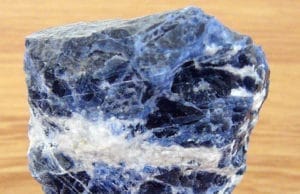
Sodalite is a feldspathoidal tectosilicate mineral that is rich royal blue widely used as an ornamental gemstone. Chemical formula is Na8 (Al6Si6O24) Cl2. Specimens can be blue, gray, pink, colorless, or other pale shades. They sometimes fluoresce bright orange under ultraviolet light. Sodalite nearly always forms massive aggregates or disseminated grains.
Opal
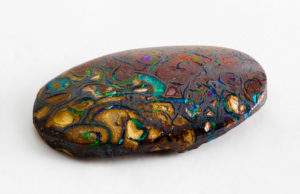
Opal is one of the most visually extraordinary gemstones on Earth. Some specimens flash with brilliant rainbow colors that appear to move and shift...
Bismuth
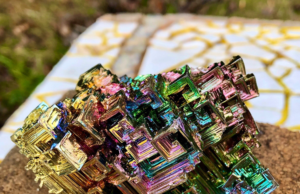
As a native metal, bismuth has been known since the Middle Ages. A German monk named Basil Valentine first described it in 1450. Bismuth is often found uncombined with other elements, forming indistinct crystals, often in parallel groupings. It is hard, brittle, and lustrous. It is also found in grains and as foliated masses. Silver-white, it usually has a reddish tinge that distinguishes it. Specimens may have an iridescent tarnish. Bismuth is found in hydrothermal veins and in pegmatites and is often associated with ores of tin, lead, or copper,
Corundum
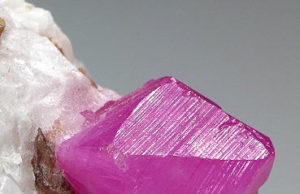
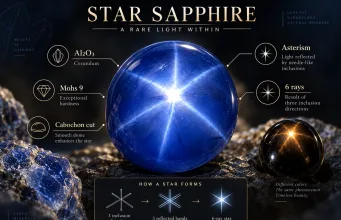
Corundum is a mineral that is primarily composed of aluminum oxide (Al2O3) and is one of the naturally occurring crystalline forms of aluminum oxide....