





Fossils
Earth’s Ancient Life Preserved in Stone
Fossils are the most reliable evidence of life that existed long before humans appeared. They record the shapes of ancient organisms, the environments they lived in, and the conditions that shaped their evolution. A fossil may be the hard shell of a marine creature, the imprint of a leaf pressed into mud, the preserved burrow of a worm, or the microscopic skeleton of tiny plankton drifting through prehistoric oceans. Some fossils capture a moment of movement — a footprint, a feeding trace, a shallow burrow. Others preserve whole organisms with astonishing detail.
The rocks that contain these remnants form a vast archive. Layer by layer, they record oceans rising and falling, forests expanding and shrinking, deserts migrating, climates cooling and warming, and species emerging, flourishing, and disappearing. Fossils allow scientists to reconstruct these ancient worlds and understand how Earth changed through deep time.
What Fossils Represent
A fossil is any preserved evidence of past life. Life leaves behind more than bones. It leaves textures, movements, chemical signatures, biological structures, and behaviors. Because of this, the fossil record includes several distinct categories, each providing different types of information.
Body Remains
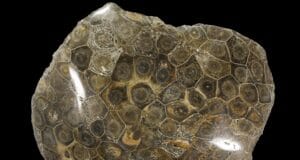
These include bones, shells, teeth, wood, leaves, coral skeletons, seeds, and other physical structures. They help identify the organism and reveal anatomy, growth patterns, age, injuries, and adaptations.
Behavioral Traces
Footprints, trackways, burrows, borings, feeding marks, resting impressions, and coprolites belong to this group. These fossils show how animals moved, how they interacted with their surroundings, and how they searched for food or avoided predators.
Microscopic Fossils
Foraminifera, diatoms, radiolarians, spores, pollen grains, and tiny algae form an enormous part of the fossil record. These organisms reflect ocean chemistry, temperature, salinity, nutrient levels, and shifts in climate. They are also essential for dating rock layers with great precision.
Chemical Signatures
Some fossils leave behind molecular or isotopic clues rather than physical structures. These include pigments, lipids, carbon and nitrogen isotopes, and organic residues. Chemical fossils reveal early microbial life, oxygen levels in the atmosphere, and environmental changes that occurred billions of years ago.
How Fossils Form
Most organisms never become fossils. Decomposition begins immediately after death, and scavengers, bacteria, oxygen, water, and weathering quickly destroy tissues. Fossilization requires rapid protection from these destructive forces.
Rapid Burial
Mud, sand, volcanic ash, silt, or underwater sediments must cover remains quickly. This protects them from scavenging and physical disturbance.
Low-Oxygen Conditions
Decaying organisms need oxygen. In stagnant waters, deep ocean floors, or fine-grained deposits, oxygen is limited, slowing decomposition enough for preservation to begin.
Mineral-Rich Water
Groundwater containing dissolved minerals flows through buried remains. These minerals fill cavities, coat surfaces, or replace tissues entirely, preserving fine shapes and internal details.
Pressure and Time
As sediments accumulate, they compress the layers below. Over thousands to millions of years, sediments lithify — turning into solid rock that stabilizes and protects fossils.
Only a tiny fraction of all organisms ever fossilize, which makes each fossil valuable evidence of ancient life.
Fossilization Processes
Fossils form through a variety of pathways. Each process preserves different types of details and provides different insights into ancient organisms and environments.
Permineralization: Mineral-rich water infiltrates pores within bone, wood, or shell. Minerals crystallize, creating strengthened, stone-like replicas of the original material while retaining microscopic detail. Many vertebrate bones and petrified forests result from this process.
Replacement: Biological material dissolves and is gradually replaced by minerals. The original substance disappears, but its form remains intact. Shells replaced by silica, bones replaced by calcite, and wood turned to quartz are common examples.
Carbonization: Soft tissues compress under heat and pressure. Most chemical components escape, leaving a thin carbon film that outlines the organism. This process preserves delicate structures such as leaves, small fish, soft-bodied organisms, and insects.
Molds and Casts: A mold forms when the organism decays or dissolves, leaving a hollow impression. A cast forms when minerals or sediment fill that impression. These fossils preserve external shapes even without original material.
Amber Preservation: Tree resin can trap insects, feathers, plant fragments, and small organisms. As the resin hardens into amber, it seals these remains with extraordinary detail — often including hairs, wing veins, colors, and cellular textures.
Trace Formation: Movements and behaviors leave impressions in soft sediment. Burrows, footprints, trails, feeding marks, and coprolites record how organisms interacted with their environments.
Each fossilization process reveals a different dimension of ancient life: biology, ecology, behavior, and environmental conditions.
Types of Fossils and What They Reveal
Body Fossils
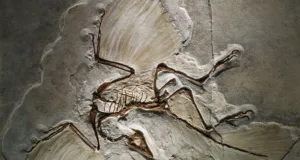
Body fossils preserve structure. They show size, shape, growth stages, injuries, diseases, and evolutionary modifications. They often allow scientists to reconstruct entire organisms.
Trace Fossils
Trace fossils represent behavior rather than structure. They expose:
- movement patterns
- group behavior
- burrowing depth
- feeding style
- predator-prey relationships
- substrate type
A single trackway can show whether an animal traveled alone or in a group, whether it accelerated, and how it interacted with its environment.
Microfossils
Though small, microfossils form the basis of modern stratigraphy and paleoclimate research. Their abundance, rapid evolution, and sensitivity to environmental change make them powerful tools for:
- climate reconstruction
- ocean chemistry analysis
- dating sediment layers
- tracking glacial and interglacial cycles
- identifying ancient habitats
Chemical Fossils
Molecular fossils extend the fossil record far beyond what physical remains can show. Pigments and isotopes reveal:
- ancient atmospheric conditions
- nutrient cycles
- presence of microbial communities
- temperature fluctuations
- early oxygenation events
Chemical fossils often represent the earliest known life on Earth.
Why Fossils Are Important
Fossils are essential for understanding how life and environments evolved over geological time.
Evolution
They record transitions between species, adaptations to changing environments, and the appearance and disappearance of lineages. Evolution becomes visible in the rock record.
Climate Change
Fossils reveal shifts in temperature, precipitation, ocean circulation, and atmospheric composition. Pollen, spores, and microfossils are especially sensitive climate indicators.
Plate Tectonics
When marine fossils appear on mountaintops or tropical fossils in cold regions, they demonstrate continental movement. Fossils help reconstruct ancient geography.
Mass Extinctions
Catastrophic events leave sharp boundaries in the fossil record. These include asteroid impacts, volcanic pulses, and ocean collapses. Fossils show which groups vanished, which survived, and how ecosystems rebuilt afterward.
Ancient Ecosystems
Fossils reconstruct forests, reefs, deserts, wetlands, deep seas, and polar environments. They reveal predator-prey relationships, food webs, and seasonal cycles.
Natural Resources
Many economically important resources have fossil origins:
- coal from ancient forests
- petroleum from plankton
- limestone from marine organisms
- phosphates from biological accumulation
Fossils help identify and interpret these deposits.
Index Fossils and Geological Time
Certain organisms evolved quickly, spread widely, and disappeared suddenly. These “index fossils” allow precise dating of rock layers.
Examples include:
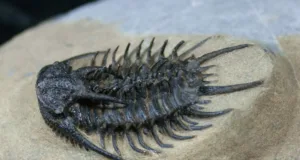
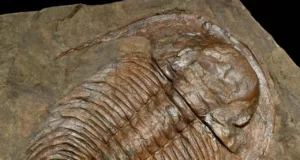
- trilobites
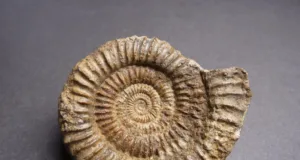
- ammonites
- graptolites
- planktonic foraminifera
Their appearances and extinctions mark boundaries in Earth’s geologic time scale.
How Scientists Study Fossils
Field Research
Scientists map rock layers, record fossil positions, describe sediments, and excavate remains. The context of a fossil — its orientation, surrounding layers, and stratigraphic level — often provides more information than the fossil itself.
Laboratory Techniques
Modern paleontology uses advanced tools:
- CT and micro-CT scanning
- 3D reconstruction
- isotope analysis
- electron microscopy
- thin-section petrography
- high-resolution surface imaging
These methods uncover structures and chemical patterns that are invisible to the naked eye.
Reconstructing Ancient Environments
From a well-preserved fossil bed, scientists can infer:
- water depth
- sedimentation rates
- oxygen levels
- salinity
- temperature
- vegetation type
- food webs
- seasonal signals
Fossils allow researchers to rebuild entire ecosystems that vanished millions of years ago.
Conclusion
Fossils are the most dependable record of Earth’s ancient life. They show how organisms lived, how they adapted, how ecosystems changed, and how the planet responded to dramatic shifts in climate, geography, and biodiversity. Every fossil captures a moment from a world that no longer exists — a moment preserved in stone, waiting to be understood.
They form the foundation of paleontology, the key to Earth’s biological past, and a crucial tool for interpreting the deep history written inside rocks.