




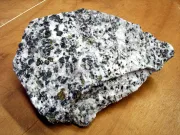
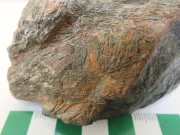
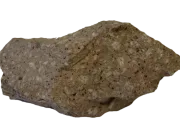








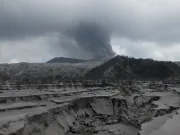




Felsic igneous rocks are relatively silica-rich and commonly contain quartz, potassium feldspar and sodium-rich feldspar.
Tag: Felsic Rocks
Dacite
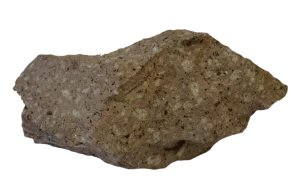
Learn how dacite forms, its mineral composition, TAS classification, textures, volcanic hazards, and how to distinguish it from andesite and rhyolite.
Orbicular Granite
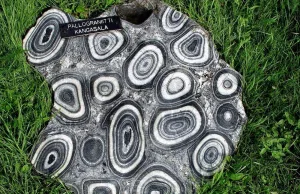
Formation, Texture, Composition, and Geological SignificanceAt first glance, orbicular granite looks almost too unusual to be natural. Its surface contains rounded, often eye-like patterns...
Tonalite

Tonalite is a type of intrusive igneous rock that belongs to the granodiorite suite of rocks. It is characterized by its composition, which is...
Pegmatite
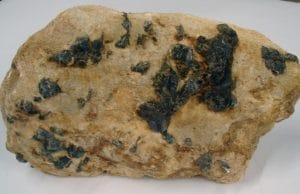
Pegmatite is an igneous rock that form end of the stage a magma’s crystallization. Pegmatites contain exceptionally large crystals and they contain rarely minerals than other types of rocks. They have interlocking crystals usually larger than 2.5 cm in size. Generally most Pegmatites are found in sheets of rock that are dikes and veins Also near large masses of igneous rocks called batholiths.
Granite
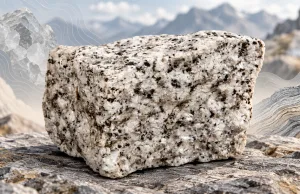
Granite is one of the most recognizable and widely used igneous rocks on Earth. Known for its coarse-grained texture, durability, and distinctive mixture of...
Rhyolite
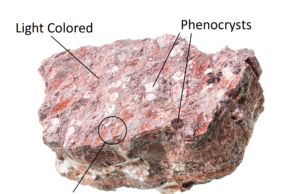
Rhyolite: High-Silica Magma's Race Against Time on Earth's SurfaceVolcanic rocks are often put into a single mold: lava flows, cools, becomes rock. But in...
Granodiorite

Granodiorite is a phaneritic-textured intrusive igneous rock similar to granite, but containing more plagioclase feldspar than orthoclase feldspar. According to the QAPF diagram, granodiorite has a greater than 20% quartz by volume, and between 65% to 90% of the feldspar is plagioclase. A greater amount of plagioclase would designate the rock as tonalite.