

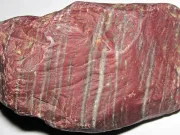
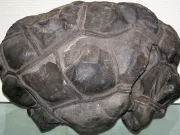
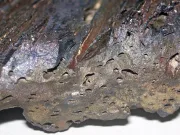
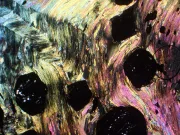
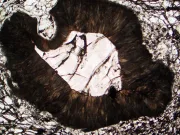
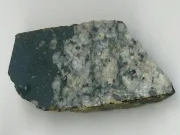
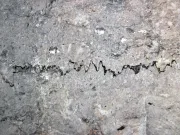
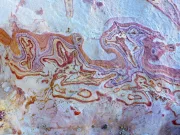



Perfectly round stones are often mistaken for fossil eggs, artificial objects or meteorites. In many sedimentary settings, however, the explanation is concretion growth: minerals precipitate within soft sediment, cementing a patch more strongly than the surrounding rock. As weathering erodes the softer host, a rounded or unusual mass remains. Concretions do not all form in the same way, and their chemistry, shape and internal structure offer clues about their history.
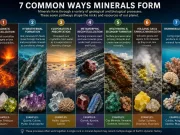
How These Structures Develop
Observe mineral composition, internal texture, surrounding rock and the environmental process that formed each feature. The outward shape is only one part of a reliable identification.
1. Calcite Concretions
Calcium carbonate precipitates from groundwater in marine or terrestrial sediments, sometimes around a shell, bone or organic fragment. The result can be a relatively hard nodule enclosed in softer mudstone. Acid reaction and mineral texture help identify the calcite cement.
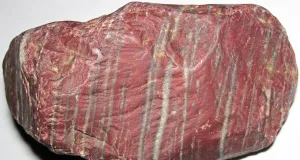
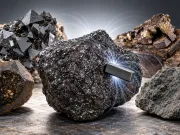
2. Ironstone Concretions
Iron oxide or iron carbonate minerals concentrate within sediment, commonly producing dark, red-brown or rusty concretions. Iron can move in solution under reducing conditions and precipitate when chemistry changes. A metallic appearance does not establish an extraterrestrial origin.
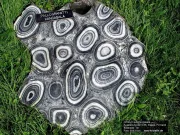
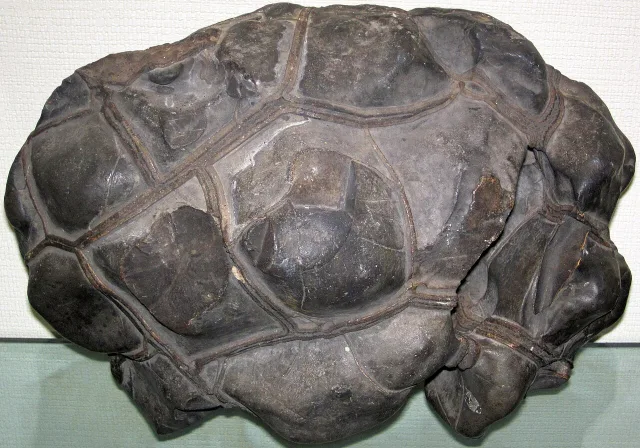
3. Septarian Concretions
These masses contain distinctive networks of polygonal cracks filled with later minerals such as calcite. The fractures may develop during cementation and changing internal conditions. Cut and polished surfaces reveal striking patterns, but the crack network is geological, not an eggshell.
4. Moqui Marbles
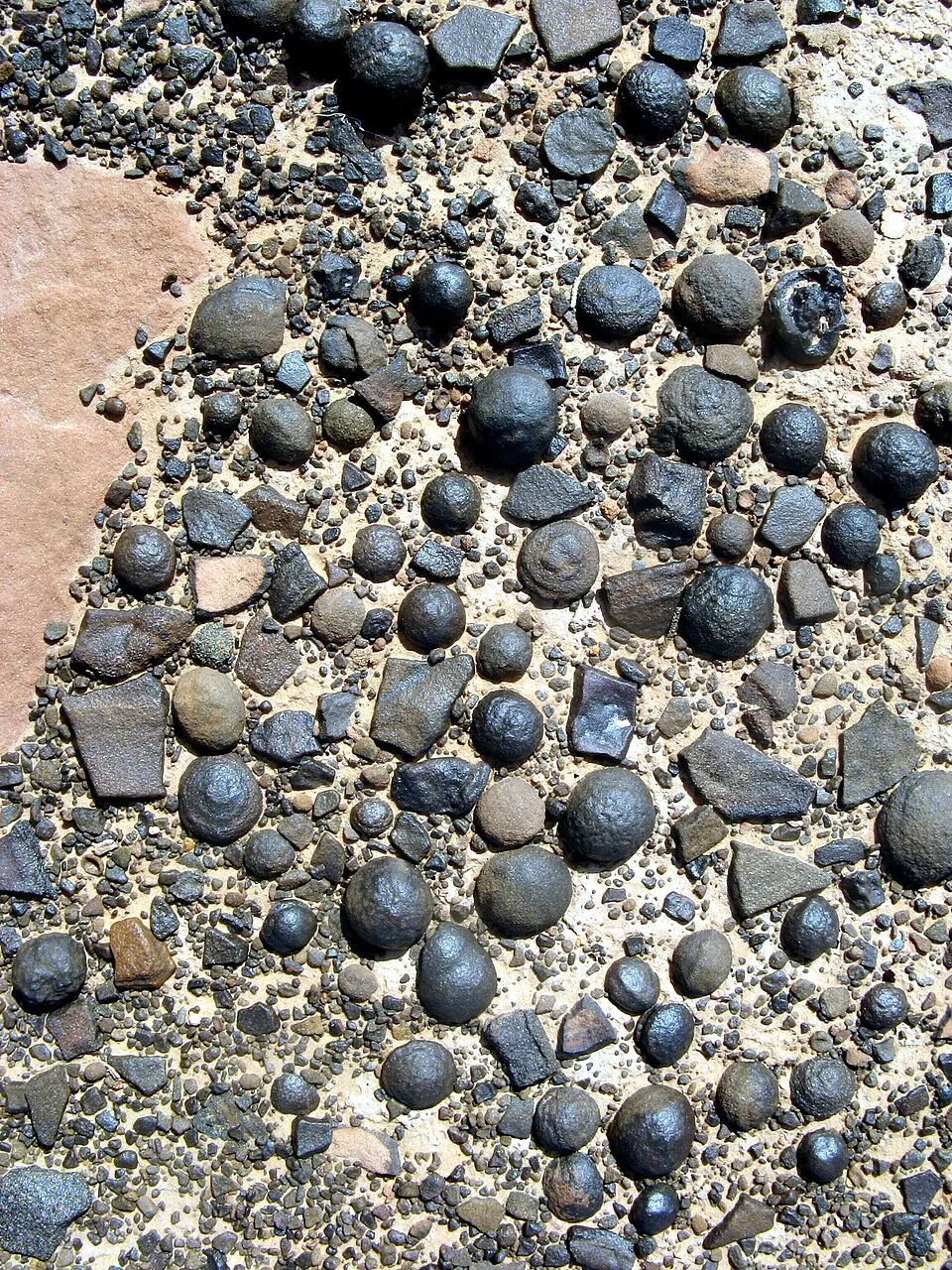
Commonly found in Utah sandstone, these rounded concretions often have iron-oxide cement concentrated around a sandstone core. Their formation involves groundwater chemistry and redistribution of iron. They can range from small pellets to larger rounded stones.
5. Siderite Nodules
Siderite is iron carbonate, which commonly precipitates in low-oxygen sedimentary environments. It can later weather into brown oxides. Some siderite nodules preserve fossils and internal textures not visible on the exterior.
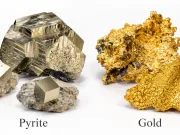
6. Pyrite Concretions
Iron sulfide can form during early burial where microbial sulfate reduction and other chemical conditions supply suitable sulfur and iron. The resulting nodules may be metallic and irregular. Later oxidation can transform their surface and produce staining.
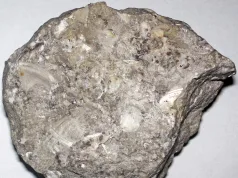
7. Chert Nodules
Silica-rich masses form within limestone or chalk, producing hard, smooth-fracturing nodules. Many flint nodules are conspicuous because the carbonate rock surrounding them weathers differently. Their internal forms may reflect replacement or local silica precipitation.
8. Disc-shaped Concretions
Not all concretions are spheres. Layered sediment permeability and anisotropic cementation can cause flattened, lens-like or disc-shaped bodies. The external shape depends on chemical transport and the sediment fabric.
9. Tubular Concretions
These elongated forms may develop around burrows, roots or preferential groundwater pathways. Mineral cement can grow around an original channel, so the interior may contain a different sediment texture or even an empty tube.
10. Giant Spherical Concretions
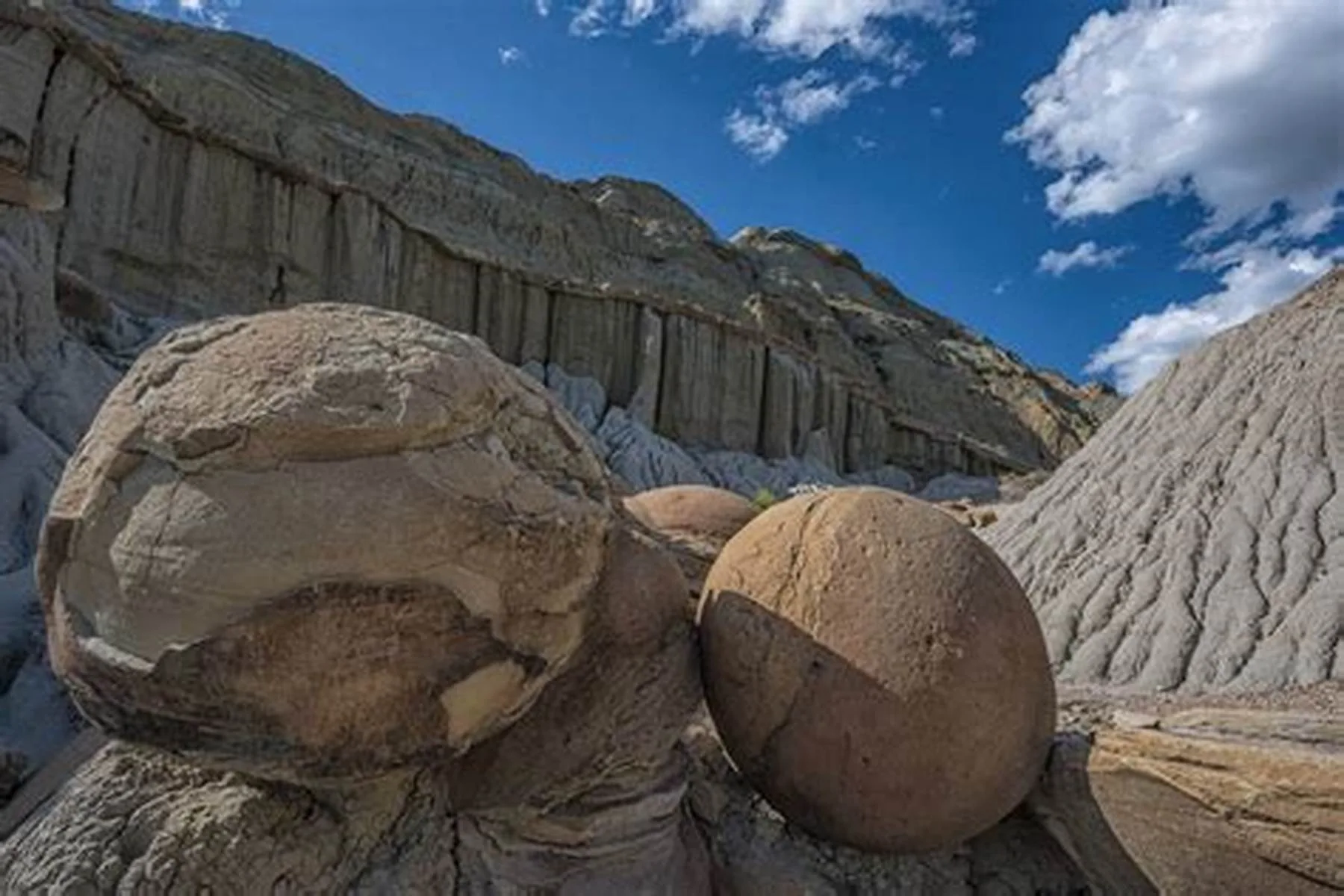
Some geological conditions allow concretions to attain meter-scale diameters. Famous examples include the Moeraki Boulders of New Zealand. Large spheres are impressive but should not automatically be interpreted as volcanic bombs, dinosaur eggs or products of human construction.
How Concretions Grow in Sediment
A growing concretion requires a source of dissolved constituents, pathways for pore fluids and a chemical condition that favors mineral precipitation. The central object is not always a fossil or pebble: cement may develop around a small local chemical contrast. Growth can occur concentrically or in more complex patterns. Scientists analyze mineral composition, stable isotopes and microstructures to understand fluid sources, timing and sediment conditions.
Concretion, Geode or Fossil Egg?
A geode commonly has a cavity lined with crystals; many concretions are solid or show mineral-filled cracks. A fossil egg should retain biological eggshell microstructure and suitable anatomical and sedimentary context. Meteorites require entirely different diagnostic evidence, such as fusion crust and metal-bearing minerals. Because misleading similarities are common, scientific identification must consider internal structure as well as external shape.
Field Identification Tips
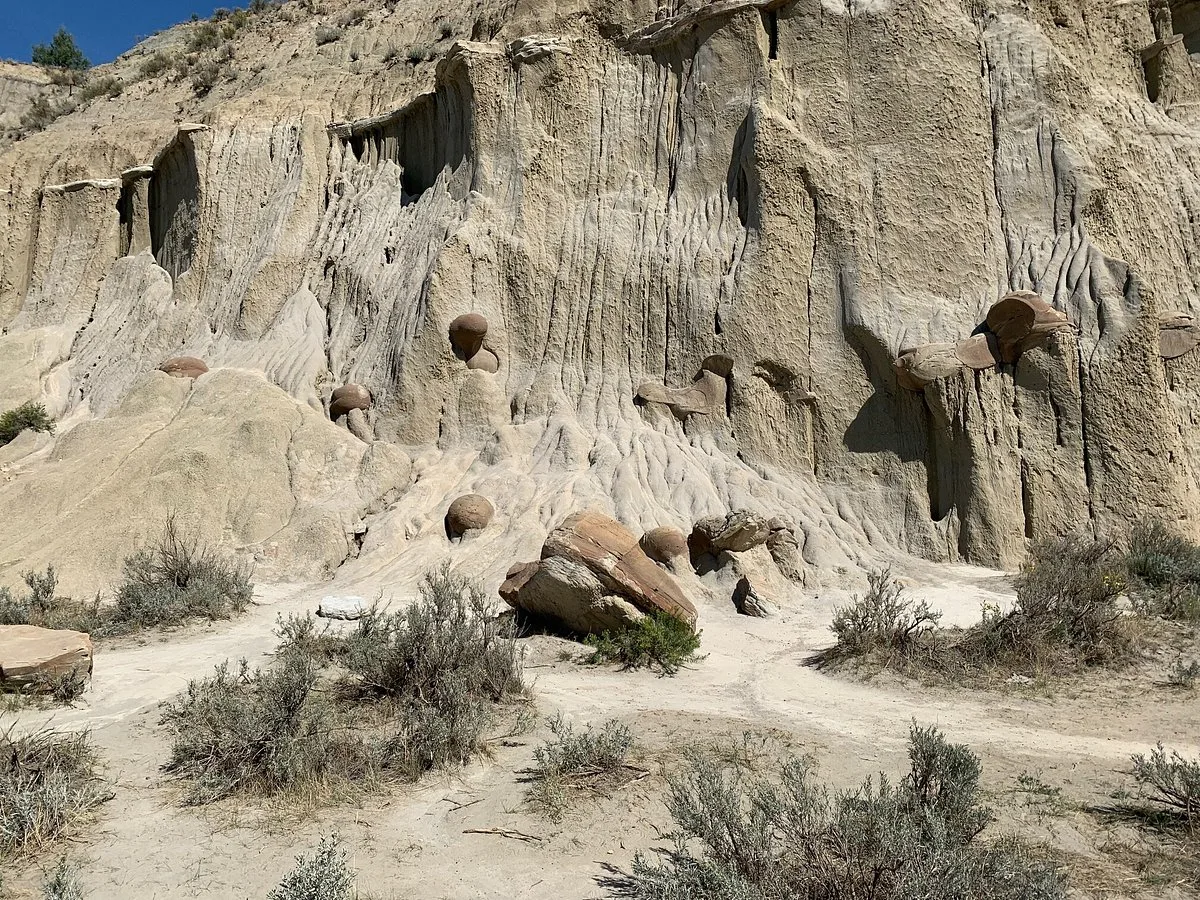
The host rock is often the strongest clue to concretion origin. Look for gradual changes in cement, sediment grains crossing the nodule boundary and mineral-filled cracks. The site already covers Cannonball Concretions and Moeraki Boulders.
The Role of Groundwater and Cementation
Concretions commonly form when pore fluids move through sediment and precipitate mineral cement in localized regions. The availability of dissolved ions and changes in pH, oxidation conditions or organic matter can concentrate cement around a nucleus. Because the cemented zone is harder than nearby sediment, erosion may expose it as a separate nodule or ball. This difference in resistance is especially important for explaining why concretions often seem to sit on the surface.
How to Examine a Concretion Without Destroying It
First record the host sediment and surrounding bedding. Search for a natural broken face or a loose weathered example rather than splitting an intact feature in a protected site. Notice whether sedimentary layers continue through the mass, if crystals fill a cavity, and whether chemical staining forms distinct bands. A truly biological fossil should show anatomical detail in addition to a suggestive overall shape.
Frequently Asked Questions
Can unusual rock shapes be identified by a photograph alone?
Sometimes the texture is distinctive, but a confident conclusion may require viewing a fresh surface, field context or microscopic details.
Can geological processes create biological-looking forms?
Yes. Mineral growth, erosion, fracture patterns and sediment cementation can produce striking resemblances to living structures.