










Phosphate Minerals
Phosphate minerals are compounds in which the phosphate anion (PO₄³⁻) bonds with various metal cations, creating a diverse family of minerals that appear in sedimentary deposits, pegmatites, guano-rich layers and even meteorites. These minerals often crystallize in settings where phosphorus accumulates—such as marine phosphorites, igneous apatite-rich rocks or caves enriched by bird or bat excrement—and their presence points to unique chemical and environmental conditions. Beyond their geological intrigue, phosphate minerals hold huge practical significance: the common mineral Apatite (Ca₅(PO₄)₃(F,Cl,OH)) serves as the main source of phosphorus used in fertilizers, while others like Whitlockite (Ca₉(Mg,Fe)(PO₄)₆(PO₃OH)) and Maricite (NaFePO₄) reveal details about alteration, trace-element distribution and even extraterrestrial processes. For geologists, engineers and site professionals, recognising phosphate minerals means understanding nutrient cycles, rock-fluid interactions, deposit formation and material behaviour—all of which tie into fields from agriculture to geotechnical investigations and environmental studies.

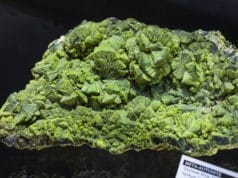
Autunite
Autunite is a phosphate mineral that formula is calcium uranium phosphate (Ca (UO2)2(PO4)2·10–12H2O) and It is harness of 2 - 2, 5.A popular collector’s...
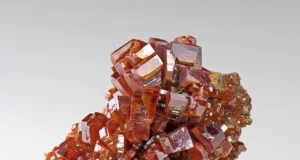
Vanadinite
Vanadinite is a striking mineral known for its vibrant red to orange-red hexagonal crystals. Composed primarily of lead, vanadium, oxygen, and chlorine, it forms...
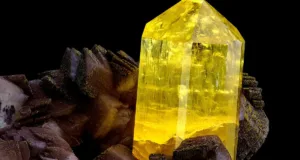
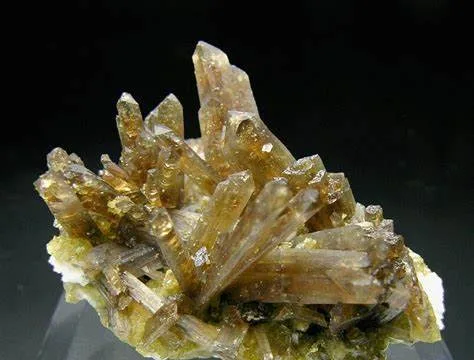
Yellow Apatite
Yellow Apatite is a variety of the mineral apatite, which belongs to the phosphate group. Apatite itself is a group of phosphate minerals that...

Pyromorphite
Pyromorphite is a secondary lead mineral that forms in the oxidation zones of lead ore deposits. It is classified as a member of the...
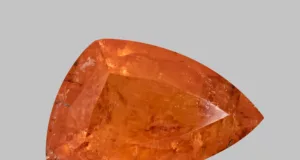
Eosphorite
Eosphorite is a mineral belonging to the group of phosphates. It typically forms in pegmatite veins, which are coarse-grained igneous rocks found in association...

Brazilianite
Brazilianite is a rare and highly valued gemstone named after its country of origin, Brazil. It is a phosphate mineral that belongs to the...

Variscite
Variscite is a term used to describe a type of mineral that belongs to the group of aluminum phosphate minerals. It is characterized by...

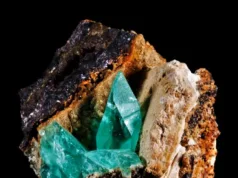
Torbernite
Torbernite is a mineral belonging to the uranyl phosphate group. Its chemical formula is (Cu,U)2(PO4)2·8-12H2O. It typically forms bright green to emerald-green crystals, often...
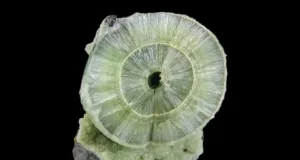
Wavellite
Wavellite is a mineral that belongs to the phosphate class of minerals. It is renowned for its distinctive crystal formation, which often occurs in...

Apatite
Apatite is a very common mineral, but transparent gemstone-quality apatite is extremely rare. Despite the fact that apatite is the defining mineral for 5 on Mohs scale of hardness, the gemstone remains virtually unknown to most, and is seldom found in jewelry stores.
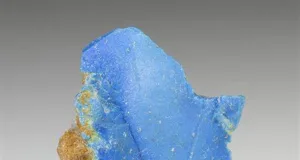
Ceruleite
Ceruleite is a beautiful and relatively rare mineral that belongs to the secondary copper mineral group. It is known for its stunning blue color...
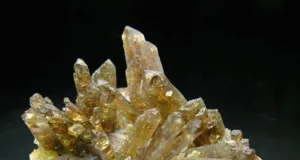
Childrenite
Childrenite is a relatively rare mineral that is composed of basic iron aluminum phosphate. It belongs to the phosphate mineral group and is often...