




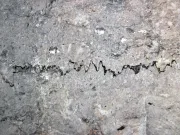
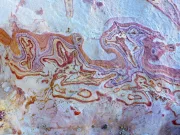
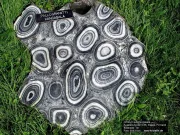
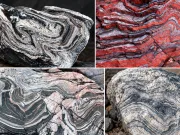






Deep within the Earth’s crust, a fault can suddenly slip during an earthquake, releasing enormous amounts of stored energy. Some of this energy is converted into heat along the sliding surfaces. Under suitable conditions, temperatures rise so rapidly that portions of the surrounding rock begin to melt.
When this molten material cools and solidifies, it may form an unusual rock known as pseudotachylyte.
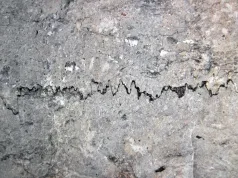
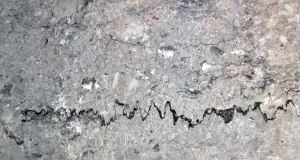
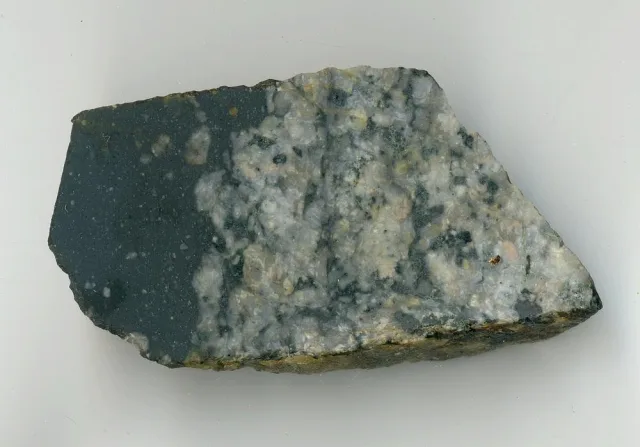
Often appearing as thin, dark veins cutting through lighter-colored rocks, pseudotachylyte can preserve evidence of rapid fault movement that occurred thousands or even millions of years ago.
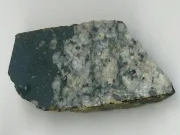
Pseudotachylyte is a fine-grained, commonly dark-colored rock formed primarily by the rapid solidification of frictional melt generated during intense fault slip.
Its distinctive textures make it particularly important in structural geology, tectonics, and the study of ancient earthquakes.
By examining pseudotachylyte, geologists can investigate how faults rupture, how frictional heating develops, and how earthquake-related deformation becomes preserved in the geological record.
What Is Pseudotachylyte?
Pseudotachylyte, also spelled pseudotachylite, is a rock commonly associated with localized melting during rapid deformation.
It usually occurs as thin veins or irregular zones within pre-existing rocks.
The material may be black, dark gray, or brownish and often has a very fine-grained, glassy, or cryptocrystalline appearance.
Pseudotachylyte forms when intense frictional heating melts rock material along a rapidly slipping fault surface.
The melt may remain along the fault or be injected into nearby fractures before solidifying.
Unlike ordinary volcanic rocks, tectonic pseudotachylyte forms underground through highly localized deformation rather than through the eruption of magma at the surface.
Main Characteristics of Pseudotachylyte
| Property | Description |
|---|---|
| Rock category | Fault-related melt rock |
| Common color | Black, dark gray, or brown |
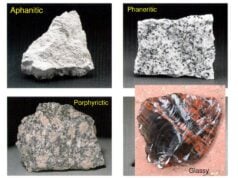
| Texture | Glassy, cryptocrystalline, or very fine-grained |
| Main formation mechanism | Frictional melting during rapid slip |
| Geological environment | Fault zones and other high-strain settings |
| Typical occurrence | Fault veins and injection veins |
| Common inclusions | Fragments of surrounding host rock |
| Geological significance | Evidence of rapid deformation and possible ancient seismic slip |
The exact appearance depends on the host rock, melt composition, cooling conditions, and subsequent alteration.
How Does Pseudotachylyte Form?
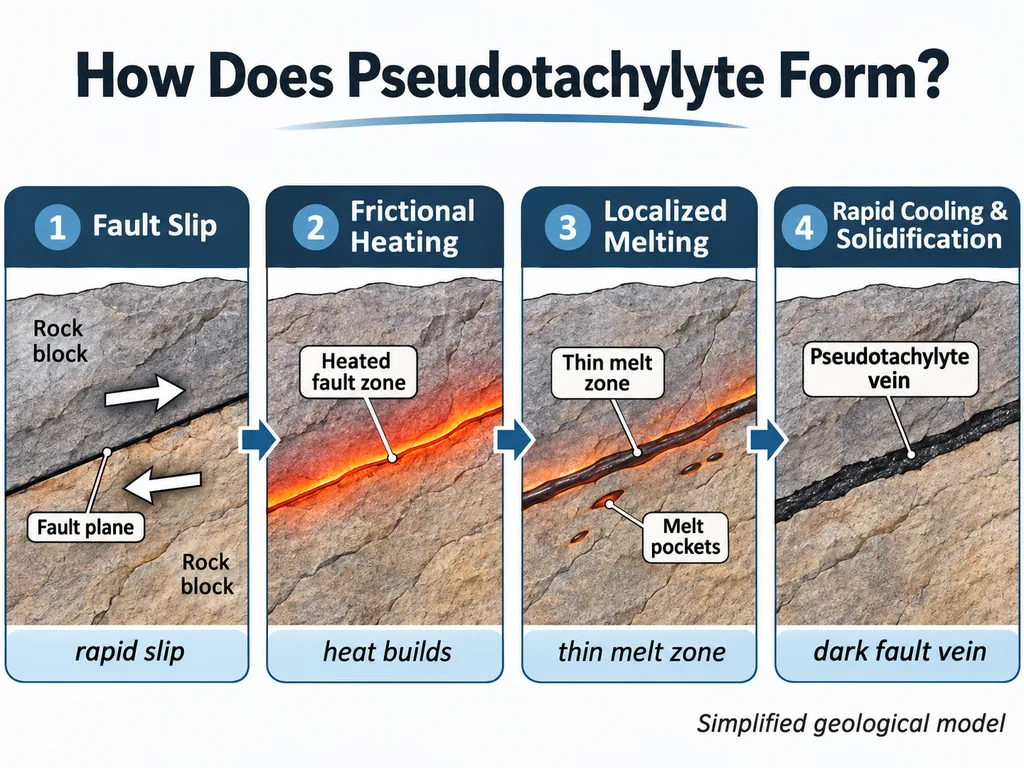
Pseudotachylyte formation involves the rapid conversion of mechanical energy into thermal energy during fault movement.
When two rock surfaces slide past one another under high stress, frictional resistance can generate substantial heat within a narrow zone.
If heat accumulates faster than it can escape, localized melting may occur.
1. Sudden Fault Slip
Stress gradually accumulates within the Earth’s crust as tectonic plates move.
When the strength of a fault is exceeded, rapid sliding may begin.
During an earthquake, displacement can become concentrated along extremely narrow zones.
2. Frictional Heating
The mechanical work done against friction is partly converted into heat.
Because deformation may be strongly localized, temperatures can rise very rapidly along the fault surface.
The temperature increase depends on factors such as slip velocity, shear stress, displacement, thermal properties, and the duration of sliding.
3. Localized Rock Melting
Under suitable conditions, the temperature becomes high enough to melt portions of the surrounding rock.
Not every mineral necessarily melts at the same time.
Some minerals and rock fragments may survive within the molten material, producing a mixture of melt and solid clasts.
The amount and composition of melt depend on the host rock and deformation conditions.
4. Melt Movement and Injection
The newly formed melt may remain within the principal slip zone.
If fluid pressure and local stress conditions permit, some melt can enter adjacent fractures.
This produces branching structures known as injection veins.
5. Rapid Cooling and Solidification
As movement stops or the heat source diminishes, the surrounding cooler rock removes heat from the melt.
Rapid cooling produces glass, extremely fine crystals, or a combination of both.
The resulting solidified material forms pseudotachylyte.
This sequence is a simplified formation model. Not every fast-moving fault generates enough heat to melt rock, and not every pseudotachylyte occurrence formed under identical conditions.
Frictional Melting During Earthquakes
Frictional melting is one of the most dramatic processes that can occur during rapid fault displacement.
Most earthquakes do not produce magma in the conventional volcanic sense.
Instead, melting—when it occurs—is restricted to very narrow zones where intense shear deformation and heating are concentrated.
Why Can Faults Become So Hot?
Heat production depends partly on the frictional resistance acting against sliding.
A conceptual expression for frictional energy released per unit fault area is:
Frictional work per unit area = Average shear stress × Slip distance
Only part of this energy necessarily becomes local heat. Energy is also consumed by fracturing, radiated seismic waves, and other processes.
The temperature rise further depends on how quickly heat is produced and conducted away.
Does Every Earthquake Produce Pseudotachylyte?
No.
Several processes can prevent frictional melting, including:
- Lower frictional heating.
- Short slip distances.
- Efficient thermal diffusion.
- Fluid-related fault weakening.
- Deformation distributed across a wider zone.
- Geological conditions unfavorable for melt preservation.
Even when pseudotachylyte forms, later alteration and deformation may destroy or obscure the original evidence.
This helps explain why pseudotachylyte is not found along every ancient fault.
Physical Characteristics and Texture
Pseudotachylyte is commonly identified through its appearance and relationship with surrounding rocks.
Color
Many specimens are black or dark gray, contrasting strongly with lighter host rocks such as granite and gneiss.
However, color alone is not diagnostic.
Fine-Grained or Glassy Matrix
Rapid cooling often produces a very fine-grained groundmass.
Some samples preserve glass, while others contain microscopic crystals formed during cooling or subsequent alteration.
Rock Fragments and Mineral Clasts
Fragments of the original host rock may survive within the melt.
These inclusions can appear angular, rounded, or partially dissolved.
Their shapes and relationships with the matrix may help reveal the melting process.
Sharp Vein Boundaries
Pseudotachylyte veins may have sharp contacts with the surrounding rock.
Some display very fine-grained margins consistent with rapid cooling.
Flow Structures
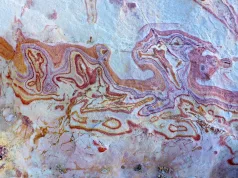
Certain samples preserve flow banding, aligned clasts, or other structures associated with movement of molten material.
These features can provide strong evidence for a former melt.
Pseudotachylyte Fault Veins and Injection Veins
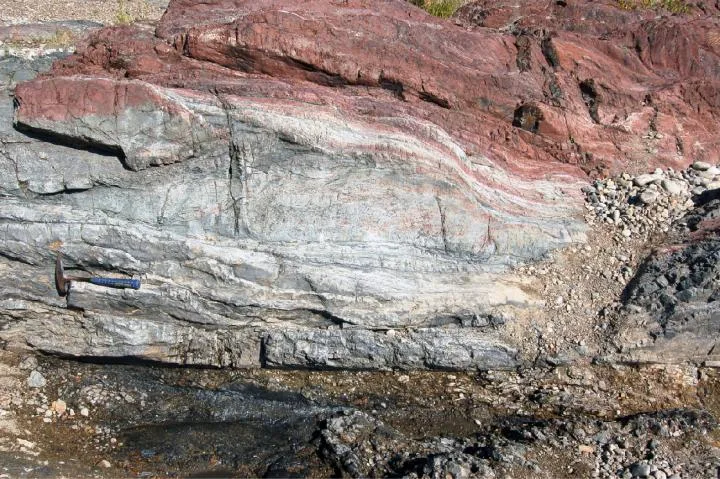
Pseudotachylyte commonly occurs in two important structural forms.
Fault Veins
Fault veins form along surfaces where rapid sliding and frictional melting occurred.
They are often approximately parallel to the principal slip surface.
Their thickness may vary along the fault, and they can contain fragments of surrounding rock.
Injection Veins
Injection veins form when frictional melt enters fractures extending away from the main slip zone.
They may branch from fault veins and cut across earlier rock structures.
Injection veins are especially useful evidence because their geometry can demonstrate that material was mobile during formation.
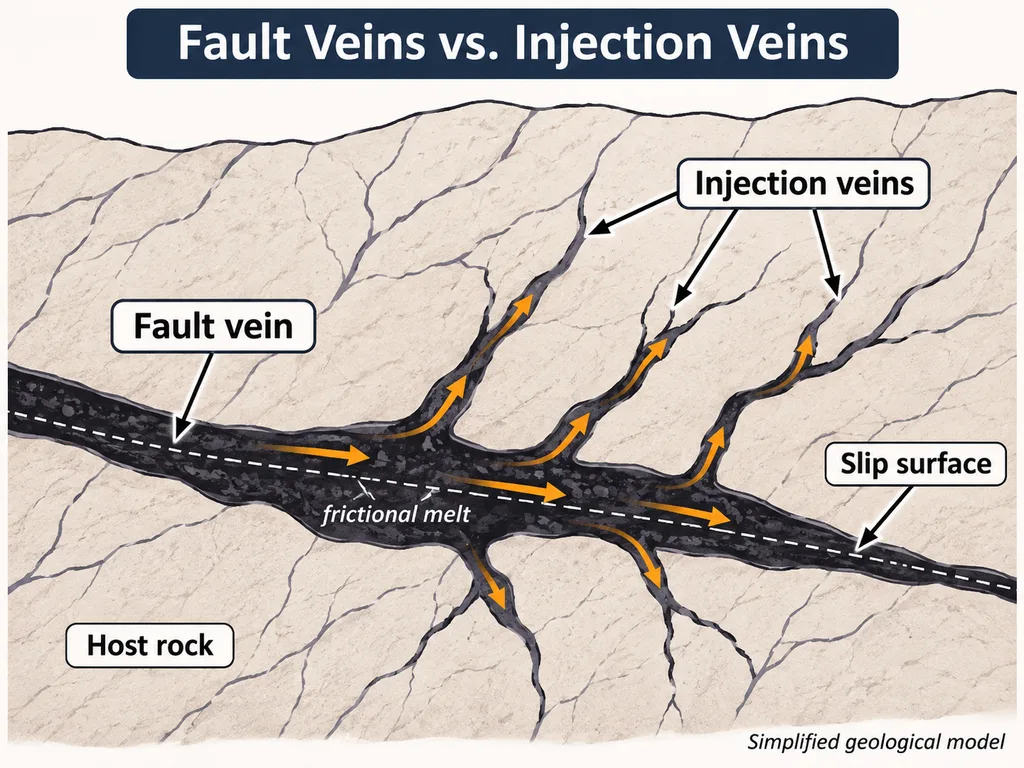
Fault Veins vs. Injection Veins
| Feature | Fault vein | Injection vein |
|---|---|---|
| Main location | Principal slip surface | Fractures extending away from slip surface |
| Main process | Melting and solidification along slip zone | Movement and solidification of injected melt |
| Typical orientation | Often follows fault | May branch obliquely or across structures |
| Geological evidence | Localized seismic deformation | Former melt mobility |
The presence of connected injection veins strengthens an interpretation involving molten material, especially when supported by microscopic evidence.
Mineral Composition of Pseudotachylyte
Pseudotachylyte does not have one fixed mineral composition.
Its chemistry generally reflects the composition of the rock that melted, although selective melting, crystallization, and interaction with surrounding material can modify the result.
For example, pseudotachylyte generated within granite may contain material derived from quartz, feldspar, mica, and accessory minerals.
Pseudotachylyte formed within mafic or metamorphic rocks may have a different bulk composition.
Common Constituents
Depending on the host rock and preservation conditions, pseudotachylyte may contain:
- Glass or devitrified glass.
- Fine feldspar or other mineral microlites.
- Surviving quartz and feldspar fragments.
- Rock fragments derived from the wall rock.
- Secondary alteration minerals.
The mineral assemblage must be established through petrographic and analytical observations rather than inferred from its dark color.
Pseudotachylyte Under the Microscope
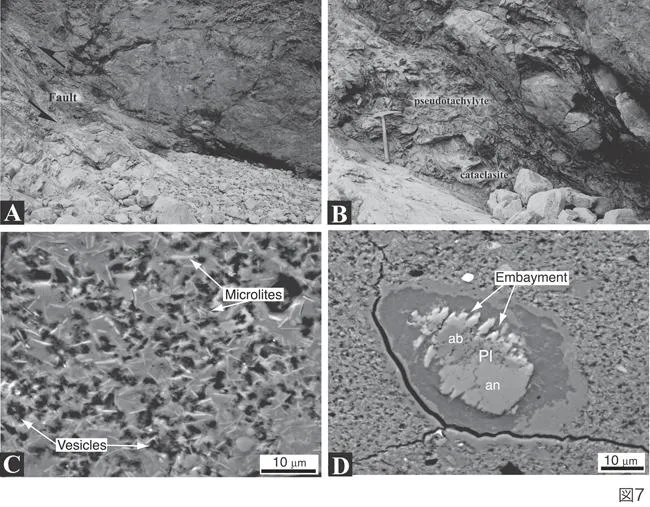
Thin-section microscopy provides some of the most important evidence for identifying pseudotachylyte.
A dark fault vein by itself may resemble fine-grained cataclasite, an altered vein, or other fault-related material.
Microscopic structures help distinguish these possibilities.
Glassy and Cryptocrystalline Groundmass
Some pseudotachylytes contain preserved glass.
Others consist mainly of tiny crystals produced during cooling or later transformation of the original glass.
Microlites and Spherulites
Microlites are microscopic crystals that may grow as melt cools.
Some pseudotachylytes also contain small radial crystal aggregates called spherulites.
These textures can support an interpretation involving rapid crystallization.
Embayed Mineral Fragments
Mineral fragments may display irregular, rounded, or partially dissolved margins.
Such features can indicate interaction between solid clasts and molten material.
Vesicles and Flow Banding
Gas bubbles may form vesicles in certain pseudotachylytes.
Flow banding can record movement and deformation while the material was molten or partially molten.
Not every specimen contains all these features.
Reliable identification generally requires combining field relationships, petrography, and sometimes chemical analysis.
Pseudotachylyte vs. Mylonite and Cataclasite
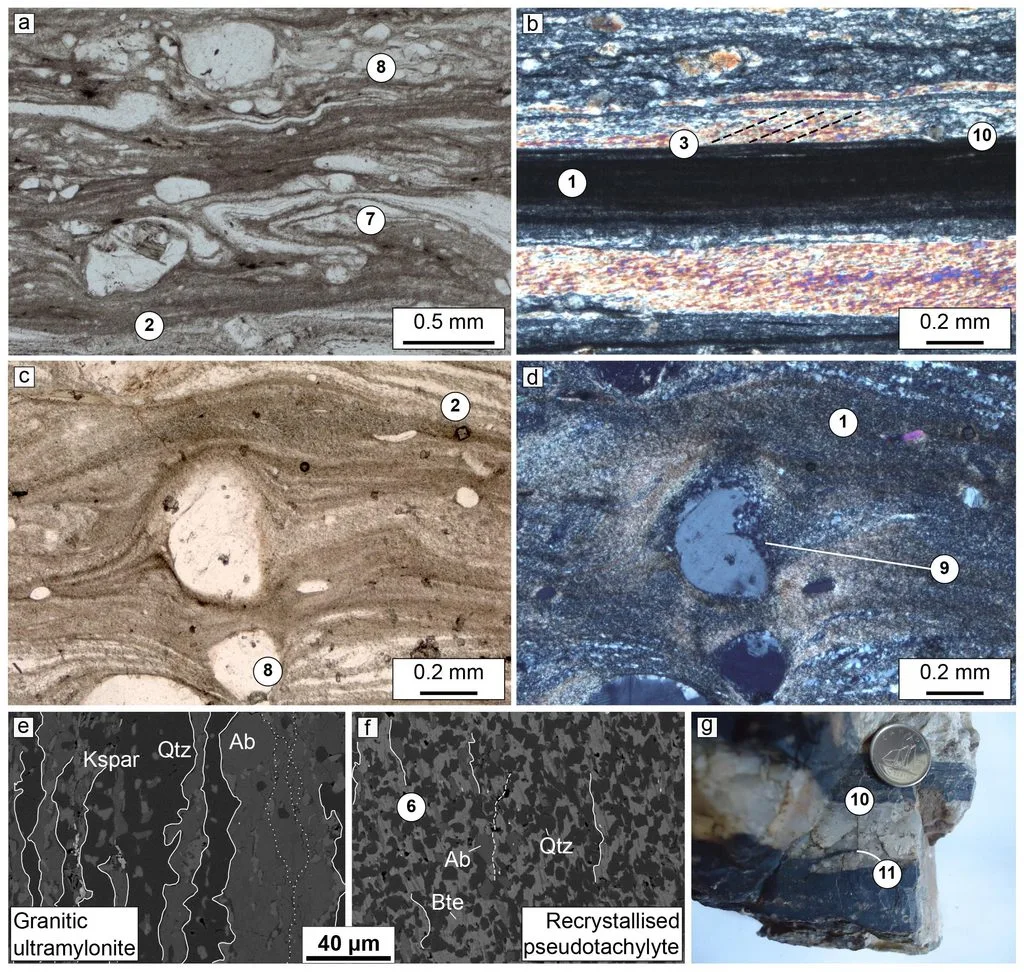
Fault zones contain several rock types formed by different deformation mechanisms.
Pseudotachylyte, mylonite, and cataclasite can occur together, but they should not be confused.
Pseudotachylyte
Typically associated with rapid localized melting and subsequent solidification.
It may form dark veins containing glassy or very fine-grained material and surviving clasts.
Mylonite
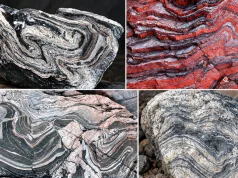
Mylonite is a cohesive fault or shear-zone rock characterized by grain-size reduction and a commonly well-developed tectonic fabric produced predominantly through crystal-plastic deformation.
It generally forms without requiring frictional melting.
Cataclasite
Cataclasite forms mainly through brittle fragmentation, crushing, and frictional sliding.
It contains broken mineral and rock fragments within a finer-grained matrix.
Comparison Table
| Characteristic | Pseudotachylyte | Mylonite | Cataclasite |
|---|---|---|---|
| Main mechanism | Frictional melting | Crystal-plastic deformation | Brittle fragmentation |
| Typical texture | Very fine-grained, locally glassy | Foliated or lineated | Fragmental |
| Melt required | Usually in tectonic melt-origin examples | No | No |
| Common occurrence | Rapid-slip zones | Ductile shear zones | Brittle fault zones |
| Strong indicator of seismic slip | In appropriate tectonic context | Not by itself | Not by itself |
These rock types can overprint one another as fault conditions evolve.
Pseudotachylyte vs. Volcanic Glass
Pseudotachylyte may resemble dark volcanic glass such as obsidian.
Both can contain material that solidified rapidly from a melt.
However, their formation environments differ.
Obsidian generally forms through rapid cooling of silica-rich volcanic lava.
Tectonic pseudotachylyte forms through localized frictional melting along faults.
Unlike many volcanic glasses, pseudotachylyte commonly occurs as thin fault-related veins with injection structures, surviving mineral clasts, and direct connections to deformation surfaces.
Geological context is essential for distinguishing the two.
Where Is Pseudotachylyte Found?
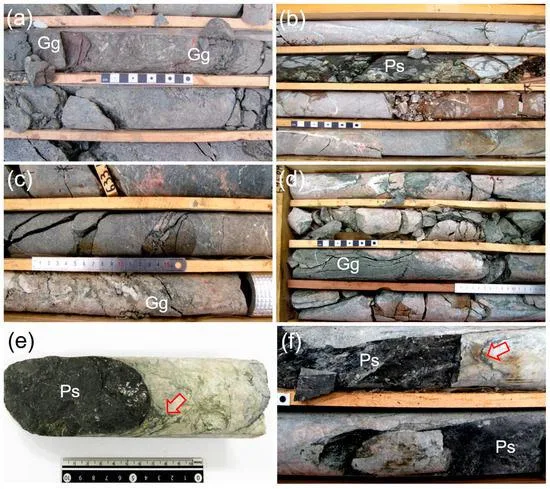
Pseudotachylyte has been documented in a variety of geological settings worldwide.
Ancient Fault Zones
Exhumed fault zones within crystalline rocks provide important examples.
These rocks may once have formed at depths where earthquake ruptures occurred.
Erosion and tectonic uplift can eventually expose them at the surface.
Pseudotachylyte-bearing rocks have been studied in parts of Norway and other Scandinavian geological regions.
Some occurrences are associated with deformation of deep crustal rocks.
Korea
Studies of fault zones in South Korea, including borehole samples from the Andong region, have documented pseudotachylyte and associated fault rocks.
These occurrences provide evidence for the deformation history of ancient faults.
China
Research on the Anning River Fault Zone has documented pseudotachylyte-related structures and investigated their significance for rapid deformation near the brittle–ductile transition.
Meteorite Impact Structures
Pseudotachylyte-like rocks also occur in large impact structures such as Vredefort in South Africa.
Some impact-associated pseudotachylytes form through frictional melting during intense deformation, while other impact melt rocks originate from shock-related processes.
These mechanisms must be distinguished rather than treated as identical.
Pseudotachylyte and Ancient Earthquakes
One of the most important applications of pseudotachylyte research is the identification of ancient rapid-slip events.
Earthquakes generally last from seconds to minutes, but the rocks affected by an earthquake may preserve deformation structures for millions of years.
Pseudotachylyte can provide a particularly valuable record because frictional melting commonly requires intense, localized heating associated with rapid motion.
Can Pseudotachylyte Prove an Ancient Earthquake Occurred?
In an established tectonic fault setting, well-documented frictional-melt pseudotachylyte provides strong evidence for rapid seismic slip.
However, researchers must first demonstrate the melt origin and exclude other relevant geological processes.
Similar materials may form during impact events or exceptional nontectonic high-strain processes.
What Can Scientists Learn?
Pseudotachylyte may help researchers investigate:
- The location of ancient fault slip surfaces.
- Evidence of frictional heating.
- Relative timing of deformation events.
- Melt movement through fracture networks.
- The evolution of fault-zone strength.
- Possible seismic rupture processes.
These observations are especially informative when integrated with structural mapping and geochronology.
Can Pseudotachylyte Reveal Earthquake Magnitude?
Pseudotachylyte can preserve clues about frictional work and fault displacement, but the size of a vein alone cannot determine the magnitude of an ancient earthquake.
Earthquake magnitude depends on seismic moment, which incorporates the rigidity of the rocks, the area of fault rupture, and average displacement.
Researchers may use field observations and physical models to estimate aspects of seismic slip, but uncertainties are substantial.
A thin pseudotachylyte vein does not necessarily indicate a small earthquake, and a thick vein does not automatically prove a large earthquake.
Interpretation requires information about fault geometry, rupture extent, displacement, and geological context.
Can Pseudotachylyte Be Dated?
In some cases, yes.
Pseudotachylyte may contain minerals or glass suitable for radiometric dating.
The argon-40/argon-39 method, for example, has been applied to suitable pseudotachylyte samples to constrain the timing of fault-related heating and deformation.
However, the measured age may be affected by inherited argon, incomplete resetting, alteration, or later geological events.
Dating results must therefore be evaluated alongside petrographic and structural evidence.
A reliable date can help place a seismic event within a broader tectonic history, but it does not necessarily identify every earthquake that occurred on the fault.
How to Identify Pseudotachylyte in the Field
Pseudotachylyte is often recognizable by dark veins cutting through lighter host rocks, but appearance alone is insufficient.
1. Identify the Geological Setting
Determine whether the rock occurs within a fault zone or another strongly deformed geological environment.
2. Look for Dark Veins
Search for narrow black, gray, or brown veins with sharp boundaries.
Some may follow a fault surface, while others branch away from it.
3. Examine Injection Structures
Look for branching veins that extend into adjacent fractures.
These may indicate that material flowed away from the principal deformation zone.
4. Search for Rock Fragments
Look for clasts enclosed within a finer-grained matrix.
Some fragments may have shapes suggesting partial melting or interaction with mobile material.
5. Observe Relationships With Other Fault Rocks
Check whether the veins cut mylonite, cataclasite, or older mineral veins.
Cross-cutting relationships can help determine the relative timing of geological events.
6. Confirm With Petrography
Thin-section microscopy is often essential.
Evidence such as microlites, chilled margins, glass, vesicles, flow textures, and partially melted clasts can strengthen the interpretation.
7. Use Additional Analysis When Necessary
Scanning electron microscopy, mineral chemistry, and other methods may help establish the rock’s origin.
Important: Not every black vein in a fault zone is pseudotachylyte. Some fine-grained fault rocks form entirely through crushing or alteration without melting.
Why Is Pseudotachylyte Important in Geology?
Pseudotachylyte provides a rare opportunity to examine the physical conditions of past rapid-slip events.
Earthquake Mechanics
Its formation demonstrates that frictional heating can become intense enough to melt rock locally.
Fault Strength and Weakening
The presence of frictional melt may influence fault resistance during sliding.
Molten material can sometimes promote dynamic weakening, while solidification after slip may strengthen or weld parts of a fault surface.
Structural Geology
Fault veins and injection structures preserve information about deformation geometry and the movement of material during fault activity.
Geochronology
Suitable pseudotachylyte samples may provide constraints on the timing of deformation.
Impact Geology
Comparing friction-generated pseudotachylyte with shock-generated impact melt helps scientists understand high-strain processes during meteorite impacts.
Frequently Asked Questions About Pseudotachylyte
What is pseudotachylyte?
Pseudotachylyte is a commonly dark, fine-grained rock that typically forms when frictional melt produced during rapid fault slip cools and solidifies.
Does pseudotachylyte form during earthquakes?
Many tectonic pseudotachylytes are associated with rapid seismic slip, although their identification and geological context must be established carefully.
Why is pseudotachylyte usually black?
Its dark appearance commonly reflects the composition and extremely fine-grained or glassy nature of the solidified material. Color varies with host-rock composition and alteration.
Is pseudotachylyte a volcanic rock?
No. Tectonic pseudotachylyte forms through localized fault-related melting rather than volcanic eruption.
Is pseudotachylyte the same as mylonite?
No. Mylonite forms predominantly through crystal-plastic deformation, while melt-origin pseudotachylyte forms through rapid heating, melting, and solidification.
What is the difference between pseudotachylyte and cataclasite?
Cataclasite forms mainly through brittle fragmentation. Pseudotachylyte generally involves frictional melting, although both can contain rock fragments.
Can pseudotachylyte form without earthquakes?
Yes. Similar friction-generated melt rocks may form during large impacts and certain other high-strain events.
Can pseudotachylyte be used to date ancient earthquakes?
In suitable samples, radiometric dating can help constrain the timing of frictional melting and deformation.
Does every earthquake produce pseudotachylyte?
No. Frictional melting depends on slip conditions, heat production, host-rock properties, and other factors. Some formed pseudotachylytes may also be altered or destroyed.
Where is pseudotachylyte found?
It occurs in ancient fault zones, crystalline basement rocks, some deep crustal settings, and certain impact structures.
Can the thickness of a pseudotachylyte vein reveal earthquake magnitude?
Not by itself. Vein thickness can provide information about melting and deformation, but earthquake magnitude requires additional constraints.
Conclusion
Pseudotachylyte is one of the most revealing rocks associated with rapid deformation in the Earth’s crust.
Its dark veins, fine-grained textures, and melt-related structures can preserve evidence of intense frictional heating during ancient fault movement.
Although not every earthquake produces pseudotachylyte, tectonic examples provide valuable evidence of past seismic slip and the physical processes operating along faults.
By studying pseudotachylyte, geologists can investigate ancient earthquakes, reconstruct fault histories, and better understand the relationship between friction, melting, and rock deformation.
Scientific References and Further Reading
- Geological Survey of India. Rock Texture Atlas: Vugs, Veins and Pseudotachylites. https://gsi.gov.in/RockTextureAtlas/VugsVeinsAndPseudotachylite/
- Spray, J. G. (2010). Frictional Melting Processes in Planetary Materials: From Hypervelocity Impact to Earthquakes. Annual Review of Earth and Planetary Sciences, 38, 221–254. https://doi.org/10.1146/annurev.earth.031208.100045
- Rowe, C. D., and Griffith, W. A. (2015). Do faults preserve a record of seismic slip: A second opinion. Journal of Structural Geology, 78, 1–26. https://doi.org/10.1016/j.jsg.2015.06.006
- Geometric Complexity of Earthquake Rupture Surfaces Preserved in Pseudotachylyte Networks. Journal of Geophysical Research: Solid Earth (2018). https://doi.org/10.1029/2018JB016192
- Pseudotachylyte Alteration and the Rapid Fade of Earthquake Scars From the Geological Record. Geophysical Research Letters (2020). https://doi.org/10.1029/2020GL090020
- Spray, J. G., and Biren, M. B. (2021). Distinguishing friction- from shock-generated melt products in hypervelocity impact structures. Geological Society of America. https://doi.org/10.1130/2021.2550(06)
- Pseudotachylyte Formation in Brittle–Ductile Transition of the Anning River Fault Zone: Implications for Seismic Processes. Applied Sciences (2025). https://www.mdpi.com/2076-3417/15/11/5870