







Geology Fundamentals
Home Geology Fundamentals
Geology is the science that explores how the Earth was formed, how it changes, and what its physical materials reveal about the planet’s long and complex history. From the deep interior of the Earth to the landscapes we see on the surface, geology connects every process that shapes our environment. It explains earthquakes, volcanoes, mountain building, erosion, sedimentation, and the formation of rocks and minerals, giving us a complete picture of how our world works.

The Bermuda Triangle (Devil’s Triangle)
The Bermuda Triangle, also known as the "Devil's Triangle," is a loosely defined region in the western part of the North Atlantic Ocean. Its...

Paraíba Tourmaline
Paraíba tourmaline is a rare and highly valued variety of tourmaline, renowned for its striking and vivid blue to greenish-blue colors. It is characterized...
Marble: From Quarry to Sculpture
Marble, a timeless and revered medium in the world of sculpture, has a rich history that spans millennia. From its origins deep within the...
River and Stream
Rivers and streams are bodies of water that flow across the surface of the Earth, typically in a channel or bed. Rivers and streams...

Demantoid Garnet
Demantoid garnet is a rare and highly sought-after variety of the mineral andradite, which belongs to the garnet group. Known for its exceptional brilliance...
Weathering Types
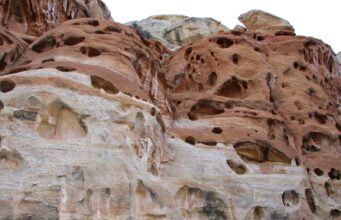
Weathering is the combination of processes that breaking down of rocks, soil and minerals, eventually transforming into sediment. On the other hand, disintegration or alteration of the rock surface in its natural or original position through physical, chemical and biological processes induced or modified by wind, water and climate.

The Ring of Fire
The Ring of Fire is a geographical region in the Pacific Ocean known for its high level of volcanic and seismic activity. It is...
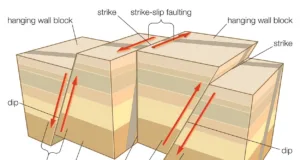
Fault and Types of Faults
Fault is a fracture or crack where two rock blocks slide past one to another. If this movement may occur rapidly, it can be causes earthquike or slowly, in the form of creep.Types of faults include strike-slip faults, normal faults, reverse faults, thrust faults, and oblique-slip faults.
Metamorphic Rocks: Foliation, Lineation, and Metamorphic Grades
The Transformation of Rocks Under PressureMetamorphic rocks are the result of an incredible transformation. When existing rocks—whether igneous, sedimentary, or even older metamorphic rocks—are...
Zultanite
Zultanite, a gemstone of breathtaking beauty and scientific intrigue, is a rare variety of the mineral diaspore. Its distinctive color-changing properties and rarity make...

Uniformitarianism
Uniformitarianism is a fundamental principle in geology that suggests that the same geological processes and natural laws that operate today have been operating throughout...
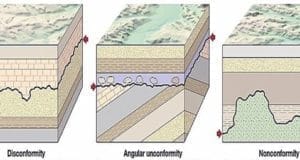
Unconformities
An unconformity is contact between two rock units.Unconformities are typically buried erosional surfaces that can represent a break in the geologic record of hundreds of millions of years or more. It it called an unconformity because the ages of the layers of rock that are abutting each other are discontinuous at the unconformity. An expected age of layer or layers of rock is/are missing due to the erosion; and, some period in geologic time is not represented.