





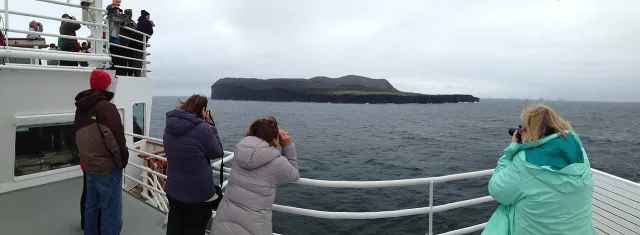
Surtsey is one of the clearest modern examples of an island being built from the seafloor. It emerged south of Iceland in November 1963 and continued to grow through a sequence of eruptions until 1967. Since its formation, the island has provided a rare natural experiment: geologists can watch young volcanic deposits change while ecologists document the arrival of life on previously barren land.
Where Is Surtsey and Why Did It Form?
Surtsey lies roughly 32 km off Iceland’s southern coast, within the Vestmannaeyjar volcanic system. Iceland straddles the Mid-Atlantic Ridge, where tectonic plates diverge and magma can rise through fractures. An underwater volcanic vent erupted on the seabed; repeated eruptions eventually piled enough material above sea level to create a new island. The process demonstrated how submarine volcanism contributes to the growth of oceanic land.
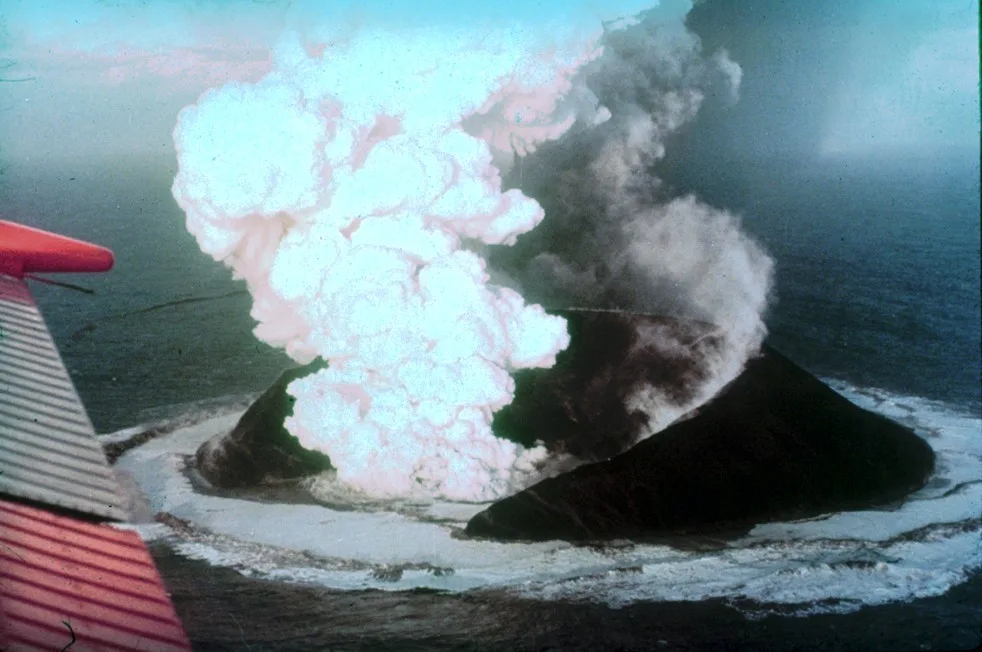
From Submarine Eruption to Explosive Island
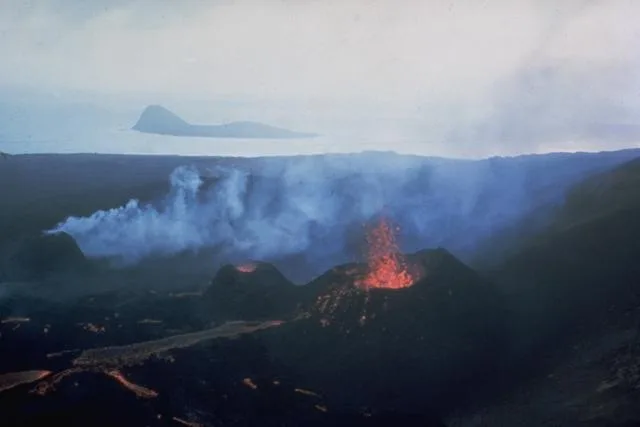
Early explosions occurred when hot magma met seawater. Rapid vaporization and fragmentation produced dark ash, steam and tephra, sometimes forming towering columns. This water-driven explosive phase is commonly called Surtseyan activity. As the vents became isolated from direct seawater contact, lava fountains and flowing basalt became more important. Lava flows helped armor parts of the island against wave attack. The historical eruption photograph below captures the violence of the early island-building phase.
Ash, Lava and Palagonite
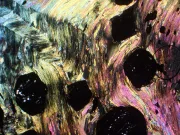
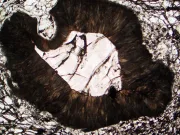
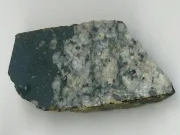
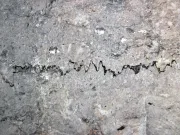
Surtsey contains volcanic ash, tuff, basaltic lava and altered glass-rich material. Basaltic glass can react with water and heat to form palagonite-like alteration products; these changes help consolidate loose deposits. Hydrothermal activity and the internal heat of the young volcano have therefore influenced how quickly some tephra became resistant rock. The difference between unconsolidated ash slopes and solid lava surfaces helps explain the island’s uneven erosion.
Why Has the Island Become Smaller?
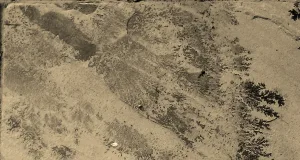
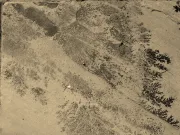
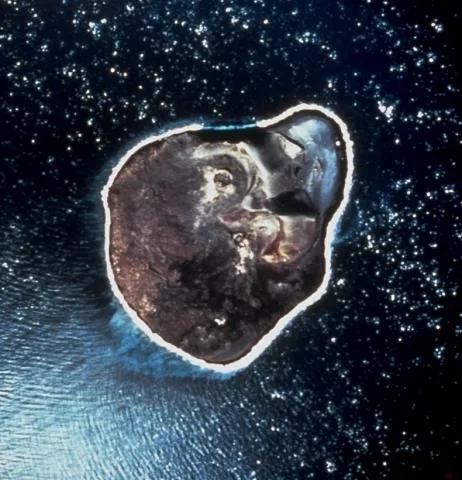
Wave erosion attacked Surtsey almost as soon as it formed. Steep ash and tephra shores retreated much faster than the tougher lava-capped areas. Waves removed loose material and redistributed it as coastal sediments. By comparing shoreline maps and aerial surveys, scientists can measure how rapidly a volcanic island evolves after its eruption ceases.
A Protected Laboratory for New Life
The island was protected early in its history and became a UNESCO World Heritage Site in 2008. Restricted human access allows researchers to examine natural colonization by seabirds, plants, insects and microorganisms without the usual disturbance from tourism. It remains important for understanding both island ecology and the long-term geological evolution of new volcanic terrain.
Why Surtsey Matters to Geology
The island records a complete transition from submarine explosions to above-water lava construction, followed by weathering, erosion and ecosystem development. For more context, see our Iceland lava fields article and volcanic wonders coverage.
Eruption Timeline and Coastal Evolution
Surtsey emerged in November 1963 as underwater explosive activity built ash and tephra above sea level. Later basaltic flows strengthened parts of the island, and the eruption ended in June 1967. Since then, waves have cut back the coast, especially where loose tephra is exposed, while more resistant lava has helped preserve sections of the island.
Palagonitization and New Rock
The interaction of water, residual volcanic heat and glass-rich tephra can alter basaltic glass and cement ash deposits into palagonitized tuff. Researchers use this young island to study how erosion, hydrothermal alteration and colonization by plants and animals progress side by side.
Surtseyan Eruptions: A Geological Term Born Here
The term Surtseyan describes a style of explosive volcanism where magma interacts with shallow water. Rapid heat transfer causes water to flash to steam and magma to fragment into ash. Explosions can eject wet, dark tephra that falls back as deposits around the vent. The resulting landform may begin as a low, broad tuff ring before later eruptions build higher cones or lava fields. Not every submarine eruption produces an island: vent depth, magma supply, ocean currents and erosion are important constraints.
From Loose Ash to Stable Rock
Young volcanic ash is vulnerable to wave action and rain because the particles are initially weakly bonded. As the deposits undergo chemical alteration and cementation, they may become stronger tuff. Surtsey has been studied to understand this relatively rapid transformation, including hydrothermal effects. Erosion, however, continues even after the eruption has ended, and the island’s modern shoreline is not the same shape as its original eruptive outline. Aerial imagery is particularly useful for documenting those changes.
Frequently Asked Questions
What makes this geological site distinctive?
Surtsey lies roughly 32 km off Iceland’s southern coast, within the Vestmannaeyjar volcanic system.
Is this a natural geological formation?
Yes. Its distinctive features are explained by known geological and environmental processes, supported by field observations and scientific research.
Scientific Sources
- UNESCO World Heritage Centre: Surtsey
- Surtsey Research Society: the 1963–1967 eruption
- Icelandic Nature Conservation Agency: Surtsey