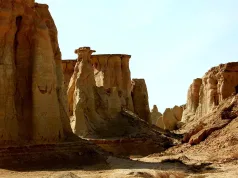
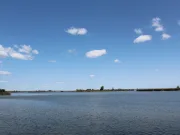



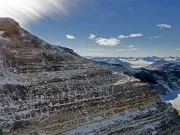
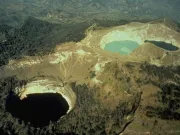
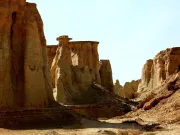
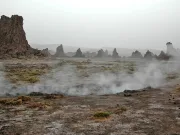









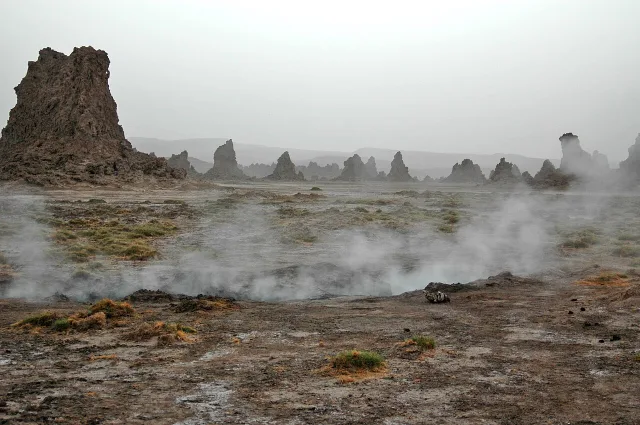
On the eastern shore of Lake Abbe (also written Lake Abhé or Lake Abhe), in Djibouti, tall mineral towers rise from an arid, salt-affected basin. They can look like ancient ruins or the vents of an alien world. In fact, they are deposits created by geothermal water, lake chemistry and changing water levels within the tectonically active Afar Rift.
Where Is Lake Abbe?
Lake Abbe lies along the border region between Djibouti and Ethiopia. The basin belongs to the Afar Depression, where the East African Rift, Red Sea and Gulf of Aden tectonic systems interact. Crustal extension, fractures and heat flow create opportunities for deep groundwater to circulate and return to the surface as hot springs.
How the Giant Carbonate Chimneys Form
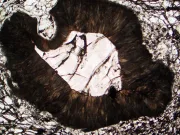
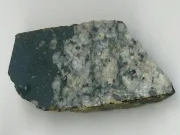
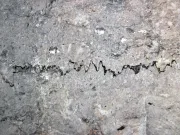
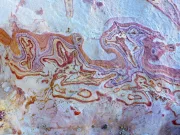
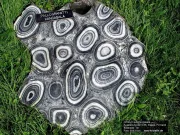
Geothermal fluids carrying dissolved minerals rise along faults and fractures. When those fluids mix with lake water, cool or change chemical conditions, calcium carbonate can precipitate. Layer after layer builds chimney-like masses, sometimes around paths where warm water once flowed. Research shows these deposits record not only hydrothermal circulation but also interactions between water chemistry and microbial processes. Although called limestone towers in popular descriptions, many are more precisely hydrothermal carbonate deposits, including calcite-rich and travertine-like materials.
Why Some Towers Stand on Dry Ground
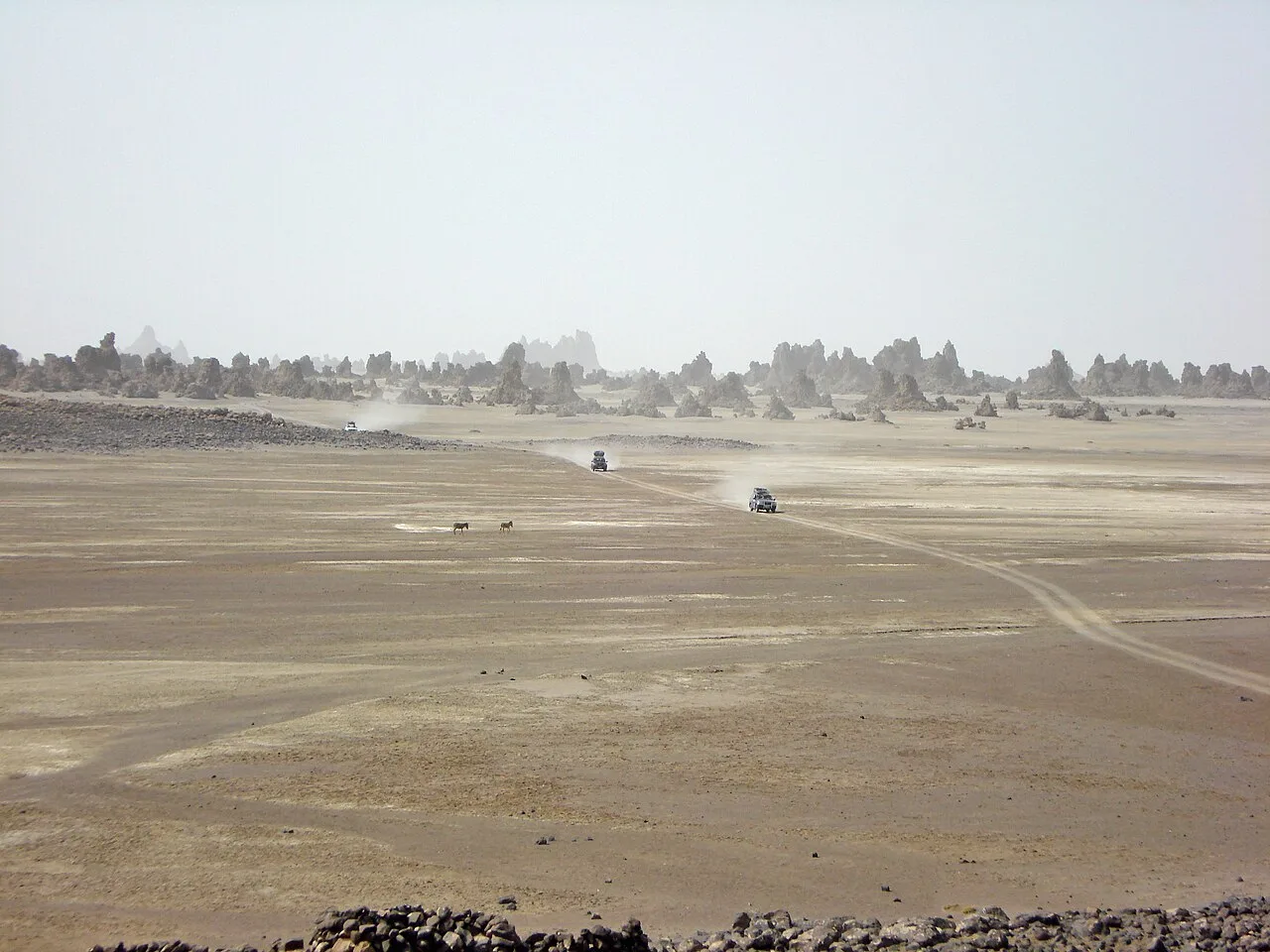
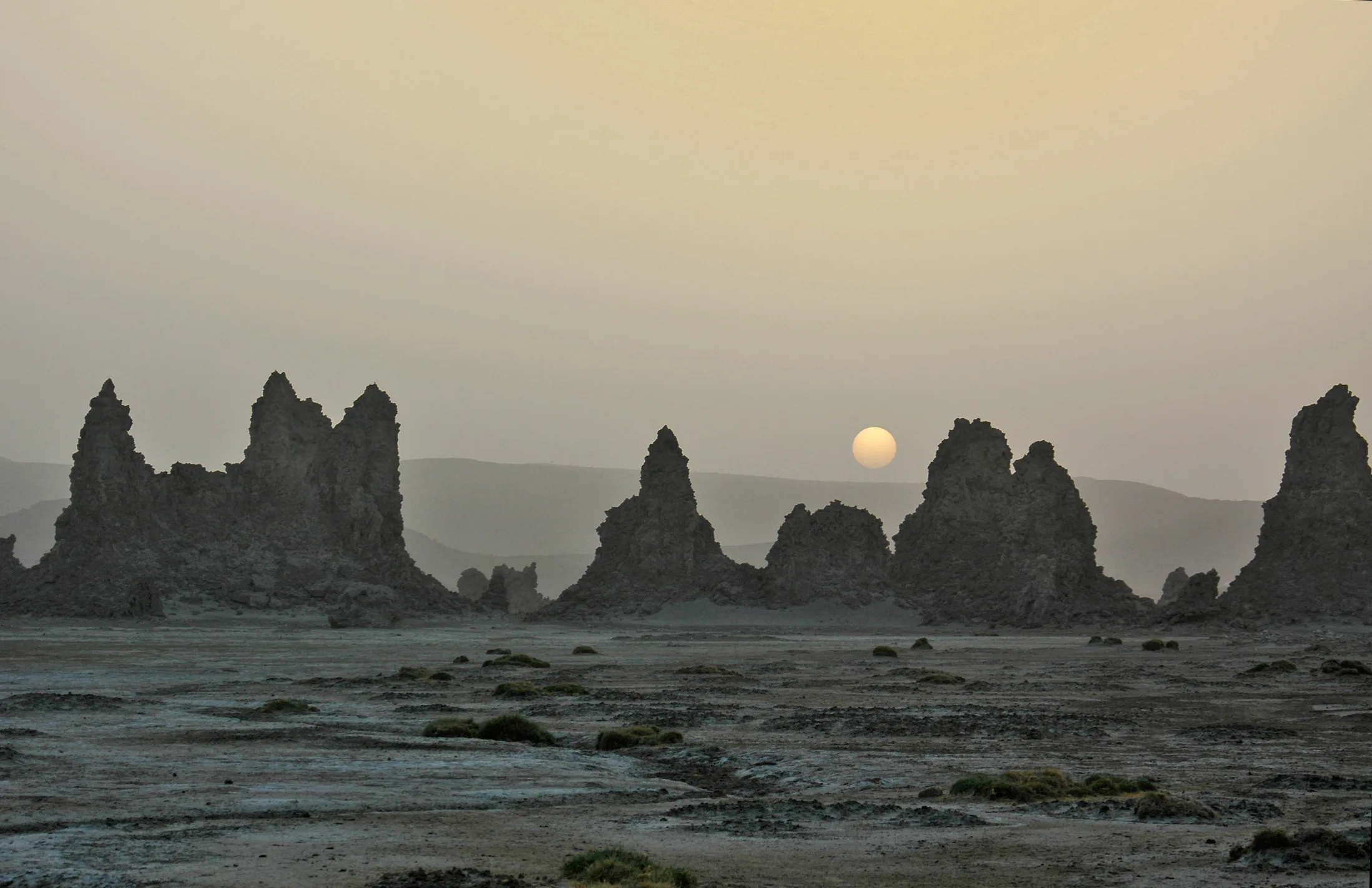
A chimney can develop underwater or close to the waterline and later become exposed when the lake shrinks or shifts. The high, dry structures visible today record a changing shoreline. Variation in lake level, groundwater supply and evaporation can expose the carbonate masses, while ongoing thermal discharge continues at active sites. Geologists use the textures and positions of the chimneys to interpret former lake and spring conditions.
Why the Rift Matters
The towers are not random desert sculptures. Their distribution is influenced by faults that allow hydrothermal water to reach the surface. The larger Afar region is an outstanding place to study continental stretching and future ocean-basin development. Hot springs, gas emissions, mineral deposits and fractures are evidence of this active geological setting.
What Are the Towers Made Of?
Carbonate minerals—particularly calcite—are key constituents. Some deposits also contain sediment, microbial textures and chemical signatures reflecting mixed lake and geothermal water. They differ from lava spires, which form by cooling magma, and from ordinary desert hoodoos, which are carved from pre-existing sedimentary rock by erosion.
What Makes Lake Abbe Important?
Lake Abbe brings together hydrogeology, geochemistry and active tectonics in one landscape. Field surveys and geophysical investigations examine the subsurface plumbing system, with implications for geothermal energy exploration as well as Earth history. Compare this site with our feature on the Danakil Depression.
The Chemistry Behind Carbonate Towers
Warm mineral-bearing waters move upward along fractures in this rift basin. When dissolved inorganic carbon and calcium reach conditions favorable for precipitation, calcite-rich carbonate can accumulate around discharge points. Changing temperature, mixing, carbon dioxide and microbial interactions may influence how the towers grow.
Why Towers Now Stand Above the Shoreline
Lake levels and spring discharge positions have changed over time. Mineral structures that formed in or near water can become stranded on dry lakebed as the shoreline retreats. Their different heights and textures can provide clues about historical water conditions, while rift faults explain where geothermal fluids reach the surface.
What Is the Difference Between Calcite and Halite Here?
Lake Abbe is an evaporative basin, so salt crusts and saline water occur in its broader landscape. Yet the dramatic towers are commonly composed of calcium carbonate deposits, rather than simply being oversized halite crystals. Calcite has a different crystal structure and solubility from halite; the two minerals record different fluid chemistries. Geologists sample and analyze the rocks to establish mineralogy rather than relying on color. This distinction matters because a white or pale mineral deposit in an arid setting is not necessarily rock salt.
Reading the Rift Landscape
Afar is the site of regional crustal extension and magmatic activity. As faults fracture rock, groundwater may circulate to depth, warm and return toward the surface. Hydrothermal discharge can be concentrated along linear structures, allowing towers to form in groups rather than at completely random positions. The surrounding basin preserves additional sedimentary and evaporite features that reflect changing water levels and arid conditions. The spectacular surface landforms are therefore linked to subsurface structure and fluid flow.
Frequently Asked Questions
What makes this geological site distinctive?
Lake Abbe lies along the border region between Djibouti and Ethiopia.
Is this a natural geological formation?
Yes. Its distinctive features are explained by known geological and environmental processes, supported by field observations and scientific research.
Scientific Sources
- DeMott et al. (2021), lacustrine carbonate towers of Lake Abhe
- Hydrothermal activity of the Lake Abhe geothermal field (2025)
- AGU: imaging hydrothermal vents at Lake Abhé