






A glittering surface is one of the first things people notice when they examine a rock. The sparkle does not come from a single substance: it may reflect mica flakes, quartz grains, feldspar cleavage or metallic mineral crystals. The angle of the light and the size of mineral grains both matter. Here are ten common rock types or varieties that can shimmer and the best clues for distinguishing them.
How to Recognize These Rocks
Begin with grain size, mineral composition, hardness, texture and geological context. The examples below describe common features rather than absolute diagnostic tests; natural specimens vary.
1. Mica Schist
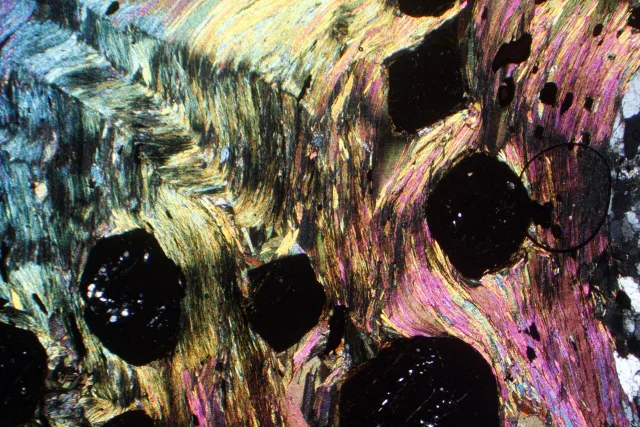
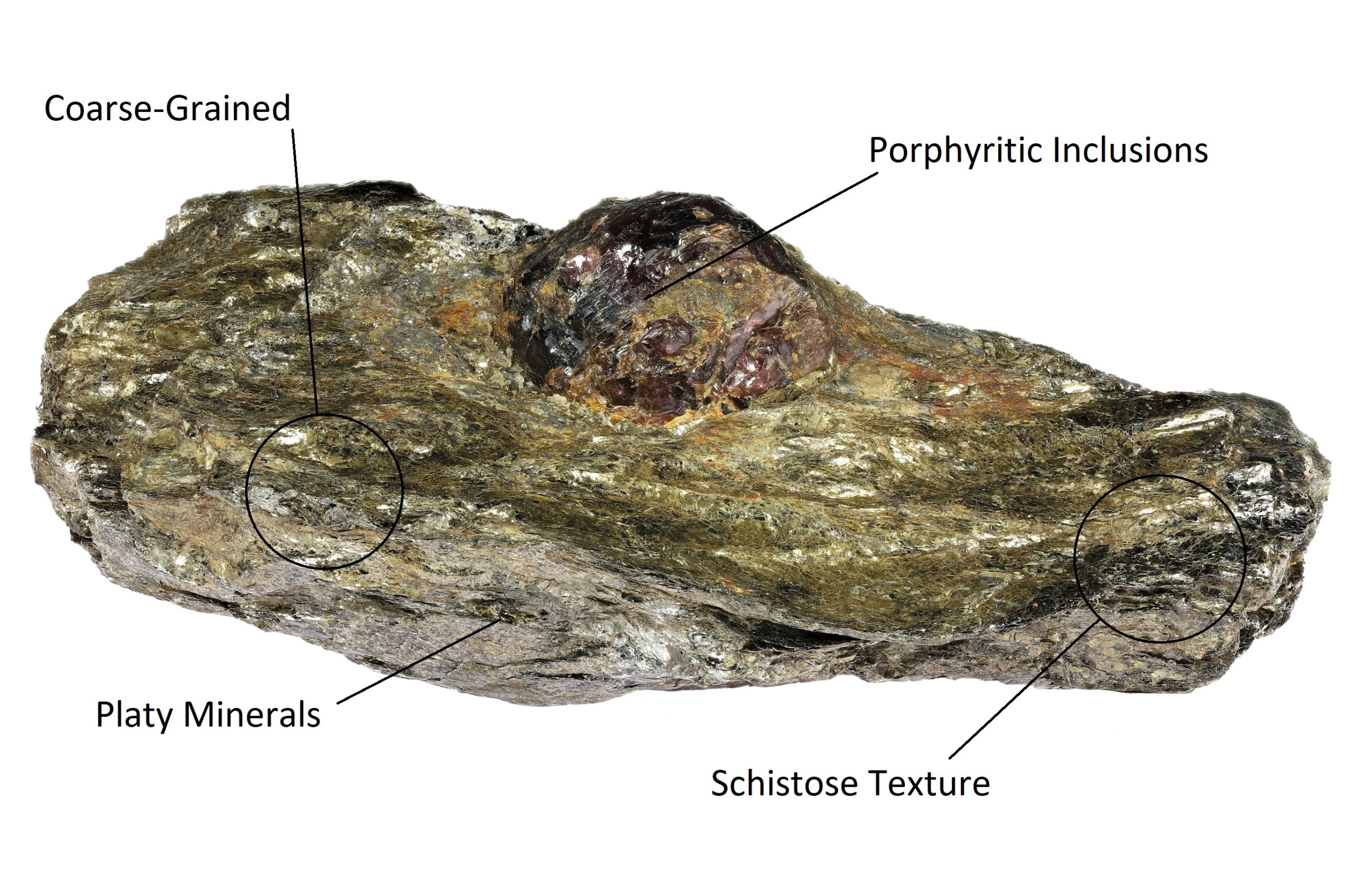
Muscovite and biotite crystals form thin, reflective sheets during metamorphism. In mica-rich schist, their alignment produces an obvious shimmer across the foliation. Large individual flakes distinguish schist from finer-grained phyllite. Turn the specimen slowly and watch whether many surfaces flash together.
2. Phyllite
Extremely fine mica and chlorite crystals give phyllite a silky sheen rather than coarse sparkles. Its gently wavy foliation may catch light in broad bands. It normally represents a metamorphic grade between slate and schist, although rock histories differ.
3. Granite
Granite contains interlocking quartz, feldspar and usually some dark minerals. Small mica books or feldspar cleavage planes can sparkle on a fresh break or polished surface. Granite is relatively coarse-grained and lacks the strong directional foliation typical of many metamorphic rocks.
4. Quartzite
A quartzite sample may glitter because tightly intergrown quartz crystals reflect light at different angles. It is very hard and often fractures across former sand grains rather than around them. White quartzite can resemble sugary marble, but their hardness and acid reactions differ.
5. Gneiss
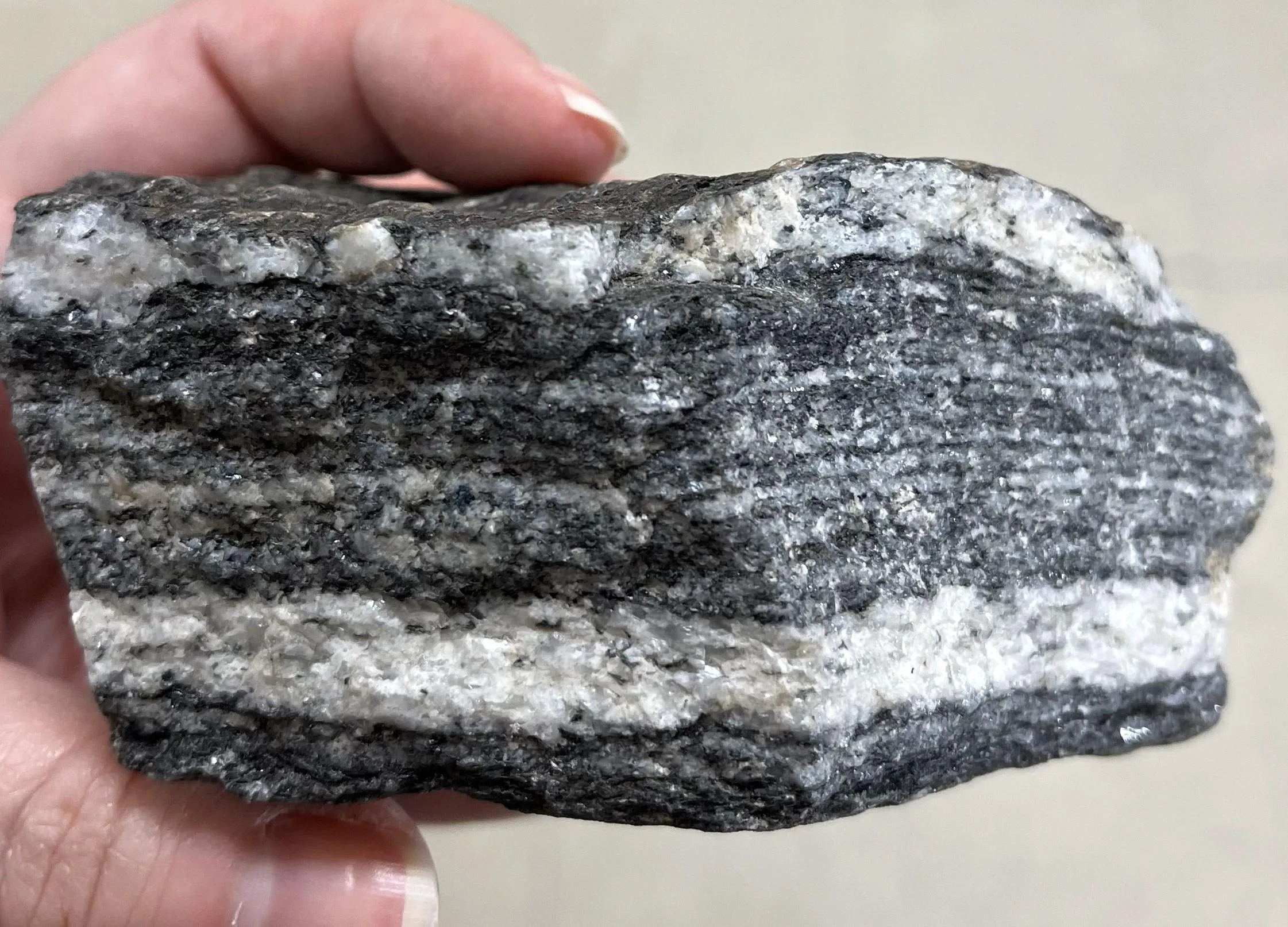
Alternating light quartz-feldspar-rich zones and darker mica or amphibole zones create a striped appearance. Mica-rich zones can shimmer, while larger crystals display distinct reflections. The banded metamorphic fabric is a critical clue.
6. Pegmatite
Many pegmatites contain exceptionally large feldspar, quartz and mica crystals. Broad mineral faces can flash strongly in direct light. A pegmatite need not contain rare gemstones; crystal size is the key textural property.
7. Mica-rich Sandstone
Tiny detrital mica flakes can be scattered between sand grains, making a gritty rock sparkle. Bedding, visible sand-sized particles and weakly to strongly cemented grains help separate it from a crystalline metamorphic rock.
8. Crystalline Marble
Coarse calcite or dolomite crystals can show bright cleavage reflections, especially on a fresh or polished surface. Calcite-bearing marble is much softer than quartzite and commonly reacts with dilute acid.
9. Pyrite-bearing Shale
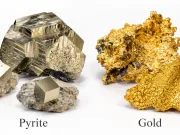
Small pyrite crystals in dark shale can glitter with a metallic yellow shine. Pyrite is an iron sulfide and can tarnish or oxidize. Metallic sparkle should not be confused with native gold; test crystal shape and hardness.
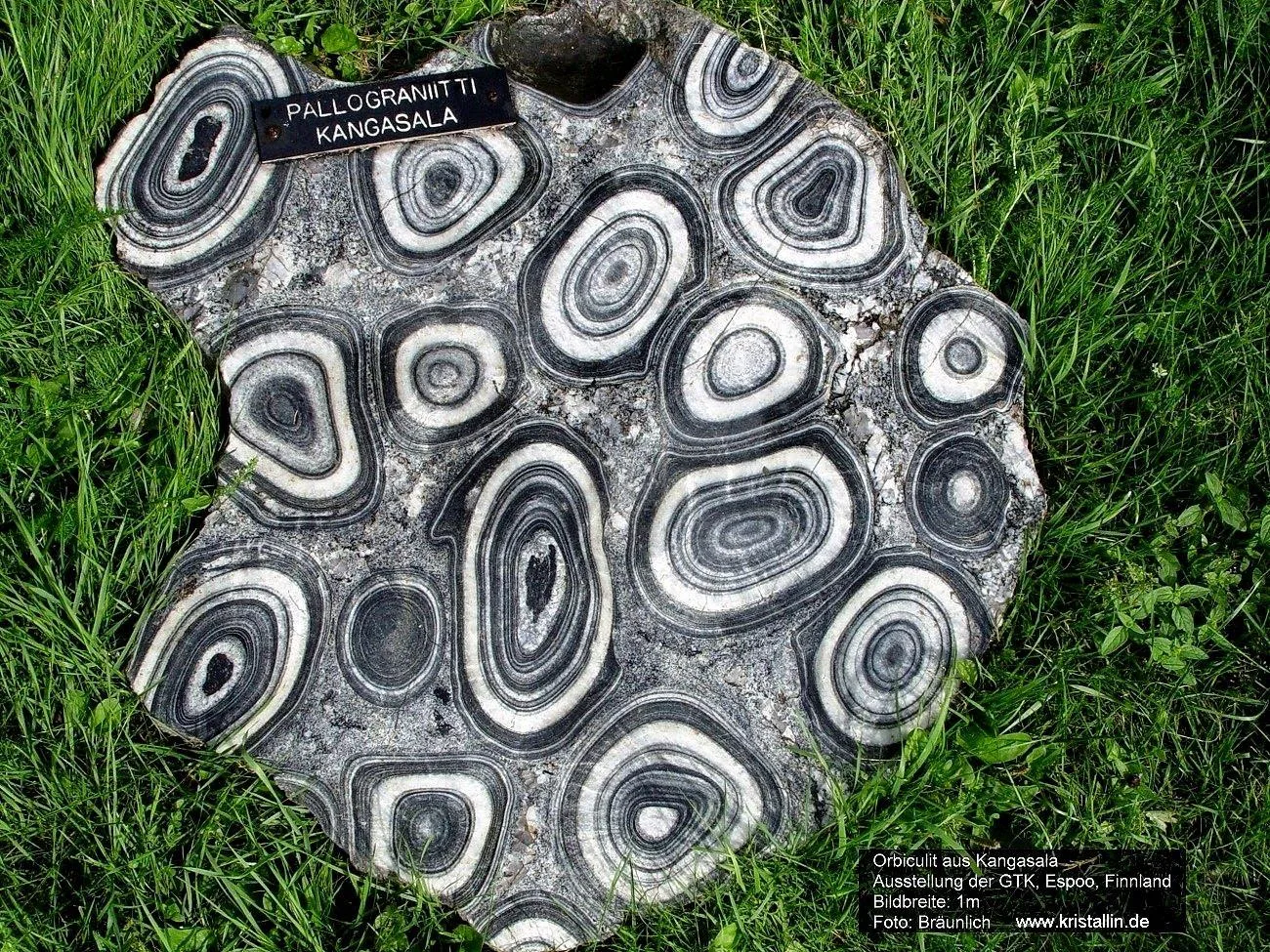
10. Aventurine Quartzite
Aligned microscopic flakes of mica or hematite in a quartz-rich rock may produce a decorative shimmering effect called aventurescence. The sparkle comes from inclusions within the rock, not from an inherent property of quartz.
Identification Tips and Common Mistakes
Sparkle alone cannot identify a rock. Note whether the reflection is glassy, pearly or metallic, and whether mineral plates are aligned. Compare hardness, grain size and foliation. See our sunstone aventurescence guide and the igneous rock overview.
Why Sparkle Changes with Viewing Angle
A crystal face reflects incoming light most strongly when its orientation sends the reflected beam toward the observer. As the rock is rotated, separate mineral grains flash on and off. Flaky mica produces multiple bright points across foliation, while a larger feldspar crystal may produce one broad reflection. On wet surfaces, thin water films can make almost any rock look brighter; inspect a dry surface before drawing conclusions.
Mica, Quartz and Pyrite: Three Different Types of Shine
Mica typically has a pearly to vitreous luster on its planar cleavage faces and readily separates into thin flakes. Quartz appears glassy and fractures without mica-like sheets. Pyrite displays a distinct metallic luster and may form small cubic crystals. If the rock contains more than one of these minerals, their different flashes may be visible simultaneously. This is why a description such as ‘golden sparkling stone’ cannot securely determine composition.
A Quick Field Identification Checklist
Use natural daylight or a simple directional flashlight. Check whether reflections are aligned in one direction, scattered through a granular rock or concentrated in isolated crystals. Estimate grain size, look for foliation and compare hardness. A strong glitter effect may come from tiny common minerals rather than precious gems. Mineral abundance matters much more than commercial value.
Frequently Asked Questions
Can a single visual feature identify a rock?
Usually not. Combine texture, composition, structural patterns and geological setting before drawing a conclusion.
Should I break an unfamiliar specimen?
Use an existing fresh break or loose specimen when permitted. Avoid damaging protected outcrops, fossils or geological heritage sites.