



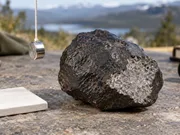

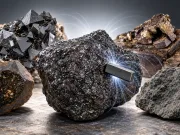


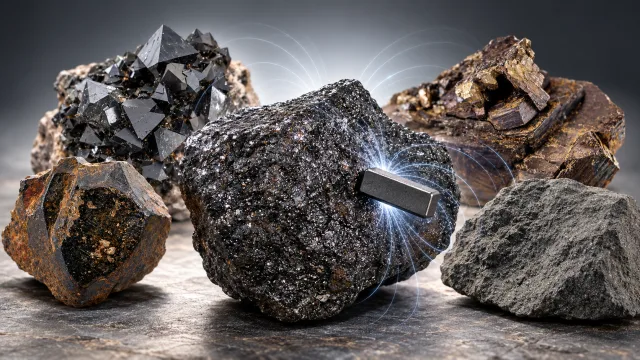
When you bring a magnet close to a rock and notice that it is strongly attracted, the result can be surprising. If the rock is dark, heavy, and magnetic, several questions may immediately come to mind:
Why is this rock magnetic?
Does it contain iron?
Could it be a meteorite?
A rock usually becomes magnetic because it contains iron-bearing magnetic minerals. The most important of these is magnetite, but minerals such as pyrrhotite, maghemite, and certain iron-titanium oxides can also contribute to magnetic behavior.
For this reason, magnetism alone does not mean that a rock is a meteorite. Many volcanic, igneous, and metamorphic rocks on Earth can react to a magnet simply because they contain small amounts of magnetite.
In this guide, we will look at eight common magnetic rocks and minerals, ranging from strongly magnetic minerals to rocks that become magnetic because of the minerals they contain.
Why Are Some Rocks Magnetic?
Most rocks are not made of a single mineral. Instead, they contain a mixture of different minerals in varying proportions.
Many common minerals show little or no visible reaction to a household magnet.
However, some iron-bearing minerals have much stronger magnetic properties.
Important examples include:
- magnetite,
- maghemite,
- pyrrhotite,
- and some iron-titanium oxides.
A rock does not need to be composed entirely of iron to be magnetic.
Even a relatively small amount of magnetite can sometimes produce a noticeable attraction to a strong magnet.
This means that tiny magnetic mineral grains inside a rock may be enough to make the entire specimen react.
1. Magnetite
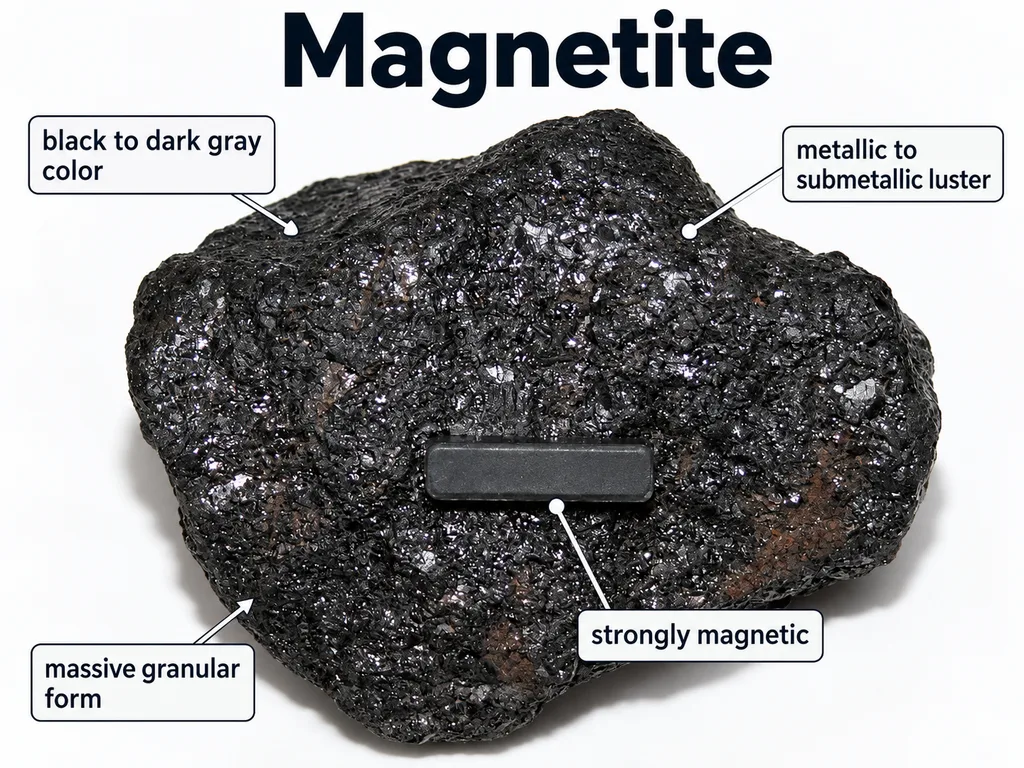
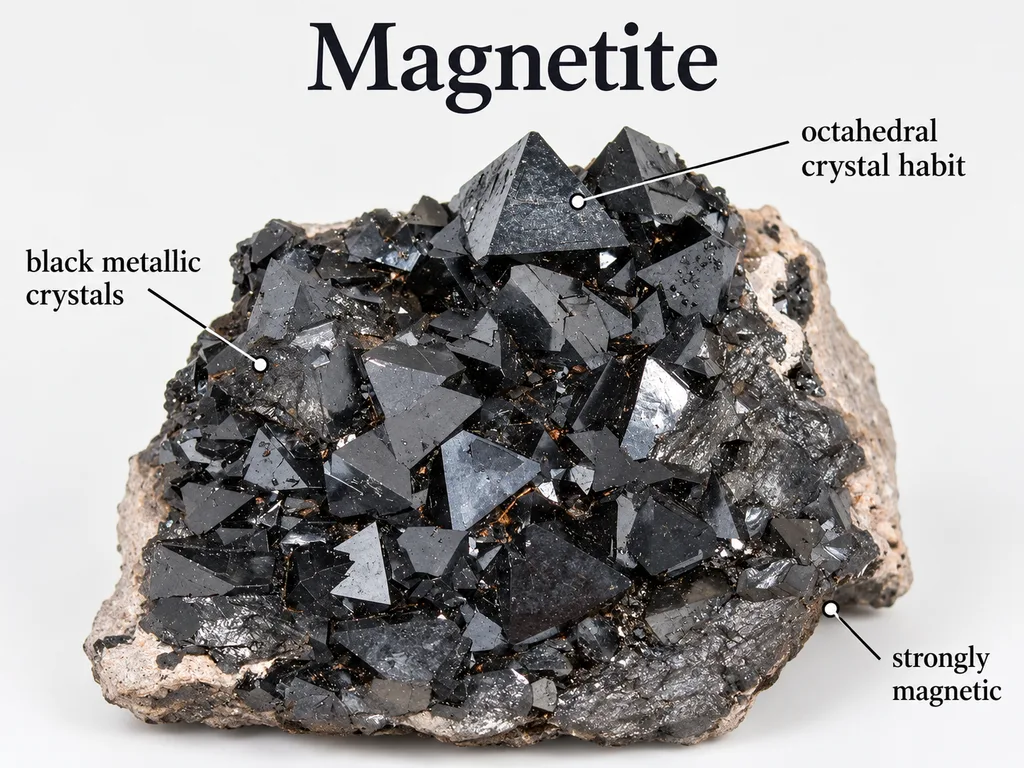
When discussing magnetic rocks and minerals, magnetite is the best place to start.
Its chemical formula is:
Fe₃O₄
Magnetite is an iron oxide mineral and one of the most important naturally occurring magnetic minerals.
It is commonly:
- black,
- dark gray,
- metallic,
- or submetallic in luster.
Its Mohs hardness is approximately 5.5 to 6.5.
One of magnetite’s most recognizable properties is its strong magnetic response. Good specimens can be easily attracted to a small magnet.
Some naturally magnetized pieces of magnetite can even act as permanent magnets. These naturally magnetized specimens are known as lodestone.
Magnetite occurs as an accessory mineral in many rocks, including:
- basalt,
- gabbro,
- metamorphic rocks,
- skarn deposits,
- and iron ores.
If a rock reacts strongly to a magnet, magnetite is often one of the first minerals to consider.
2. Pyrrhotite
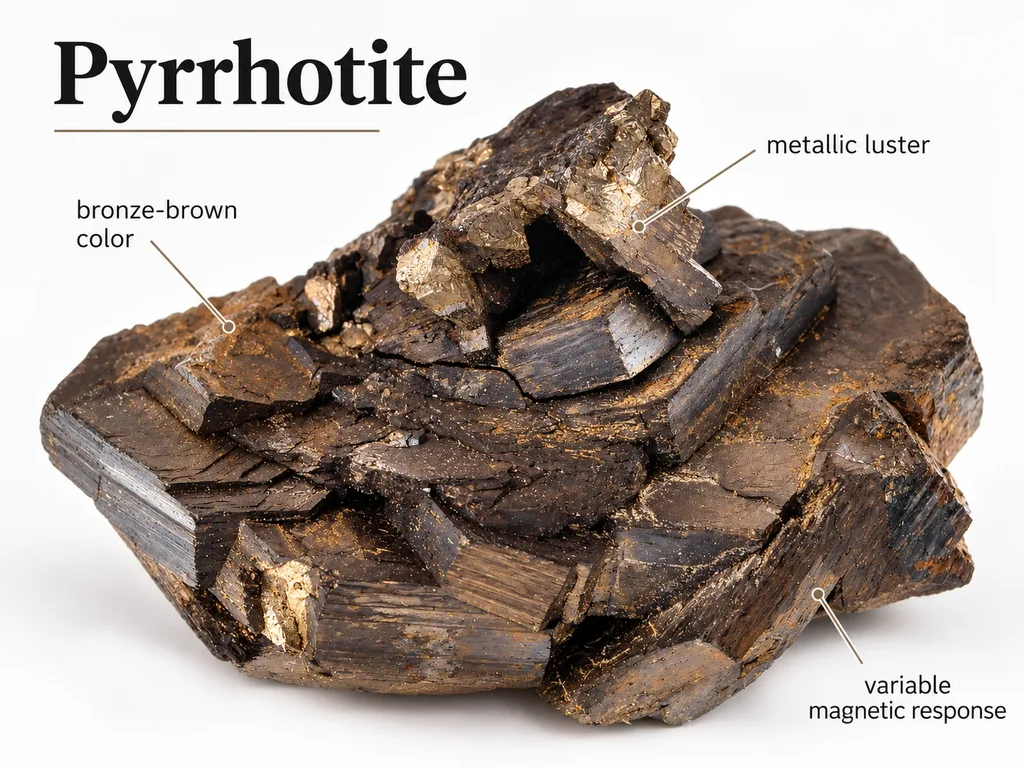
Pyrrhotite is an iron sulfide mineral with interesting magnetic properties.
Its general chemical formula is commonly written as:
Fe₁₋ₓS
It is usually bronze, brownish bronze, or dark metallic in appearance.
One important characteristic of pyrrhotite is that its magnetism can vary considerably from one specimen to another.
Some pyrrhotite specimens are noticeably magnetic, while others may show only a weak response.
This variation is related to differences in iron deficiency and crystal structure.
Pyrrhotite can occur in:
- mafic igneous rocks,
- metamorphic rocks,
- hydrothermal veins,
- and nickel-copper sulfide deposits.
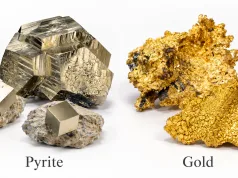
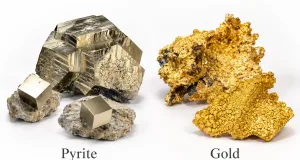
It can sometimes be confused with pyrite.
However, pyrrhotite is often more bronze-colored than pyrite and may show a much stronger magnetic response.
3. Maghemite
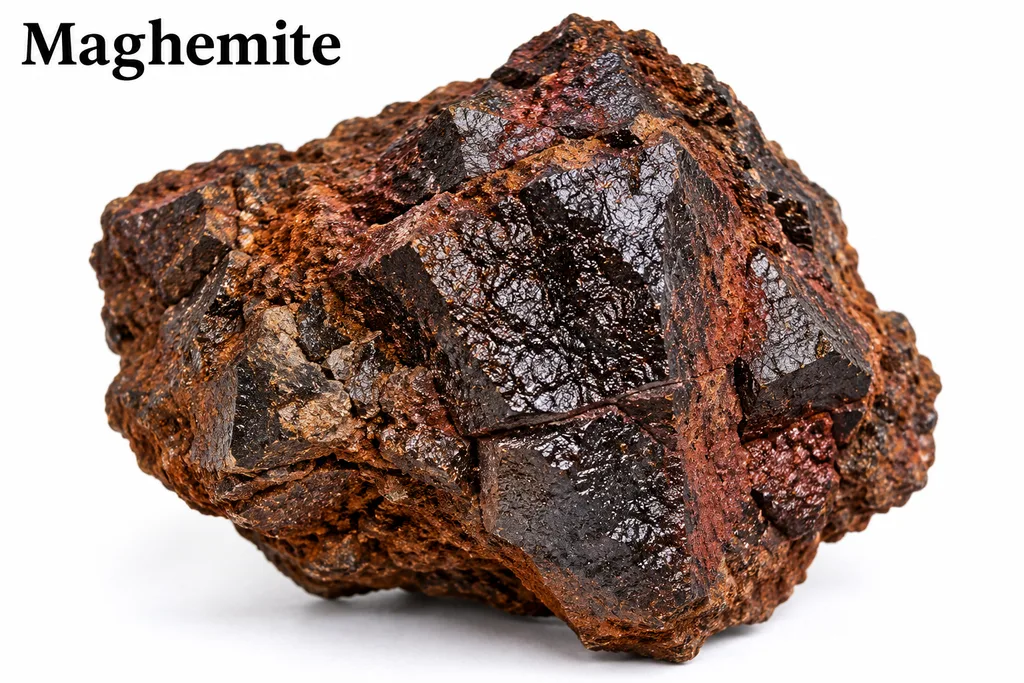
Maghemite is another iron oxide mineral with strong magnetic properties.
It is structurally related to spinel-type minerals and contains iron mainly in the ferric state.
Maghemite is commonly:
- brownish black,
- reddish brown,
- or dark black.
It can form through the oxidation of magnetite and may occur in soils, weathered rocks, and iron-rich environments.
Like magnetite, maghemite can be strongly magnetic.
However, because it is often very fine-grained, it may be difficult to identify with the naked eye.
If a rock is magnetic but does not show obvious magnetite crystals, fine-grained maghemite or magnetite may still be responsible for the magnetic response.
4. Ilmenite
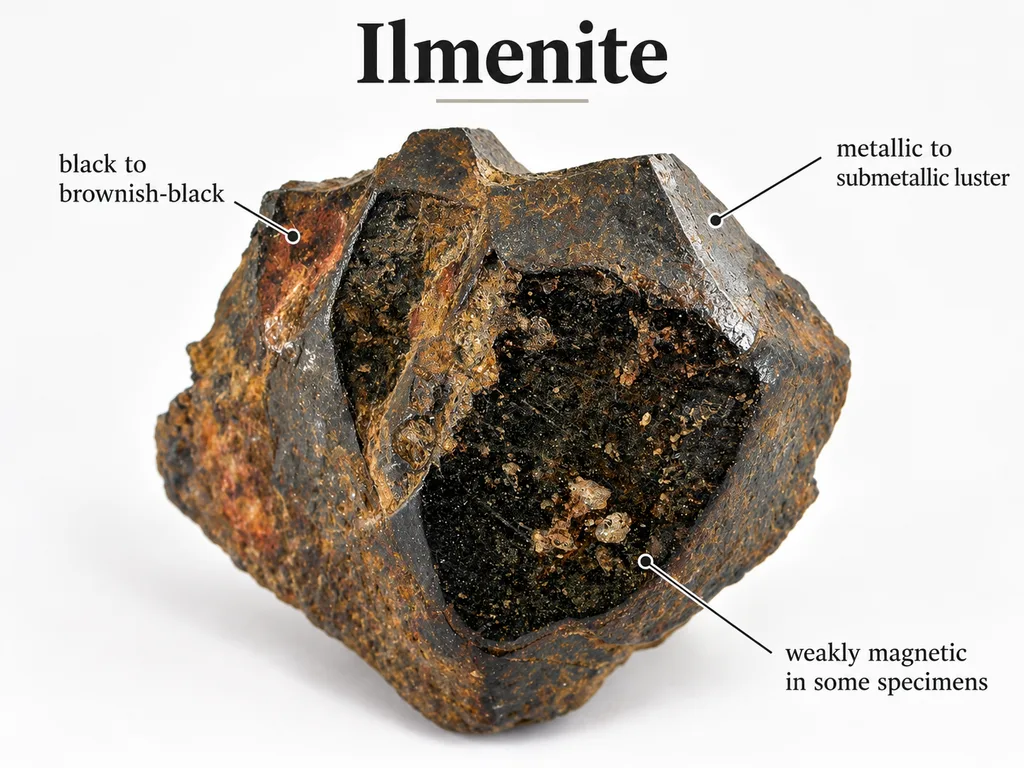
Ilmenite is an important iron-titanium oxide mineral.
Its chemical formula is:
FeTiO₃
It is usually black or dark gray and may have a metallic to submetallic luster.
Ilmenite is not usually as strongly magnetic as magnetite.
However, some ilmenite-bearing specimens may show a weak to moderate magnetic response.
This is especially true when ilmenite occurs together with magnetite or when microscopic intergrowths of iron-titanium oxides are present.
Ilmenite commonly occurs in igneous rocks and can also become concentrated in heavy mineral sands.
For this reason, dark sands found on beaches or along rivers may contain mixtures of magnetite, ilmenite, and other dense minerals.
5. Basalt
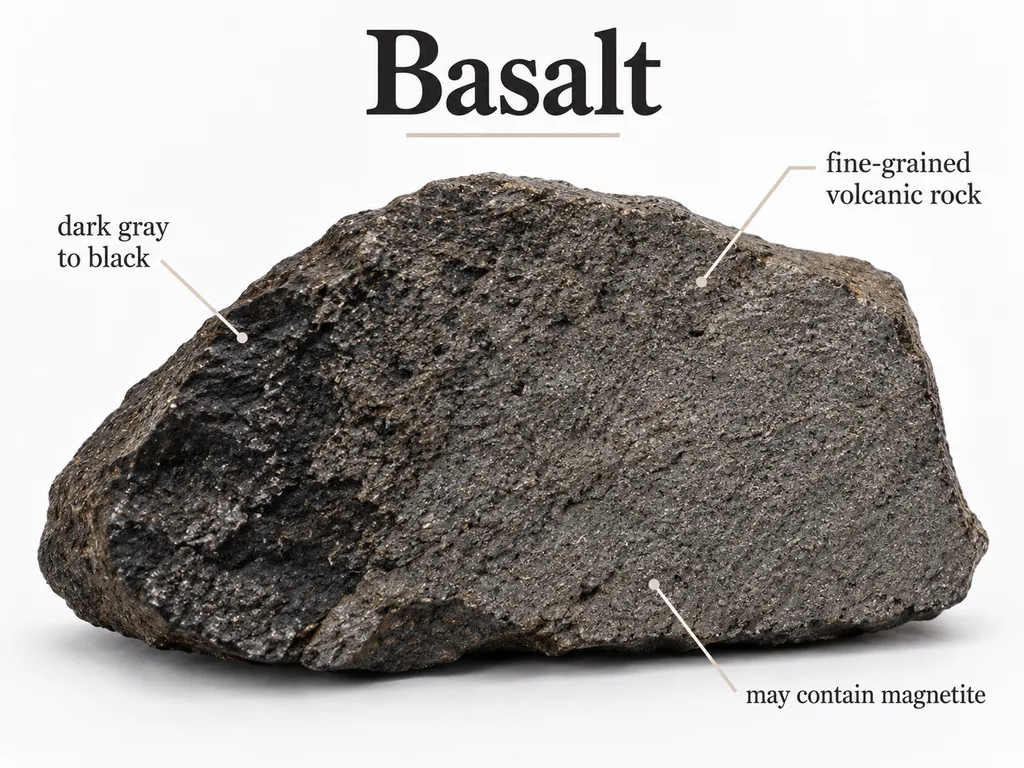
Basalt is one of the most common volcanic rocks on Earth.
It is usually:
- dark gray,
- black,
- and fine-grained.
Basalt is not a single mineral.
It commonly contains minerals such as:
- plagioclase,
- pyroxene,
- sometimes olivine,
- magnetite,
- and titanomagnetite.
The magnetic response of basalt is mainly caused by magnetite and titanomagnetite.
Some basalt samples may react strongly to a magnet, while others may show only a weak attraction.
The difference depends on the amount and type of magnetic minerals present.
This illustrates an important point:
A magnetic rock does not have to be made of metal.
It may simply contain a small amount of strongly magnetic minerals.
6. Gabbro
Gabbro is a coarse-grained igneous rock that is broadly equivalent in composition to basalt.
The main difference is how it forms.
Basalt cools rapidly at or near the surface, producing fine crystals.
Gabbro cools slowly underground, allowing larger crystals to develop.
Gabbro commonly contains:
- plagioclase,
- pyroxene,
- olivine,
- magnetite,
- and ilmenite.
Magnetite and iron-titanium oxides within gabbro may cause the rock to react to a magnet.
Some specimens can show a noticeable magnetic response.
Because gabbro is coarse-grained, individual dark magnetite grains may sometimes be visible directly within the rock.
7. Serpentinite
Serpentinite may not immediately seem like a magnetic rock, but some specimens can be surprisingly magnetic.
Serpentinite forms when ultramafic rocks react with water through a process called serpentinization.
During this process, minerals such as:
- serpentine,
- magnetite,
- and sometimes hydrogen
may form.
The magnetite produced during serpentinization can make serpentinite magnetic.
As a result, greenish, dark green, or nearly black serpentinite may sometimes react strongly to a magnet.
However, not all serpentinite contains the same amount of magnetite.
Some samples may therefore be strongly magnetic, while others show only a weak response.
8. Magnetite-Rich Skarn
Skarn is a type of metamorphic-hydrothermal rock that forms when hot magmatic fluids react with carbonate-rich rocks.
Skarns can have highly variable mineral compositions.
Some skarn deposits contain large amounts of magnetite.
These may be described as magnetite-rich skarns.
Magnetite-rich skarn can be:
- very dark,
- dense,
- heavy,
- and strongly magnetic.
In some regions, magnetite skarn deposits are economically important sources of iron ore.
If a rock is black, unusually heavy, and strongly magnetic, a magnetite-rich rock such as skarn may be worth considering.
Which Rocks and Minerals Are the Most Magnetic?
In general, the strongest reactions are seen in magnetite-rich specimens.
A simplified comparison looks like this:
| Rock or Mineral | Typical Magnetic Response |
|---|---|
| Magnetite | Very strong |
| Maghemite | Strong |
| Pyrrhotite | Variable, moderate to strong |
| Magnetite-rich Skarn | Strong |
| Basalt | Weak to moderate, sometimes strong |
| Gabbro | Weak to moderate |
| Serpentinite | Variable |
| Ilmenite | Usually weak |
These values should not be treated as absolute.
Natural rocks can vary significantly in mineral composition.
Two samples of the same rock type may show very different magnetic behavior depending on how much magnetite or other magnetic minerals they contain.
Is Every Magnetic Rock Magnetite?
No.
Magnetite is one of the most common causes of rock magnetism, but it is not the only possibility.
Other magnetic materials can include:
- pyrrhotite,
- maghemite,
- magnetite-bearing basalt,
- magnetite-bearing gabbro,
- serpentinite,
- and industrial slag.
For this reason, a magnet test should be treated as only one clue in rock and mineral identification.
Other properties should also be examined, including:
- color,
- density,
- streak,
- crystal form,
- grain size,
- and overall texture.
Could a Magnetic Rock Be a Meteorite?
Yes, but magnetism alone is not enough to identify a meteorite.
This is an important distinction.
Many meteorites, especially ordinary chondrites, contain iron-nickel metal and therefore react to a magnet.
Iron meteorites are usually strongly magnetic.
However, many ordinary Earth rocks containing magnetite can also respond strongly to a magnet.
Therefore:
“It sticks to a magnet, so it must be a meteorite”
is not a reliable conclusion.
Meteorite identification should also consider features such as:
- fusion crust,
- density,
- visible metal grains,
- regmaglypt-like surface depressions,
- chondrules,
- and streak behavior.
Magnetism is useful, but it is only one part of the identification process.
How Can You Test a Rock for Magnetism at Home?
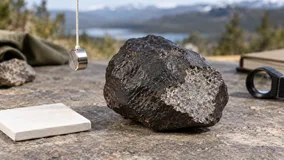
The easiest method is to use a strong neodymium magnet.
Instead of immediately placing the magnet directly on the rock, slowly bring it closer.
This allows you to observe the strength of the attraction.
Strong attraction
If the magnet clearly pulls toward the rock or can lift a small specimen, the rock may contain a relatively high amount of magnetite or another strongly magnetic mineral.
Moderate attraction
If the rock reacts only when the magnet is very close, it may contain a smaller amount of magnetic material.
Very weak attraction
Some rocks react only to strong neodymium magnets and may show no obvious response to ordinary refrigerator magnets.
A more sensitive method is to suspend a magnet from a thread and slowly move the rock toward it.
Even a small deflection may reveal weak magnetic attraction.
Why Does Black Sand Stick to a Magnet?
Black sands found along beaches, rivers, and stream beds often contain heavy minerals.
These may include:
- magnetite,
- ilmenite,
- hematite,
- garnet,
- and other dense minerals.
When a magnet is passed over the sand, magnetite-rich grains can be separated from the non-magnetic material.
This is one reason black sand is familiar to gold prospectors.
However, black sand does not automatically mean that gold is present.
Gold and heavy minerals can sometimes become concentrated in similar places because of the same hydraulic processes, but black sand alone is not proof of a gold deposit.
Can a Rusty or Red Rock Be Magnetic?
Yes.
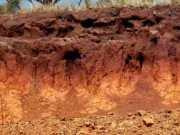
A red, orange, or brown weathered surface does not mean that a rock contains no magnetite.
Magnetite may oxidize over time and form other iron oxide or iron hydroxide minerals near the surface.
As a result, a rock may have a weathered outer surface that is:
- red,
- orange,
- or brown,
while the interior remains dark and magnetic.
Pure hematite is generally much less magnetic than magnetite.
If a red or rusty-looking rock shows a strong magnetic response, magnetite or another magnetic mineral may still be present inside.
Is Magnetism Enough to Identify a Rock?
No.
Magnetism is a useful diagnostic property, but it cannot identify a rock by itself.
For example, basalt, gabbro, serpentinite, and skarn can all contain magnetite and may all respond to a magnet.
A more reliable identification requires several properties to be considered together:
- color,
- grain size,
- mineral composition,
- hardness,
- density,
- streak,
- crystal structure,
- and magnetic response.
In geology, identification is usually most accurate when several characteristics point toward the same conclusion.
Conclusion
A rock usually becomes magnetic because it contains iron-rich magnetic minerals.
The most important of these is magnetite, but pyrrhotite, maghemite, and certain iron-titanium oxides may also contribute to magnetic behavior.
Rocks such as basalt, gabbro, serpentinite, and magnetite-rich skarn can react to a magnet because they contain these minerals.
The most important point to remember is this:
A magnetic rock is not automatically a meteorite.
Many common Earth rocks can react to magnets.
For this reason, magnetism should always be considered together with other properties such as color, density, streak, crystal form, and texture.
If your rock is strongly magnetic, one of the first questions to ask is:
Could it contain magnetite?
In many cases, the answer is yes.
Frequently Asked Questions
Why do some rocks stick to magnets?
Most magnetic rocks contain magnetite, maghemite, pyrrhotite, or other iron-rich minerals that respond to a magnetic field.
What is the most magnetic common mineral?
Magnetite is one of the most strongly magnetic and widespread naturally occurring minerals.
Is basalt magnetic?
Some basalt is magnetic because it contains magnetite, titanomagnetite, or other iron-bearing minerals.
Is gabbro magnetic?
Some gabbro samples can be magnetic because they contain magnetite and iron-titanium oxides.
Is hematite magnetic?
Pure hematite is generally much less magnetic than magnetite. A strongly magnetic hematite-looking rock may contain magnetite or other magnetic minerals.
Does a magnetic rock mean it is a meteorite?
No. Many ordinary terrestrial rocks are magnetic. Meteorite identification requires several additional tests and observations.
Why can serpentinite be magnetic?
Magnetite can form during serpentinization, causing some serpentinite samples to respond strongly to magnets.
Why does black sand stick to a magnet?
Black sand often contains magnetite and other heavy iron-rich minerals. Magnetite-rich grains can be separated from the sand with a magnet.
References
- U.S. Geological Survey (USGS). Rock Magnetism and Magnetic Properties of Rocks.
- U.S. Geological Survey (USGS). Magnetic Principles and Magnetic Minerals in Rocks.
- Mindat.org. Magnetite – Mineral Information, Data and Localities.
- Mindat.org. Pyrrhotite – Mineral Information, Data and Localities.
- Mindat.org. Maghemite – Mineral Information, Data and Localities.
- Mindat.org. Ilmenite – Mineral Information, Data and Localities.