
























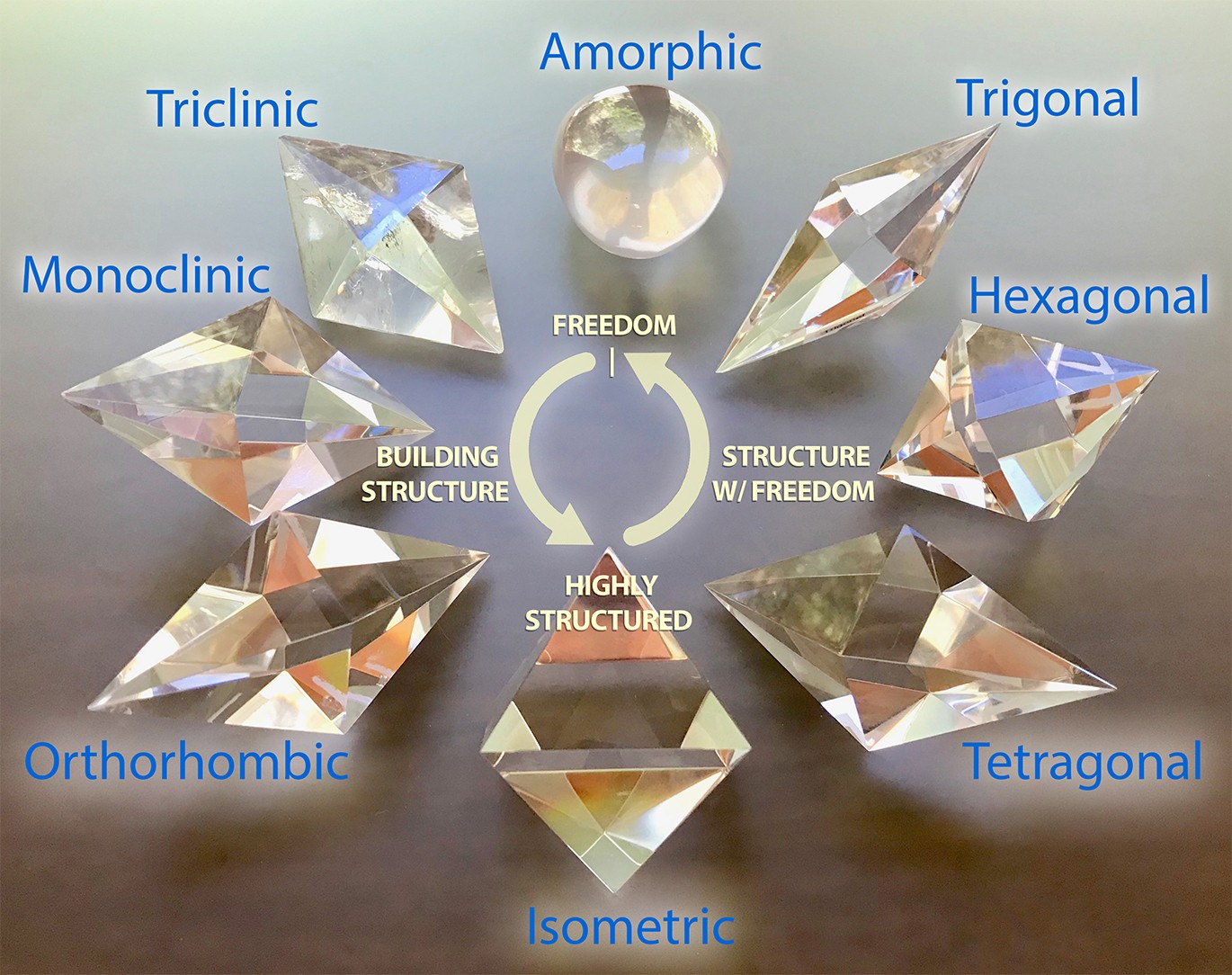
Crystal systems classify crystals according to their point symmetry and associated conventional unit-cell geometry. The seven systems are cubic, tetragonal, hexagonal, trigonal, orthorhombic, monoclinic and triclinic. Their characteristic axes and angles help describe crystal structure, but external habit alone does not determine symmetry.
Crystal Systems Explorer
Equal cell edges and right angles are characteristic of the conventional cubic cell; symmetry, not just shape, defines the system.
a = b = c; α = β = γ = 90°
Pyrite, halite, diamond
Four threefold axes in the cubic system
Models show illustrative cell geometry, not measured lattice parameters or complete crystal morphology. Crystal systems are defined by symmetry. Reference: International Union of Crystallography.
What Is a Crystal System?
A crystal system is a classification of the symmetry of a periodic crystal structure. Its symmetry operations constrain the geometry used to describe the repeating unit cell, but the external shape of a specimen does not uniquely identify its crystal system. The seven systems group the 32 crystallographic point groups; they are distinct from the 14 Bravais lattice types and the 230 three-dimensional space-group types.
The unit cell is specified by three edge lengths, a, b and c, and three interaxial angles: α between b and c, β between a and c, and γ between a and b. Conventional cell geometry is a useful guide to symmetry, not a substitute for measuring it. Metric equalities can occur accidentally in lower-symmetry structures.
The Seven Crystal Systems at a Glance
| System | Conventional cell geometry | Characteristic symmetry | Examples |
|---|---|---|---|
| Cubic | a = b = c; α = β = γ = 90° | Four threefold axes | Halite, pyrite, diamond |
| Tetragonal | a = b; α = β = γ = 90° | Fourfold axis or rotoinversion | Zircon, rutile |
| Hexagonal | a = b; α = β = 90°; γ = 120° | Sixfold axis or rotoinversion | Beryl, apatite |
| Trigonal | Rhombohedral or hexagonal axes | Threefold axis | Quartz, calcite |
| Orthorhombic | All angles 90° | Three perpendicular symmetry directions | Topaz, olivine |
| Monoclinic | α = γ = 90° (unique b) | One principal twofold axis or mirror | Gypsum, orthoclase |
| Triclinic | No required metric equality or right angles | Identity, with or without inversion | Kyanite, plagioclase |
The equalities in the table are symmetry requirements in the conventional settings. Lengths not constrained to equality and angles not constrained to 90° may nevertheless happen to be equal or right in a particular crystal.
1. Cubic (Isometric) Crystal System
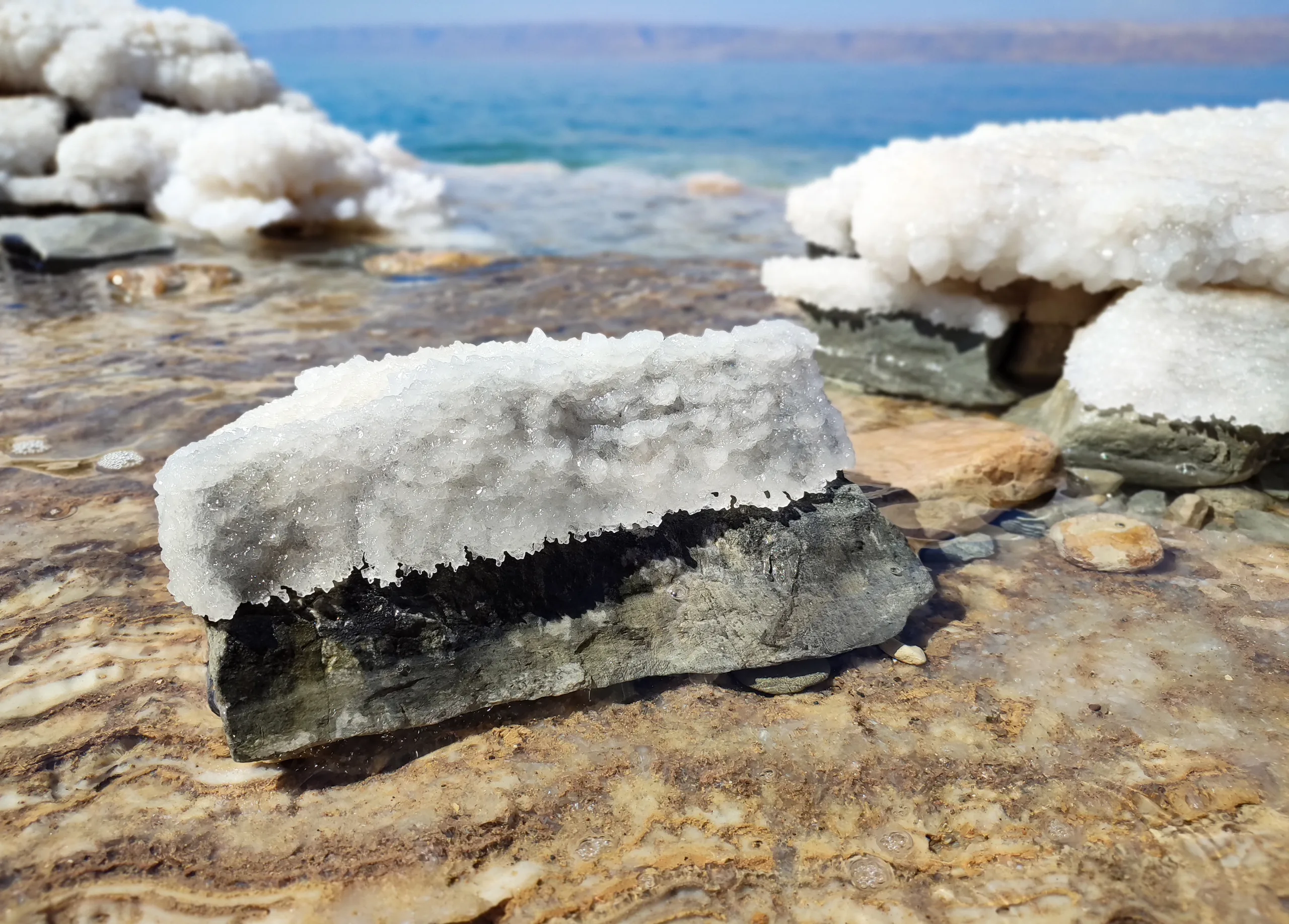
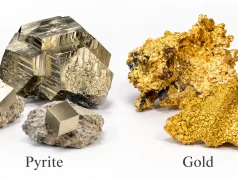
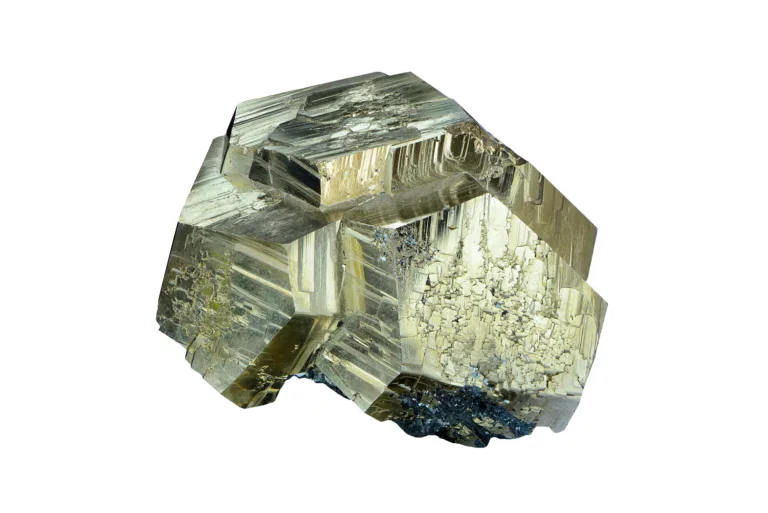
The cubic system has three equivalent perpendicular cell directions and four threefold rotation axes along body-diagonal directions. Halite and galena commonly display cubic habits, while diamond frequently forms octahedra. Cubic pyrite can also develop pyritohedral forms. These differences reflect the crystal faces that grow or dissolve most slowly, not a change in the symmetry system.
Halite has three perfect cleavage directions at right angles, producing cubelike fragments. Cleavage is a property of bonding and is not identical to external habit: diamond is cubic but cleaves along octahedral planes.
2. Tetragonal Crystal System
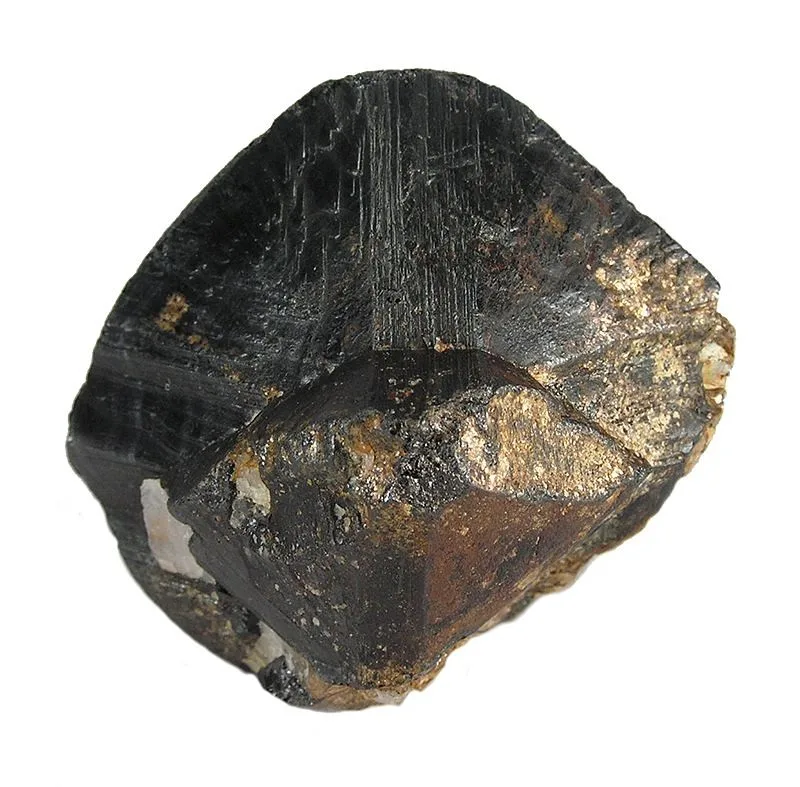
A tetragonal structure has a principal fourfold rotation or rotoinversion direction and a conventional cell with a square basal plane. The c repeat length is not required to equal a. Zircon, rutile and cassiterite are common examples. Zircon often develops prisms terminated by pyramidal faces; rutile may occur as slender needles or stout crystals. Neither elongation nor a square cross-section alone establishes tetragonal symmetry.
3. Hexagonal Crystal System
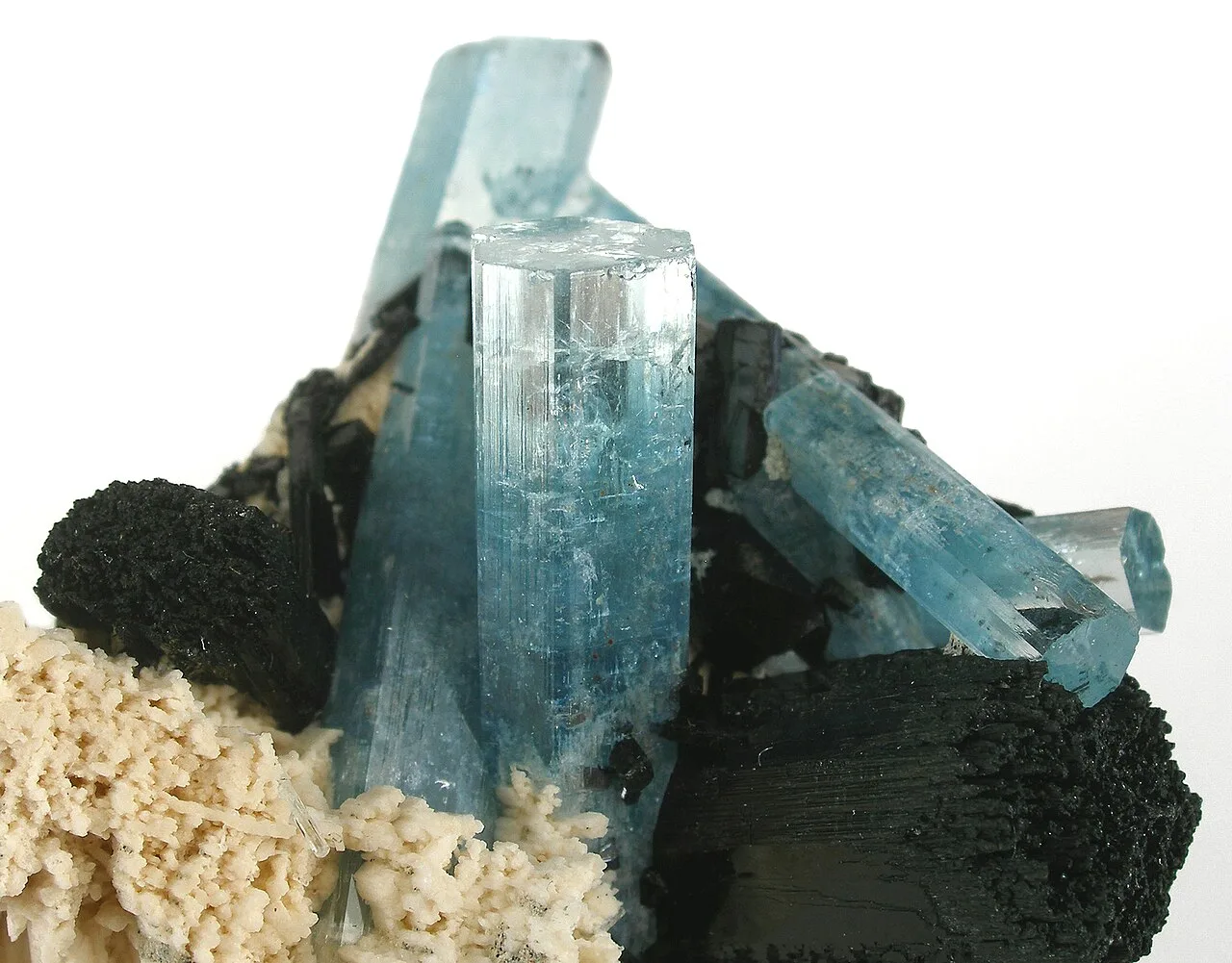
Hexagonal crystals possess a principal sixfold rotation or rotoinversion symmetry. The conventional cell uses two equal basal vectors at 120° and a perpendicular c vector; a four-axis description is also used for crystal faces. Beryl, including aquamarine and emerald, commonly grows as six-sided prisms. Apatite is another familiar example. Some hexagonal minerals form plates rather than prisms because growth rates differ between basal and prismatic faces.
4. Trigonal Crystal System
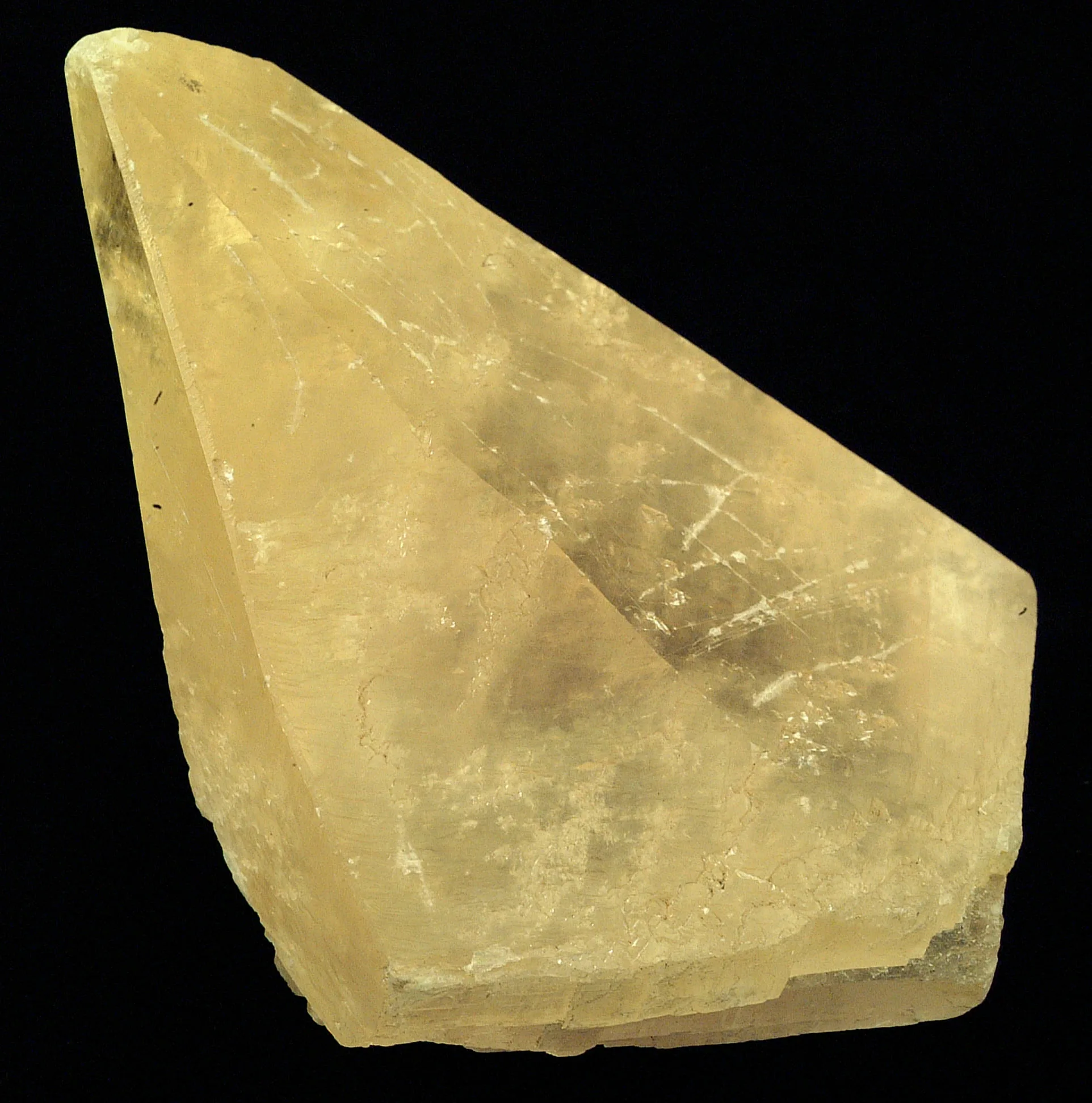
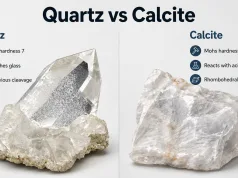
Trigonal structures possess a threefold principal symmetry direction rather than the sixfold symmetry that defines the hexagonal crystal system. The distinction is important because both may use hexagonal axes, and a trigonal mineral can have a six-sided appearance. Ordinary α-quartz, calcite and corundum are trigonal.
A rhombohedral lattice can be described using a primitive cell whose three edges are equal and whose three angles are equal; the angles are not required to be right. Trigonal crystals may belong to either the rhombohedral or hexagonal lattice system. The explorer lets you switch axis representations to understand why cell geometry alone cannot determine symmetry.
5. Orthorhombic Crystal System
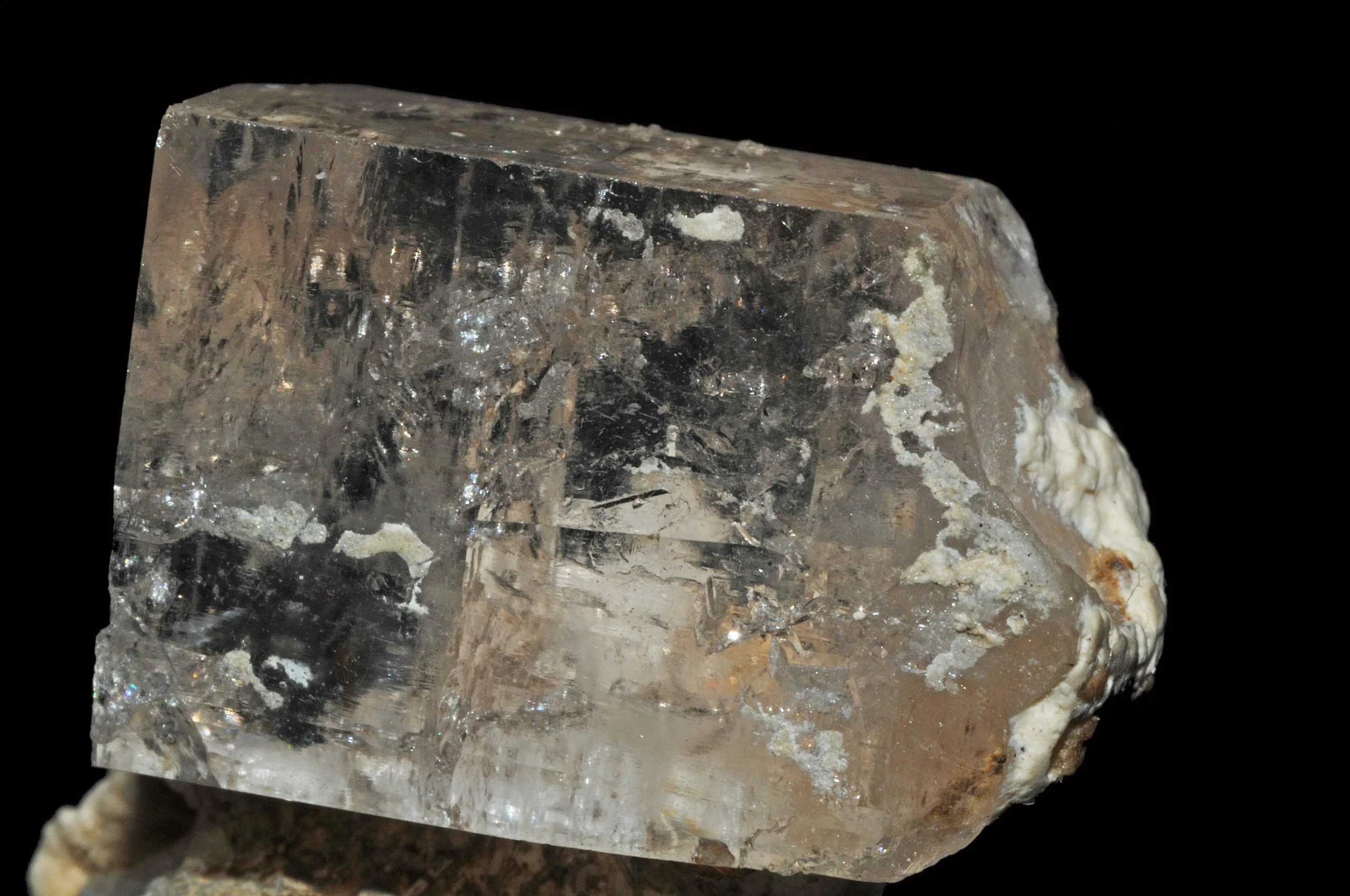
Orthorhombic structures use three perpendicular directions, with no required equality between the corresponding cell lengths. Their point groups have three perpendicular symmetry directions. Topaz, olivine and barite are examples. Topaz may form prismatic crystals, whereas olivine is frequently granular in igneous rocks. The unequal metric axes do not mean the crystal is asymmetrical or disordered.
6. Monoclinic Crystal System
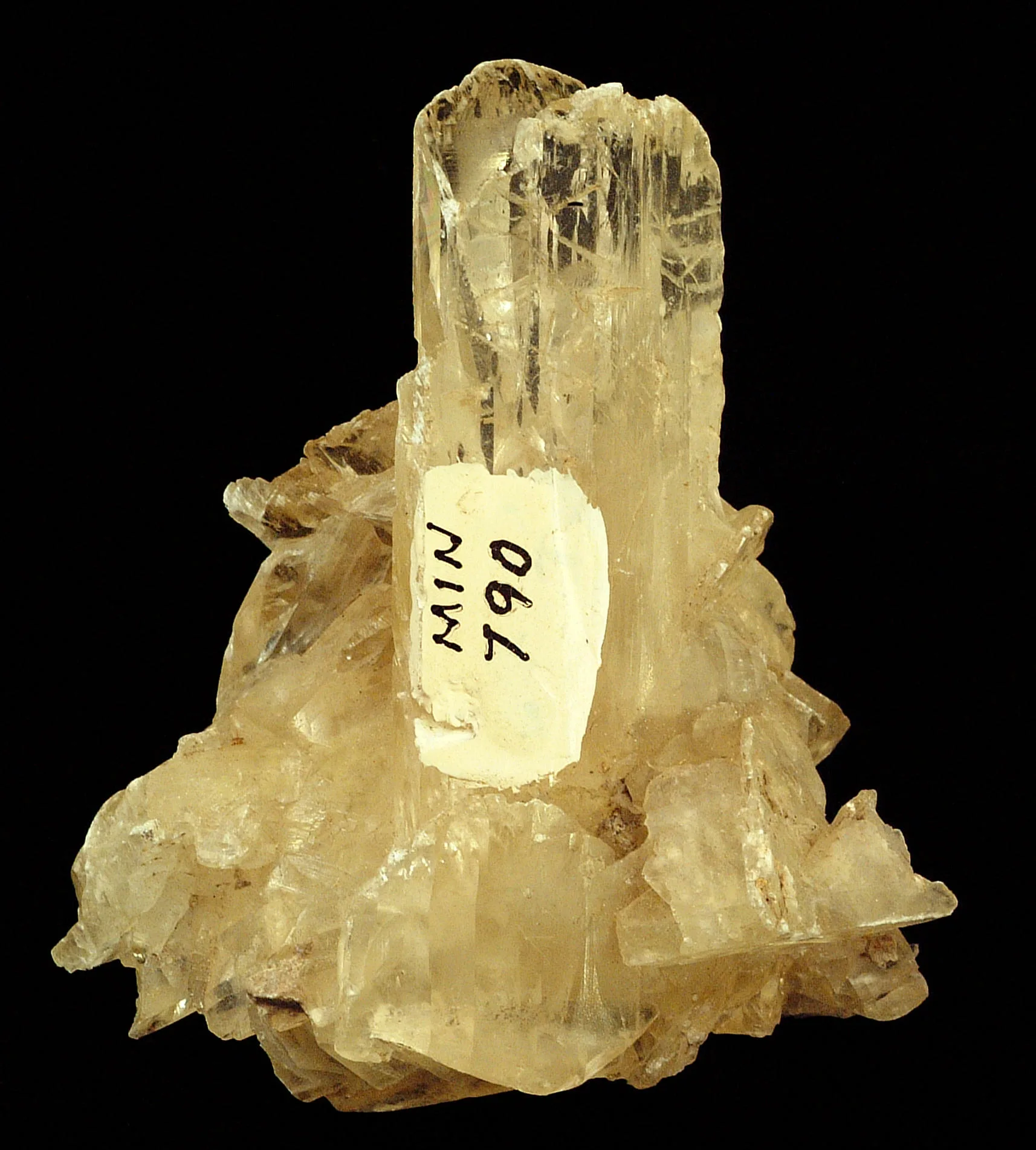
The conventional unique-b setting has α and γ equal to 90°, while β is not constrained to a right angle. A principal twofold axis or mirror plane characterizes monoclinic point symmetry. Gypsum, orthoclase and augite are common examples. Gypsum can grow as tabular crystals or form fibrous aggregates. Twinning can create composite shapes that obscure the symmetry of an individual crystal.
7. Triclinic Crystal System
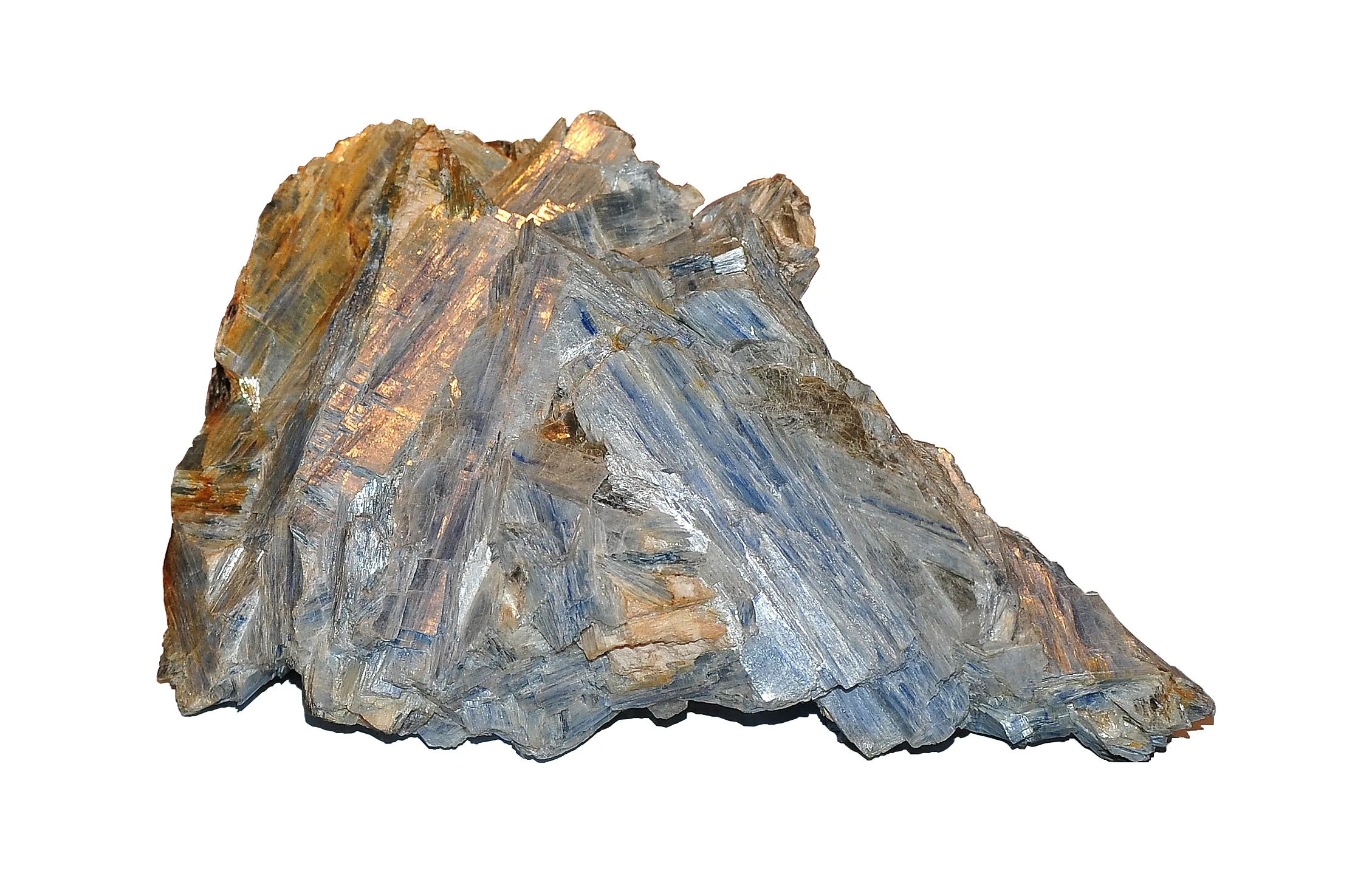
Triclinic symmetry contains the identity operation alone or identity plus inversion. None of the three cell edges is required to equal another and none of the angles is constrained to 90°. Kyanite and plagioclase feldspars are examples. Bladed kyanite also demonstrates anisotropy: its scratch hardness differs by direction because bonding differs along its structure.
Crystal System, Lattice, Habit and Cleavage
| Term | Meaning | Example |
|---|---|---|
| Crystal system | Point symmetry classification | Quartz: trigonal |
| Bravais lattice | Periodic arrangement of equivalent lattice points | Primitive cubic |
| Habit | External shape or aggregate form | Prismatic quartz |
| Cleavage | Preferred breakage planes | Rhombohedral calcite |
| Twinning | Symmetry-related intergrowth of crystals | Repeated plagioclase twins |
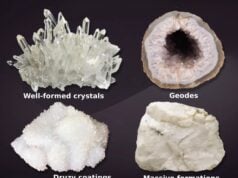
Natural crystal form depends on growth conditions, available space, chemistry and defects. In the field, look for repeated face arrangements, symmetry and consistent interfacial angles; combine these clues with hardness, streak, cleavage and mineral association. The absence of a well-developed crystal face is not evidence of low symmetry.
How Geologists Determine Crystal Systems
X-ray diffraction identifies lattice spacings and symmetry-related reflections. Optical microscopy and electron diffraction provide complementary evidence. A mineral’s composition may narrow the candidates but does not uniquely specify its structure: diamond and graphite both consist of carbon yet have very different structures and properties. Polymorphs can form under different temperature and pressure conditions.
The rotatable models above represent illustrative cells, not measured lattice parameters or complete atomic structures. Use the mineral photographs for comparison and the axis controls to observe geometric constraints. For specimen identification, combine this information with physical tests rather than relying on apparent shape.
Frequently Asked Questions
Are all crystals cubic, hexagonal or another of the seven systems?
Ordinary three-dimensional periodic crystals fall into seven crystal systems. Quasicrystals and other aperiodic structures require additional crystallographic descriptions.
Why is quartz trigonal if it looks hexagonal?
Common α-quartz has threefold crystal symmetry despite its frequently six-sided external habit.
Are rhombohedral and trigonal synonymous?
No. Rhombohedral describes a lattice system or cell setting; trigonal is a crystal system.
Can crystal habit identify a mineral?
Habit is useful, but must be considered with other physical properties or diffraction data.
How many Bravais lattices exist?
There are 14 conventional three-dimensional Bravais lattice types, grouped into lattice systems.
More interactive geological models are available in the Geology Tools library.
References
IUCr Online Dictionary of Crystallography: Crystal system
IUCr: Unit-cell constraints and symmetry
IUCr: Common misconceptions in crystallography and crystal optics