
























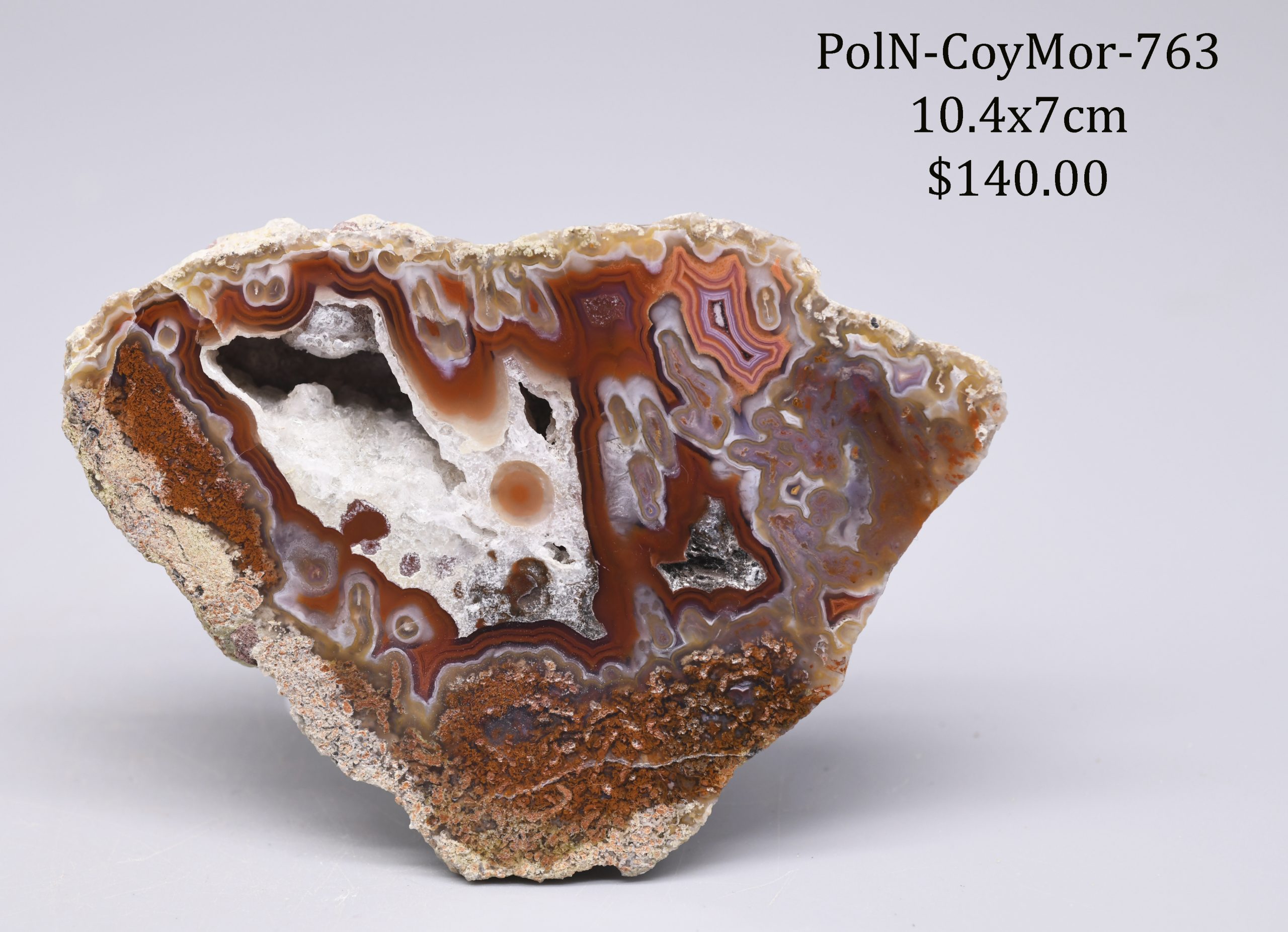
Agate is a patterned variety of chalcedony, composed predominantly of microcrystalline silica (SiO₂). Its concentric bands, mineral inclusions and translucent layers develop as silica-rich fluids fill cavities and fractures in rock.
What Is Agate?
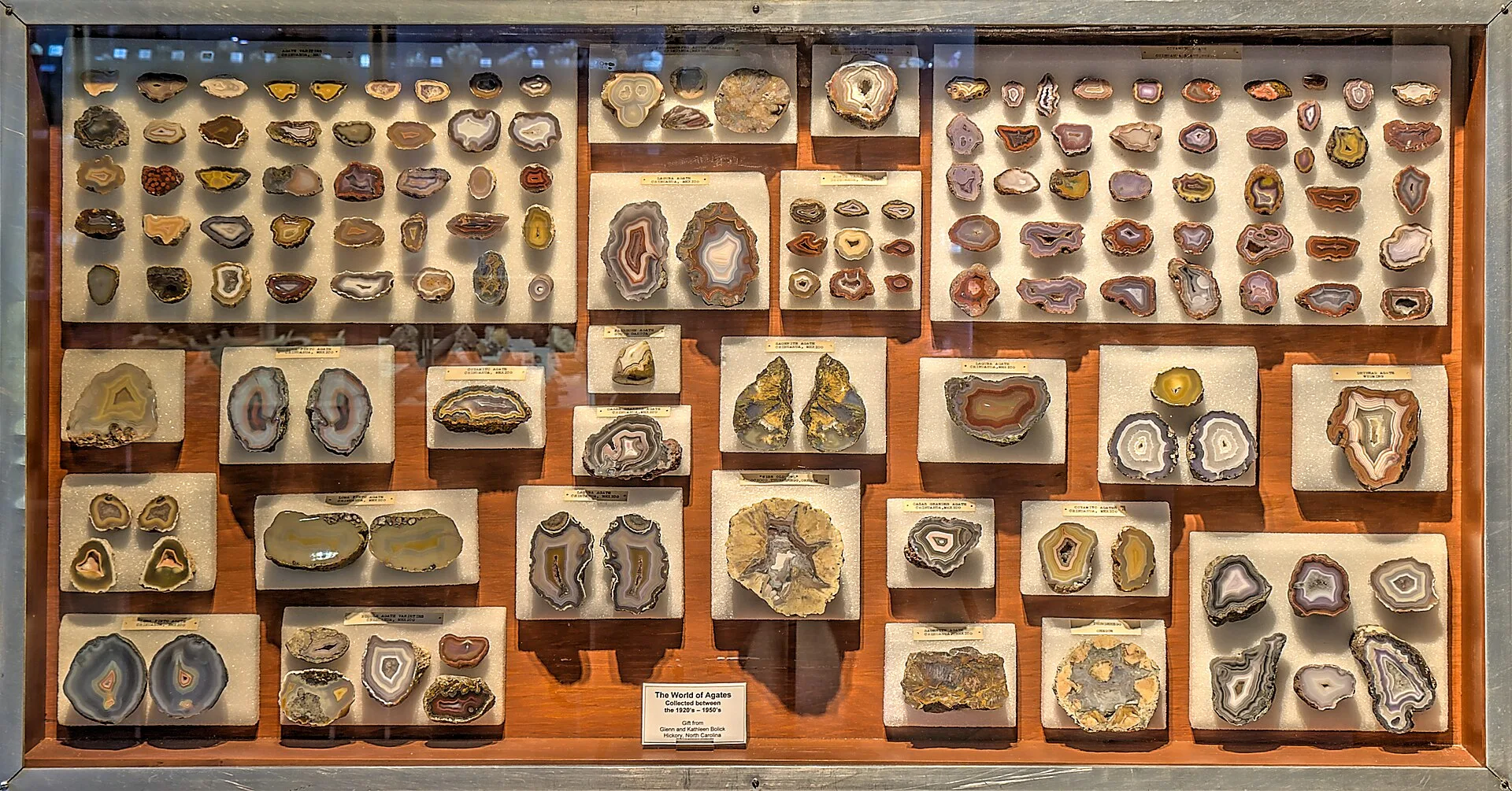
Agate is a patterned variety of chalcedony, a microcrystalline form of silica composed predominantly of quartz (SiO₂). Many agates display curved, concentric or angular bands, although the term is also used commercially for chalcedony with moss-like, dendritic or other inclusions. Agate is not a separate mineral species: it is a textural and ornamental designation within the silica family.
Its characteristic bands record changes in the chemistry, availability and deposition of silica-bearing fluids. Some specimens are nearly transparent in thin slices; others are translucent or opaque because of inclusions, pores and fine-grained impurities. Color alone is not sufficient for identification.
How Agate Forms
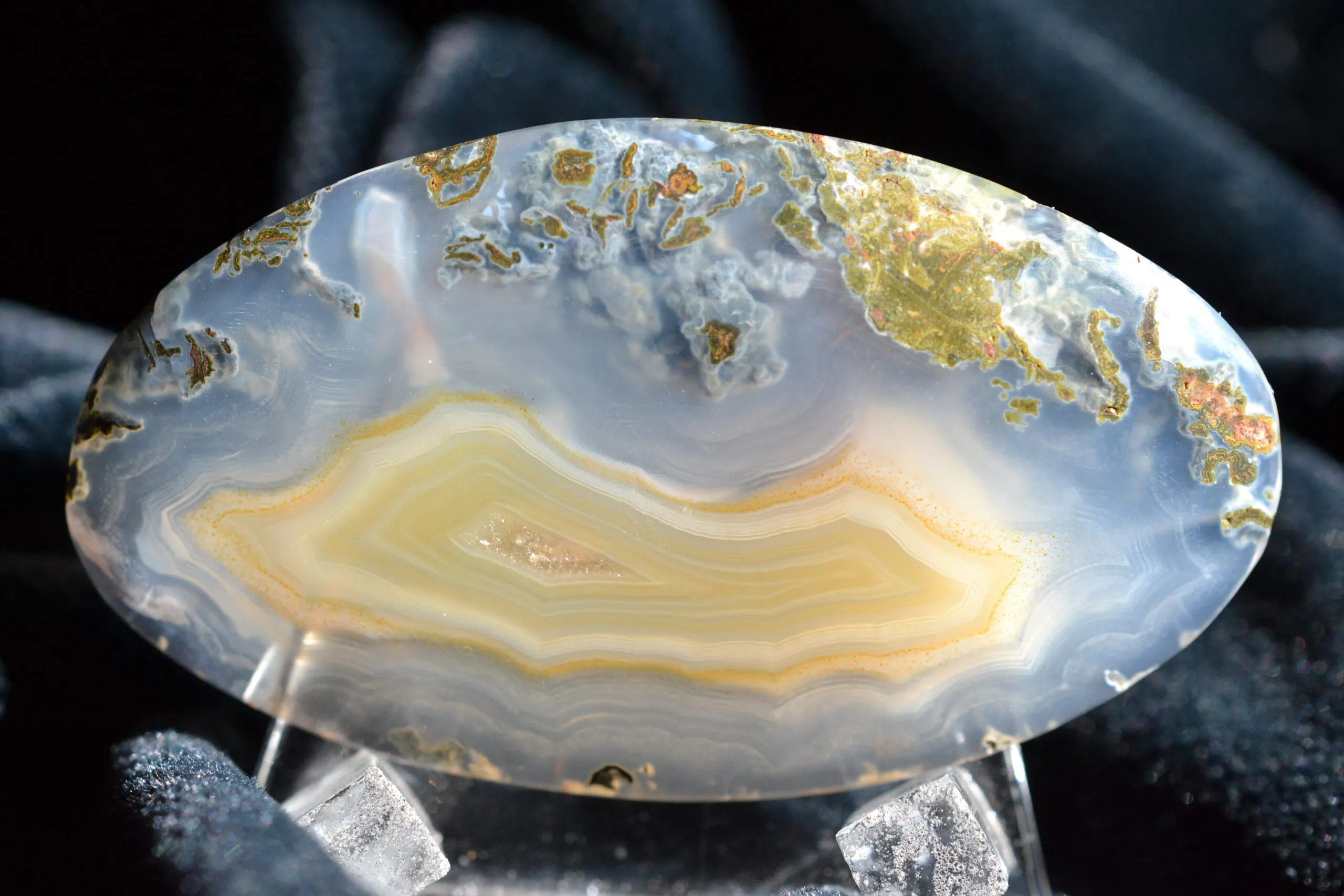
Many agates develop in cavities left by gas bubbles in volcanic lava. After the rock cools, groundwater or hydrothermal fluids carrying dissolved silica enter the voids. Silica precipitates on cavity walls in successive episodes, progressively reducing the open space. Deposition may alternate between fibrous chalcedony and more coarsely crystalline quartz. Some cavities retain an open center lined with quartz crystals.
Agate also forms in fractures and cavities in sedimentary and other host rocks. The presence of agate therefore does not, by itself, prove that its host rock is volcanic. Formation conditions vary among deposits, and banding is not necessarily a simple annual or seasonal record. The relationship between silica supply, nucleation, fluid flow and crystallization remains an active subject of mineralogical research.
Banding, Color and Internal Structures
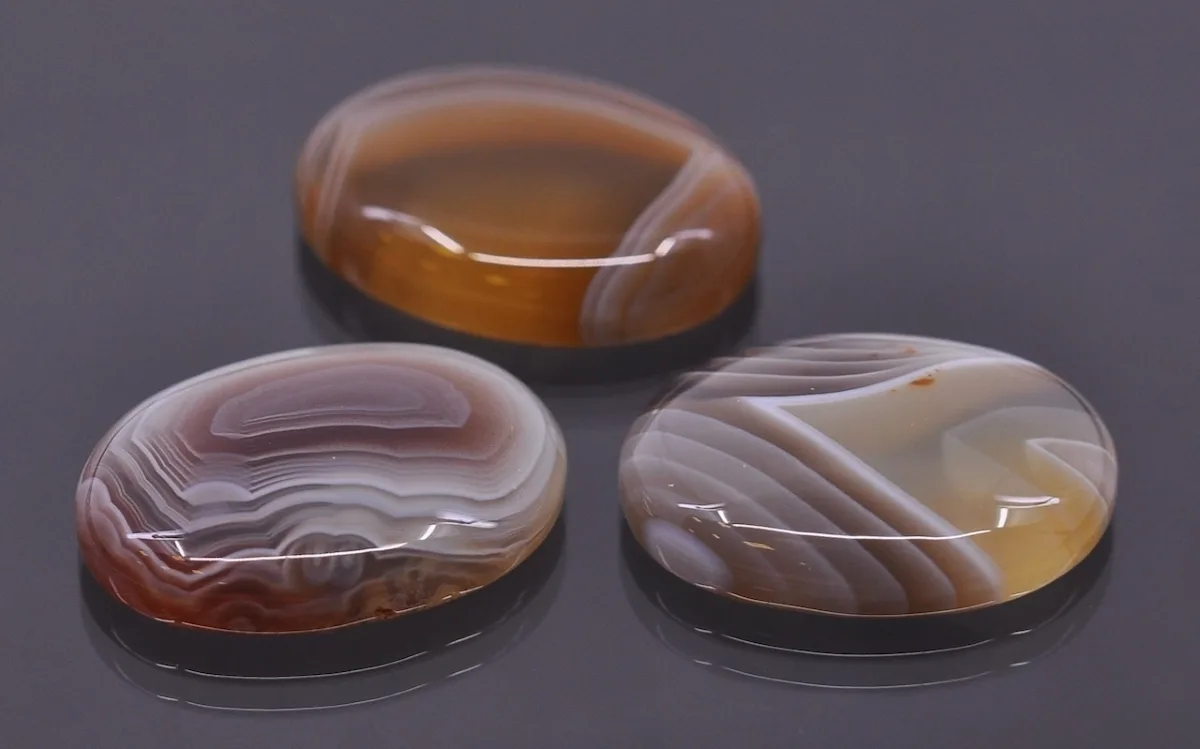
Agate bands may form as nested shells that follow the cavity wall, as near-parallel layers, or as sharply angled fortification patterns. Color differences commonly reflect trace iron oxides and hydroxides, other mineral inclusions, and variations in the size and arrangement of silica fibers. White zones may scatter light differently from adjacent translucent bands.
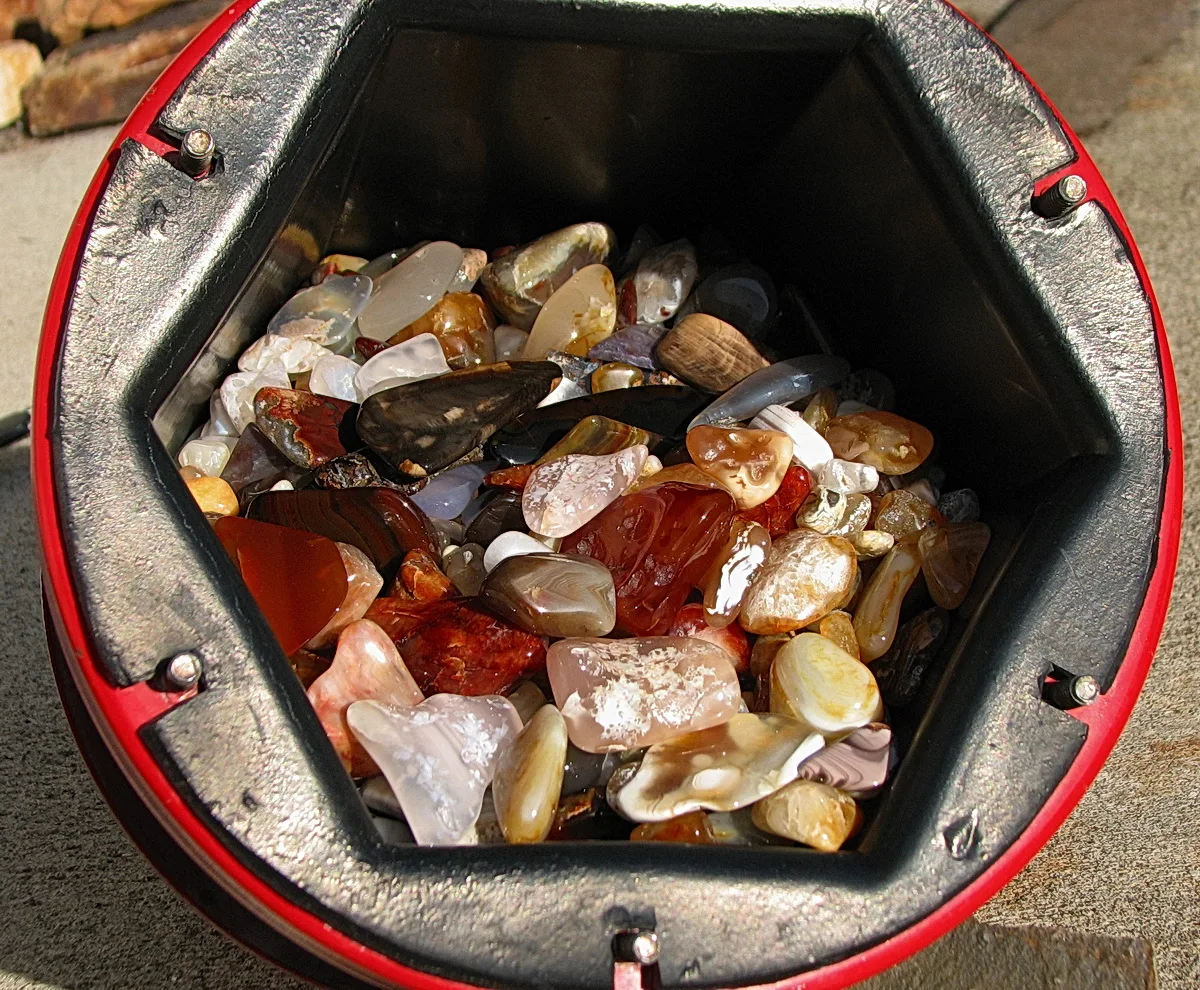
Natural agates can be gray, white, brown, red, orange, yellow, blue or combinations of these colors. Intensely uniform pink, purple or electric-blue stones are often dyed, although vivid natural colors do occur. A strong color is not proof of treatment; examination of dye concentrations in cracks and pores is more informative.
Physical and Optical Properties
| Property | Agate |
|---|---|
| Composition | Predominantly SiO₂ (microcrystalline quartz); may include moganite and inclusions |
| Mineral classification | Chalcedony variety; not a distinct mineral species |
| Crystal system | Quartz component: trigonal; aggregate is microcrystalline |
| Mohs hardness | Approximately 6.5–7 |
| Specific gravity | Typically around 2.6, variable with inclusions |
| Luster | Waxy on rough surfaces; vitreous when polished |
| Transparency | Translucent to opaque |
| Cleavage | None |
| Fracture | Conchoidal to uneven |
Agate is predominantly silica (SiO₂), with microcrystalline quartz and, in some chalcedony, minor moganite. Its Mohs hardness is approximately 6.5–7, so it can scratch ordinary glass, although a scratch test alone is not diagnostic. Specific gravity is commonly near 2.6, depending on porosity and inclusions. It lacks true cleavage and typically breaks with a conchoidal to uneven fracture. Polished surfaces commonly show a waxy to vitreous luster.
Agate is usually translucent at thin edges, but individual specimens may be opaque. Its fine texture makes it suitable for carving and polishing. Under magnification, banding, mineral inclusions, fractures and occasional tiny quartz-lined cavities may be visible. Acid does not normally produce the vigorous effervescence typical of calcite.
Major Agate Varieties
| Variety or trade name | Distinguishing appearance | Important distinction |
|---|---|---|
| Fortification agate | Nested, angular or curved bands | Band geometry follows cavity walls |
| Blue lace agate | Pale blue and white bands | Color can vary among specimens |
| Botswana agate | Fine gray, brown or contrasting bands | Geographic trade name |
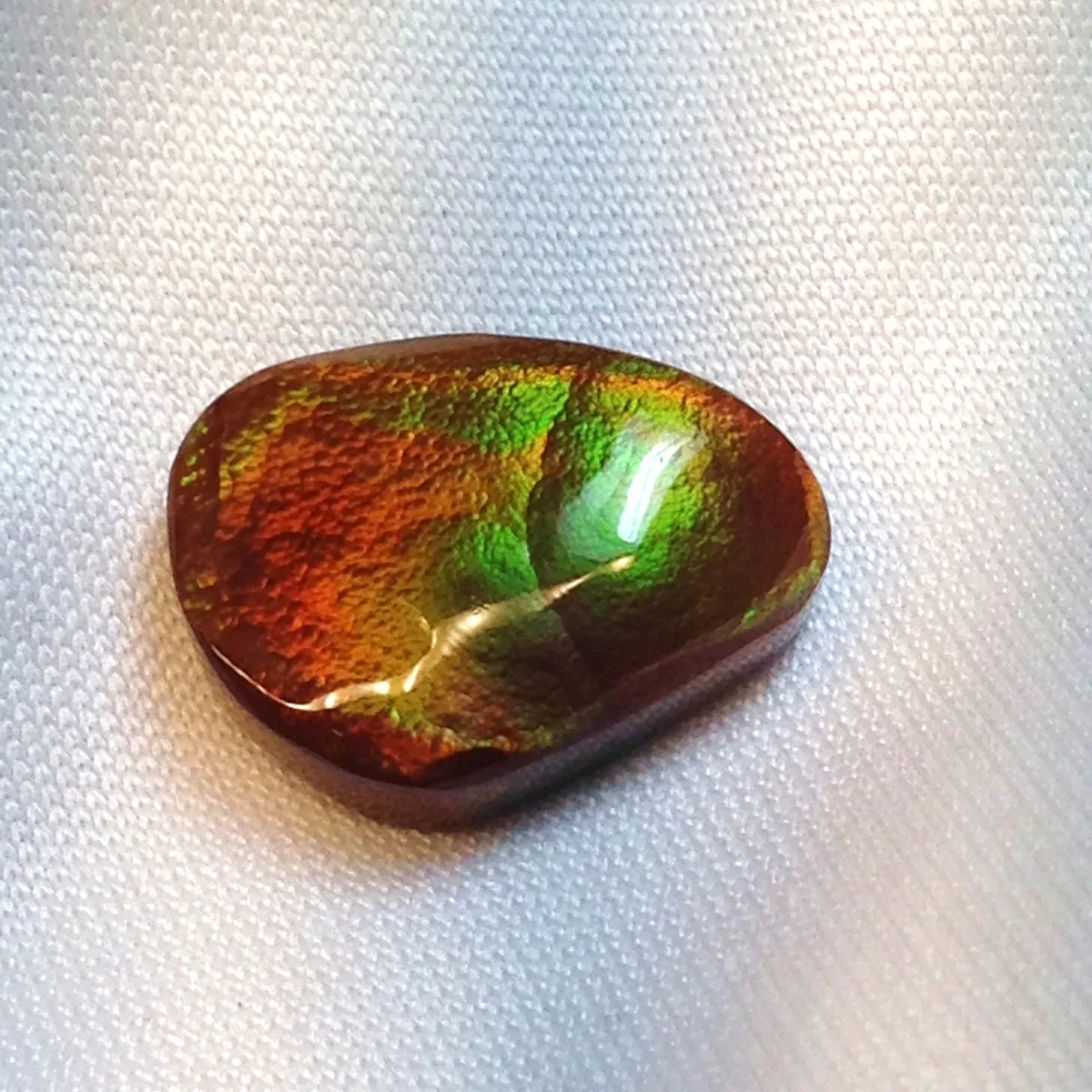
| Fire agate | Iridescent warm-colored reflections | Optical effect associated with fine iron-rich layers |
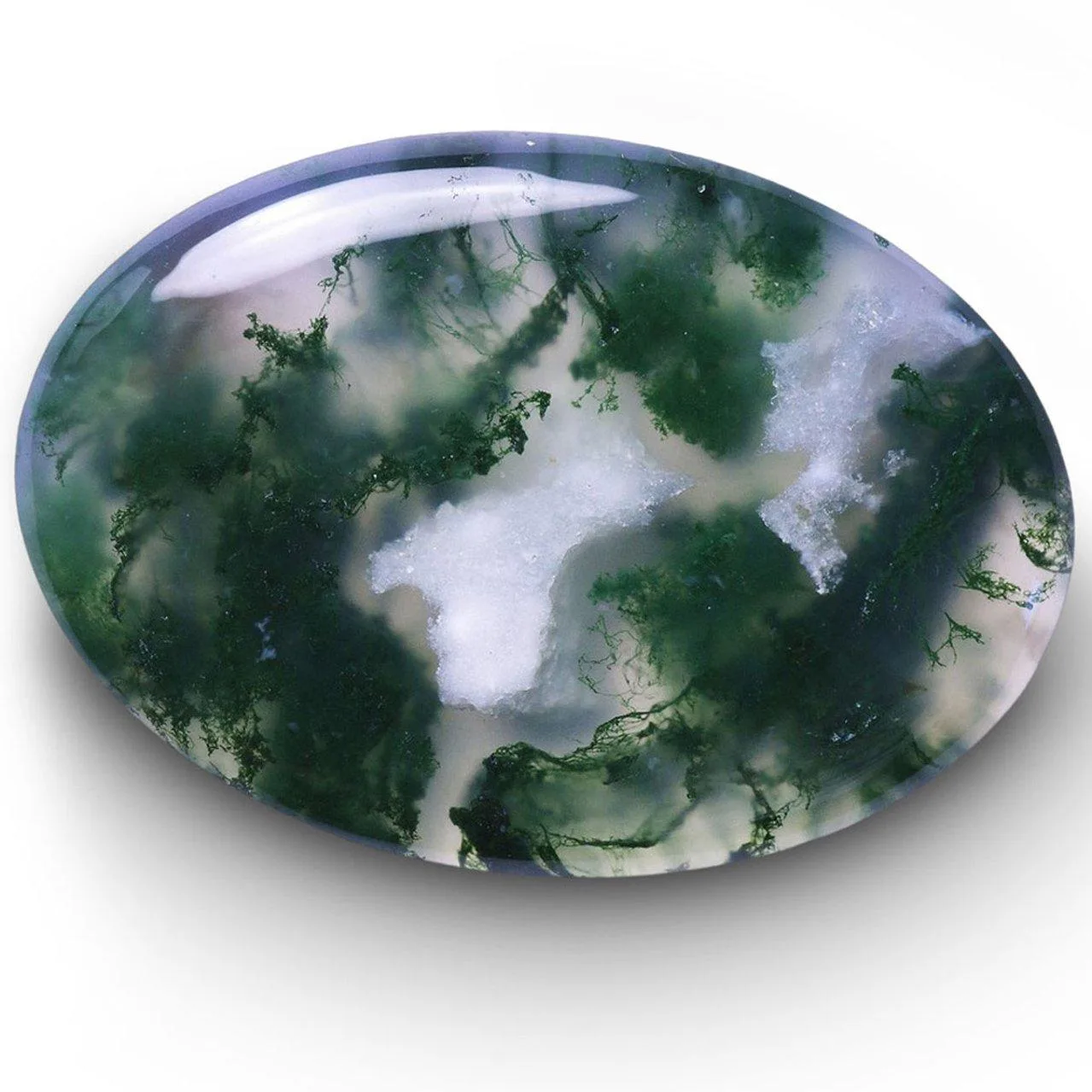
| Moss agate | Green or dark plant-like inclusions | Often lacks regular banding |
| Dendritic agate | Branching mineral inclusions | Dendrites are inorganic, not fossil plants |
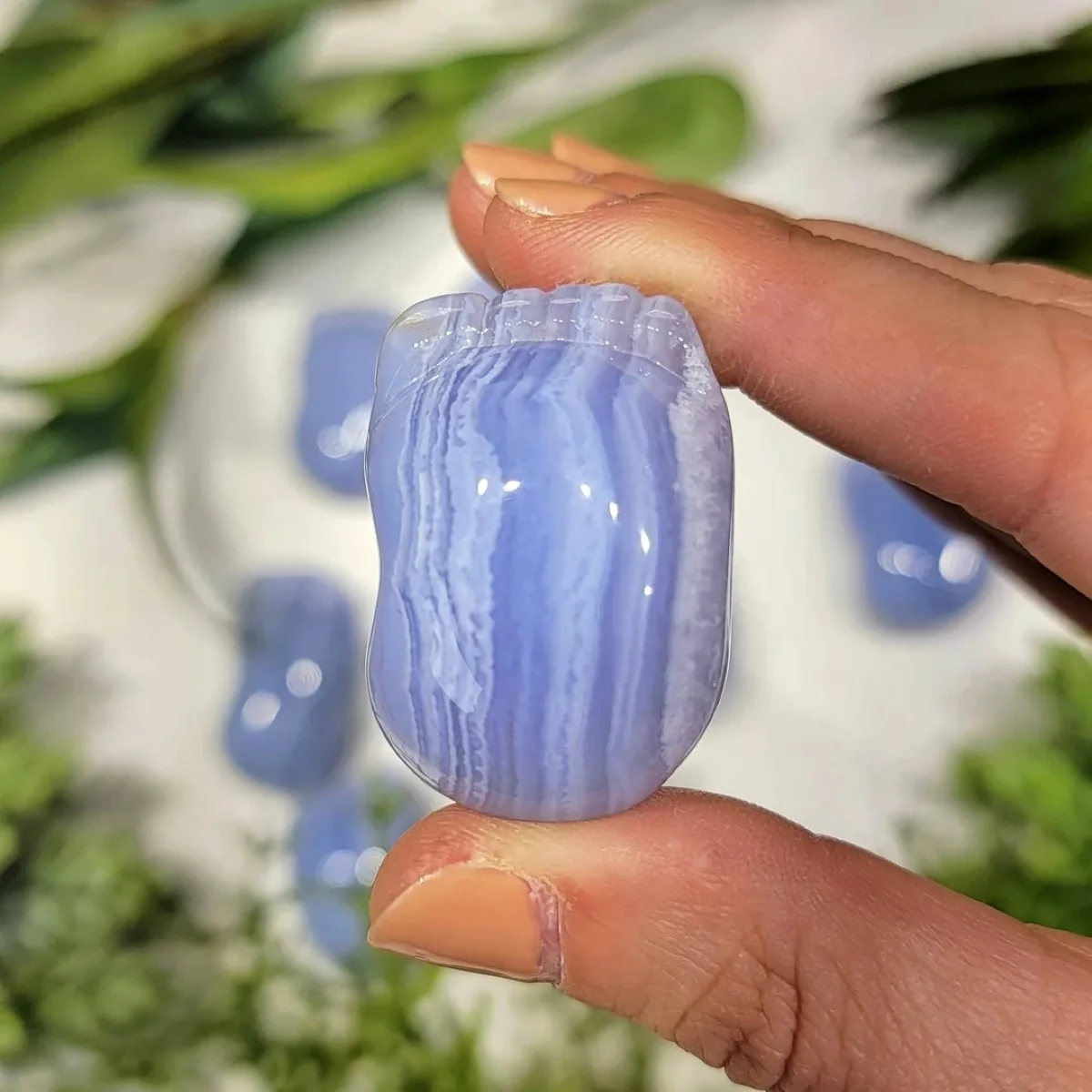
Fortification agate has angular, nested bands. Botswana agate is prized for closely spaced gray, white and brown bands; the geographic name refers to material from Botswana. Blue lace agate shows pale blue and white banding. Laguna agate from Chihuahua, Mexico, is known for strongly contrasting colors and intricate fortification patterns.
Fire agate is an iridescent chalcedony variety whose optical effect involves thin iron-oxide-rich layers; it should not be confused with orange-colored agate. Moss agate contains branching green or dark mineral inclusions and often lacks true agate banding. Dendritic agate contains branching mineral patterns that can resemble vegetation but are not fossils of plants.
Agate, Jasper, Onyx and Geodes
| Material | Typical appearance | Diagnostic caution |
|---|---|---|
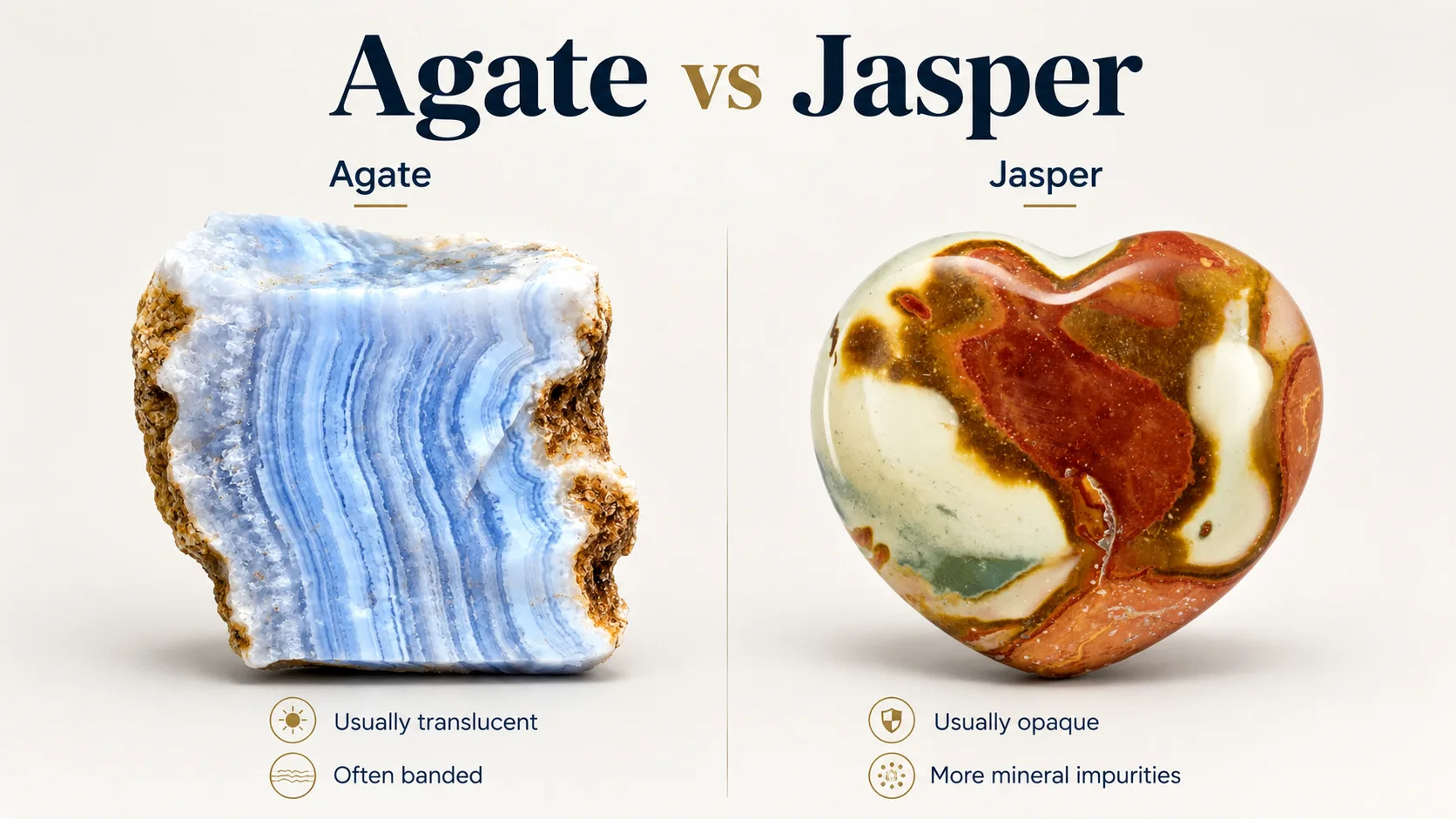
| Agate | Often translucent, curved or parallel chalcedony bands | Commercial naming includes some unbanded chalcedony |
| Jasper | Usually opaque, iron-rich or otherwise impurity-colored silica | Transitional specimens combine jasper and agate |
| Onyx (chalcedony) | Relatively straight, parallel contrasting bands | Trade name can also refer to other materials |
| Chert | Dense microcrystalline silica, commonly in sedimentary rocks | Color and fracture overlap with agate |
| Geode | Hollow mineral-lined rock cavity | Can contain agate; describes structure, not mineral |
Agate and jasper belong to the broader microcrystalline silica family. In gemological usage, agate generally emphasizes translucent chalcedony with banding, whereas jasper is typically opaque and contains abundant fine impurities. Natural stones can contain both textures, so the boundary is not absolute. See Agate vs Jasper for a side-by-side comparison.
Onyx, in the traditional chalcedony sense, has comparatively straight, parallel bands rather than curved concentric bands; commercial black onyx is frequently dyed. A geode is a hollow, mineral-lined nodule or cavity, not a mineral variety. Some agates have geode-like quartz crystal centers, but many are completely filled.
Where Agate Is Found
Agate occurs in many volcanic provinces and in sedimentary deposits derived from weathered host rocks. Important commercial sources include Brazil, Uruguay, India, Mexico, Botswana and the United States. Brazilian and Uruguayan basalt-hosted agates are especially prominent in the gem trade. Mexico is known for Laguna and fire agate; the Lake Superior region contains iron-rich banded agates eroded from ancient volcanic rocks.
Weathering releases durable silica nodules from their host rocks, and rivers or shorelines can concentrate them in gravel. Rounded exterior surfaces may conceal fine internal banding until the stone is cut. Geographic names in the gem market can refer to particular deposits, but sellers’ locality claims should be assessed independently.
Identification and Common Treatments
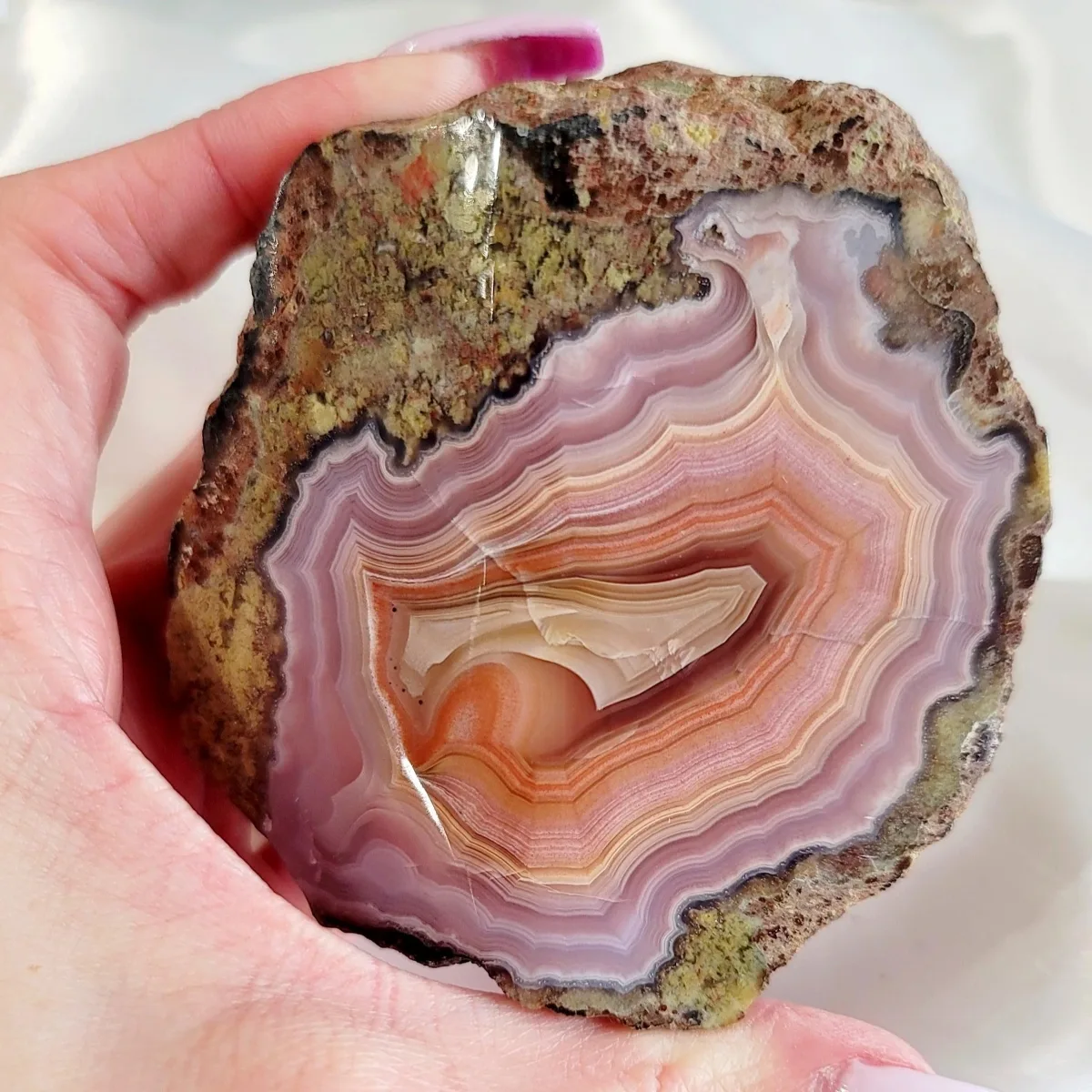
To identify agate, inspect a freshly broken or polished face for fine chalcedony texture, curved bands and translucent edges. A hand lens can reveal iron-oxide staining, internal inclusions or quartz-filled centers. Hardness and fracture support the identification, but no single field test can reliably distinguish all microcrystalline silica varieties. Laboratory Raman spectroscopy, X-ray diffraction or microscopic examination can be useful when mineralogical certainty is needed.
Agates are commonly cut into thin slabs, cabochons, beads and ornamental objects. Dyeing is widespread because porous or pale material can absorb color. Unnaturally concentrated color along cracks or grain boundaries may indicate treatment. Heat treatment can also alter the appearance of iron-bearing material. Sellers should disclose treatments where known; natural and treated agates can both be genuine silica stones.
Frequently Asked Questions
Is agate a mineral or a rock? Agate is a variety of chalcedony, consisting mainly of microcrystalline silica. It is not a distinct mineral species, and a single specimen may contain quartz, moganite and inclusions.
Why does agate have bands? Bands form through changes in silica precipitation and crystallization within cavities or fractures. Variations in inclusions and microstructure produce differences in color and translucency.
Is every colorful agate dyed? No. Many agates have natural colors, especially from iron-bearing inclusions. However, vivid uniform colors are common in treated commercial material.
Can agate form outside volcanic rocks? Yes. Silica-bearing fluids can deposit chalcedony in cavities and fractures in several geological environments.
Does agate react with vinegar? Quartz-rich agate does not normally effervesce with weak acid. A vigorous reaction suggests carbonate material rather than pure chalcedony.
Further mineralogical references: Mindat: Agate; Gemological Institute of America: Agate.