














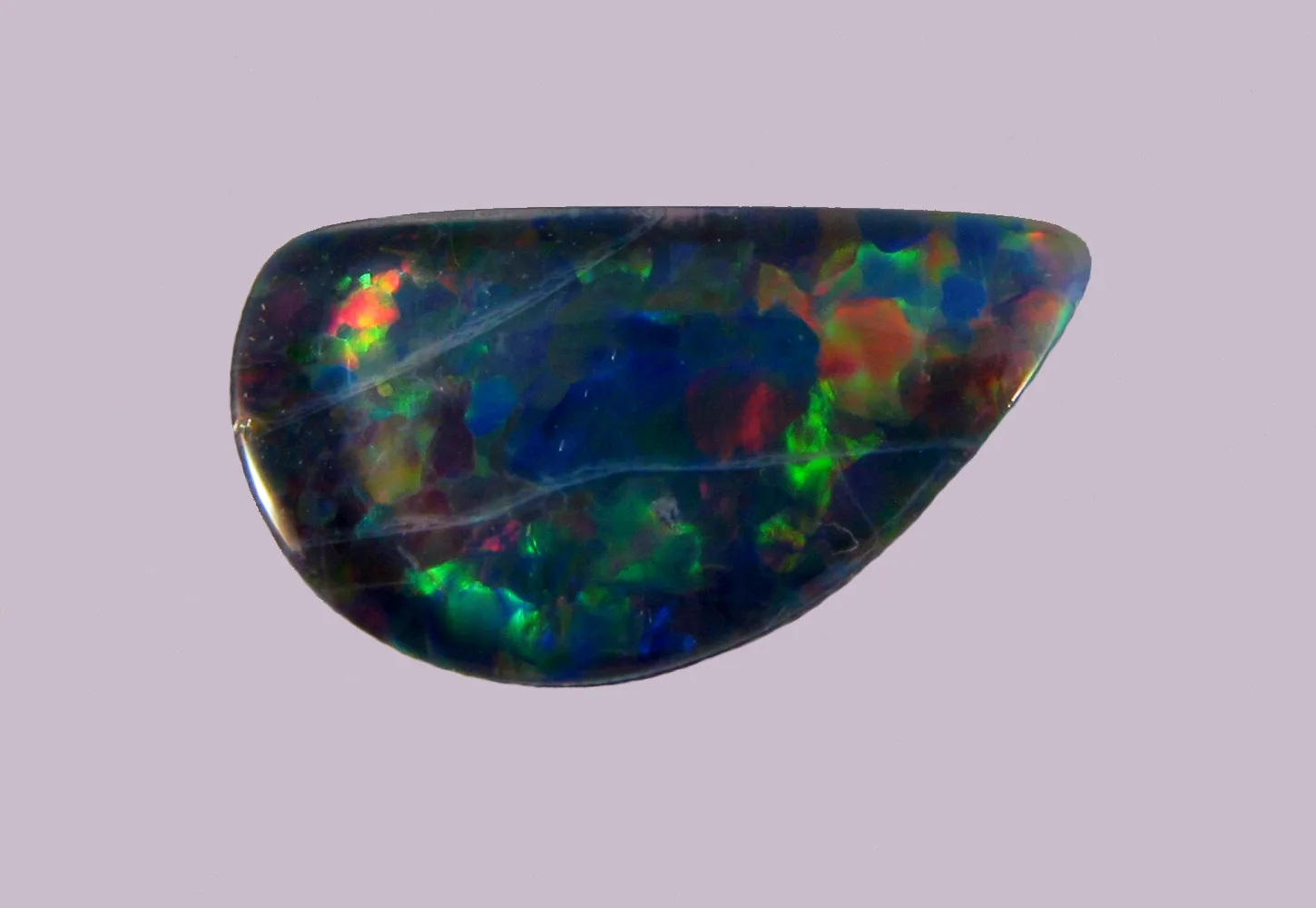
Opal is a hydrated silica mineraloid, commonly represented as SiO₂·nH₂O, whose precious varieties may display shifting flashes of spectral color. Unlike crystalline quartz, most gem opal has no single long-range crystalline framework. Its best-known optical phenomenon, play-of-color, arises when light interacts with regularly arranged microscopic silica spheres.
Opal occurs in several geological environments, from near-surface weathering systems and fractures to volcanic rocks and silica-rich sedimentary deposits. It includes black opal, white opal, crystal opal, fire opal and boulder opal. Some varieties exhibit spectacular color flashes, whereas common opal has no play-of-color. Differences in water content, porosity and structure also affect durability and care.
What Does Natural Opal Look Like?
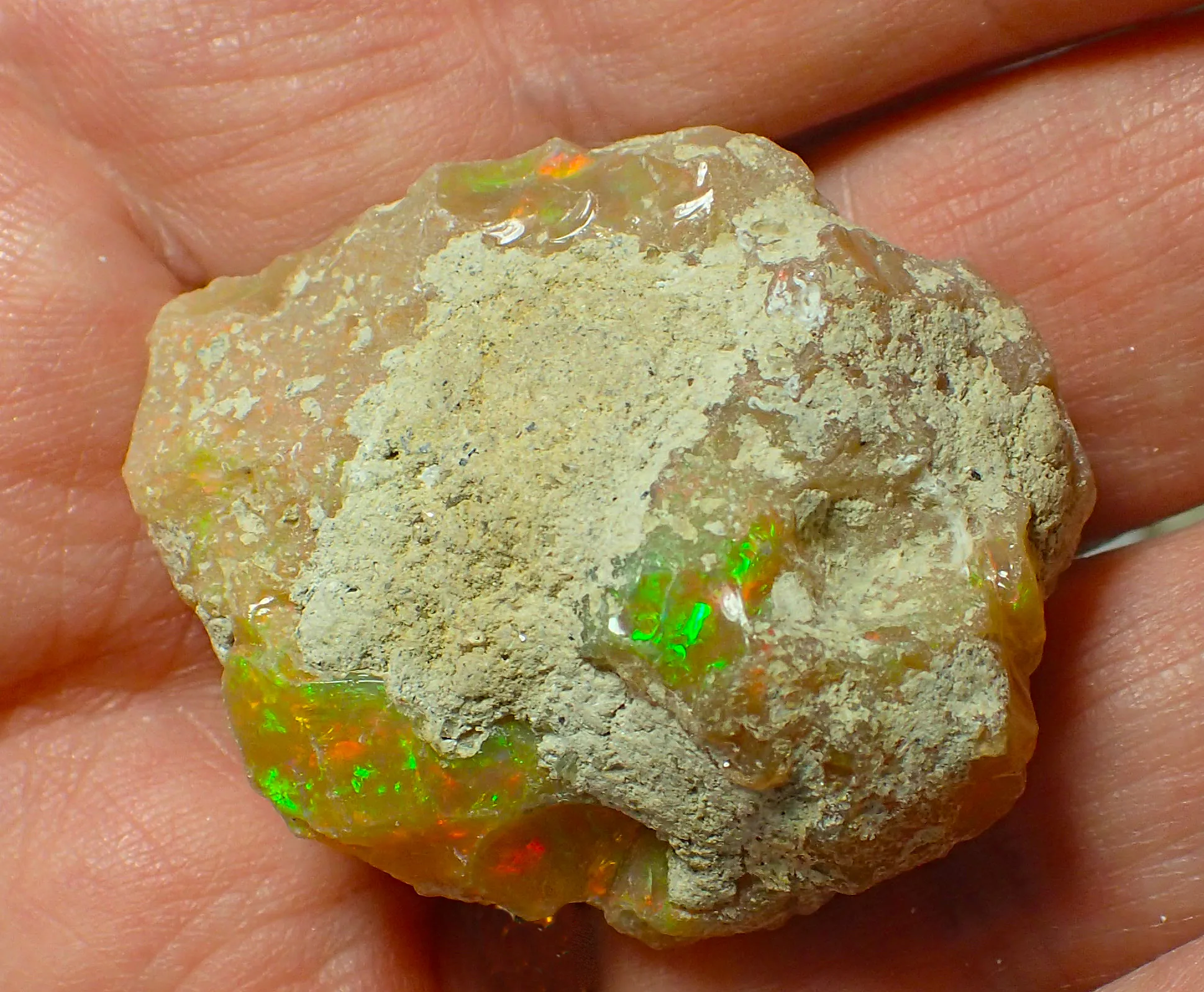
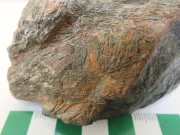
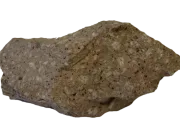
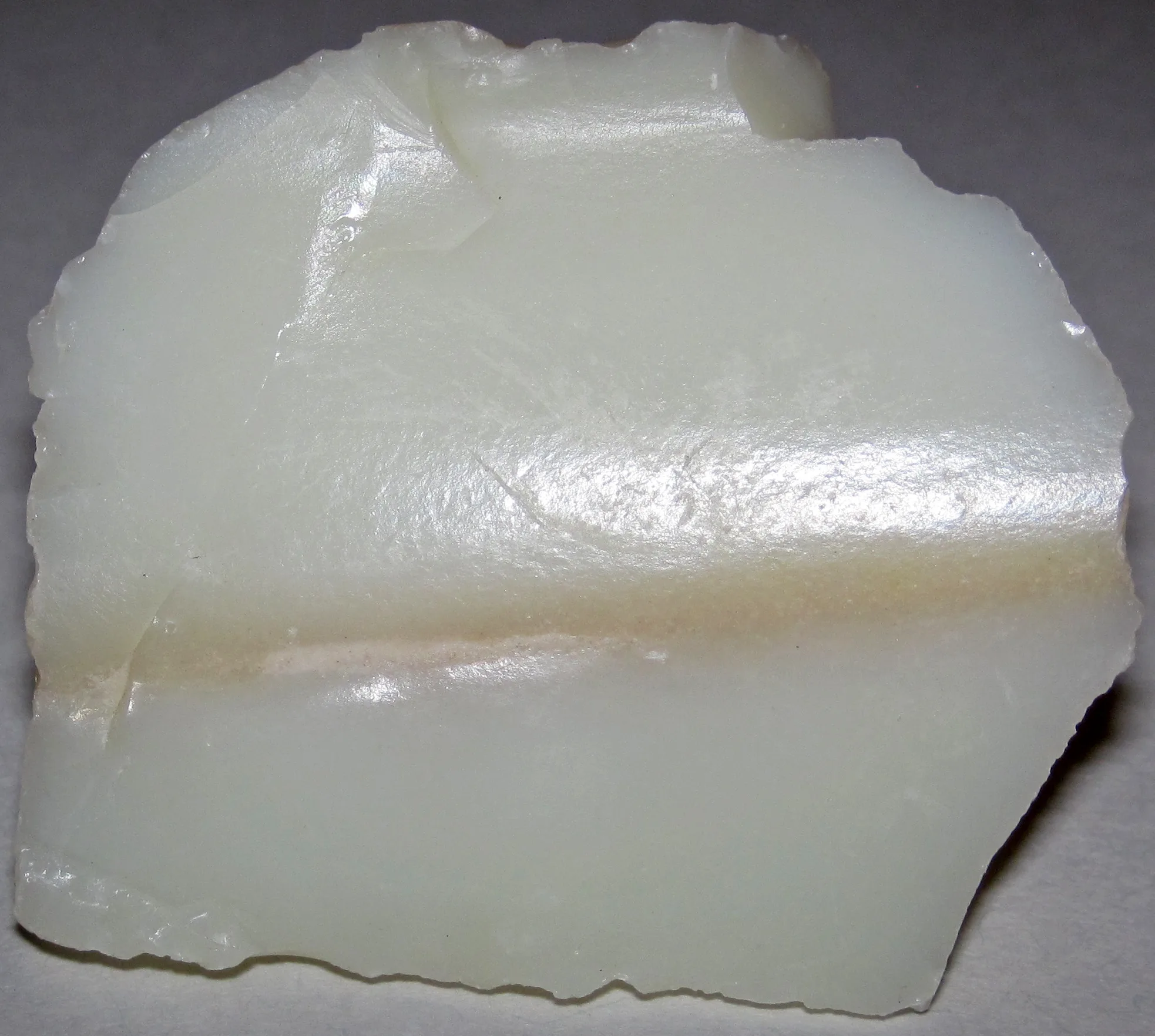
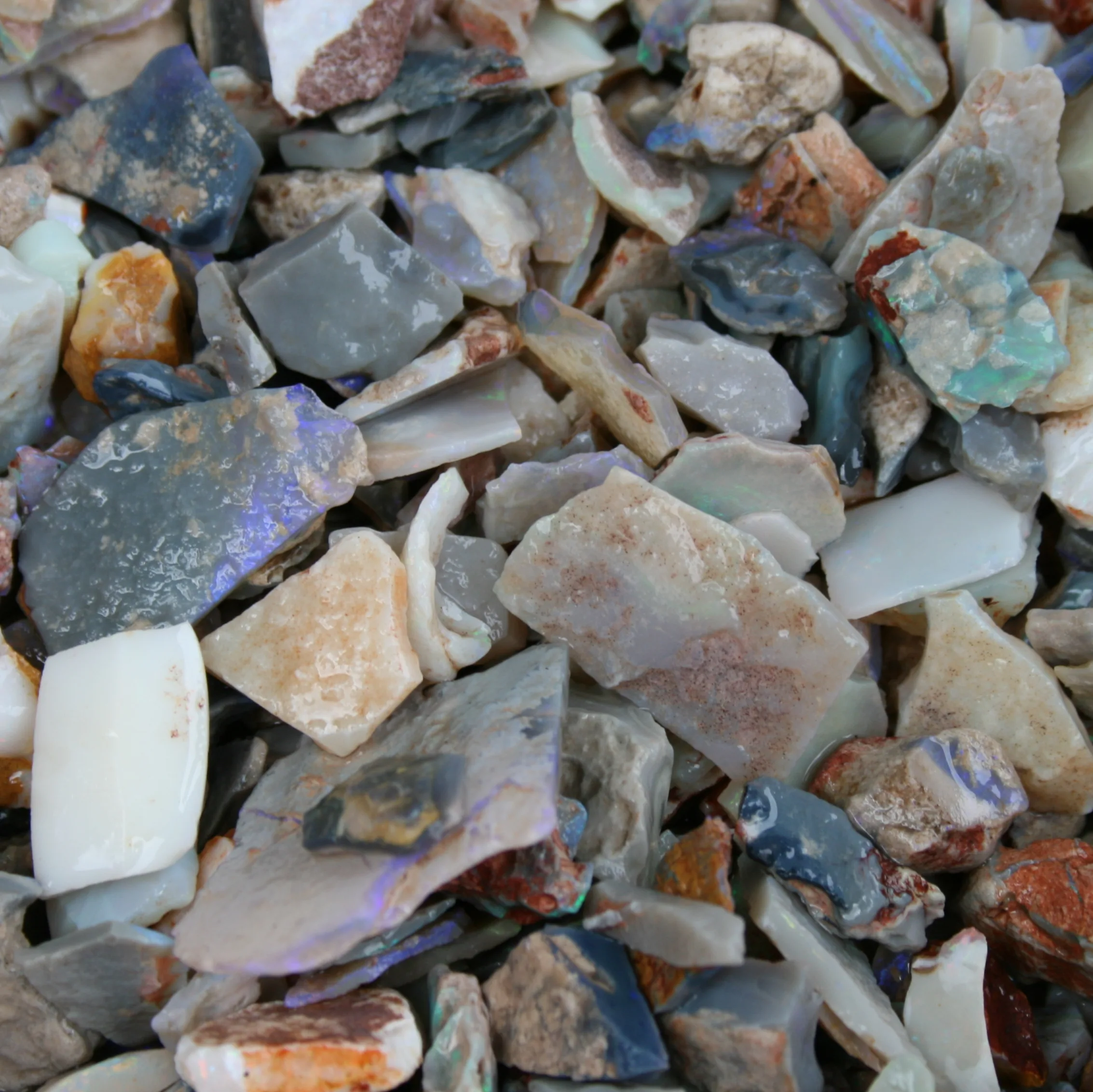
Natural opal can be milky white, black, gray, orange, red, pale blue, pink, green or nearly colorless. It may be opaque, translucent or transparent. Precious opal flashes red, green, blue, violet or other hues as the viewing angle or illumination changes. In contrast, common opal may show an attractive body color but no spectral flashes. Some gemstones contain patches of ironstone or volcanic host rock.
Body color and play-of-color are distinct properties. A black opal has a dark body color that enhances contrast with the flashes; a white opal has a lighter background. A transparent fire opal may have a vivid orange body color but little or no play-of-color. Color photographs do not fully reproduce the changing pattern seen as an opal is tilted.
Opal Properties and Identification
| Property | Typical characteristics |
|---|---|
| Composition | Hydrated silica, SiO₂·nH₂O |
| Material classification | Mineraloid; several structural silica varieties |
| Crystal structure | Opal-A is amorphous; opal-CT and opal-C show increasing short-range/paracrystalline order |
| Mohs hardness | Usually approximately 5–6.5 |
| Specific gravity | Commonly about 1.98–2.25; varies with porosity and water content |
| Luster | Vitreous, waxy or resinous |
| Cleavage | Absent |
| Fracture | Usually conchoidal to uneven |
| Color | Variable body colors and, in precious opal, play-of-color |
| Transparency | Transparent to opaque |
| Water | Variable; important to mechanical stability and hydrophane behavior |
Opal is generally softer and less resistant to abrasion than quartz, which has Mohs hardness 7. It is also less dense than many common gems. The absence of cleavage and its conchoidal fracture can resemble silica glass, so gemological tests and microscope observations are important when identifying a valuable specimen.
Why Does Precious Opal Display Play-of-Color?
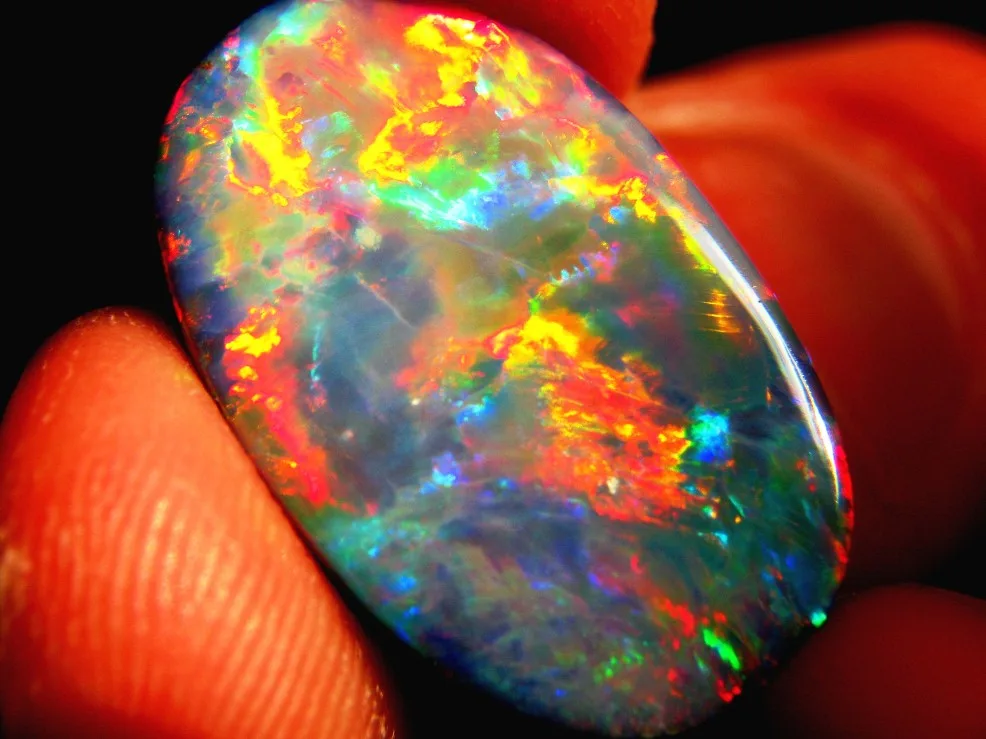
In precious opal, submicroscopic silica spheres can form relatively regular three-dimensional arrays. Light interacting with this ordered internal structure undergoes diffraction and interference, creating wavelengths that vary with sphere spacing and observation geometry. Small changes in viewing direction produce the characteristic moving flashes called play-of-color.
Not every opal contains spheres arranged with sufficient regularity to produce this effect. Poorly ordered structures scatter light without generating the same strong spectral pattern, which is one reason common opal lacks play-of-color. Visible color can form patchy mosaics, broad flashes, pinfire points, ribbons or other arrangements.
Red flashes generally require a larger characteristic spacing than blue-violet flashes. Brighter, more extensive and attractive patterns may increase the value of a precious opal. The GIA explanation of opal describes diffraction by silica spheres and why the colors appear to move.
Is Opal a Mineral or a Mineraloid?
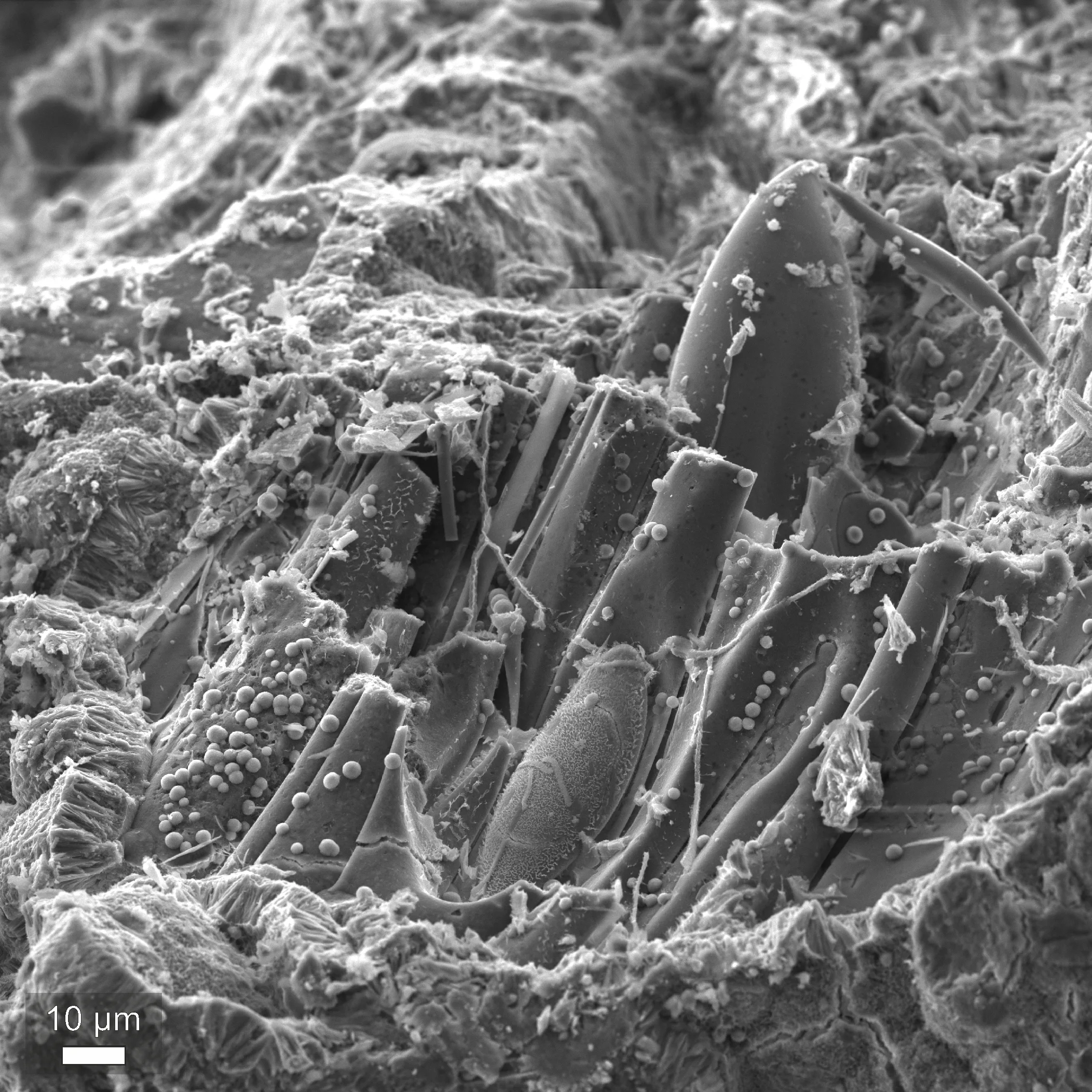
Opal is widely described as a mineraloid because it lacks the consistent long-range crystal structure required of an ideal mineral species. In detailed geological literature, hydrated silica materials are divided by X-ray diffraction and structural observations into opal-A (largely X-ray amorphous), opal-CT (disordered silica with cristobalite- and tridymite-like structural features) and opal-C (more ordered cristobalite-related material).
These distinctions concern silica structure and geological evolution, not commercial gem colors. A polished black opal and a white opal are not automatically two different structural phases. As silica matures during diagenesis, some deposits may progress from opal-A toward opal-CT or other more ordered silica phases; this process depends on geological conditions.
For mineralogical classification and formation pathways, see Mindat’s opal data and Review of the Classification of Opal.
How Does Opal Form?
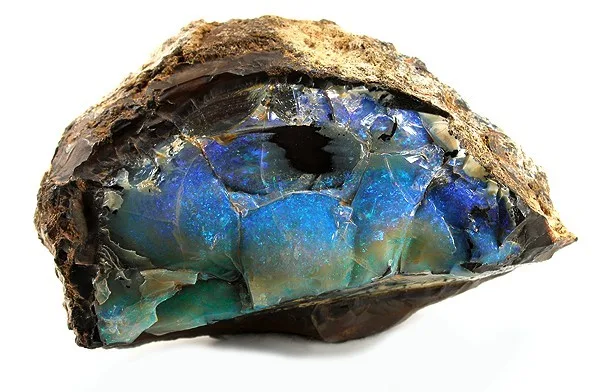
Many opal deposits form when silica-bearing waters move through cracks, weathered rock, porous sediment or cavities. As water chemistry changes or water is removed, hydrated silica precipitates and accumulates. Repeated episodes can fill voids, coat surfaces or replace pre-existing organic and mineral structures. The timing and origin of the silica supply vary among deposits.
Australia’s well-known precious opal deposits formed through complex near-surface and sedimentary geological processes. Weathering, groundwater movement and chemical precipitation are central to many deposit models. Opal may occupy fractures, cavities or irregular seams within sedimentary host formations.
Volcanic and hydrothermal opal
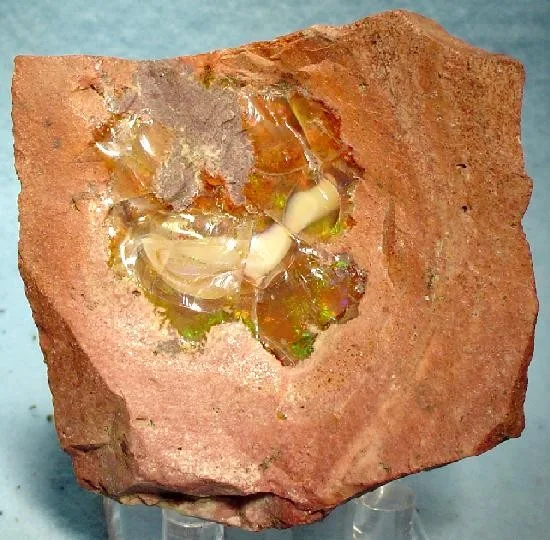
In volcanic provinces, opal can fill vesicles and cracks within lava or volcanic ash-related rocks. Mexican fire opal is particularly associated with silica-rich volcanic host rocks such as rhyolite. Silica deposited by low-temperature hydrothermal systems may also form opal-rich material around hot springs and geysers.
Opal replacement of wood and fossils
Silica-bearing fluids can replace or fill original biological tissues, preserving textures of wood, shells or fossils. Such material is sometimes called opalized or silicified fossil material, depending on the actual silica phases present. Not all fossil-looking material is gem-quality opal, and some silicified fossils have converted to chalcedony or quartz.
Types of Opal
| Type | Appearance and geological distinction |
|---|---|
| Black opal | Precious opal with dark background color enhancing play-of-color |
| White opal | White or pale body color, sometimes with vivid spectral flashes |
| Crystal opal | Transparent to translucent precious opal allowing light through the body |
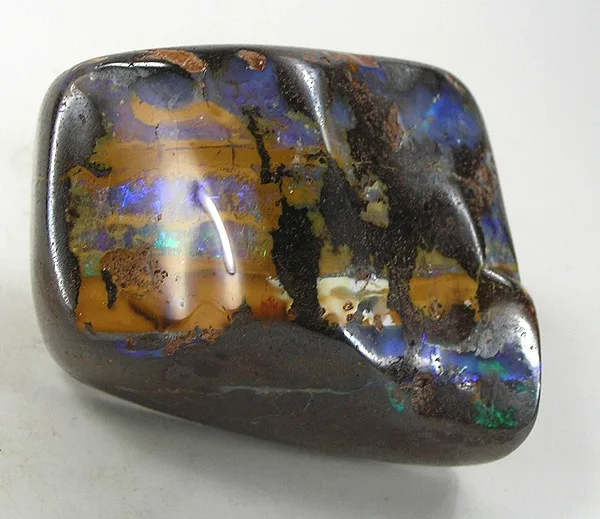
| Boulder opal | Opal attached to or intergrown with natural host rock, commonly ironstone |
| Fire opal | Yellow, orange or red body color; may or may not show play-of-color |
| Common opal (potch) | No distinct play-of-color, despite potentially attractive body color |
| Hydrophane opal | Porous opal that can absorb liquid and temporarily change in appearance or weight |
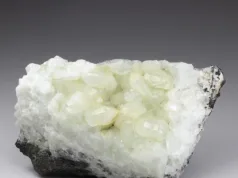
| Hyalite | Usually transparent or colorless glassy opal, sometimes exhibiting UV fluorescence |
Boulder opal
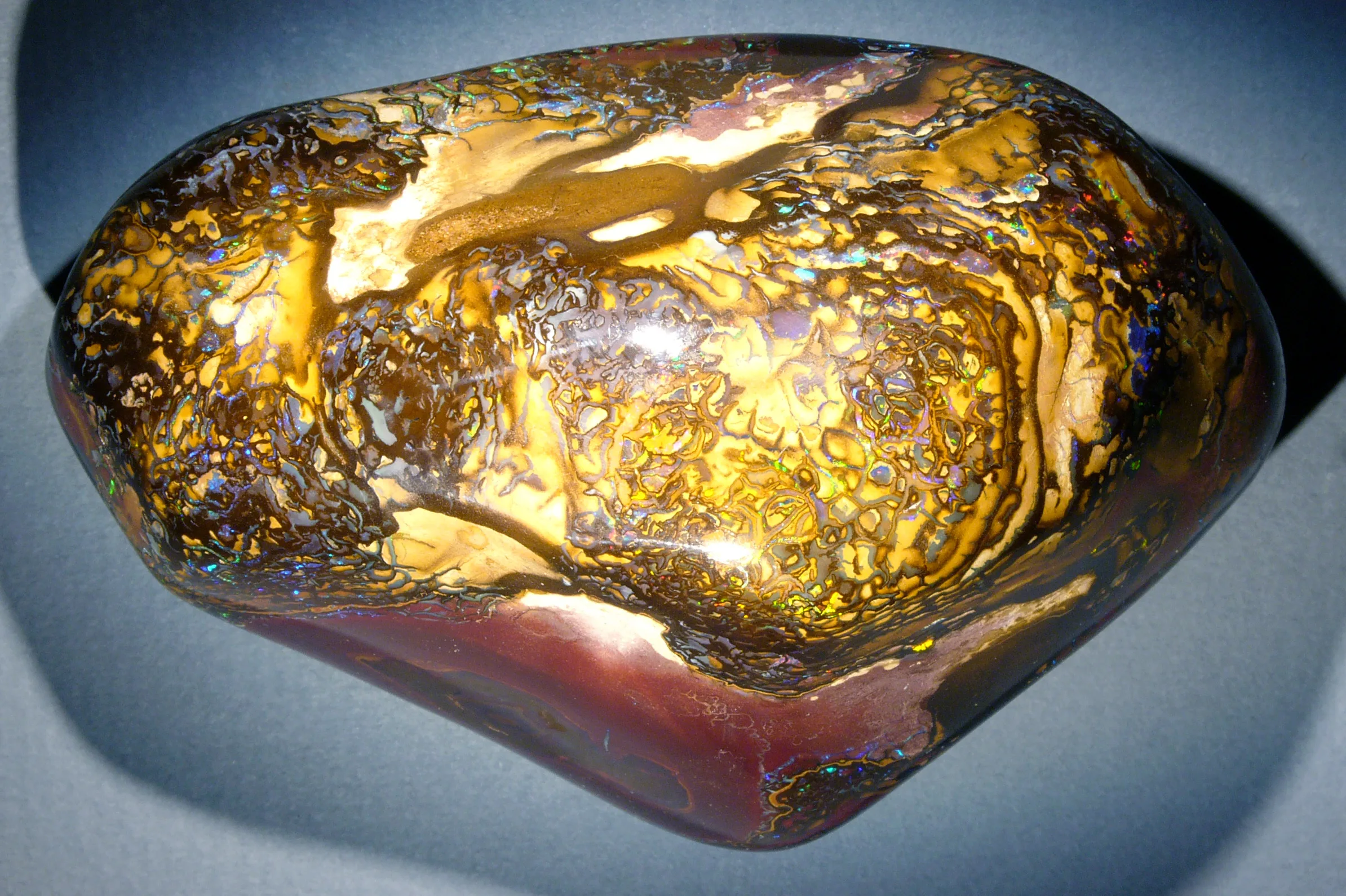
Boulder opal commonly forms thin or irregular seams within ironstone in parts of Queensland, Australia. The host rock may be kept attached during cutting, creating a polished stone with an opal layer and natural brown matrix. That construction is distinct from an assembled opal doublet with an artificial backing.
Fire opal
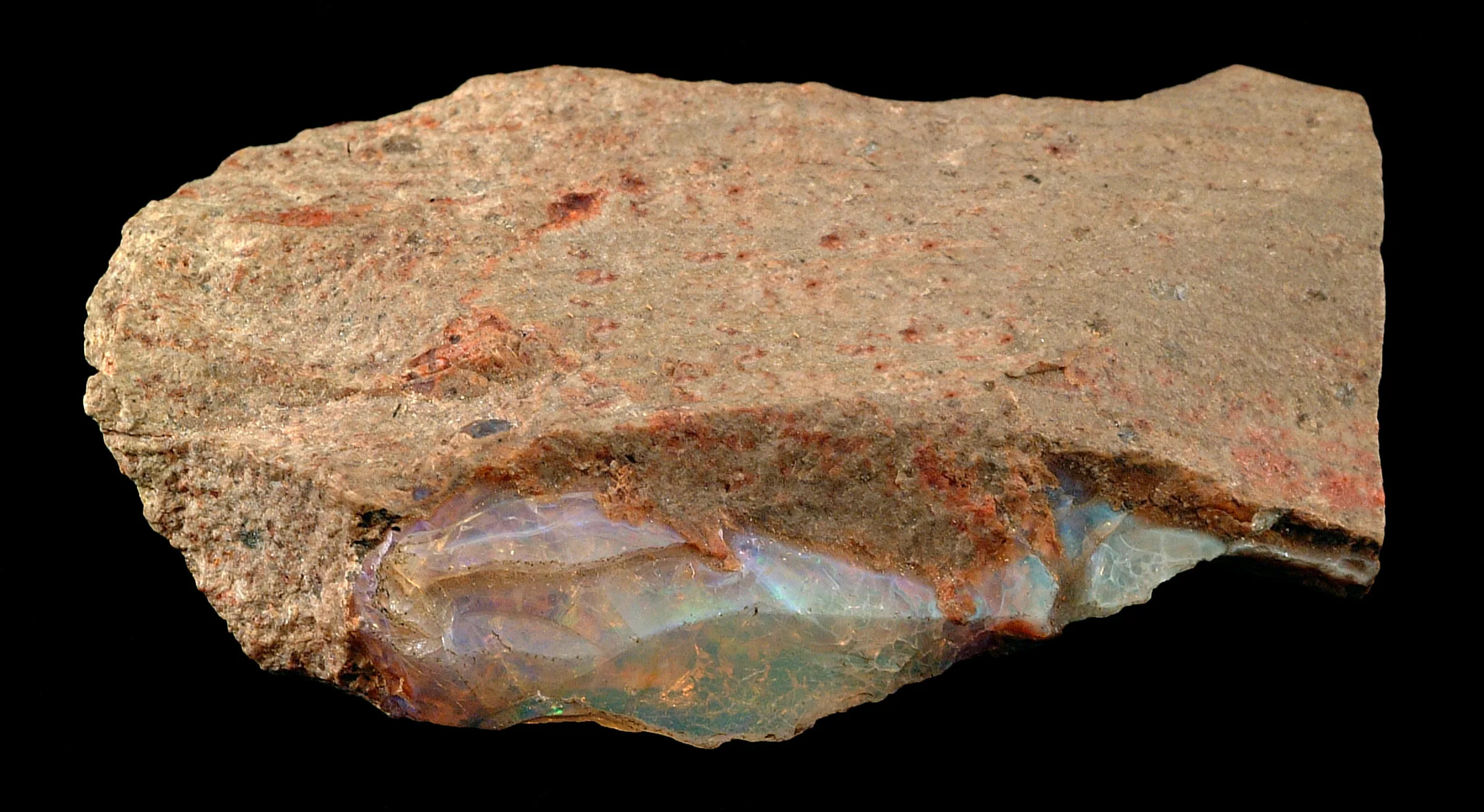
Fire opal is named for its orange, yellow or red body color, not because every fire opal has rainbow flashes. The distinction matters when comparing it with precious opal. Some Mexican fire opals are transparent and faceted, while others remain attached to their volcanic matrix.
Hydrophane opal

Hydrophane opal has a porous structure that can absorb water or other liquids. Exposure can temporarily alter transparency, apparent colors or weight, but repeated soaking, dyes and cleaning agents can also create problems. The term describes a physical behavior, not a guarantee of natural origin or high value. Ethiopian Welo opals include well-known hydrophane examples.
Opal Sources Around the World
Australia: Lightning Ridge is associated with black opal, Coober Pedy with white and light-colored opal, and Queensland districts with boulder opal. Different areas have distinct host rocks and sedimentary histories.
Ethiopia: Wollo (Welo) and other highland regions yield precious opal, including hydrophane material associated with volcanic geology. Water absorption can affect care and evaluation.
Mexico: Fire opal occurs in volcanic rocks, including rhyolite-hosted deposits. Orange body color may be visible even in stones without precious play-of-color.
Other regions: Opal and opaline silica occur in Brazil, the United States, Slovakia, Indonesia and many other areas. Deposits vary from gem-bearing cavities to common opal and siliceous deposits. A specimen’s color alone does not establish its source.
Opal vs Quartz, Chalcedony and Glass
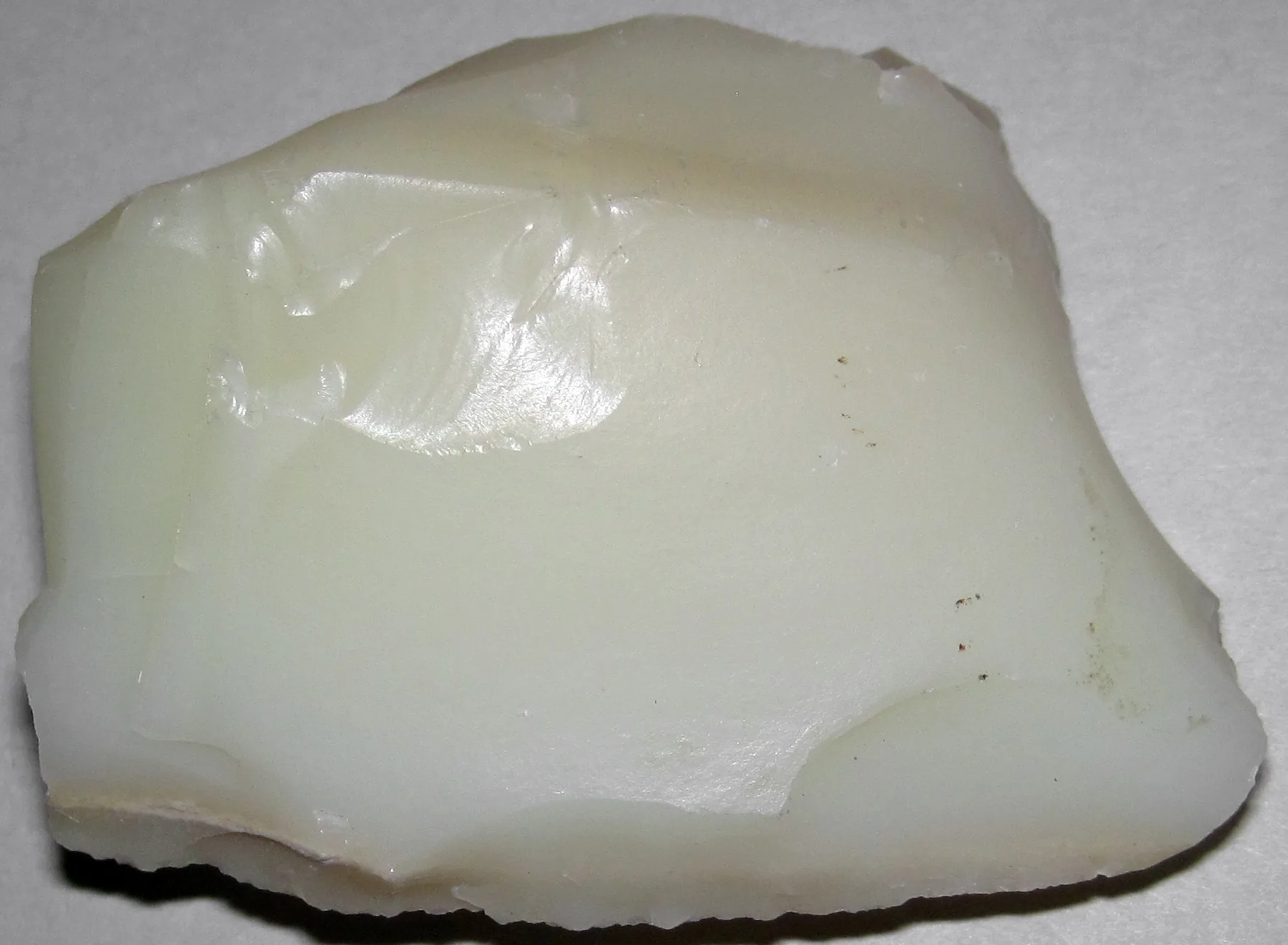
| Material | Key distinction | Typical hardness |
|---|---|---|
| Opal | Hydrated silica, generally lacks long-range crystal order; sometimes play-of-color | ~5–6.5 |
| Quartz | Crystalline SiO₂, Mohs 7, no intrinsic opal play-of-color | 7 |
| Chalcedony | Microcrystalline quartz-rich silica, often fibrous and translucent | ~6.5–7 |
| Silica glass | Amorphous silica with composition and formation distinct from geological opal | Variable |
| Opal imitation | May be glass, polymer or manufactured material with a similar visual pattern | Variable |
A red-green iridescent appearance can be imitated by manufactured materials. Gemologists examine microscopic color patterns, body structure, refractive behavior, specific gravity and spectroscopy. An item sold as solid natural opal must be distinguished from a doublet, triplet, treated opal or synthetic product.
Opal Doublets, Triplets, Treatments and Imitations
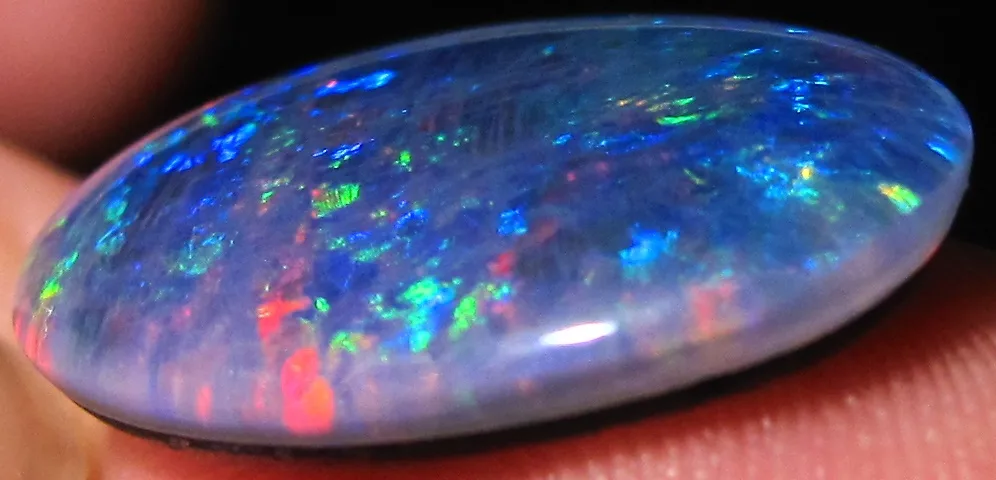
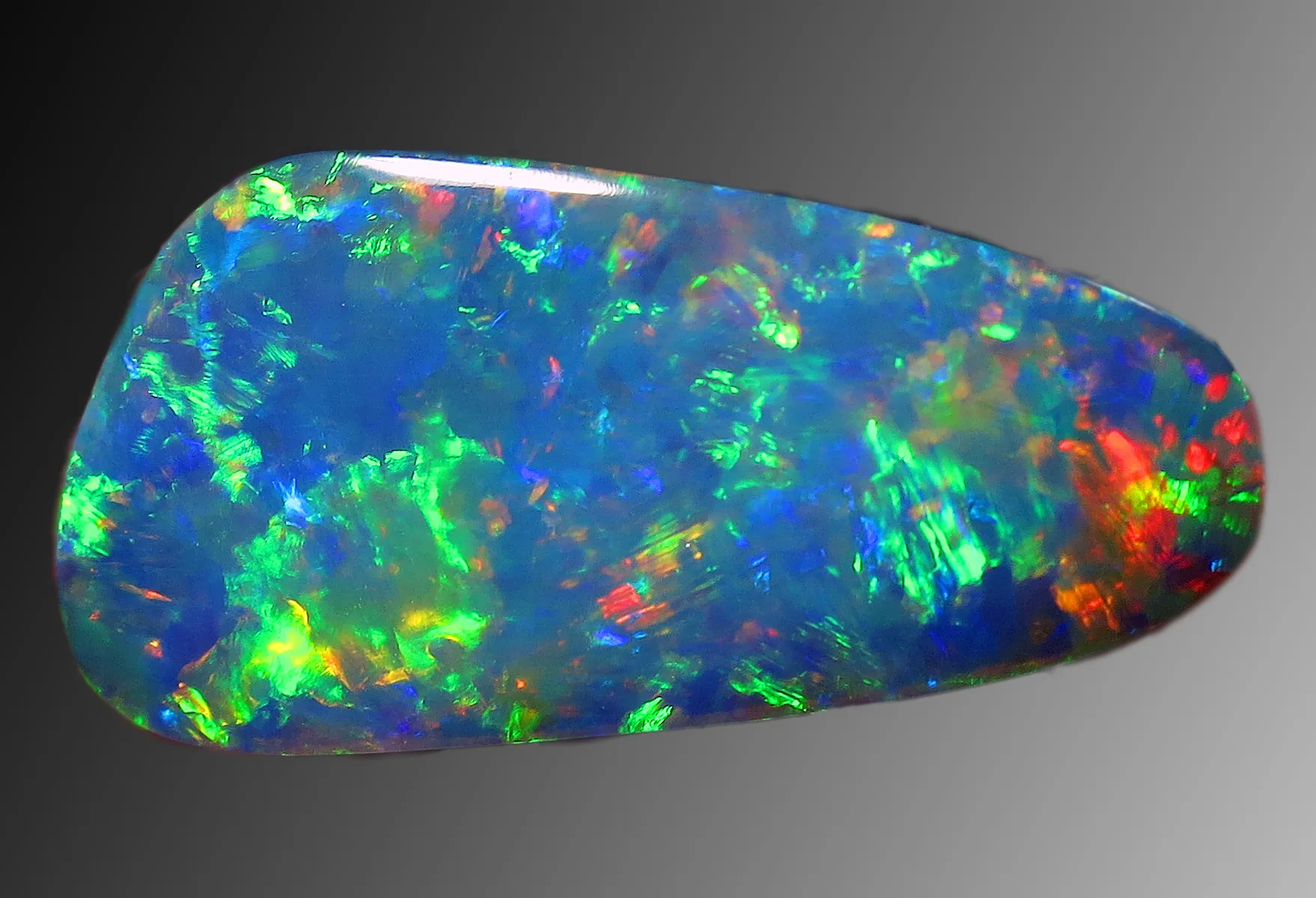
Solid opal is a single piece of natural opal. An opal doublet uses a thin opal layer bonded to backing; a triplet typically adds a clear protective cap. These assembled stones may be attractive but should be described accurately and not priced as equivalent solid stones.
Treatments and enhancements may include darkening of porous opal, smoke treatment, dye or sugar-acid processes, depending on material. Polymer impregnation or stabilizing treatments can alter appearance and handling. Synthetic or laboratory-created opal can show ordered silica structures and visual effects that resemble natural opal, but should be disclosed.
Ask sellers whether an opal is natural, synthetic, treated or assembled and whether the stone absorbs water. The GIA opal quality guide discusses natural varieties, doublets, triplets and the significance of play-of-color.
How Opal Value Is Assessed
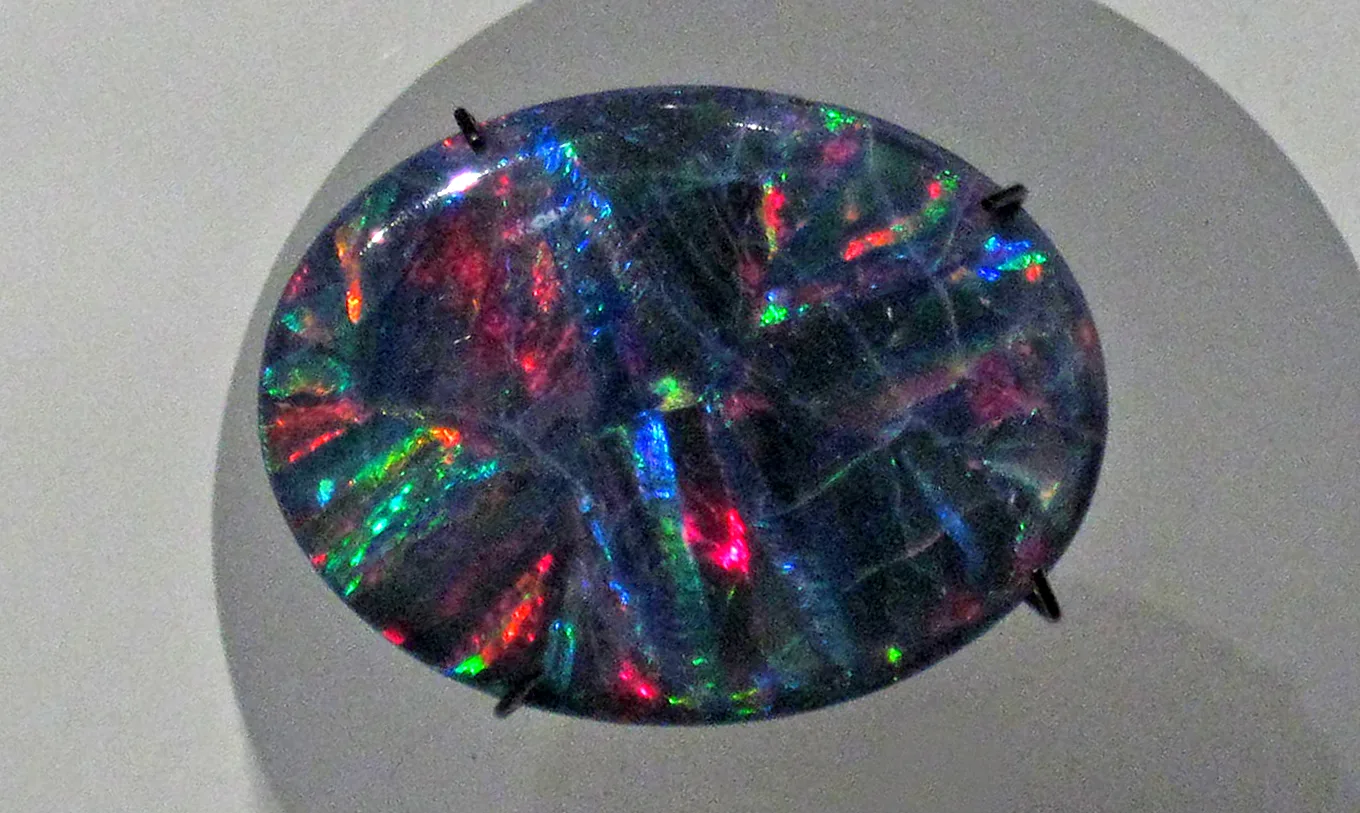
For precious opal, value commonly depends on brightness, pattern, color range, size of visible patches, stability, body color, transparency, cutting quality and any treatments or assembly. A large rough piece with weak color may be worth less than a smaller gem with bright flashes and attractive distribution.
Dark body color can make play-of-color more visible, but not all black opals are more valuable than all white opals. Red flashes can be sought after, but there are no universal price rules independent of specimen quality, origin verification and market conditions.
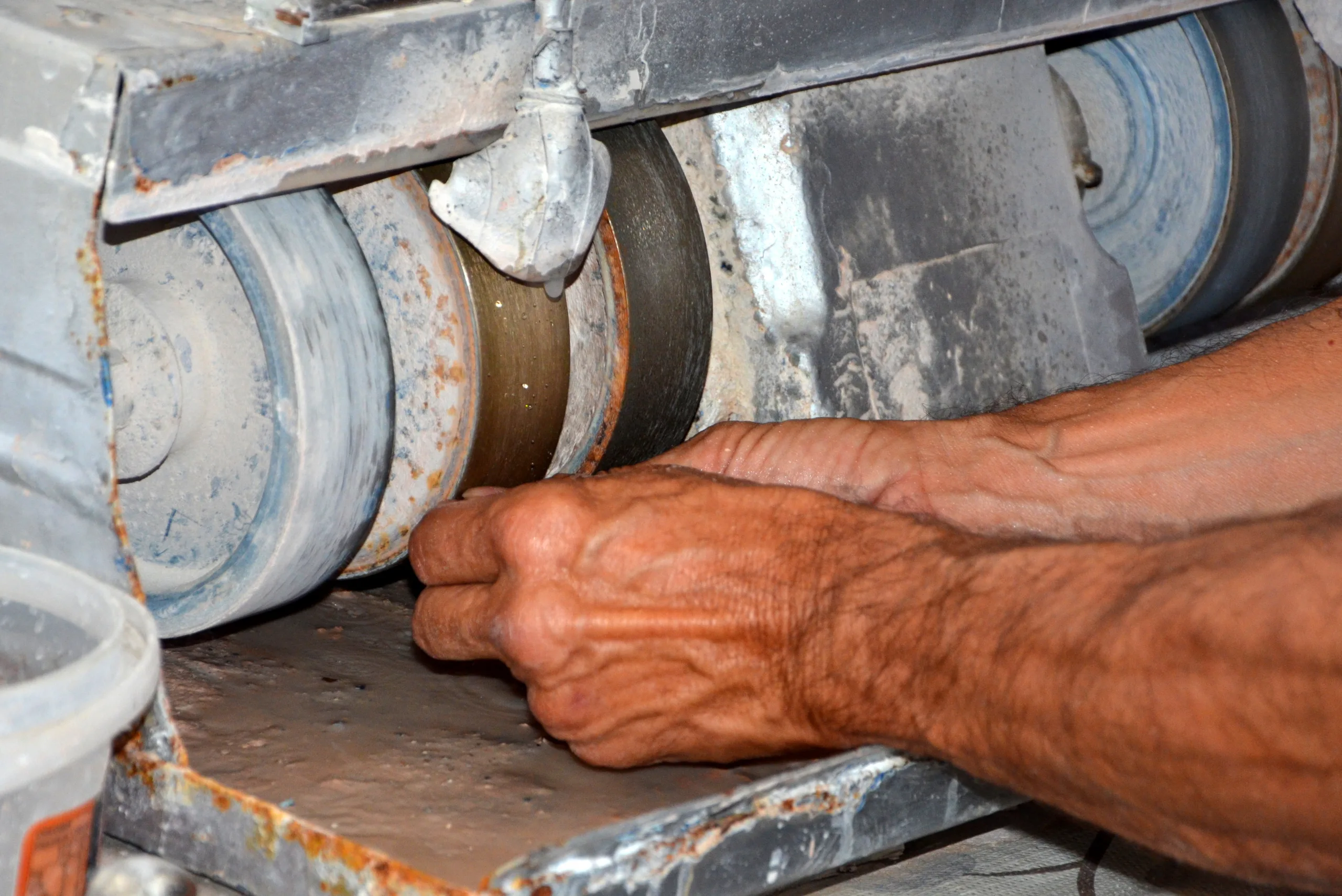
Opal is commonly cut as a cabochon to display moving colors. Some transparent fire opals may be faceted. For high-value gems, compare stones under consistent lighting and obtain clear treatment disclosure and independent assessment where warranted.
Opal Care, Water Content and Crazing
Opal contains variable water and can undergo physical change if water balance and environmental conditions shift. Certain stones develop internal cracks called crazing from dehydration or stress. Risk depends on the material’s structure, water content, treatment history and storage conditions; not every opal will craze.
Clean gently with a soft cloth and, when appropriate for a known solid opal, lukewarm water and mild soap. Avoid steam, ultrasonic cleaners, harsh chemicals, prolonged direct heat, abrupt temperature swings and impacts. Do not soak hydrophane or unknown treated opal without professional advice. Doublets and triplets may be damaged by moisture entering the adhesive layers.
Store opals away from harder gemstones such as diamonds and quartz. When a specimen has open fractures, uncertain treatments or a history of crazing, obtain gemstone-specific advice before cleaning or changing storage conditions.
Frequently Asked Questions
What is opal made of? Opal is hydrated silica, typically written SiO₂·nH₂O. Its water content and internal structure vary.
Why does opal show rainbow colors? Regularly arranged microscopic silica spheres diffract and interfere with visible light, producing shifting play-of-color in precious opal.
Is opal a mineral or a mineraloid? It is commonly classified as a mineraloid because its structure is not consistently crystalline like quartz.
Does every opal show play-of-color? No. Common opal has no characteristic play-of-color; fire opal can also lack spectral flashes.
What is the difference between black opal and boulder opal? Black opal is defined by dark body color, while boulder opal contains natural host-rock matrix.
Does Ethiopian opal absorb water? Some Ethiopian opal is hydrophane and can absorb liquid, but the behavior of an individual stone must be assessed.
Can opal crack or craze? Yes. Some stones are vulnerable to dehydration, temperature stress and mechanical damage.
Are opal doublets natural gemstones? They contain an opal layer but are assembled products with backing, not a single solid piece of natural opal.
Scientific References and Image Credits
GIA — Opal Description. Silica spheres, color phenomena and gemological identity.
GIA — Opal Quality Factors. Body color, patterns, quality and assembled stones.
GIA — Opal Buyers Guide. Value, durability and purchasing considerations.
Minerals — A Review of the Classification of Opal. Structural varieties and geology.
Mindat — Opal. Mineralogical information and localities.
International Gem Society — Opal Gemstone Information. Care and commercial forms.
Featured image: black precious opal from Wikimedia Commons, CC BY 3.0. The other new photographs have individual source and license links in their captions.