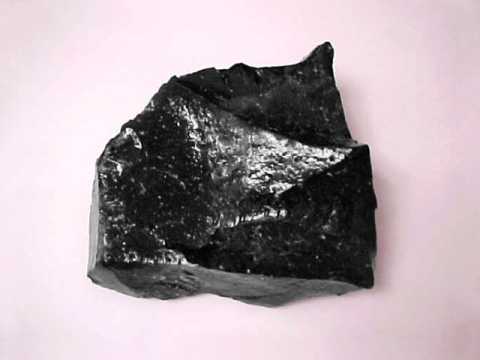
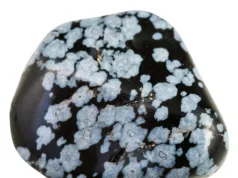
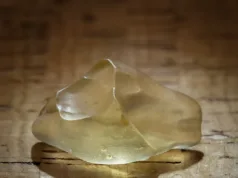
Obsidian

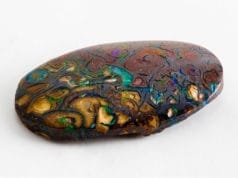
Opal from Yowah, Queensland, Australia

Opal

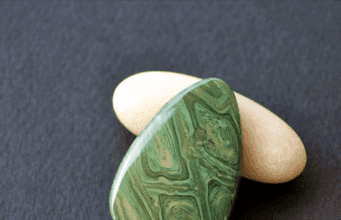
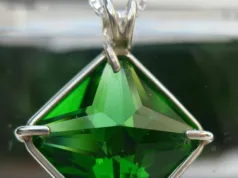
Green Obsidian

Mineraloid

Home Minerals Mineraloid

Mineraloids are fascinating geological materials: they look and behave somewhat like true minerals, yet they fall short of certain defining criteria—most notably a long-range ordered crystal structure or strictly fixed chemical composition. Unlike classic minerals which crystallize in a repeating atomic lattice, mineraloids solidify in a disordered fashion, often through rapid cooling of volcanic glass (for example obsidian), gel-like deposition at Earth’s surface, or accumulation of organic and inorganic wastes under unique conditions. Because their atomic structure is random or semi-ordered, mineraloids typically break with curved (conchoidal) fractures and lack the clean cleavage planes of crystalline minerals. Examples such as opal, volcanic glass, resinous amber, and even certain naturally-formed glasses like tektites reveal the diversity of environments where mineraloids arise—rapid cooling, high fluid flux, biological accumulation, or impact-induced melting. In this category you’ll dive into how mineraloids form, how to recognise them in the field or sample, how they differ from minerals, and why they matter to geologists, engineers and site-practitioners alike—for everything from material behaviour and heritage gems to geological processes and natural hazard indicators.
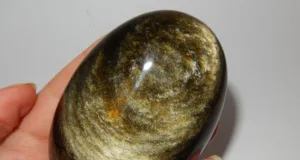
Gold Sheen Obsidian
Gold Sheen Obsidian is a type of volcanic glass that exhibits a stunning golden or metallic sheen on its surface. It is a variety...

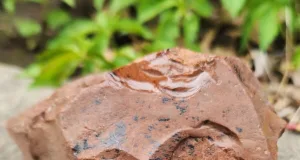
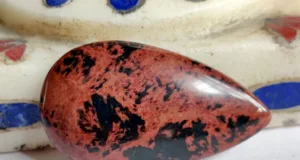
Mahogany Obsidian

Mahogany Obsidian is a type of volcanic glass that is formed during the cooling and solidification of molten lava. It belongs to the broader...

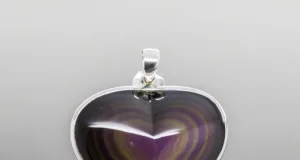
Rainbow Obsidian

Rainbow Obsidian is a type of volcanic glass that exhibits a captivating play of colors when exposed to light. It is a variety of...

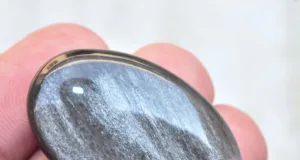
Silver Sheen Obsidian

Silver Sheen Obsidian is a type of volcanic glass that exhibits a silver or silvery-blue sheen or chatoyancy when light reflects off its surface....

Pumpkin Obsidian

Pumpkin Obsidian is a type of natural glass that is formed when lava high in silica content cools quickly. It is a variety of...

READ MORE..

Amphibole

Amphibole is an crucial institution of usually darkish-colored, inosilicate minerals, forming prism or needlelike crystals,composed of double chain SiO 4 tetrahedra, connected at the vertices and normally containing ions of iron and/or magnesium in their systems.

Gypsum

Gypsum (CaSO₄·2H₂O) is one of Earth’s most widespread, versatile, and scientifically important minerals. Though incredibly soft — so soft that it can be scratched...

Tanzanite

Tanzanite is one of the most captivating gemstones ever discovered — admired for its rich blue-violet color and remarkable rarity. Scientifically known as the...

Gold (Au)

Gold is one of the oldest and most influential metals in human history. Its value, which has continued from ancient times to the present,...

Benitoite

Benitoite, a strikingly beautiful and rare gemstone, is celebrated for its vibrant blue hues and intriguing geological origin. First discovered in California, this gemstone...