































Trachyte is an alkali-rich volcanic igneous rock dominated by alkali feldspar, commonly sanidine, with subordinate plagioclase and small amounts of mafic minerals. It typically has a fine-grained or porphyritic texture and is the approximate volcanic counterpart of syenite. Trachyte occurs in alkaline volcanic provinces, including continental rifts, ocean islands and some caldera systems. It is classified using modal mineral proportions or, when the groundmass is too fine to measure reliably, whole-rock chemistry.
What Is Trachyte?
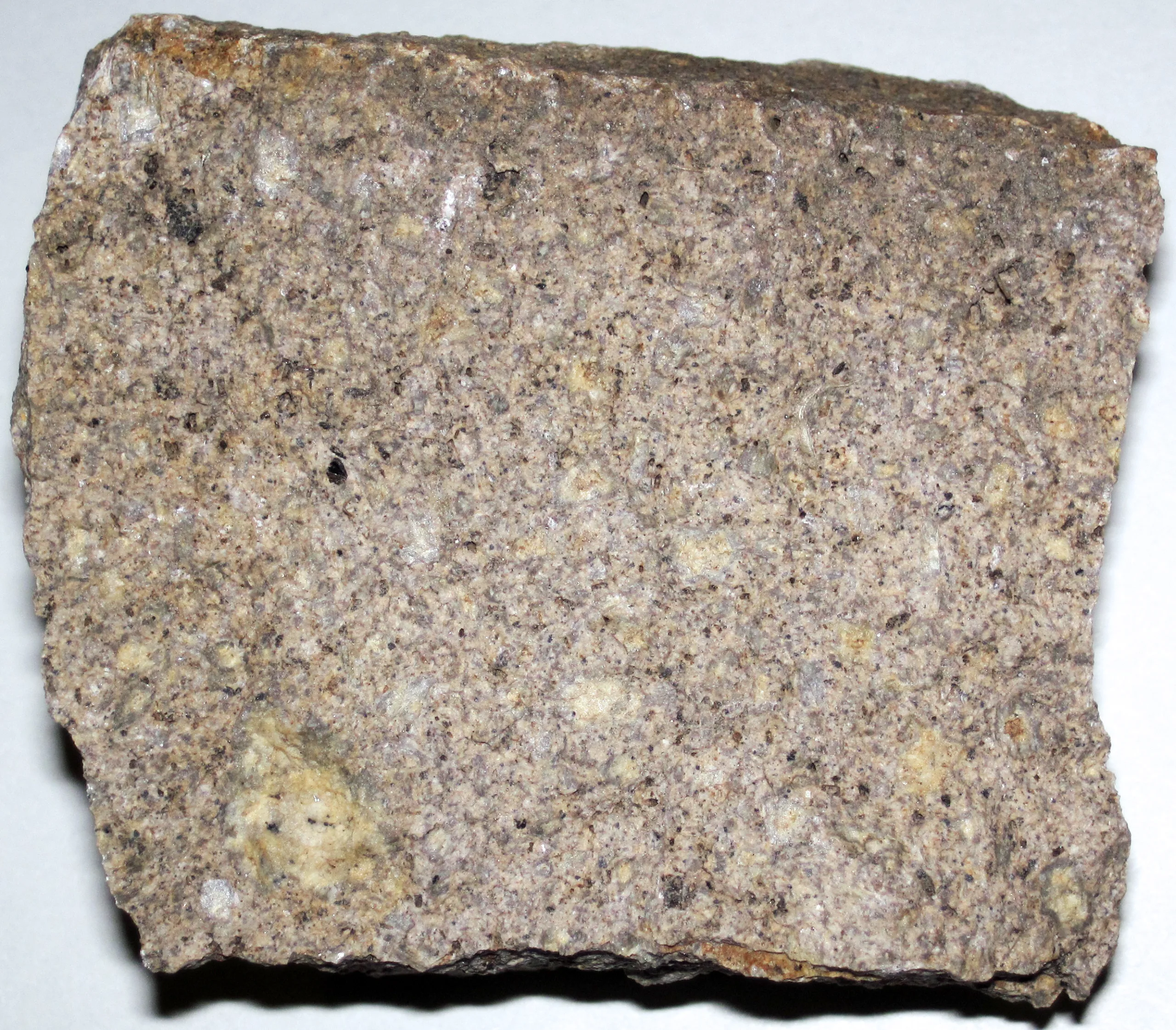
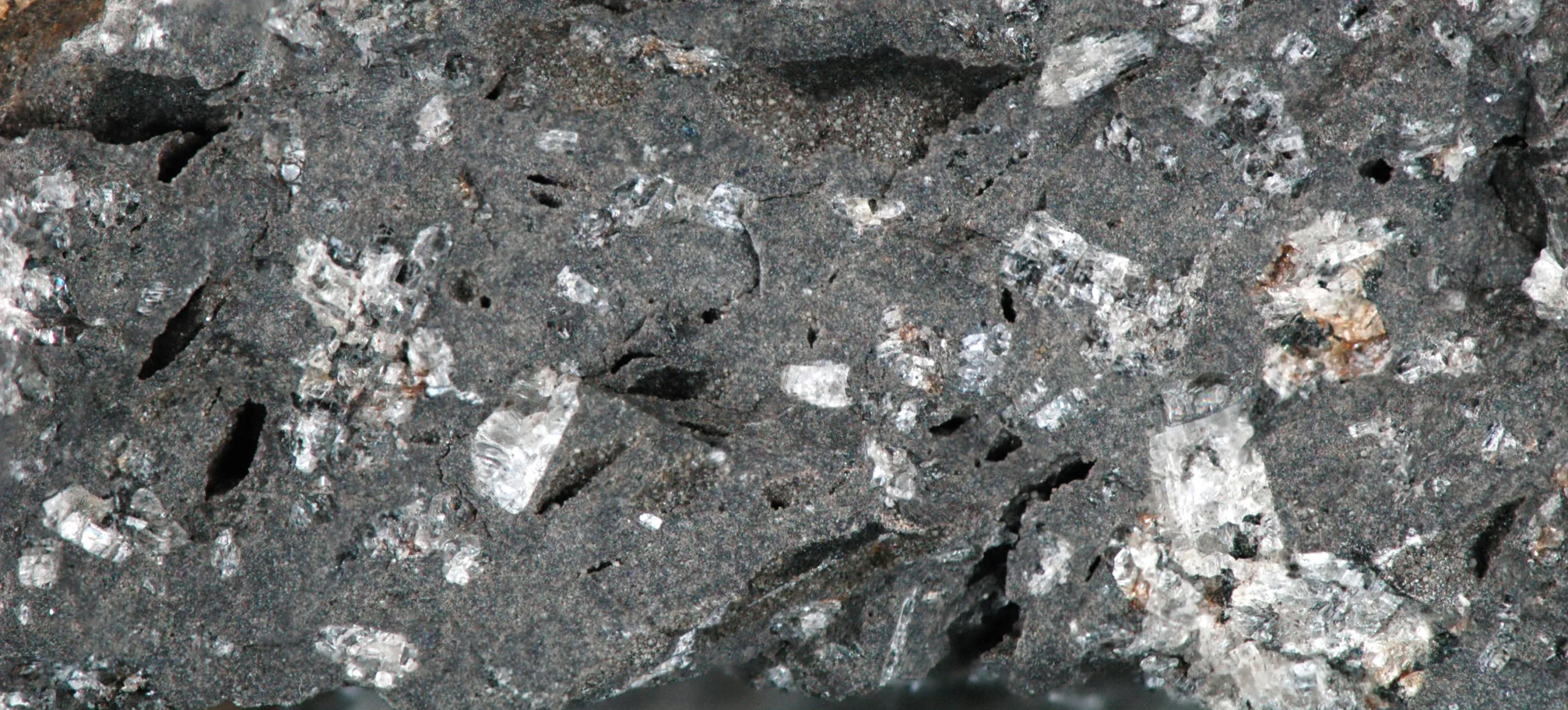
The name comes from the Greek trachys, meaning rough, referring to the appearance or feel of some specimens. A rough surface is not a diagnostic requirement. Fresh trachyte can be gray, cream, pale pink, reddish or relatively dark, depending on its groundmass, iron-bearing phases and alteration. The abundance of alkali feldspar does not mean every trachyte is pink: sanidine phenocrysts are frequently colorless, white or pale gray.
| Property | Typical characteristics |
|---|---|
| Rock group | Extrusive igneous rock |
| Principal mineral | Alkali feldspar, commonly sanidine |
| Other minerals | Plagioclase, pyroxene, amphibole, biotite, Fe–Ti oxides |
| Texture | Aphanitic, porphyritic, sometimes trachytic |
| Color | Gray, white, cream, pink, reddish or dark gray |
| TAS chemistry | Field T; silica approximately 57.6–69 wt%, with elevated total alkalis |
| Density | Variable; compact material is commonly around 2.4–2.7 g/cm³, but vesicular or altered samples may differ substantially |
| Intrusive counterpart | Syenite, approximately |
Mineral Composition
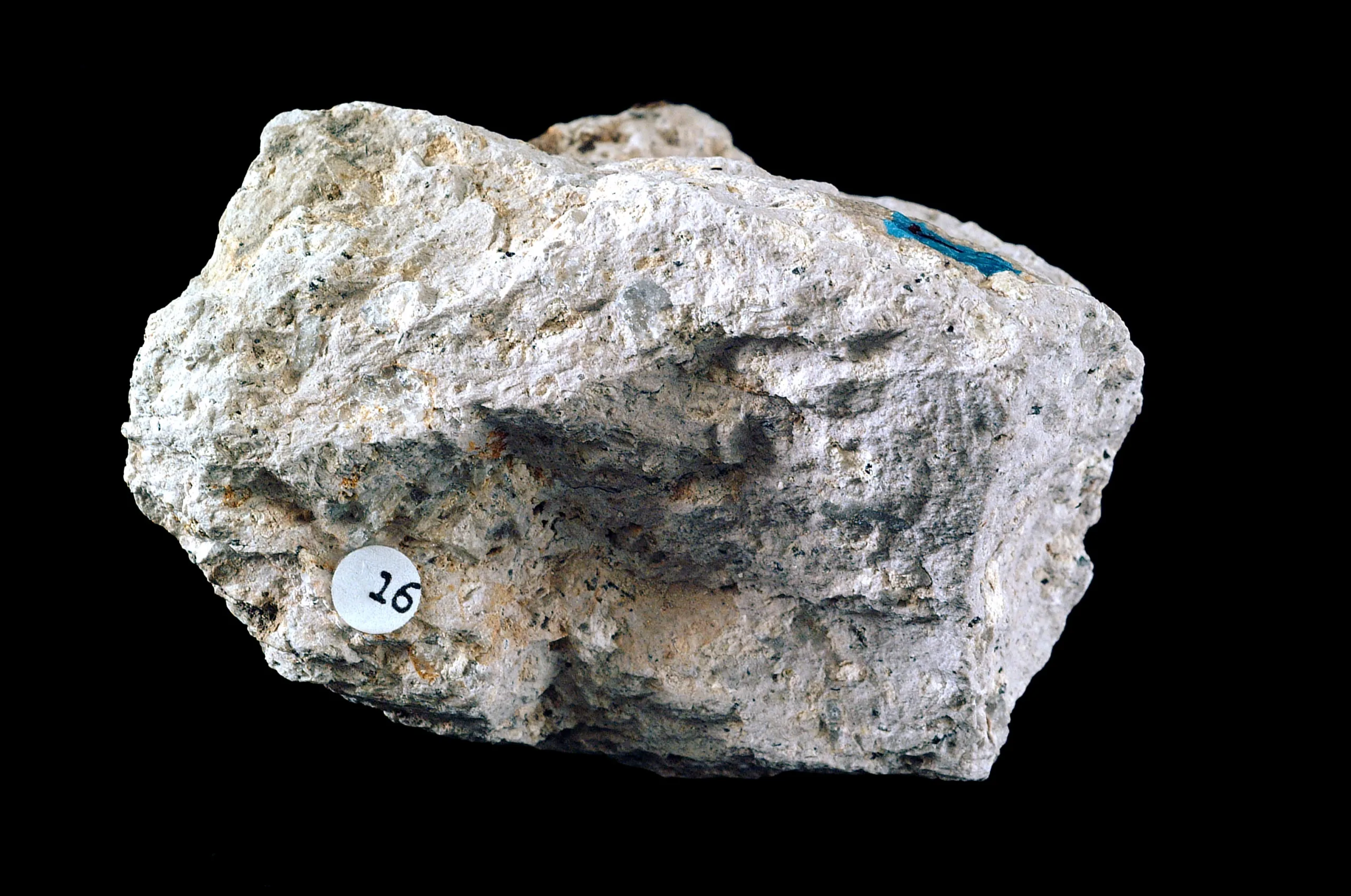
The dominant felsic mineral is alkali feldspar, typically sanidine, a high-temperature potassium–sodium feldspar. Feldspar may occur both as visible phenocrysts and as minute tabular crystals in the groundmass. Sodium-rich plagioclase can occur in smaller proportions. Dark minerals and accessory phases vary with magma chemistry, temperature, oxygen fugacity and crystallization history.
| Mineral | Petrographic significance |
|---|---|
| Sanidine | Common pale or transparent tabular phenocrysts and groundmass microlites; simple twinning may be visible. |
| Plagioclase | Often sodic; polysynthetic twinning under crossed polarizers. |
| Pyroxene | Augite or sodic pyroxene in suitable alkaline compositions. |
| Amphibole and biotite | Variable dark phases, sometimes altered to secondary minerals. |
| Quartz | Absent or minor in ordinary modal trachyte; more abundant in quartz trachyte. |
| Accessory phases | Magnetite, ilmenite, apatite, titanite and zircon may occur. |
Some peralkaline trachytes contain sodium-rich pyroxene or amphibole. Peralkalinity is a chemical property defined by a molar excess of Na₂O + K₂O over Al₂O₃, not a synonym for all trachytes. Pink or reddish colors may reflect iron oxide inclusions, staining or oxidation; color alone does not establish mineral composition.
Trachytic Texture and Thin-Section Petrography
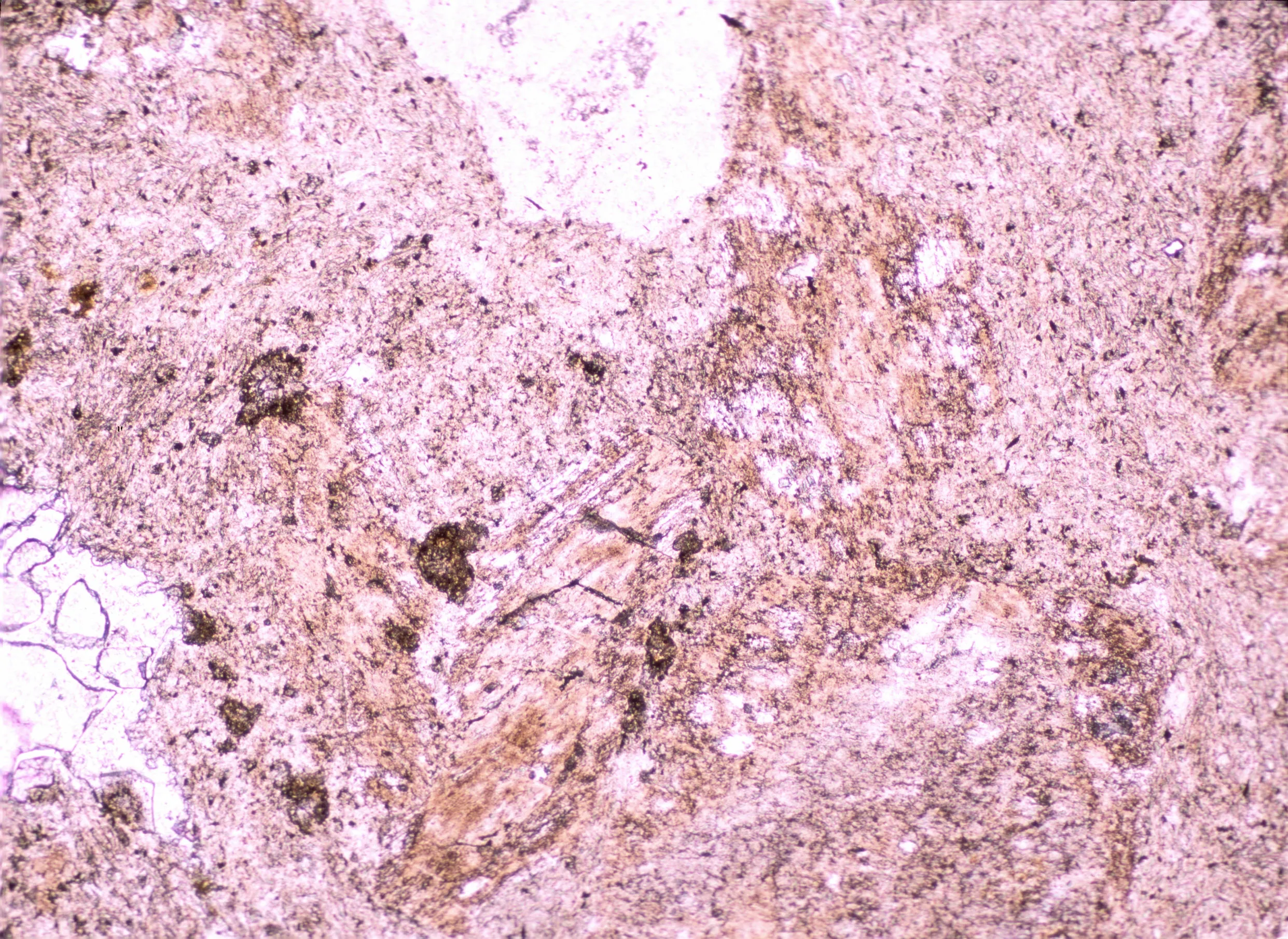
Trachytic texture refers to a groundmass fabric in which small tabular or lath-shaped feldspar crystals show a preferred orientation. Flow and deformation of partly crystalline lava can align these microlites, sometimes causing them to wrap around larger phenocrysts. The term describes texture, not chemical composition, and similar fabrics occur in other volcanic rocks. Large phenocrysts alone define porphyritic texture, not necessarily trachytic texture.
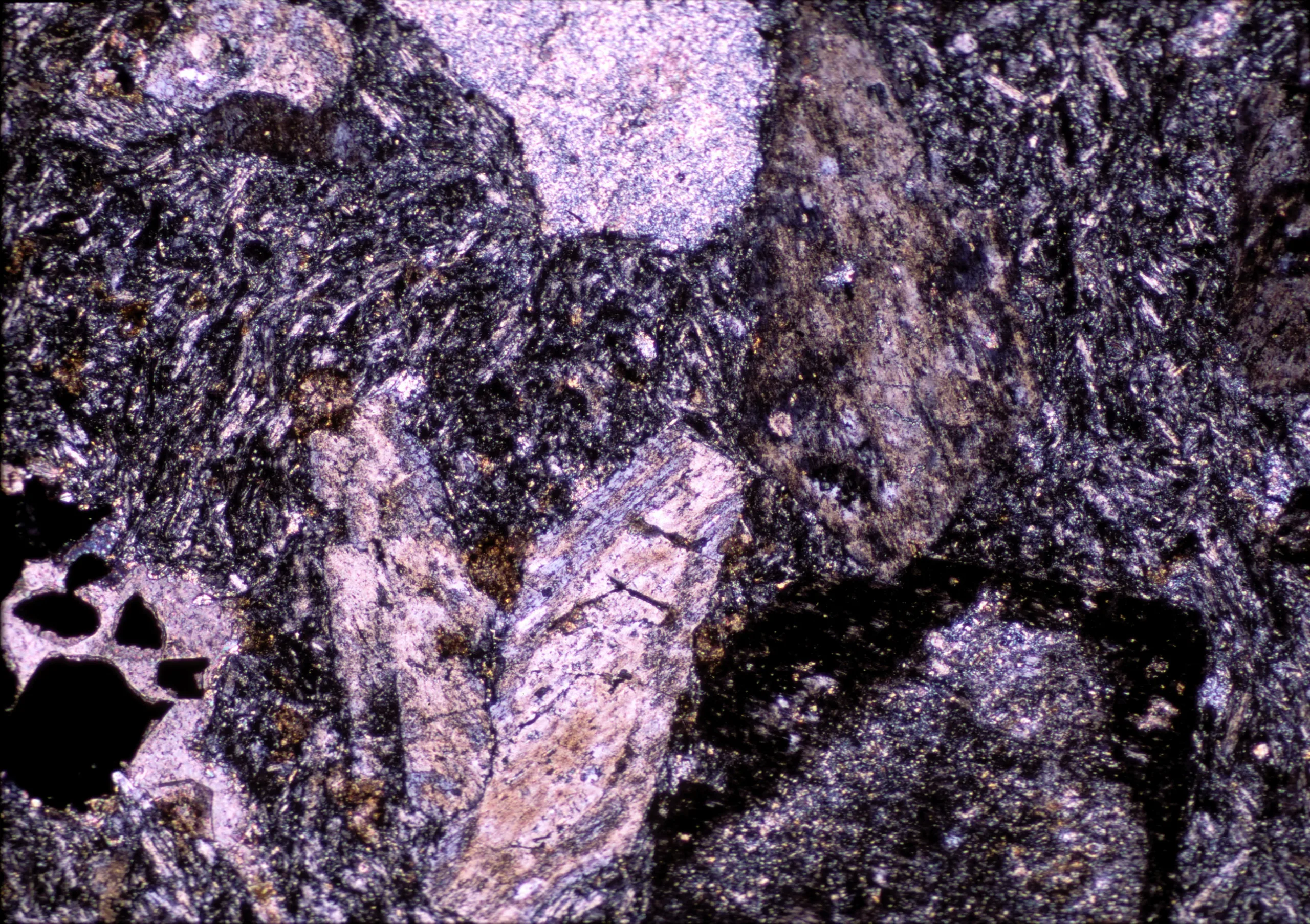
In thin section, feldspar twinning, crystal outlines and interference colors help distinguish mineral phases. Alteration to clay minerals, sericite or other secondary phases can obscure the original mineralogy. For a clear photographic example of aligned feldspar microlites, see the trachytic texture reference in Alex Strekeisen’s petrographic atlas.
Chemical Composition and TAS Classification
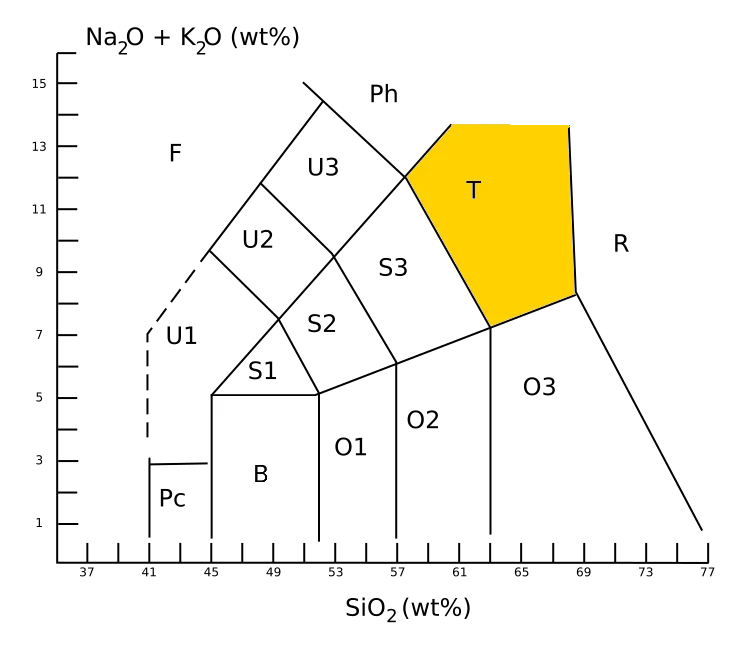
The total alkali–silica (TAS) diagram uses whole-rock SiO₂ and combined Na₂O + K₂O, expressed as weight percentages after anhydrous normalization. This approach is especially useful when glass or a very fine groundmass prevents reliable mineral counting. In the standard diagram, field T extends over approximately 57.6–69 wt% silica and relatively high alkali contents. Its boundaries are sloped; neither a fixed silica interval nor a single alkali threshold is enough to classify a sample.
Field T is subdivided into trachyte and trachydacite using calculated normative quartz. Trachyte has less than 20% normative quartz; trachydacite has more than 20%. Normative quartz is calculated from chemical composition and is not the amount of quartz actually visible in the rock. Weathering and hydrothermal alteration can redistribute sodium and potassium and make TAS classifications unreliable.
Modal QAPF Classification
When a representative crystalline mineral mode is available, volcanic rocks may instead be classified with the QAPF diagram. In ordinary trachyte (field 7), quartz is below 5% of normalized Q + A + P, and alkali feldspar constitutes 65–90% of total feldspar. A rock with 70% alkali feldspar, 20% plagioclase, 2% quartz and 8% other minerals has normalized quartz of 2/92 × 100 = 2.2% and an alkali-feldspar fraction of 70/90 × 100 = 77.8%; it plots in field 7.
| Related modal rock | Key criterion |
|---|---|
| Alkali-feldspar trachyte | Quartz below 5%; alkali feldspar exceeds 90% of total feldspar. |
| Trachyte | Quartz below 5%; alkali feldspar 65–90% of total feldspar. |
| Quartz trachyte | Quartz 5–20%; alkali feldspar 65–90% of total feldspar. |
| Latite | Quartz below 5%; alkali feldspar 35–65% of total feldspar. |
| Foid-bearing trachyte | Small feldspathoid proportion, below 10% of normalized A + P + F; quartz absent. |
How Does Trachyte Form?
Magma differentiation
Many trachytic magmas evolve from alkaline parental melts through fractional crystallization. Early removal of olivine, pyroxene, calcium-rich plagioclase and iron–titanium oxides can change the residual melt toward more silica-rich and alkali-rich compositions. The particular differentiation path depends on the original magma, pressure, water content and minerals that crystallize. Partial melting, magma mixing and crustal assimilation can also contribute; trachyte does not require one universal parental magma.
Ascent and eruption
During magma storage, feldspar and other phenocrysts can grow before eruption. As pressure decreases, dissolved volatiles may exsolve, producing bubbles. Trachytic magma can erupt as relatively viscous lava, producing domes or thick flows; in other cases, fragmentation generates ash, pumice and pyroclastic density currents. Lava viscosity depends on temperature, melt chemistry, crystal abundance and dissolved water, so composition alone cannot determine eruption style.
Cooling at or near the surface produces the fine groundmass. Flow can orient feldspar microlites, while rapid quenching can preserve glass. Bubble escape and retention create contrasting compact and vesicular zones within the same lava body. Fragmental products are best described using both composition and deposit type, for example trachytic tuff or trachytic ignimbrite.
Where Is Trachyte Found?
| Locality | Geological significance |
|---|---|
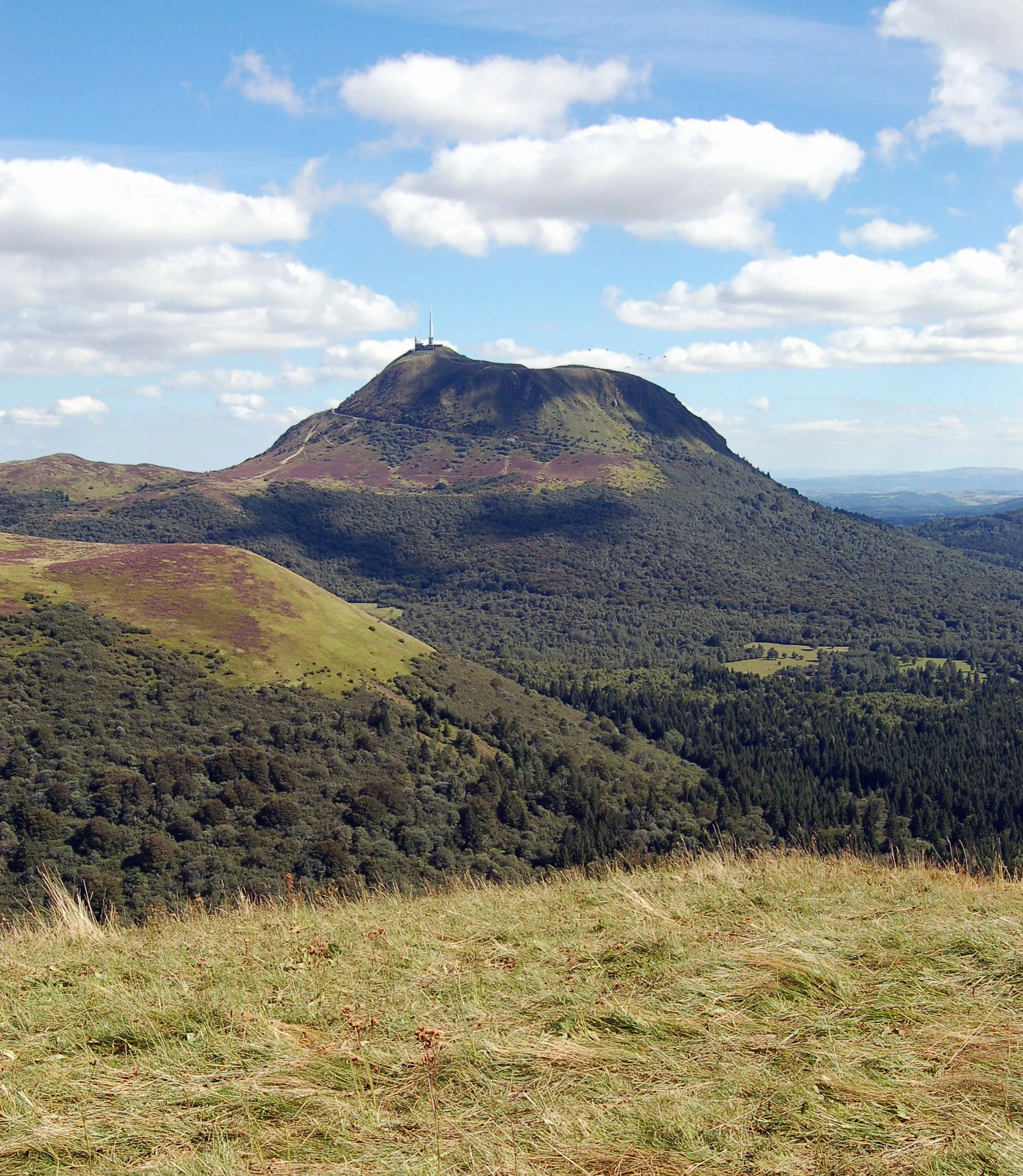
| Puy de Dôme, France | Holocene trachytic lava dome in the Chaîne des Puys. |
| Lake Magadi, Kenya | Extensive Pleistocene trachyte lava flows in the East African Rift. |
| Cripple Creek, Colorado, USA | Alkaline volcanic and intrusive complex with trachytic rocks. |
The Puy de Dôme dome preserves evidence of multiple growth phases, including effusive emplacement and explosive events. The Magadi Trachyte demonstrates that some trachytic lavas can spread across large areas despite their commonly high viscosity. Trachytic rocks therefore occur in contrasting volcanic settings and landforms rather than a single characteristic volcano type.
How to Identify Trachyte in the Field
- Examine a fresh surface for a fine-grained groundmass with pale tabular feldspar phenocrysts.
- Check for flow alignment, vesicles, glassy domains or lava brecciation; none is individually diagnostic.
- Look for quartz and feldspathoids, recognizing that their absence in a hand specimen is not proof of their absence in the rock.
- Compare texture with the geological setting and associated volcanic units.
- Use thin-section petrography and fresh whole-rock chemical analysis when distinguishing trachyte from andesite, dacite, rhyolite or phonolite.
Trachyte may resemble pale andesite or rhyolite. Sanidine-rich phenocrysts provide a useful clue, but visual identification is provisional. Neither pink color nor a rough surface is sufficient to classify the rock.
Trachyte vs. Syenite, Rhyolite and Other Volcanic Rocks
| Rock | Main distinction |
|---|---|
| Syenite | Coarse-grained intrusive counterpart of trachyte. |
| Rhyolite | Higher silica in the conventional TAS series; modal quartz is more abundant in ordinary rhyolite. |
| Dacite | Typically lower total alkalis than trachyte at comparable silica concentrations. |
| Andesite | Typically plagioclase-rich and less alkali-rich in the standard TAS classification. |
| Trachyandesite | Occupies the neighboring S3 TAS field; distinct chemical classification. |
| Phonolite | Generally silica-undersaturated, with substantial feldspathoids in modal varieties. |
Syenite and trachyte illustrate the relationship between intrusive and extrusive rocks with broadly similar mineralogical compositions. Their textures differ primarily because they crystallize under different conditions. Trachyte and rhyolite cannot always be distinguished by appearance; their chemical or mineralogical classification is more reliable.
Uses, Weathering and Engineering Properties
Compact trachyte has historically been quarried for building blocks, paving, architectural details and sculpture. In the French Massif Central, trachytic stone from the Chaîne des Puys was used in antiquity, including at the Temple of Mercury on the Puy de Dôme. Suitable modern quarry products can be used as dimension stone or aggregate after appropriate testing.
Vesicles, cooling joints, flow fabrics and weathering strongly influence engineering performance. Feldspar alteration may produce secondary clay minerals, while iron-bearing minerals may oxidize. Porous trachyte can have substantially different water absorption and strength from dense fresh lava. In geotechnical investigations, distinguish intact-rock properties from the behavior of jointed or weathered rock masses. Assess compressive strength, abrasion, water absorption, durability and aggregate reactivity for the intended use.
Frequently Asked Questions
Is trachyte intrusive or extrusive?
Trachyte is a volcanic extrusive rock; syenite is its approximate intrusive counterpart.
What is the main mineral in trachyte?
Alkali feldspar, commonly sanidine, is the dominant felsic mineral.
Is trachyte always pink?
No. Alkali feldspar and the groundmass may be pale gray, white, cream, pink or darker colors.
What is trachytic texture?
It is a groundmass fabric characterized by preferentially oriented feldspar microlites, and can occur in volcanic rocks other than trachyte.
Is trachyte the same as trachyandesite?
No. They occupy different fields on the total alkali–silica diagram.
References and Image Credits
- British Geological Survey — Trachyte (TAS)
- British Geological Survey — Trachyte (modal classification)
- British Geological Survey — Quartz trachyte
- Le Bas et al. (1986). A chemical classification of volcanic rocks based on the total alkali-silica diagram.
- IUGS — The Holocene Puy-de-Dôme and Petit-Puy-de-Dôme volcanoes
- Multi-stage growth of the trachytic lava dome of the Puy de Dôme (2020)
- Building and ornamental use of trachyte in the center of France during antiquity
- Alex Strekeisen — Trachytic texture
- Le Maitre, R. W. (ed.), 2002. Igneous Rocks: A Classification and Glossary of Terms. Cambridge University Press.
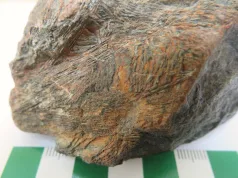
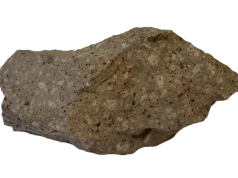
Featured image: vesicular porphyritic Magadi Trachyte from the northern end of Lake Magadi, Kenya, showing pale sanidine phenocrysts and gas cavities in a fine-grained matrix; field of view approximately 4.3 cm. James St. John, Wikimedia Commons, CC BY 2.0; resized and converted to WebP.


%2C_Pleistocene%2C_700_ka_to_1.4_Ma%3B_northern_end_of_Lake_Magadi%2C_Kenya_Rift_segment_of_the_East_African_Rift_Valley).jpg)