























Exfoliation weathering is the separation and detachment of rock in sheets, slabs or curved layers approximately parallel to an exposed surface. It is especially conspicuous in massive granitic rocks and can shape rounded domes, cliffs and boulders. The process is chiefly mechanical, although chemical alteration may assist some forms of surface peeling.
How Exfoliation Occurs
Rock may develop fractures approximately parallel to a free surface as stresses are redistributed during uplift, erosion or excavation. Such fractures are called sheet joints. Removal of overburden can contribute to the stress changes, but pressure release alone does not explain every exfoliation joint. Topographic curvature and compressive stresses parallel to the surface can create conditions favorable for opening-mode fractures.
Once a sheet has formed, thermal cycling, water movement, root growth and additional stress changes may gradually widen the fracture. Eventually a slab may detach. Fracture initiation and the subsequent detachment of a sheet are distinct stages.
Pressure Release and Thermal Effects
Deeply formed plutonic rocks become exposed as overlying material is removed. The resulting stress redistribution can promote sheeting in some settings. Daily heating and cooling may also cause differential expansion and contraction of shallow rock. Repeated thermal deformation can help propagate existing cracks; it is not necessary for every exfoliation surface to have formed through temperature changes.
Exfoliation and Spheroidal Weathering
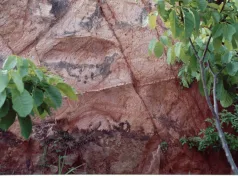
Exfoliation and spheroidal weathering may produce similarly curved surfaces, but their mechanisms differ. Spheroidal weathering commonly involves chemical alteration advancing along joints, rounding the corners and edges of joint-bounded blocks faster than their faces. Sheeting commonly involves mechanical fractures that follow the shape of the rock surface. Both processes may act together.
Related concepts are discussed in Weathering Types, Regolith and Carbonation Weathering.
Geological Examples
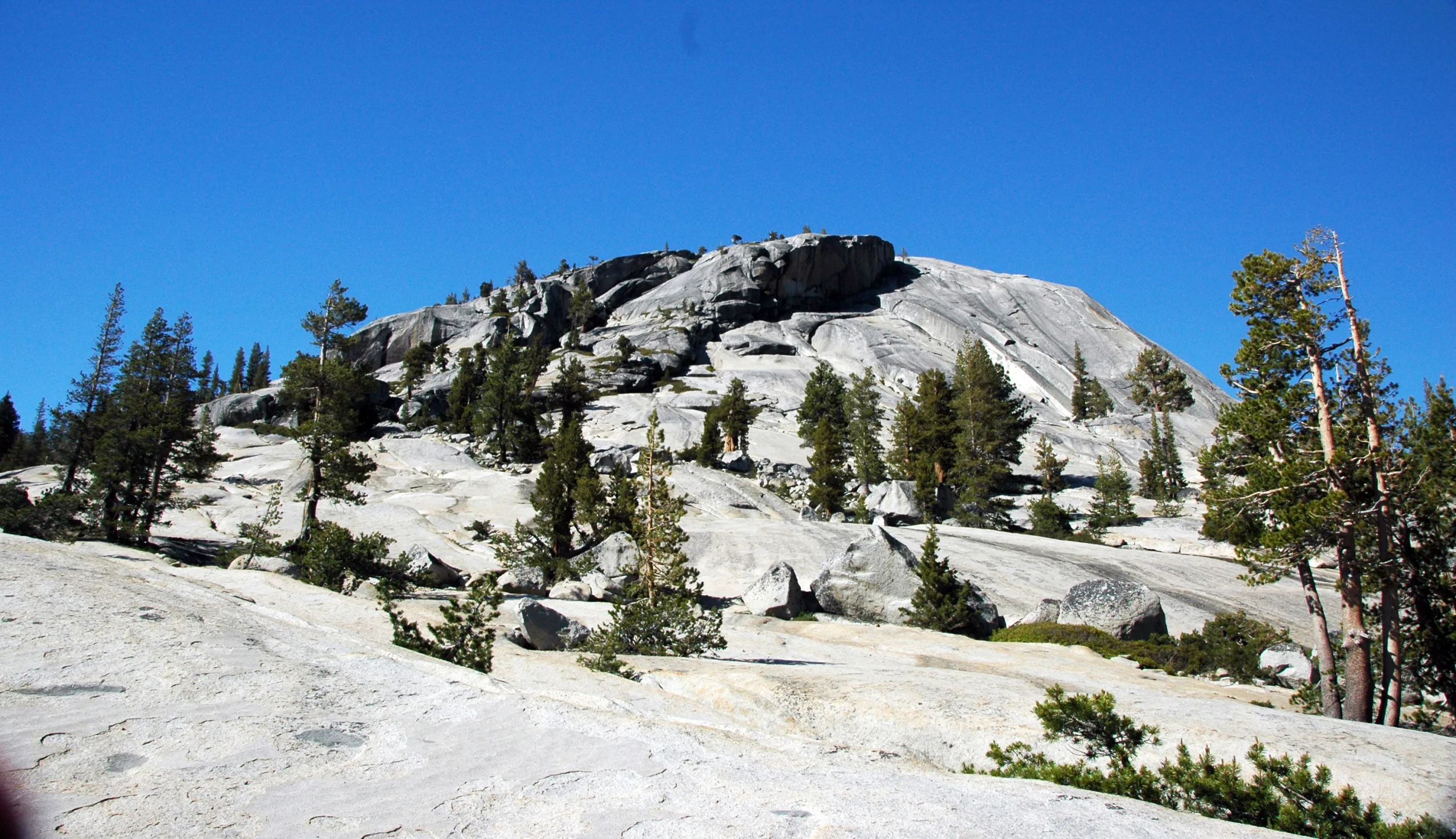
The granitic domes and cliffs of Yosemite National Park in California contain prominent sheet joints. Exfoliation contributes to their curved surfaces and can detach large slabs from steep rock faces. Similar features occur in massive igneous rocks in other climates and geological settings. Rock type, stress history and exposure geometry all influence their development.
Field Identification and Engineering Significance
A field geologist should examine whether fractures follow the rock surface, whether sheets are continuous or intersect other joint sets, and whether fresh fracture surfaces differ from weathered mineral-rich coatings. Curved surfaces alone do not establish the mechanism. Sheet joints may provide pathways for water and create potentially unstable slabs on slopes. Rockfall assessment requires mapping discontinuity geometry, groundwater, weathering and other site-specific conditions; an image alone cannot determine stability.
Frequently Asked Questions
Is exfoliation physical weathering?
Sheet detachment is mechanical, but chemical alteration can contribute to weakening and peeling in some rocks.
Does exfoliation occur only in granite?
No. It occurs in various massive rock types, including granodiorite and syenite.
Is exfoliation the same as freeze–thaw weathering?
No. Freeze–thaw processes can widen water-filled cracks, whereas exfoliation describes detachment in surface-parallel sheets.
Scientific References
National Park Service — Rockfall in Yosemite
USGS — Remote thermal detection of exfoliation sheet deformation
Mechanism of exfoliation joint formation in granitic rocks, Yosemite National Park
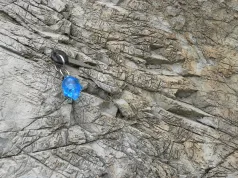
Featured photograph: exposed granodiorite at Polly Dome, Yosemite. James St. John / Wikimedia Commons, CC BY 2.0; converted to WebP.