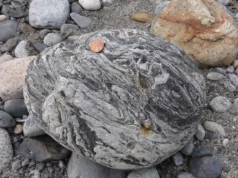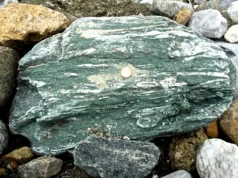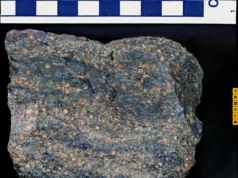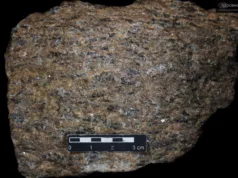






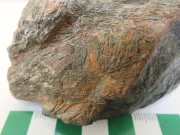










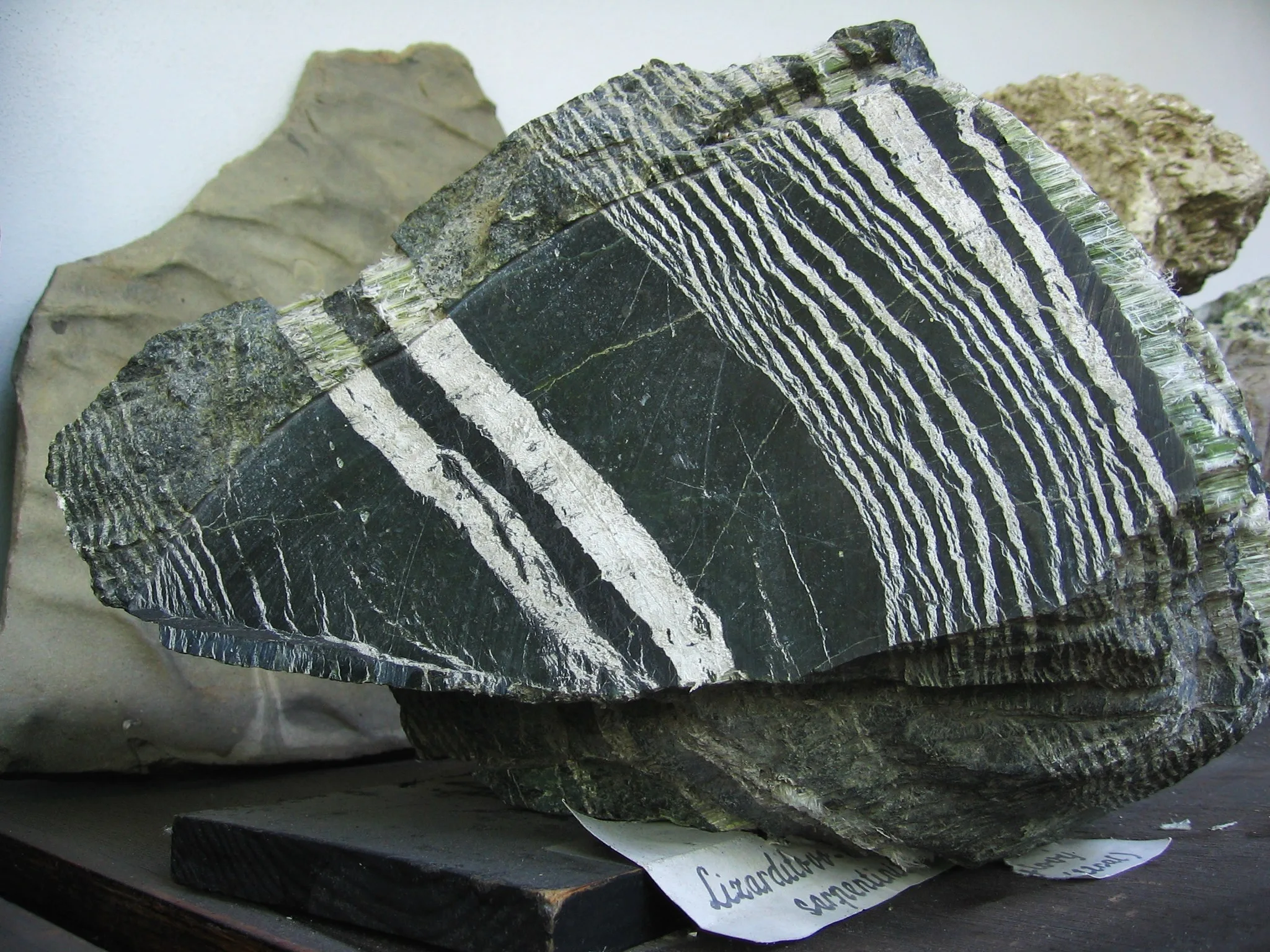
Serpentinite is a metamorphosed, hydrated ultramafic rock composed mainly of serpentine-group minerals. It commonly develops when water reacts with olivine- and pyroxene-rich mantle rocks, producing green to dark-green, mottled, veined, or locally sheared rock. Its appearance varies with the original rock, the degree of alteration, and later deformation.
What Does Serpentinite Look Like?
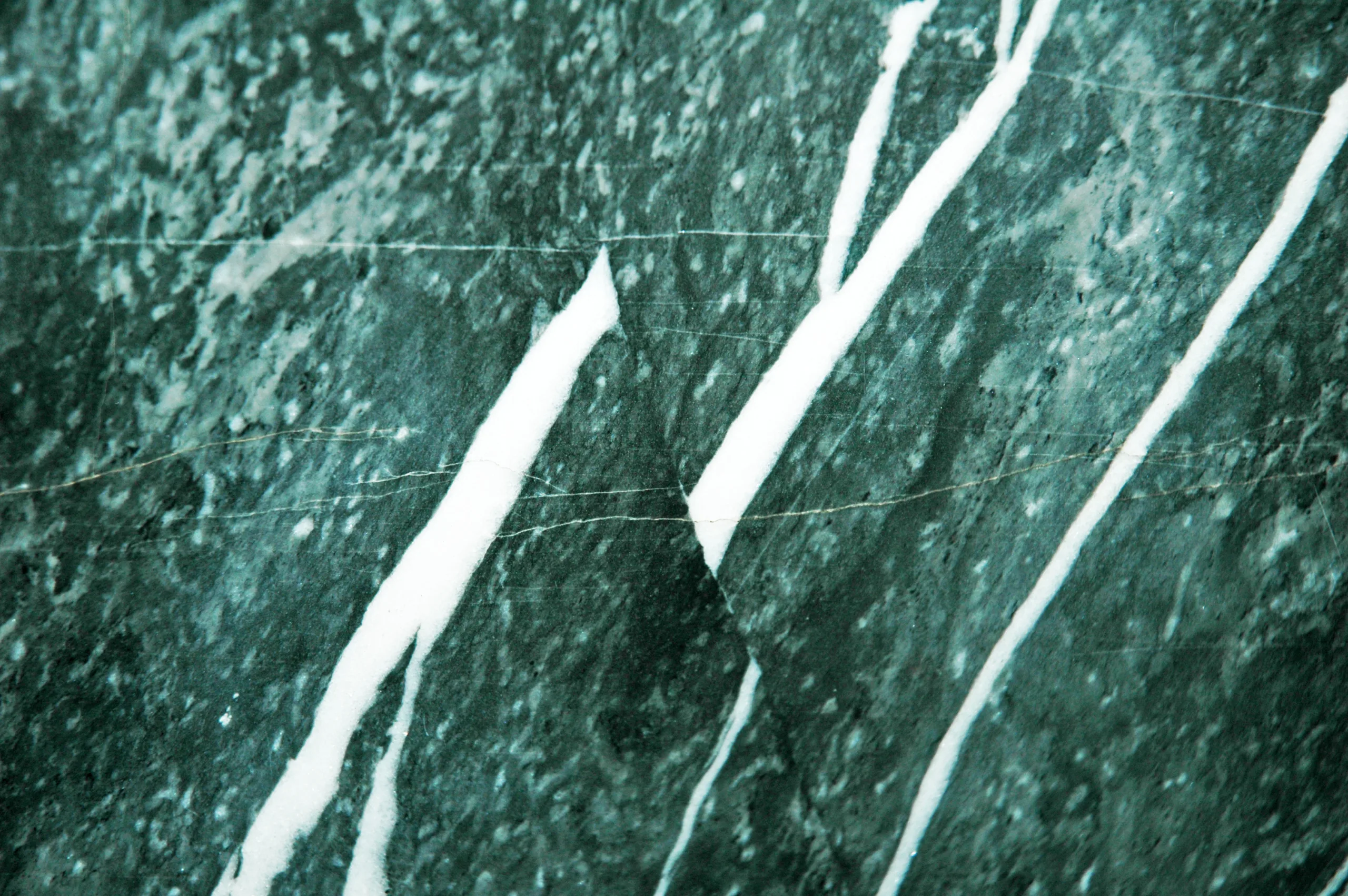
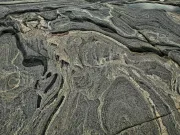
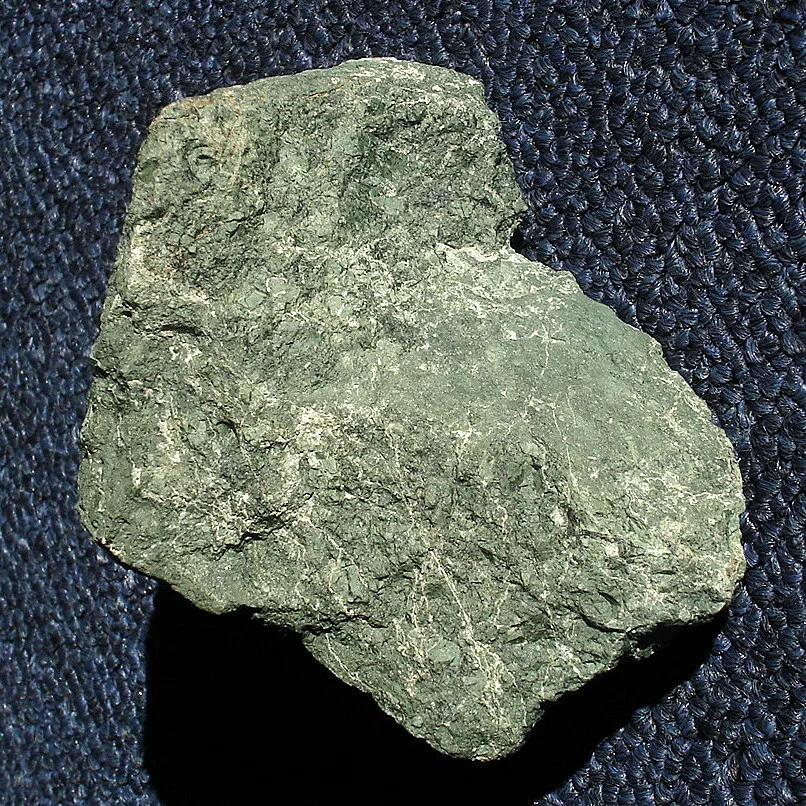
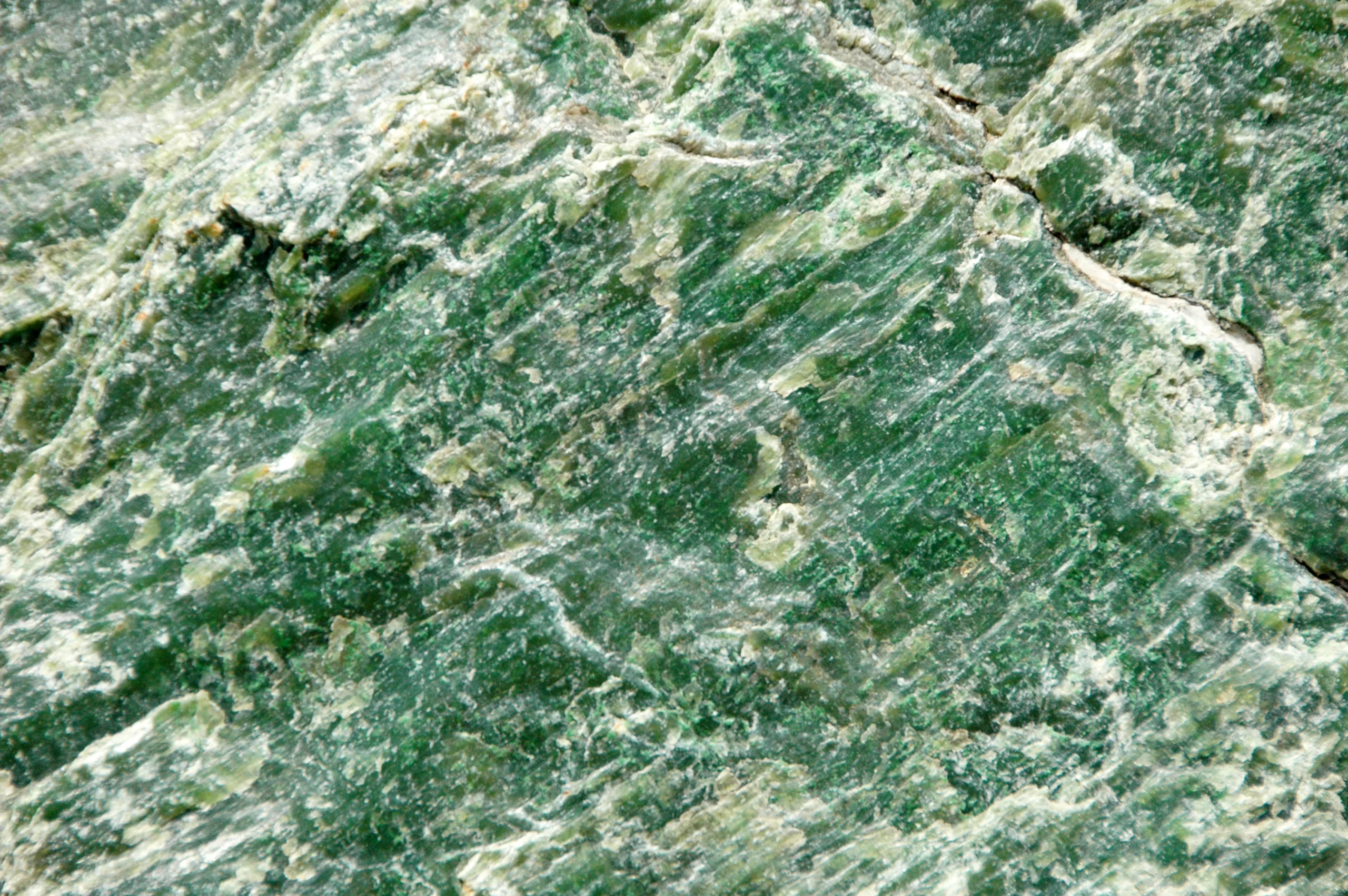
Fresh serpentinite commonly appears dark green, gray-green, greenish black, or nearly black; weathered surfaces may become rusty brown or pale green. Hand specimens range from massive, fine-grained rock to polished, slick-looking pieces with pale veins, mesh-like patterns, or strongly sheared fabrics. A waxy or slightly soapy luster can occur, but it is not diagnostic by itself. Some samples preserve coarse outlines of the original peridotite minerals; others are so thoroughly altered that their igneous ancestry is difficult to recognize without microscopy.
The term serpentinite refers to the rock, whereas serpentine refers to a group of minerals. A green mineral specimen is not automatically serpentinite, and a rock sold as ‘green marble’ may be a decorative serpentinite rather than a carbonate marble.
Mineral Composition
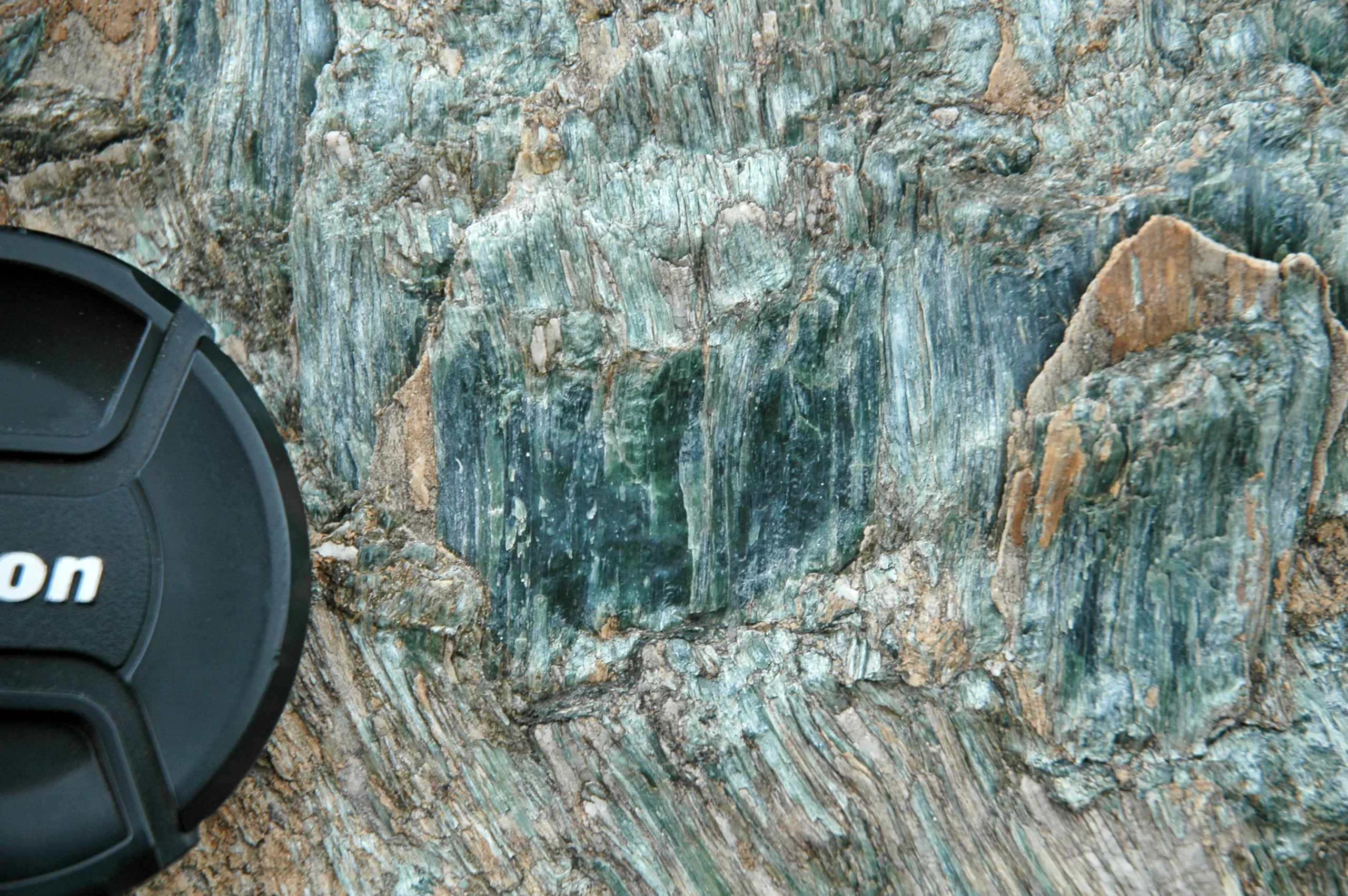
Serpentinite is dominated by hydrous magnesium silicates of the serpentine group. The principal species are lizardite, antigorite, and chrysotile. Their relative proportions depend on pressure-temperature conditions, fluid access, and deformation history. Common accompanying phases include magnetite, brucite, talc, chlorite, carbonate minerals, and relict olivine or pyroxene. Chromite or other spinel minerals may survive from the ultramafic parent rock.
| Component | What it indicates |
|---|---|
| Lizardite | Common in many low-temperature serpentinites |
| Antigorite | Frequently associated with higher-temperature, subduction-related serpentinite |
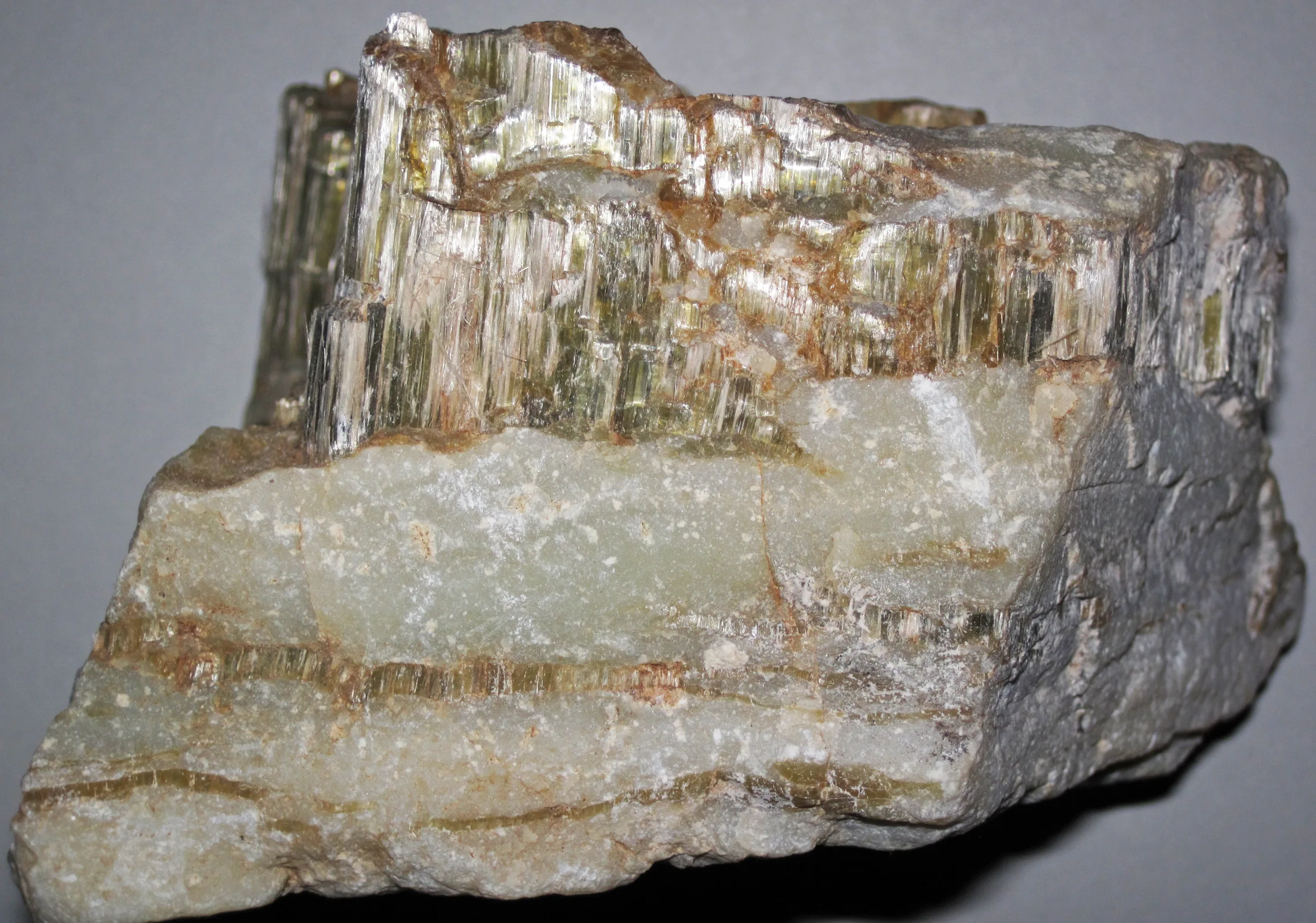
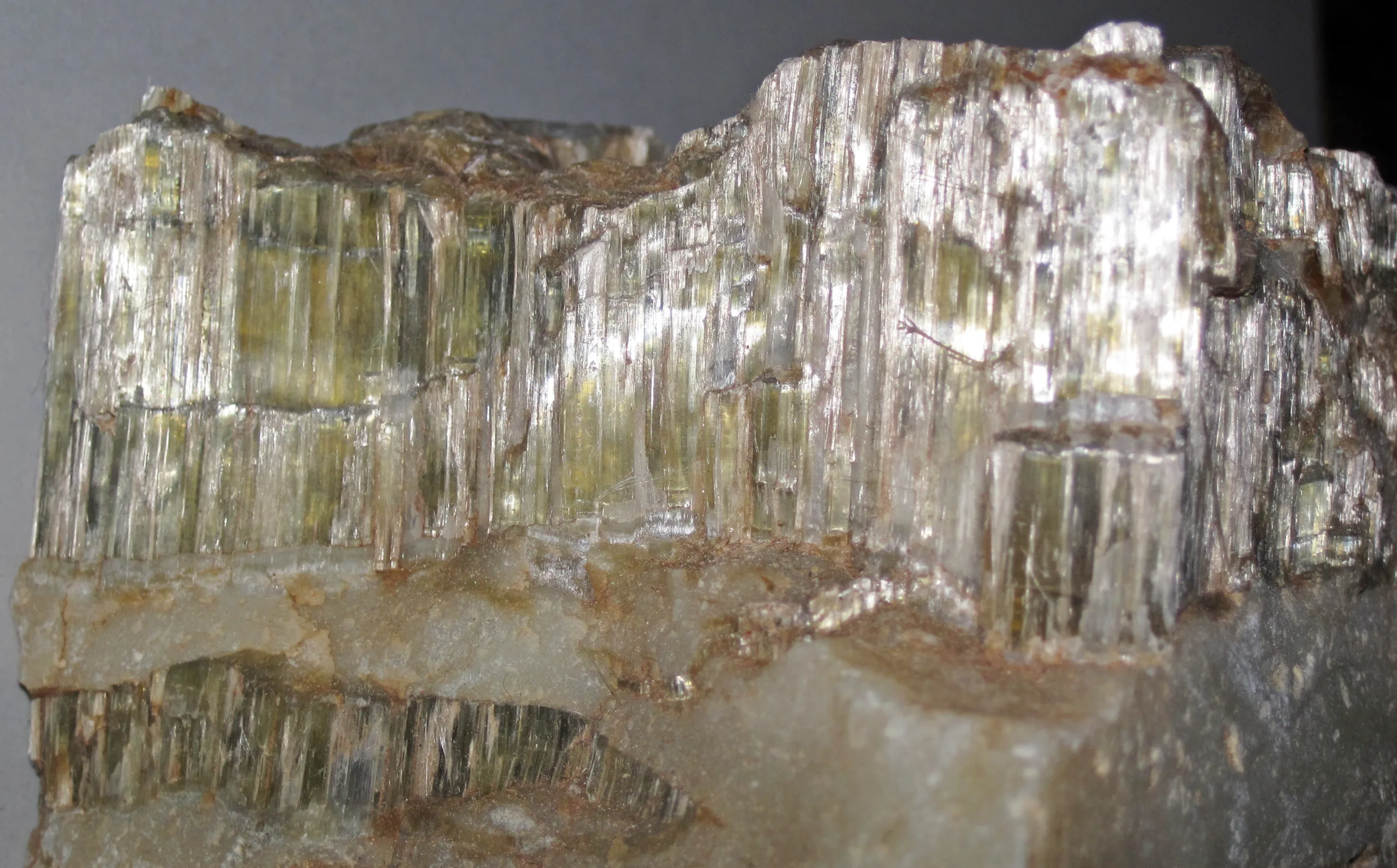
| Chrysotile | Can occur in veins or fibrous aggregates; asbestos hazard when disturbed |
| Magnetite | May form during serpentinization and contribute to magnetic response |
| Relict olivine / pyroxene | Evidence of an incompletely replaced ultramafic protolith |
How Serpentinite Forms: Serpentinization
Serpentinization is a fluid–rock reaction in which water hydrates primary ultramafic minerals. The most common protoliths are peridotites such as peridotite, dunite, harzburgite, and lherzolite; some pyroxenites also undergo serpentinization. It occurs where fractures or permeable zones allow fluids to penetrate oceanic lithosphere, mantle rocks exposed in tectonic belts, or hydrothermal systems. Hydrothermal alteration may begin near oceanic spreading centers and continue during subduction or later uplift.
A simplified magnesium-rich end-member reaction illustrates the process: 2 Mg₂SiO₄ (forsterite) + 3 H₂O → Mg₃Si₂O₅(OH)₄ (serpentine) + Mg(OH)₂ (brucite). Real ultramafic rocks contain iron, calcium, aluminum, and several silicate minerals, so their reactions are more complex. Iron oxidation can generate magnetite and molecular hydrogen under suitable conditions. Reaction pathways also depend on silica activity; talc or carbonate minerals may develop if the fluid chemistry changes.
Texture and Structures
Mesh texture
In thin section, serpentine minerals may outline former olivine grains in polygonal or mesh-like patterns. These pseudomorphic textures preserve evidence of the original crystal framework even when much of the olivine has disappeared.
Bastite and relict pyroxene
Serpentine replacement of pyroxene can preserve the original grain shape or cleavage-related features. Such bastite textures help distinguish an altered pyroxene-rich parent from a strongly olivine-dominated one.
Veins, foliation, and shear zones
Serpentine, carbonate, or other alteration minerals may fill fractures. Later deformation can produce slickensides, scaly cleavage, polished fault surfaces, and block-in-matrix fabrics. These are tectonic features, not proof that all serpentinite is strongly foliated.
Where Serpentinite Occurs
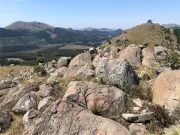
Serpentinite is common in altered oceanic lithosphere and tectonically emplaced mantle fragments. It occurs in ophiolite complexes, subduction-zone mélanges, major faults, and ultramafic massifs. Well-known occurrences include California’s Coast Ranges and Franciscan Complex, the Oman ophiolite, and portions of Alpine and Appalachian ultramafic belts. In the field, serpentinite can occur adjacent to metabasalt, gabbro, peridotite, or metamorphic rocks, but these associations require geological mapping rather than visual identification alone.
Serpentinite can influence slope stability and engineering behavior because weak, sheared zones and weathering products may develop along fractures. It also produces chemically distinctive soils that can support specialized vegetation; however, engineering properties and soil chemistry vary substantially between localities.
How to Identify Serpentinite in the Field
- Check the setting: Look for an ultramafic body, ophiolite, fault zone, or mapped serpentinized peridotite.
- Inspect fresh and weathered surfaces: Note green-black mottling, fine-grained massive texture, veins, and rusty weathering.
- Look for relict grains: Dark pyroxene or spinel relics may remain; a hand lens can help but is not conclusive.
- Use magnetism cautiously: Magnetite-rich serpentinite may attract a magnet, but many samples do not, and other rocks can be magnetic.
- Confirm with mineralogy: Thin-section petrography, Raman spectroscopy, or X-ray diffraction can identify serpentine minerals and distinguish look-alikes.
Safety: Some serpentinite contains chrysotile or other asbestos-form minerals. Do not crush, grind, saw, dry-brush, or generate dust from an unknown fibrous specimen. Visual inspection alone cannot establish that a sample is asbestos-free.
Serpentinite vs. Similar Rocks
| Rock | Key distinction |
|---|---|
| Peridotite | Original ultramafic igneous rock with abundant olivine/pyroxene; may be partly serpentinized |
| Soapstone / steatite | Talc-rich and typically much softer; may develop through further alteration |
| Greenstone / metabasalt | Typically altered basaltic rock; often contains chlorite, epidote, and actinolite |
| Marble | Carbonate-rich and commonly reacts with dilute acid on a fresh calcite surface; serpentinite generally does not |
| Nephrite jade | Dominated by tightly intergrown amphiboles; unusually tough, but visual similarities can mislead |
A small drop of dilute hydrochloric acid may help identify calcite-rich veins, but vein reaction does not mean the entire rock is marble. Laboratory testing is the reliable way to resolve uncertain mineral assemblages.
Geological Significance
Serpentinization transfers water into the oceanic lithosphere and modifies its density, strength, magnetic properties, and seismic velocities. Hydrated ultramafic rocks can transport water into subduction systems; dehydration at greater depth contributes to fluid circulation and metamorphic reactions. Serpentinization may also generate hydrogen, a chemical energy source of interest in studies of deep subsurface microbial ecosystems. The exact contribution depends on temperature, fluid chemistry, and available iron-bearing minerals.
Frequently Asked Questions
Is serpentinite an igneous or metamorphic rock?
It is generally classified as a metamorphic or hydrothermally altered rock formed from an ultramafic igneous precursor.
Is serpentinite always green?
No. It may be dark gray, blackish, brown-weathering, or various shades of green.
Does serpentinite contain asbestos?
Some does, particularly where chrysotile or other asbestos-form minerals occur. Not every serpentinite contains asbestos, and testing is required to assess a particular sample.
Can serpentinite be magnetic?
Yes. Magnetite formed during alteration can make it magnetic, but a weak response does not rule out serpentinite.
How is serpentinite different from serpentine?
Serpentinite is the rock; serpentine is a mineral group that makes up much of the rock.
Scientific Sources and Image Credits
- Coleman (1971), Petrologic and geophysical nature of serpentinites, USGS bibliographic record
- USGS Professional Paper 1016, Ultramafic and Associated Rocks
- Serpentinization and Ni–Cr mineralization study, Resource Geology
- Featured photo: Pelex, polished serpentinite from Dobšiná, Slovakia, Wikimedia Commons, CC BY-SA 3.0.