
























Marine fossils, carbonate rocks, submarine volcanic structures and fragments of oceanic lithosphere preserve evidence of seas and oceans that no longer occupy their original locations. These records occur in mountain belts, continental interiors, road cuts and coastal cliffs because plate motion, uplift, erosion and changing sea levels continually reshape the planet. The ten indicators below range from individual fossils to entire tectonic rock assemblages. Each has a different geological significance, and some require independent evidence before a marine interpretation is justified.
How Geologists Recognize Ancient Marine Environments
Geologists reconstruct paleoenvironments by combining fossils, sedimentary structures, mineralogy and stratigraphic context. Marine fossils establish the habitat of an organism; sedimentary facies describe the conditions under which a deposit formed; tectonic structures explain how rocks moved after formation. These lines of evidence complement rather than replace one another. A former shallow sea over a continent is not necessarily a former oceanic plate. Distinguishing the two requires attention to the original substrate and regional geology.
1. Ammonite Fossils
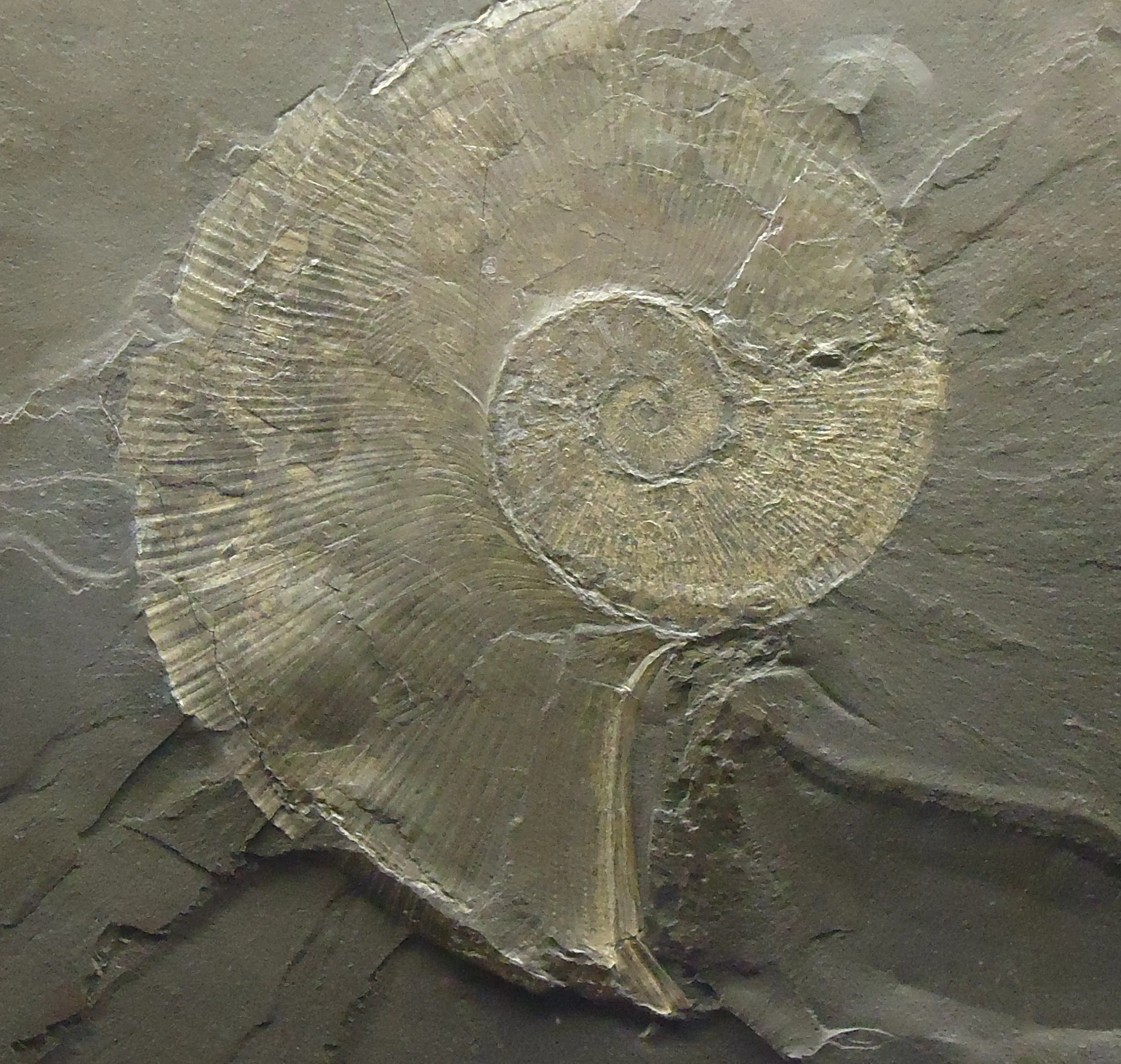
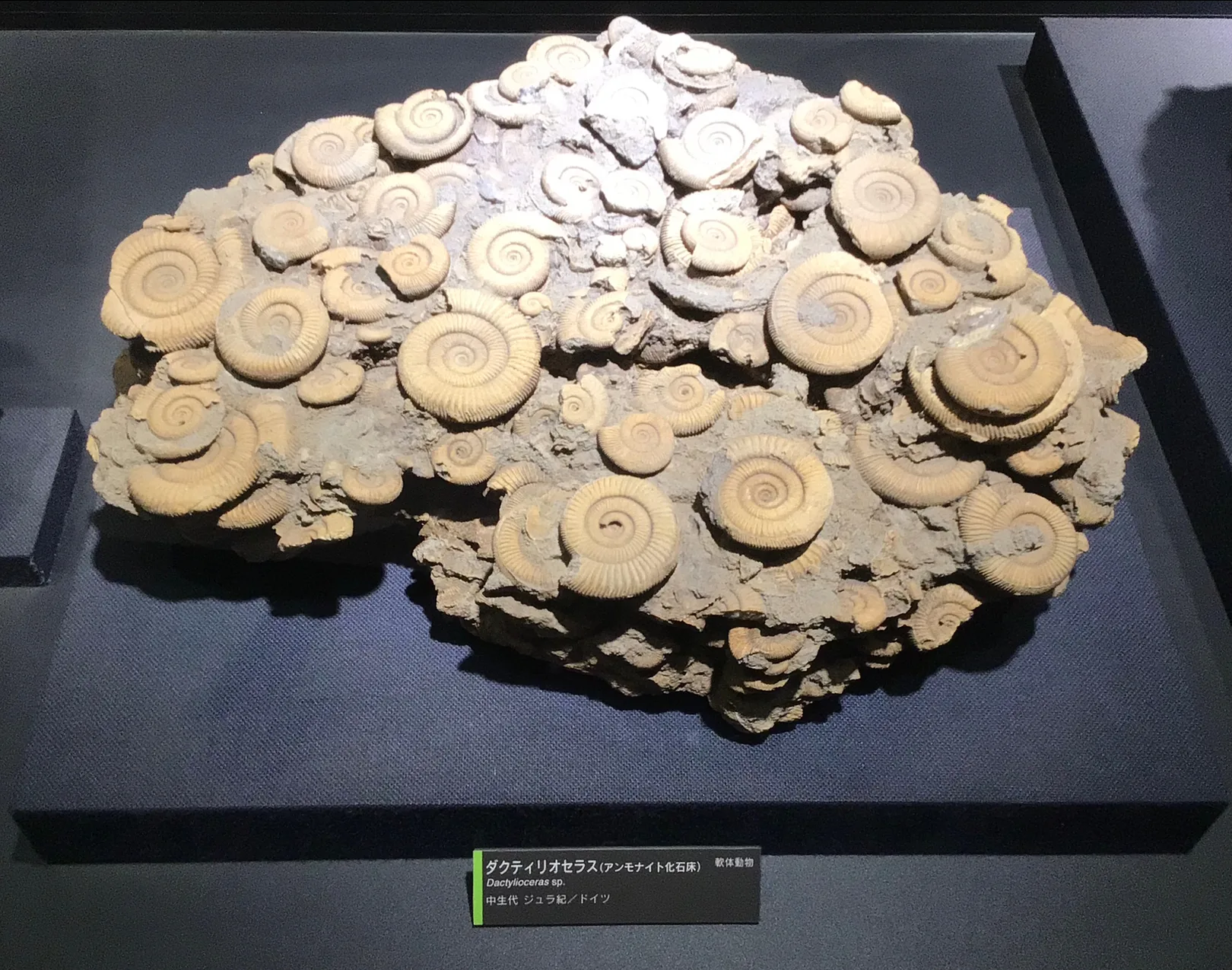
Ammonites were marine cephalopods whose chambered shells are especially abundant in Mesozoic strata. Their coiled outlines, ribs and complex sutures can survive in limestone, shale and concretions long after the original shells dissolve. Because many ammonite species evolved rapidly and were geographically widespread, identified species can also help correlate sedimentary layers and constrain their ages. An ammonite preserved within an undisturbed bed strongly supports a marine origin for the fossil-bearing sediment. However, a loose specimen may have been transported by rivers, glaciers or people; its present location alone does not establish where the ancient sea stood. Fossil shells can also be reworked into younger beds. Examine the surrounding sediment, other fossils and stratigraphic relationships before interpreting the depositional environment. See our guide to ammonites.
2. Trilobites in Paleozoic Rocks
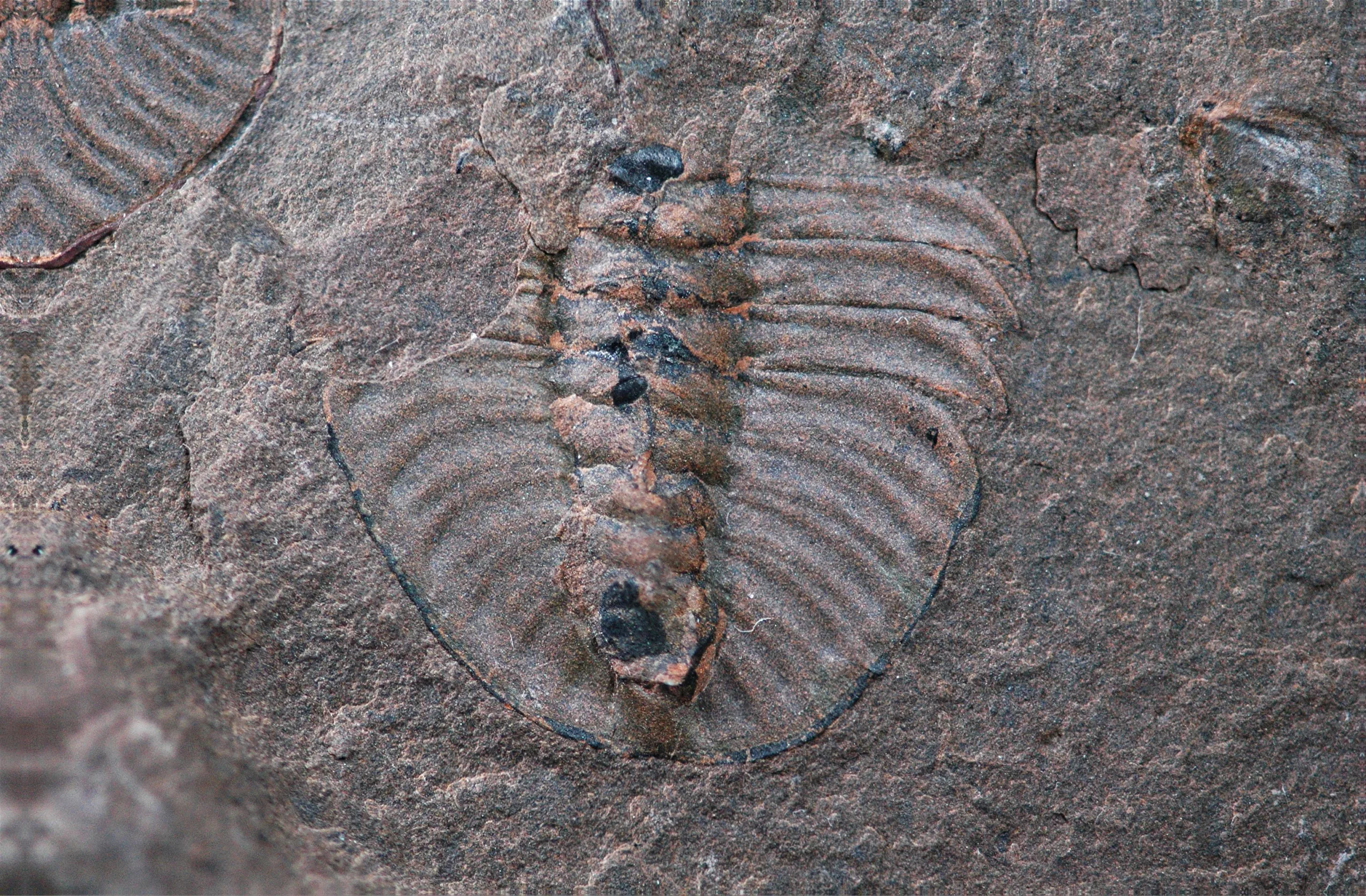
Trilobites were extinct marine arthropods that inhabited seafloor and water-column environments from the Cambrian to the end of the Permian. Their segmented exoskeletons frequently occur as isolated head shields, tail shields and molted fragments rather than complete individuals. The Burgess Shale example illustrates how fine-grained marine sediments can preserve recognizable skeletal material. Trilobite assemblages may indicate differences in water depth, substrate or oxygen conditions, although individual species had distinct ecological preferences. A trilobite in its original stratigraphic setting is powerful evidence of marine conditions, but it does not automatically identify an exact depth or shoreline position. Paleontologists compare the fossils with associated brachiopods, sedimentary fabrics and regional stratigraphy. This combination is more reliable than judging the environment from the color or grain size of the host rock alone.
3. Shell-Rich Coquina
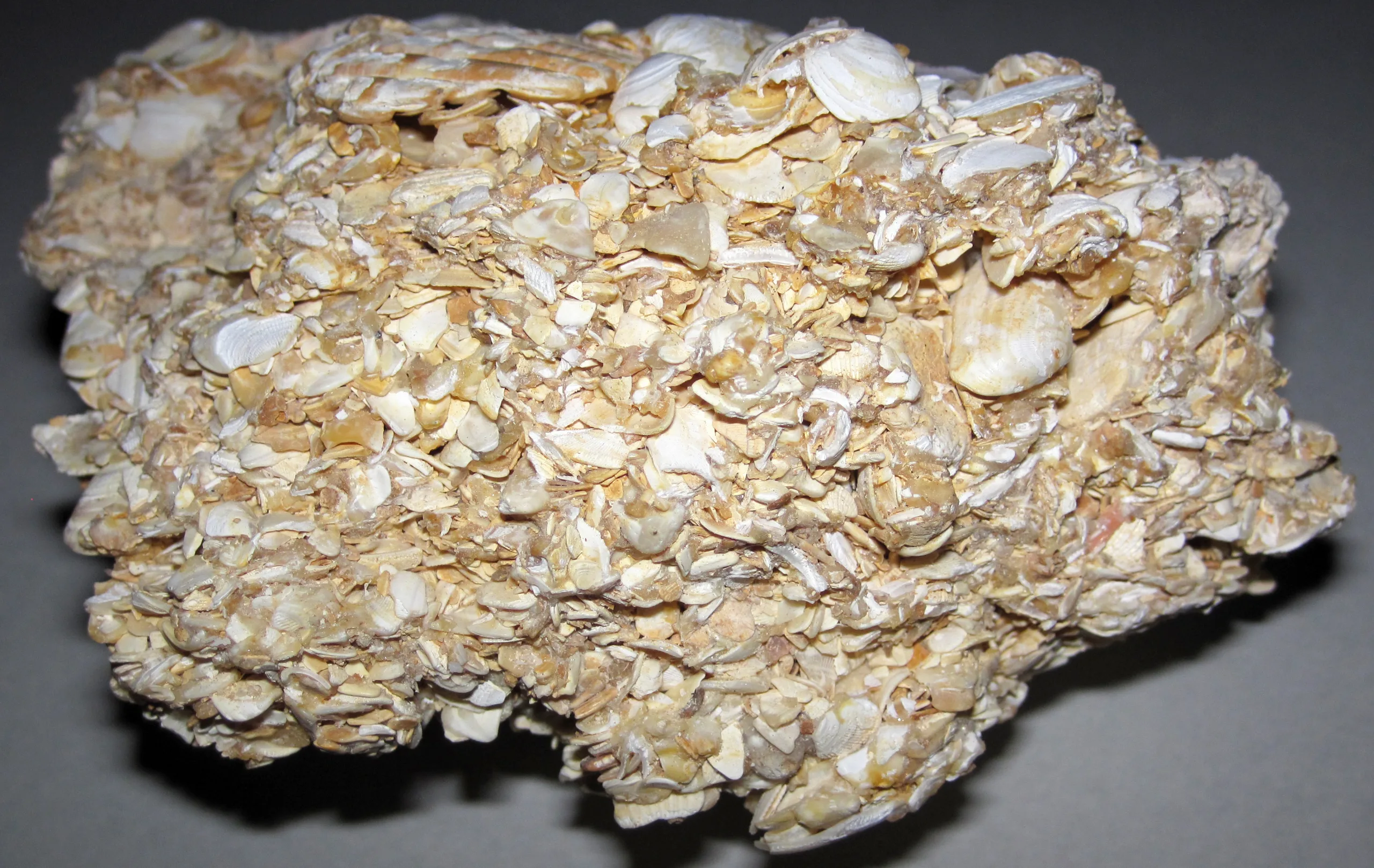
Coquina is a porous carbonate sedimentary rock dominated by shell fragments that have accumulated and become cemented together. In coastal marine settings, waves and currents can concentrate broken shells on beaches, tidal channels and shallow seafloors. The fragments commonly retain curved surfaces, growth lines and other recognizable biological features. Their degree of abrasion and sorting provides clues to transport and reworking. Marine shell identifications, especially when accompanied by marine trace fossils and tidal structures, help establish a former coastline or shallow sea. However, shell debris can also accumulate in freshwater lakes, and some marine carbonate deposits form offshore. Coquina texture by itself is not sufficient to establish salinity or water depth. The strongest interpretation combines fossil identification, sedimentary structures and the vertical succession of neighboring rock beds.
4. Chalk Deposits and Marine Microfossils
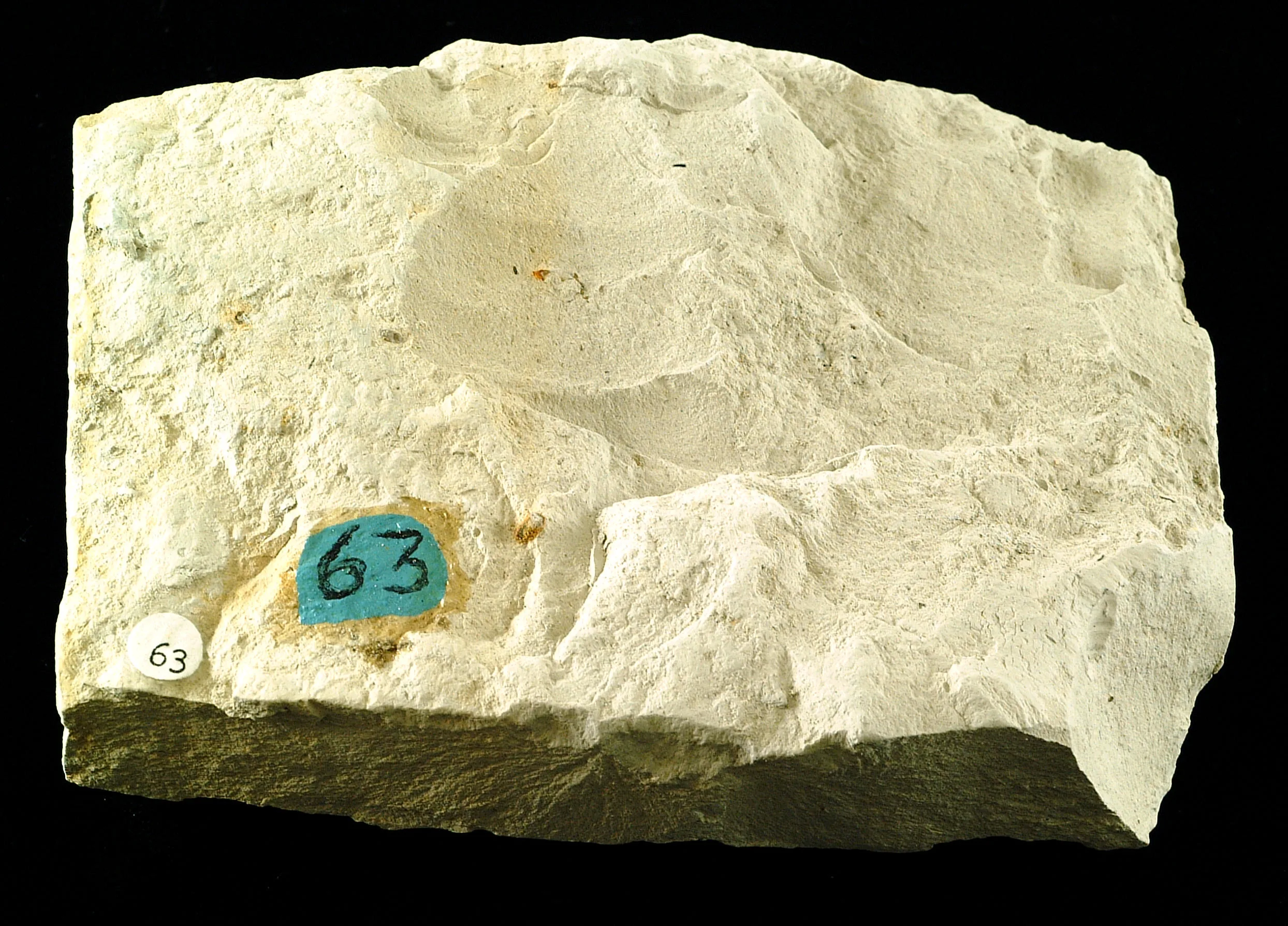
Chalk is a fine-grained, commonly pale carbonate rock made largely of microscopic calcite plates (coccoliths) produced by marine planktonic algae; foraminiferal tests and other skeletal particles may also contribute. Many marine chalk deposits accumulated when the production of carbonate particles in surface waters exceeded their dissolution and dilution by land-derived sediment. The Selma Chalk of Mississippi is an example of a Cretaceous marine carbonate unit. Under a microscope, calcareous microfossils such as foraminifera can provide evidence of ancient marine habitats and help establish stratigraphic ages. White color and softness are useful preliminary observations but cannot prove an oceanic origin: other carbonate rocks and pale sediments may look similar. Petrography, fossil assemblages and geochemical measurements can separate marine chalk from superficially similar materials. Marine chalk now exposed on land records changes in sea level, sedimentation and the later geological evolution of its basin.
5. Marine Bivalve Borings in Ancient Rock Surfaces
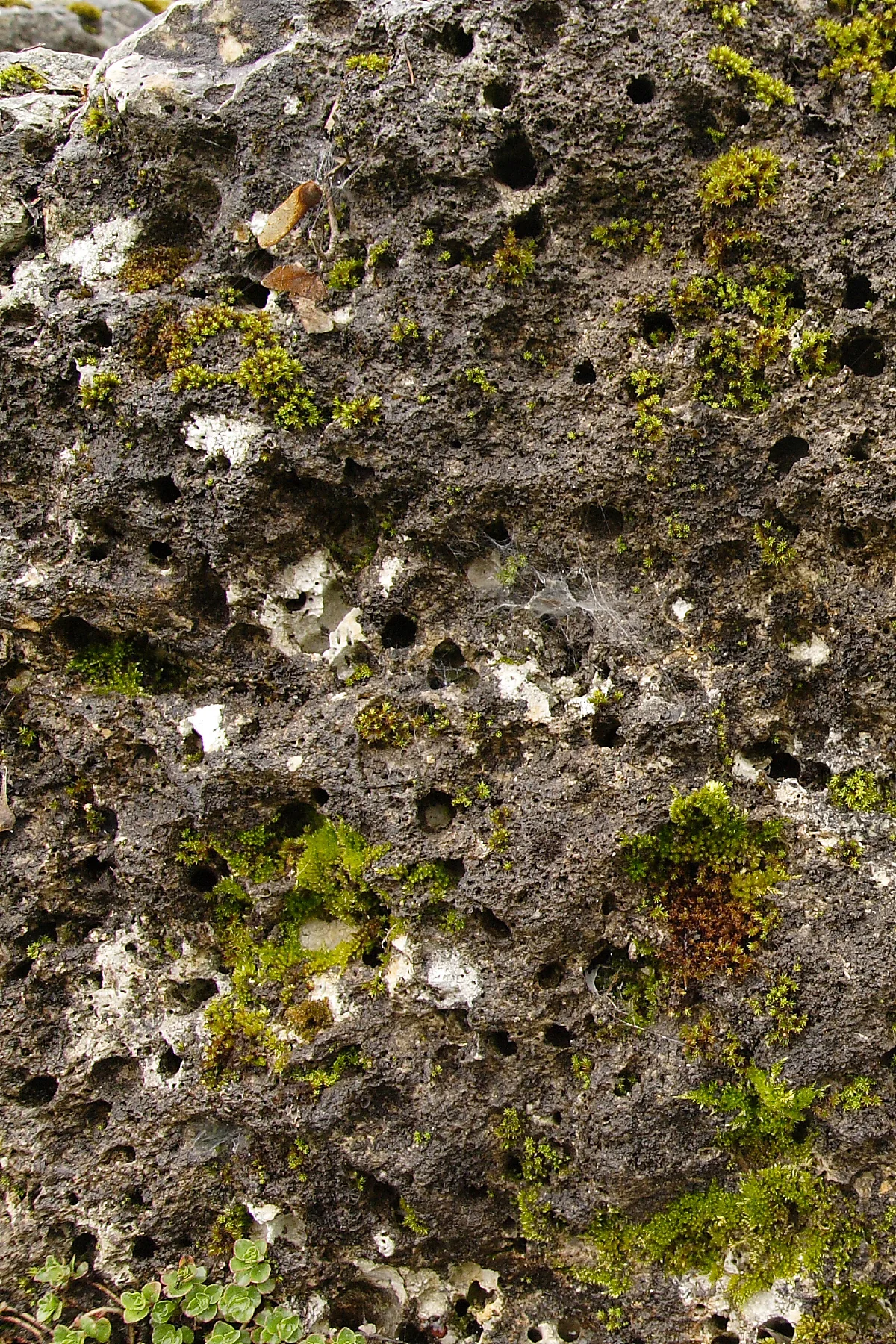
Some marine bivalves excavate cavities in firm or lithified substrates, leaving distinctive holes that can survive after the animals disappear. At the Heldenfinger Kliff in Germany, preserved borings provide evidence that marine organisms once occupied a rock surface far from today’s coastline. Such traces are particularly useful because they record biological activity on the substrate itself rather than simply the presence of transported shells. Geologists inspect the shapes, orientations, distribution and cross-cutting relationships of the cavities to distinguish biological borings from solution pits, weathering holes and modern drilling marks. When accompanied by marine sediments or identifiable fossil shells, these structures may help locate former rocky shores or submerged hardgrounds. A single rounded hole is not conclusive; the repeated morphology and geological context are essential to recognizing a genuine marine trace fossil.
6. Fossil Corals and Ancient Carbonate Communities
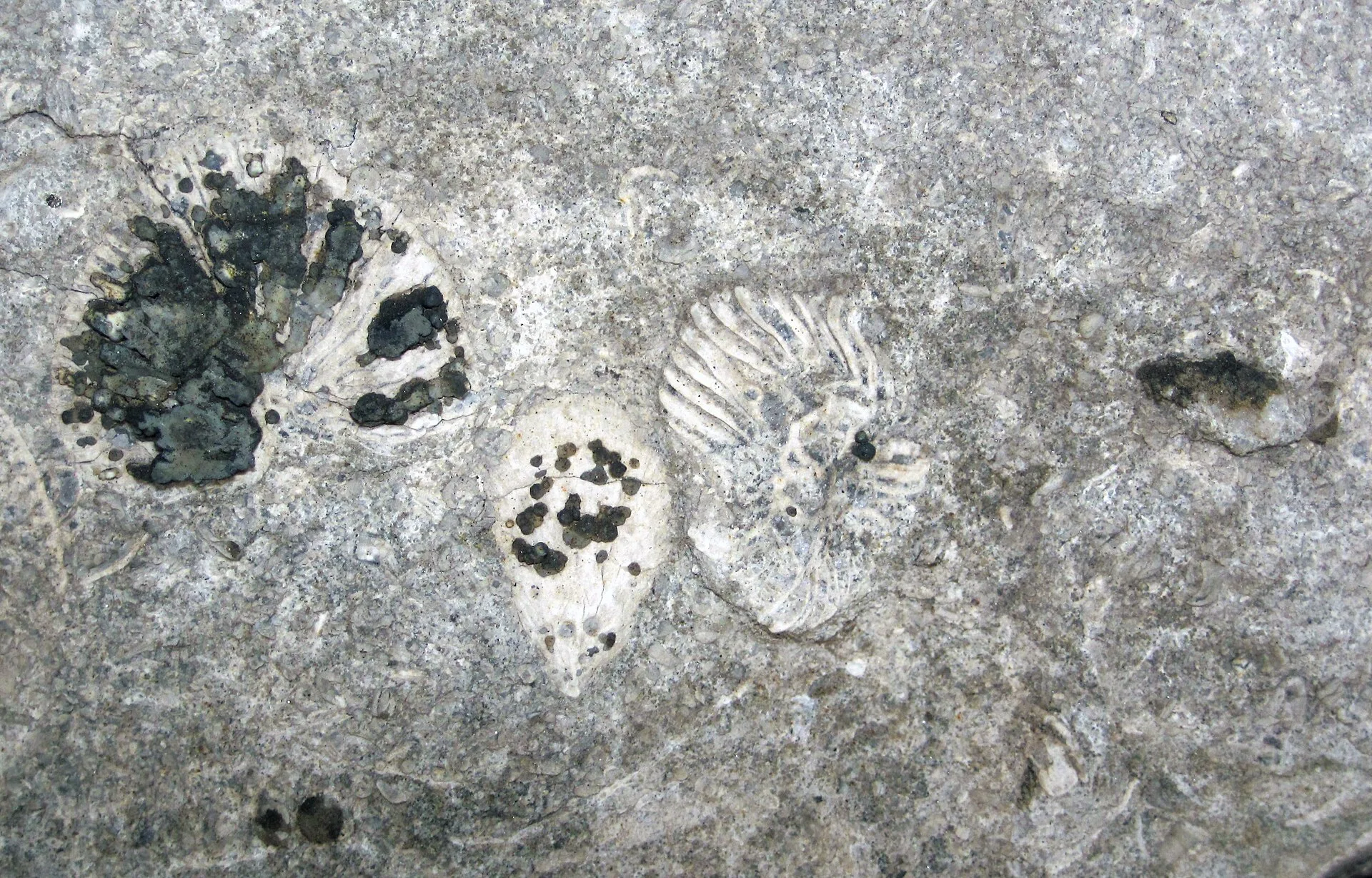
Corals preserved in sedimentary limestone document marine biological communities that existed long before the continents acquired their modern shapes. Devonian rugose and tabulate corals were important components of Paleozoic carbonate ecosystems. Their skeletal structures can remain visible in hand specimens, polished surfaces and thin sections. Colonial corals associated with stromatoporoids, crinoids and other organisms may help identify ancient carbonate platforms and reef-related environments. A coral-bearing limestone is not necessarily an intact reef: broken or isolated coral skeletons can be transported and deposited elsewhere. Some modern corals also inhabit cold, deep water, so coral presence alone should not be equated with a tropical shallow sea. Growth positions, reef-framework fabrics, associated species and sedimentary facies are required to reconstruct the original environment accurately.
7. Pillow Basalts from Underwater Volcanism
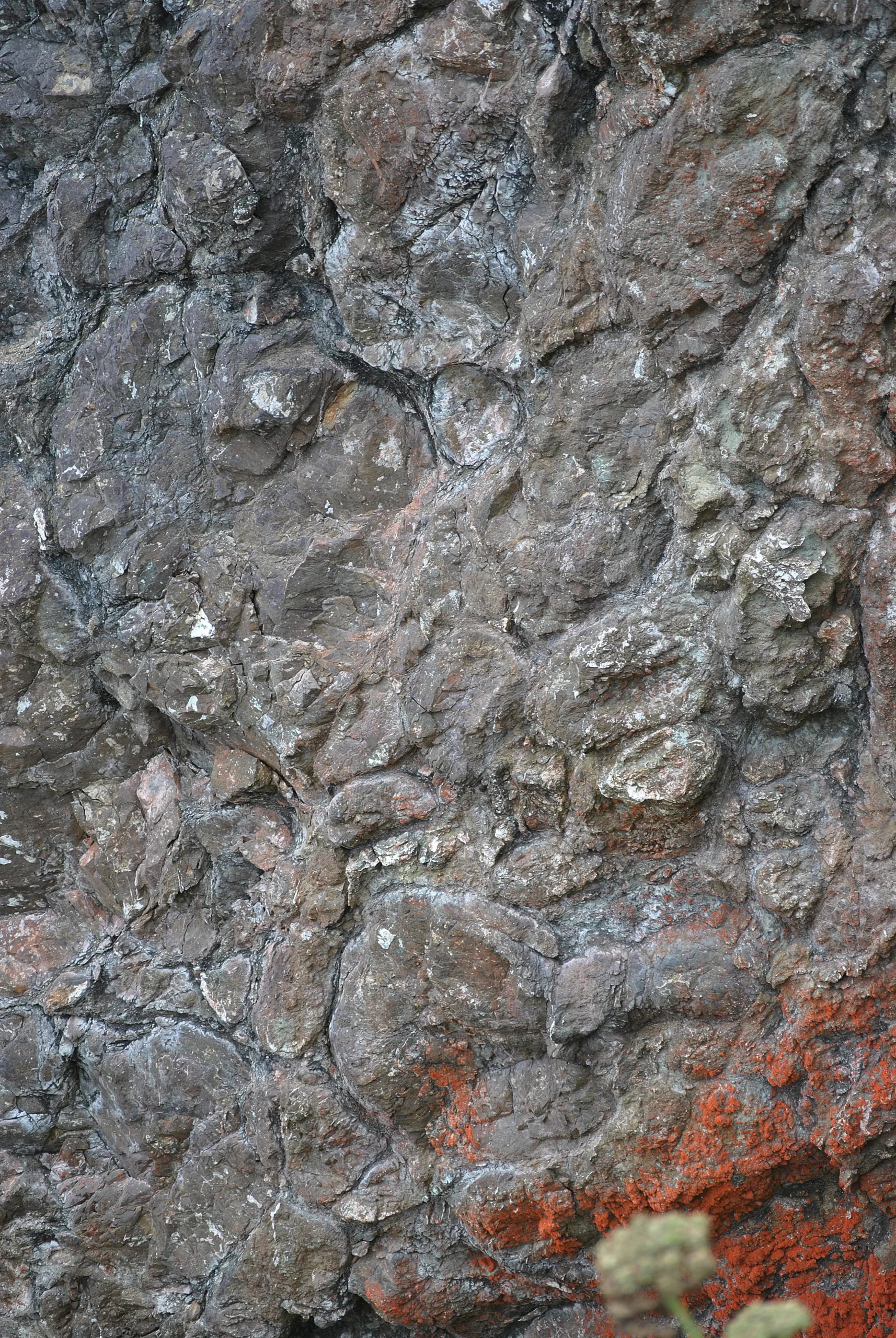
When basaltic lava erupts into water, rapid cooling can generate a solid outer crust while still-molten lava inflates rounded lobes. Successive lobes form the distinctive pillow structures preserved in many ancient submarine volcanic rocks. Chilled margins, radial fractures and sediment occupying the spaces between pillows provide additional clues to their origin. The Marin Headlands in California expose pillow basalt associated with fragments of an ancient oceanic plate. This rock association preserves evidence of volcanism that occurred underwater and was subsequently incorporated into the continental margin. Pillow structures can also form in lakes or beneath ice, however; their presence alone does not demonstrate seawater. Associated radiolarian chert, marine fossils, basalt geochemistry and regional tectonic relationships help distinguish oceanic pillow basalt from other subaqueous volcanic deposits.
8. Ophiolites: Fragments of Ancient Oceanic Lithosphere
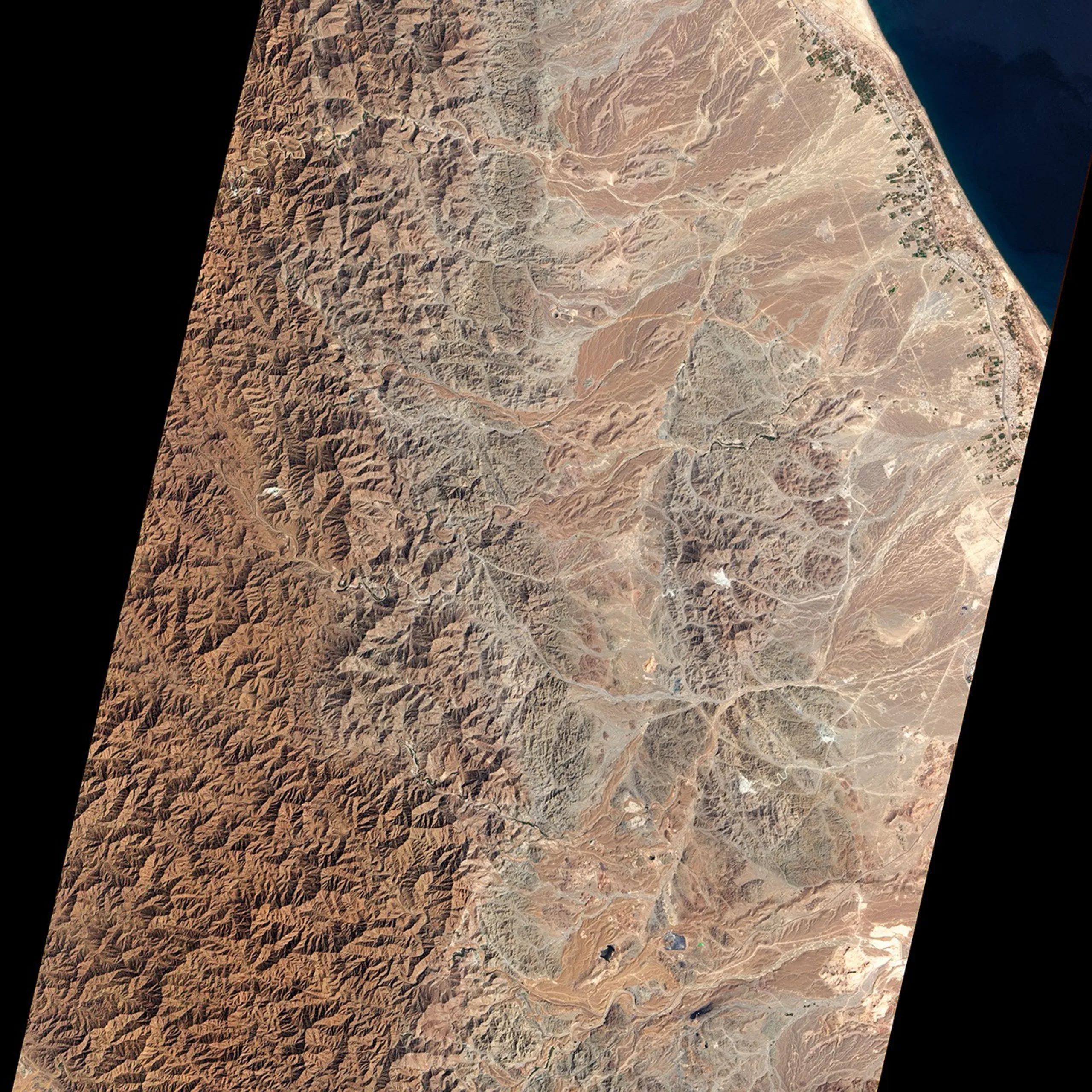
Ophiolites are tectonically exposed assemblages that preserve portions of former oceanic crust and upper mantle. A relatively complete sequence may contain mantle peridotite, layered or massive gabbro, sheeted dikes, submarine basalt and overlying sedimentary rocks. The Semail Ophiolite in Oman provides a large-scale example of oceanic lithosphere exposed on land. Such rock associations offer an opportunity to examine processes that otherwise occur kilometers below the ocean surface. Ophiolites may originate at spreading ridges or in subduction-related settings, and many have been disrupted during emplacement. An isolated serpentinite or gabbro body does not establish the existence of an ancient ocean by itself. Structural mapping, mineral chemistry, radiometric dating and relationships among the rock units are needed. Related example: the Tablelands of Gros Morne.
9. Marine Turbidites and Deep-Water Sedimentary Sequences
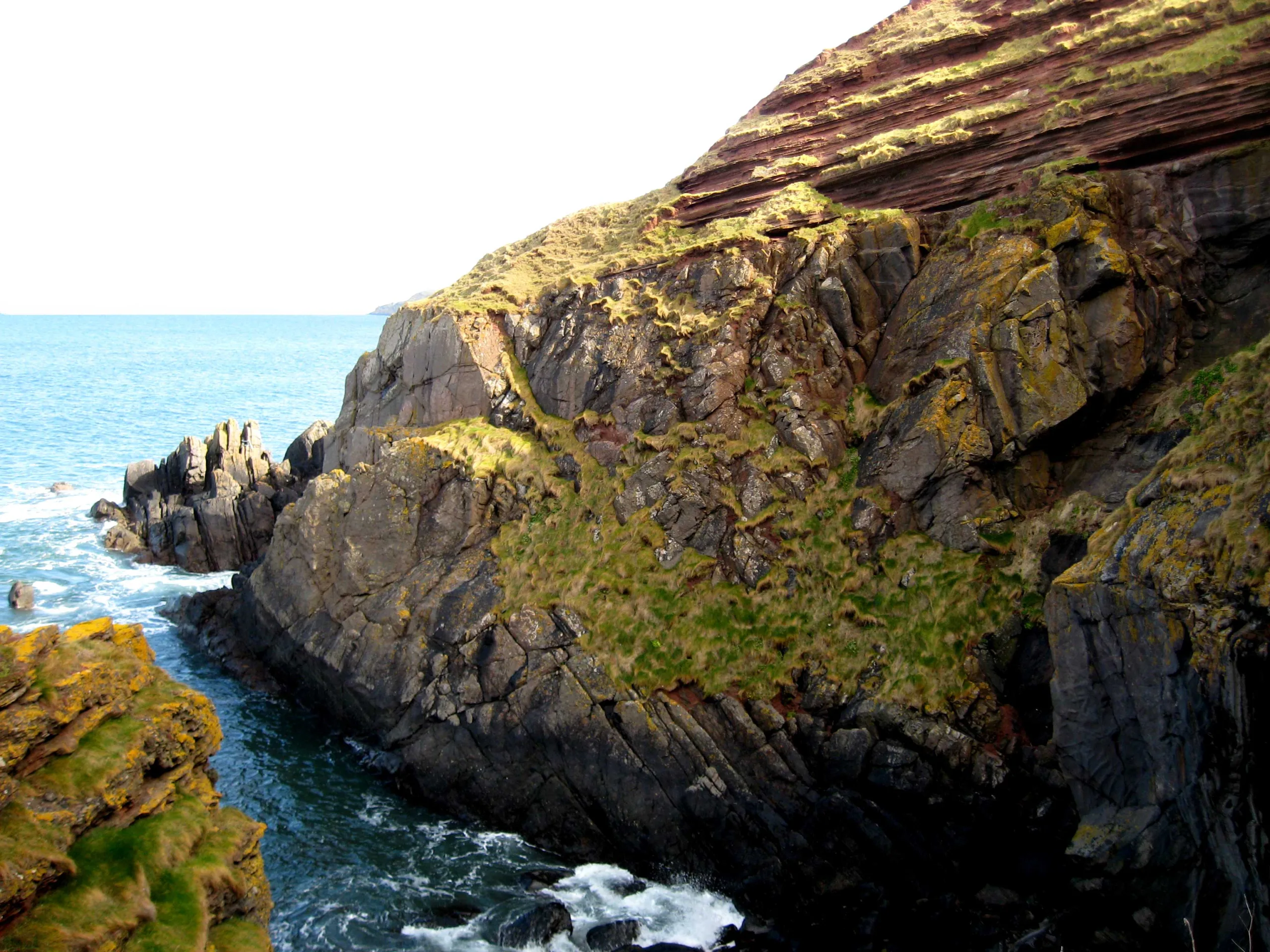
Turbidites form when sediment-laden density currents carry particles downslope and deposit them as flow energy decreases. Individual beds may display normal grading from coarser sand at the base to finer silt and mud near the top, together with laminations or sole marks. At Siccar Point in Scotland, steeply inclined Silurian greywackes record an older marine depositional system, whereas the overlying Devonian red beds represent a later continental setting. The angular unconformity separates these different chapters of Earth history. Marine turbidites can preserve evidence of sediment delivery to continental slopes, submarine fans or ocean trenches. Yet density currents also occur in lakes, and not all graded beds are turbidites. Marine fossils, basin geometry, sediment provenance and repeated facies associations establish the interpretation more securely than grading alone.
10. Radiolarian Chert from Ancient Ocean Floors
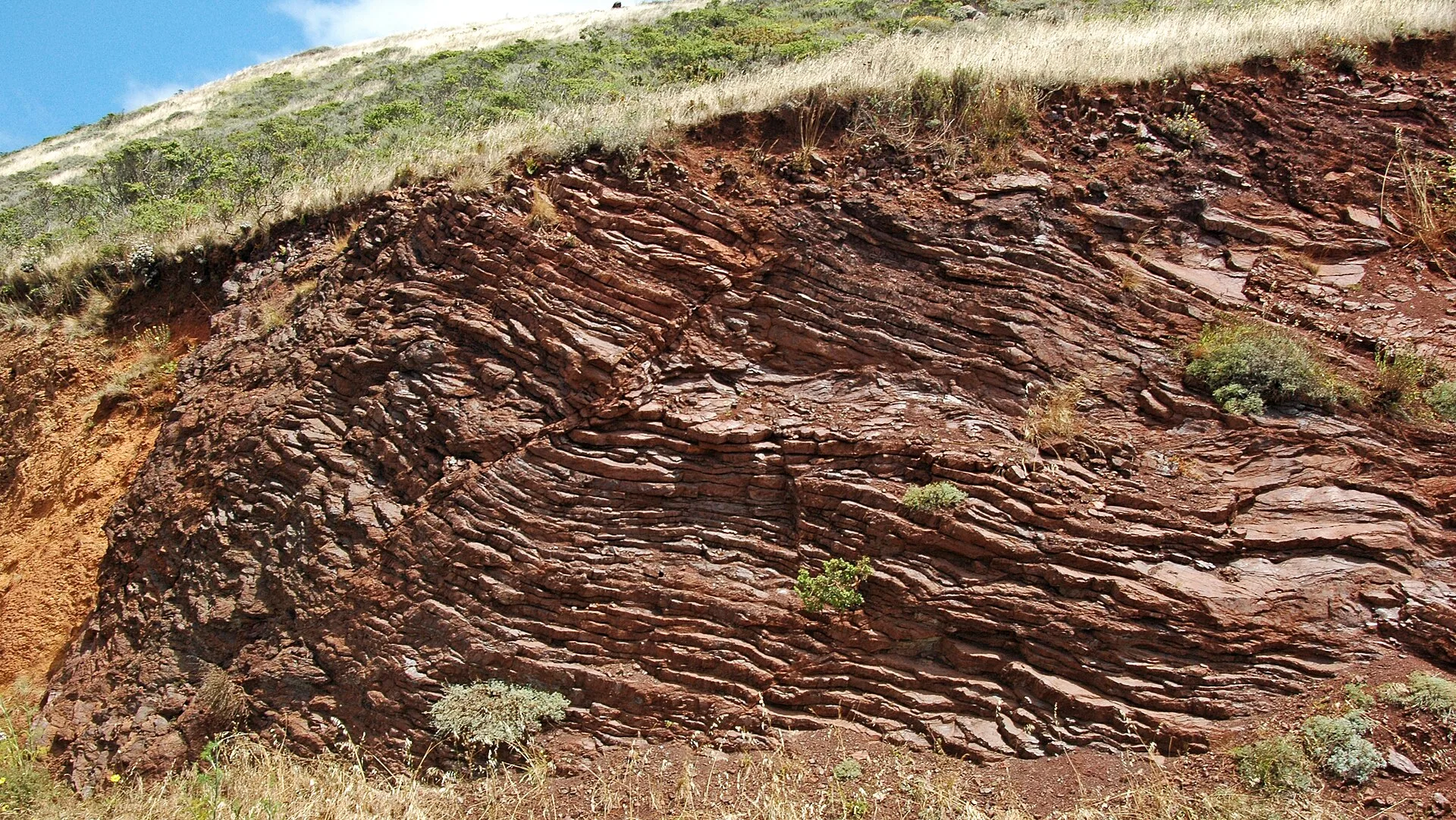
Radiolarians are microscopic planktonic organisms, many of which produce siliceous skeletons. Their remains can settle onto the ocean floor and contribute to silica-rich sediment that becomes chert during burial and diagenesis. In the Franciscan Complex of California, deformed ribbon chert preserves part of a Mesozoic deep-marine sedimentary record subsequently incorporated into the continental margin. Its thin beds, hard siliceous character and preserved radiolarian microfossils help geologists reconstruct former ocean-floor environments. Folding and faulting record later deformation, not the original geometry of the seafloor. Chert can also originate through replacement of carbonate or other silica-producing processes, so hardness and red color are not diagnostic of radiolarian origin. Microscopic examination and stratigraphic associations with submarine basalt provide particularly valuable supporting evidence.
Quick Comparison: What Each Indicator Reveals
| Indicator | Typical interpretation | Important limitation |
|---|---|---|
| Ammonites and trilobites | Marine biological habitats | Reworked fossils may be older than their host sediment |
| Coquina and coral limestone | Shell accumulation or marine carbonate communities | Confirm organisms and distinguish transported debris |
| Chalk and radiolarian chert | Marine plankton-derived sediment | Confirm microscopic fossils and sedimentary context |
| Bivalve borings | Former marine substrate or rocky shore | Distinguish biological traces from weathering |
| Pillow basalt | Subaqueous volcanism | Freshwater examples also exist |
| Ophiolites | Former oceanic lithosphere | Interpret the full assemblage and tectonic setting |
| Marine turbidites | Sediment gravity flows in marine basins | Similar deposits occur in lakes |
Frequently Asked Questions
Why are marine fossils found high in mountains? Marine sediments can be lithified, folded and uplifted during mountain building. Fossils in those sediments preserve evidence of the original marine environment, even though the rocks are now above sea level.
Does every limestone indicate an ancient ocean? No. Limestone forms in marine and nonmarine environments. Fossils, textures and stratigraphic relationships distinguish those settings.
Can a single fossil prove an entire ocean existed? A correctly identified, in-place marine fossil supports marine deposition at its locality. Reconstructing the size and boundaries of an ancient ocean requires regional evidence from many sites.
For practical field identification, compare these examples with fossil-bearing rocks and pseudofossils that resemble biological remains.
References
- British Geological Survey – Geology of London, Chalk Group composition.
- Moores and Jackson (1974), Ophiolites and oceanic crust, Nature / USGS.
- USGS, Mechanism of Formation of Pillow Lava.
- National Park Service, Golden Gate geology resources.
- National Park Service – Marin Headlands geological setting
- NASA Earth Observatory, satellite observations of Earth’s geological features.
Featured image: Multiple ammonite fossils preserved in an ancient marine sedimentary rock. Photo: Awazishima, CC BY-SA 4.0. Image resized or converted for web use.