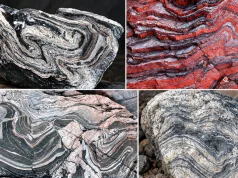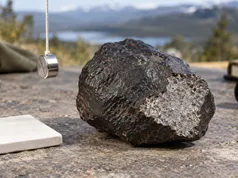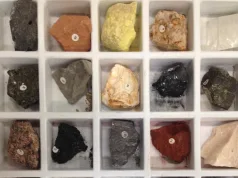
























Gneiss and schist are foliated metamorphic rocks distinguished primarily by texture. Gneiss commonly displays alternating mineral-rich bands, whereas schist exhibits schistosity defined by aligned platy or elongate minerals. Mineral composition, parent rock and metamorphic conditions vary, so color or grain size alone cannot reliably separate them.
Gneiss: Compositional Banding
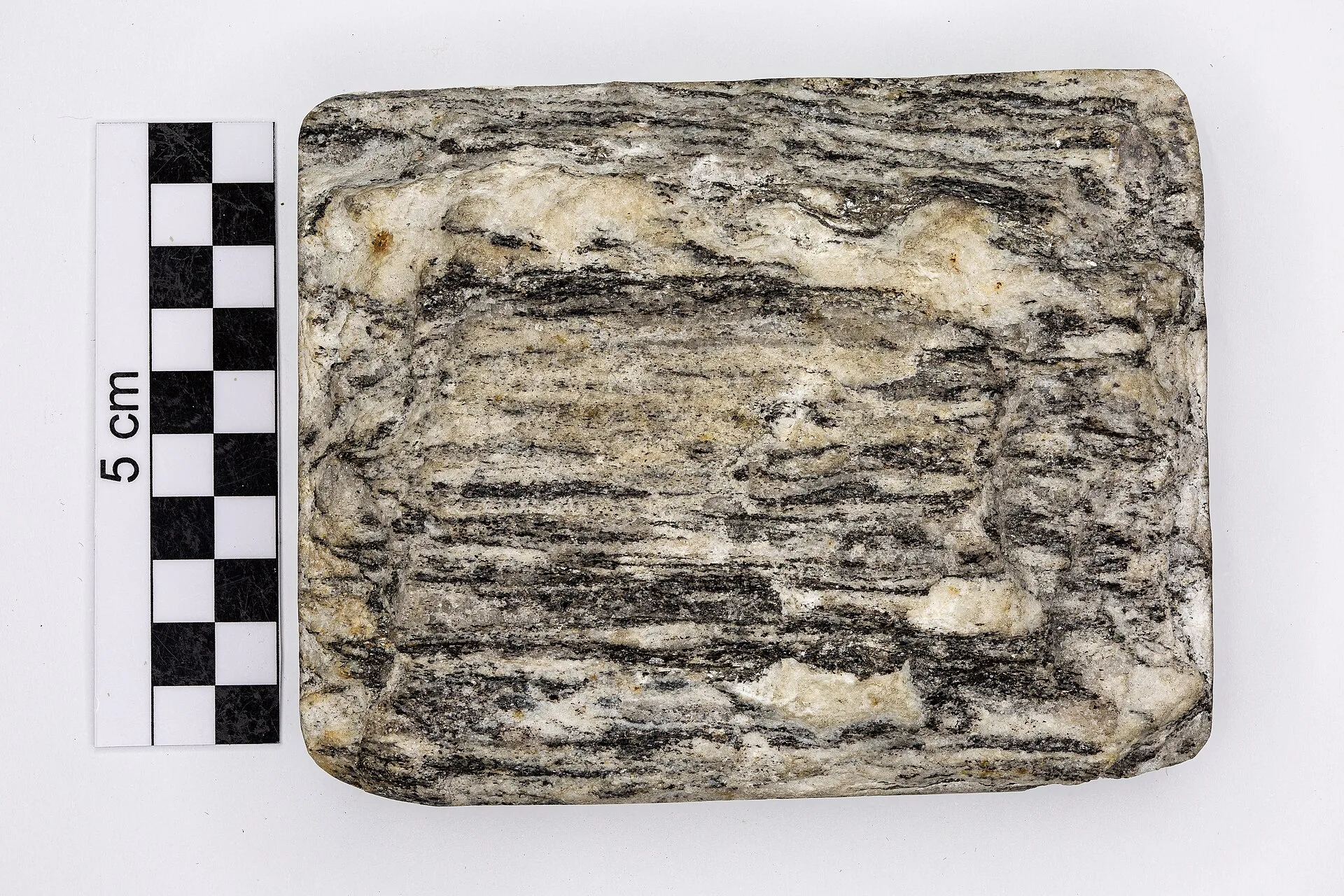
Gneiss commonly contains quartz and feldspar-rich light domains and darker domains rich in biotite, amphibole or other ferromagnesian minerals. Banding can develop through mineral segregation and deformation or partly inherit layering from the protolith. Some gneisses have irregular or discontinuous bands. Orthogneiss derives from igneous rocks; paragneiss derives from sedimentary rocks. See Gneiss.
Schist: Schistosity and Aligned Minerals
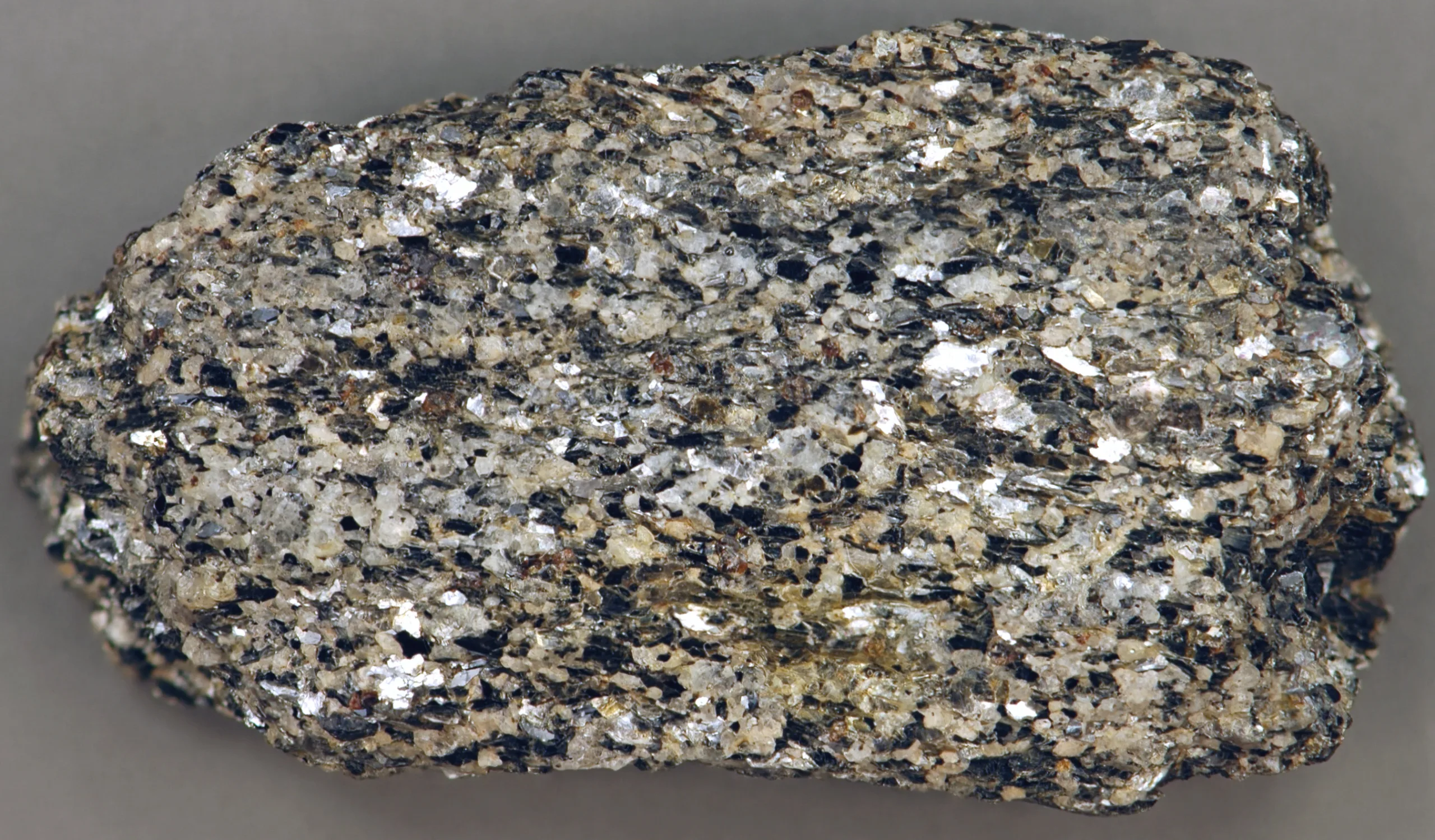
Schist is characterized by a well-developed planar fabric formed by aligned visible minerals, often mica, chlorite, amphibole or talc. Quartz, feldspar, garnet, staurolite and kyanite may also occur depending on the protolith and metamorphic conditions. Mica-rich schist commonly splits along foliation, although not every schist is shiny or easily split. See Schist.
Gneiss and Schist: Comparison
| Property | Gneiss | Schist |
|---|---|---|
| Diagnostic fabric | Gneissic banding | Schistosity |
| Typical appearance | Alternating mineral-rich domains | Aligned visible platy or elongate minerals |
| Splitting | Commonly less fissile | Often splits along foliation |
| Common minerals | Quartz, feldspar, biotite, amphibole | Mica, quartz, chlorite, garnet; varies |
| Metamorphic grade | Often medium to high | Commonly medium; variable |
Metamorphic Grade and Formation
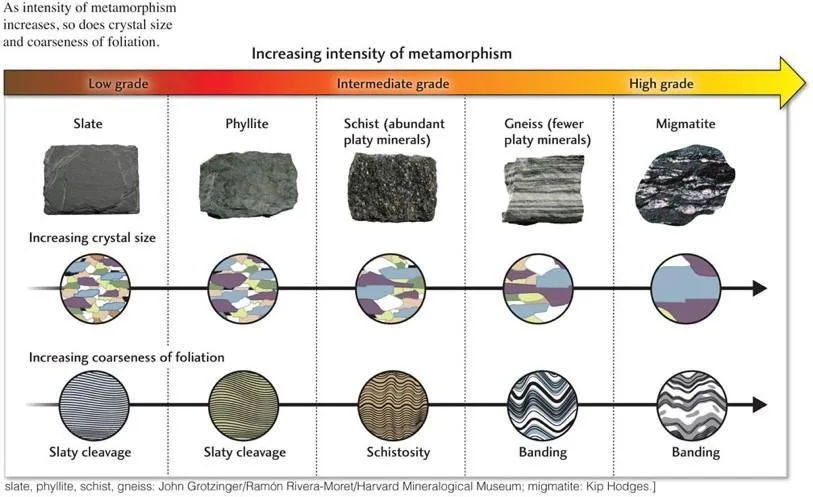
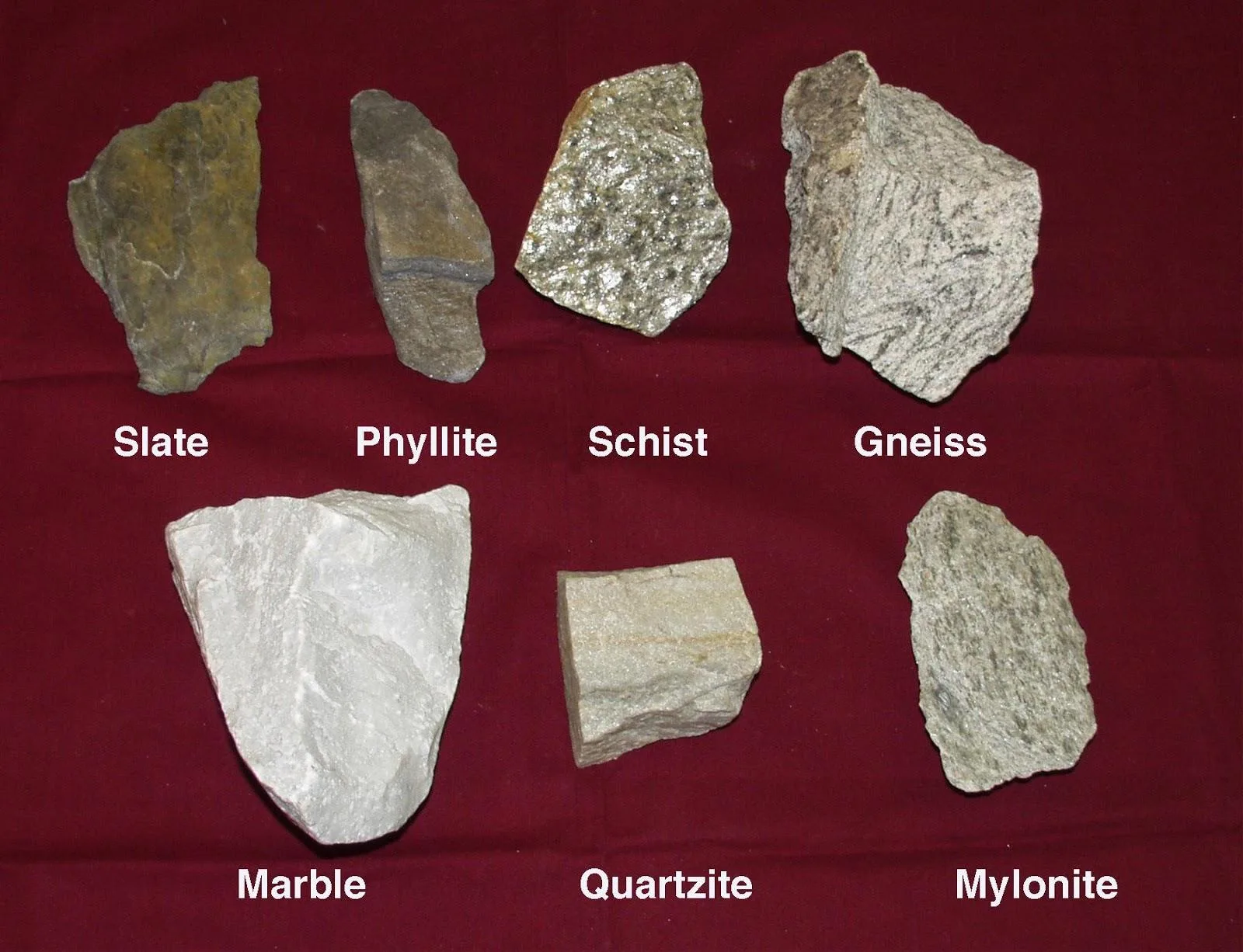
In suitable clay-rich sedimentary protoliths, increasing metamorphic grade may lead from slate to phyllite, schist and eventually gneiss. This is an educational simplification, not a universal sequence. Granite can become orthogneiss without a schist stage, and schistosity may persist at high grade. Mineral assemblages are more useful for constraining pressure and temperature than rock names alone. See index minerals and metamorphic grades.
Field Identification: Practical Steps
1. Look at a fresh surface: weathering can conceal mineral alignment or create misleading stains.
2. Observe the foliation: distinct quartz-feldspar-rich and dark mineral-rich domains suggest gneiss; closely aligned mica or elongate mineral grains suggest schist.
3. Examine a surface across the foliation: looking only along the foliation plane can hide banding.
4. Identify visible minerals: a hand lens helps distinguish shiny mica flakes from quartz and feldspar. Garnet is not unique to either rock.
5. Record uncertainty: transitional rocks may be termed schistose gneiss or gneissic schist in field descriptions; petrography can clarify their fabric and composition.
Frequently Asked Questions
Is gneiss always harder than schist?
No. Rock strength depends on mineralogy, fabric, fractures and weathering. Gneiss may be less fissile, but hardness is not a reliable diagnostic test.
Can schist become gneiss?
Some schists develop gneissic fabrics during further metamorphism and deformation, but not all gneisses form from schist.
Can gneiss contain mica?
Yes. Biotite and muscovite may occur in gneiss. Their presence alone does not identify schist.
Scientific References
Physical Geology — Classification of Metamorphic Rocks
British Geological Survey — Metamorphic Rocks