
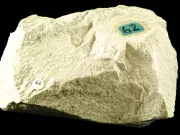
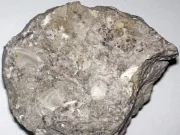























The Dunham classification groups carbonate sedimentary rocks according to their depositional texture, particularly whether original carbonate mud is present, whether grains or matrix support the fabric, and whether organisms bound components during deposition. Robert J. Dunham introduced the system in 1962. Embry and Klovan (1971) extended it to coarse-grained and reef-associated carbonate rocks. It is widely used in carbonate sedimentology, petroleum geology and petrographic descriptions.
Interactive Dunham Classification Calculator
Choose observed depositional characteristics. For coarse material, identify whether grains larger than 2 mm support the fabric.
Dunham Classification Chart
| Rock name | Depositional criteria |
|---|---|
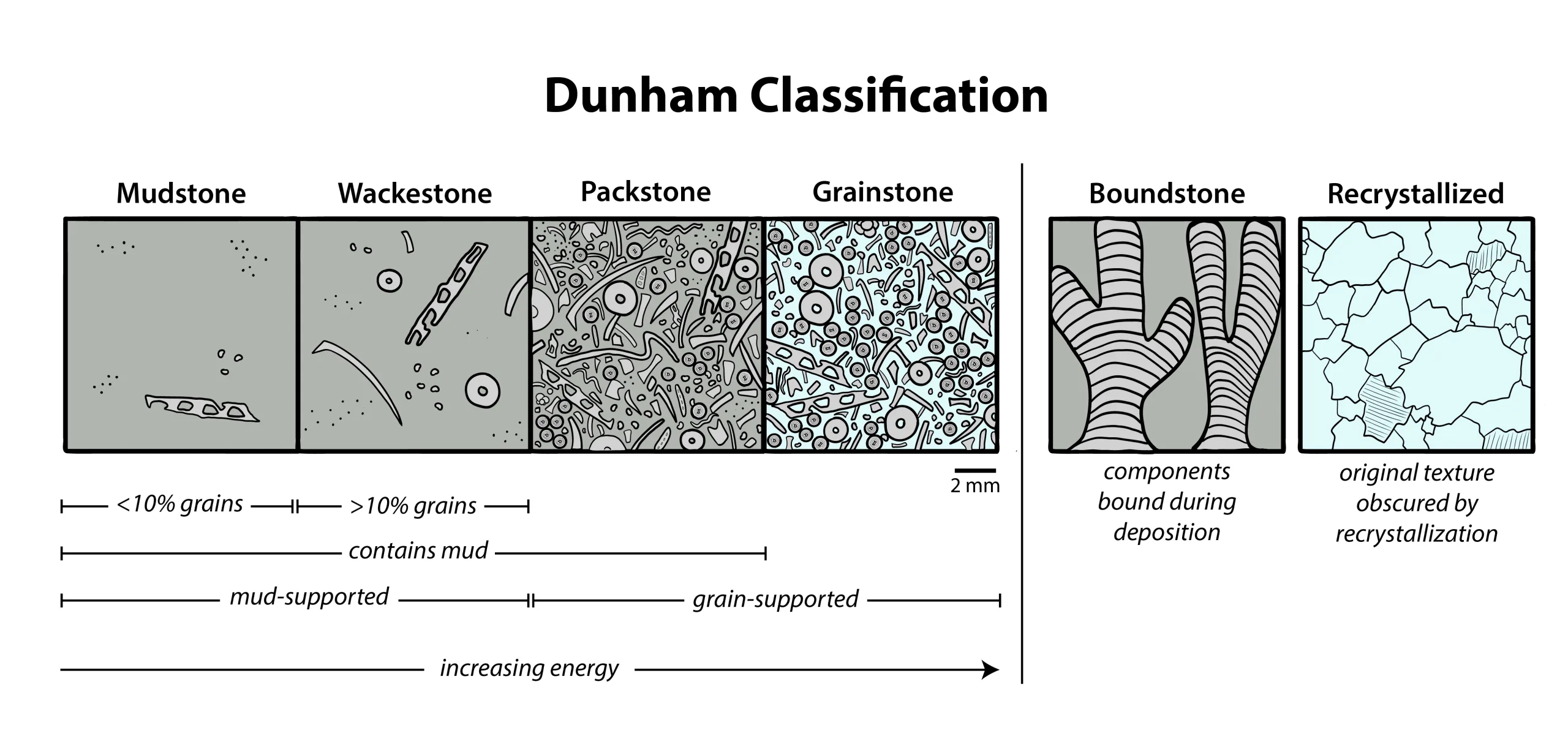
| Mudstone | Mud-supported; less than 10% grains |
| Wackestone | Mud-supported; more than 10% grains |
| Packstone | Grain-supported; depositional mud present |
| Grainstone | Grain-supported; depositional mud absent |
| Boundstone | Original components bound during deposition |
| Crystalline carbonate | Depositional texture no longer recognizable |
| Floatstone (modified) | More than 10% grains >2 mm; matrix-supported |
| Rudstone (modified) | More than 10% grains >2 mm; coarse-grain-supported |
At the 10% grain boundary or the 10% coarse-grain boundary, conventions and observational uncertainty should be stated. The interactive tool flags these exact boundaries instead of forcing an unqualified name. The original scheme describes carbonate mud as clay- and fine-silt-size material; later carbonate texture schemes use operational grain-size limits. Use a stated consistent convention when counting.
Mudstone and Wackestone
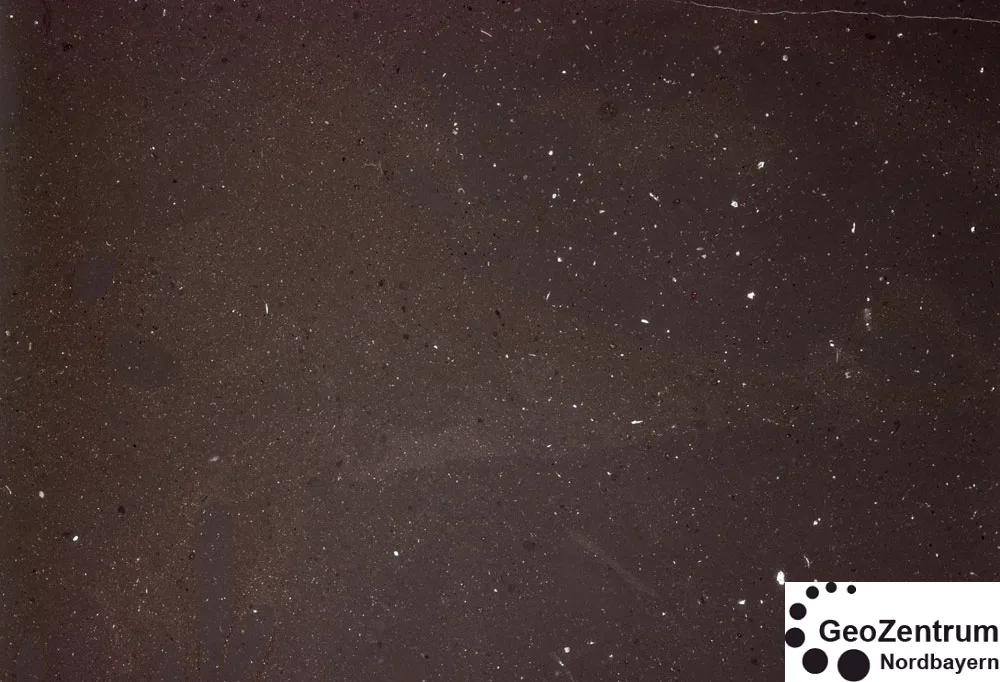
Carbonate mudstone contains predominantly fine carbonate sediment. The grains are isolated or sparse and do not form a supporting framework. A mud-supported rock containing a greater proportion of recognizable grains is a wackestone. Grains may include fragments of shells, foraminifera, ooids or peloids.
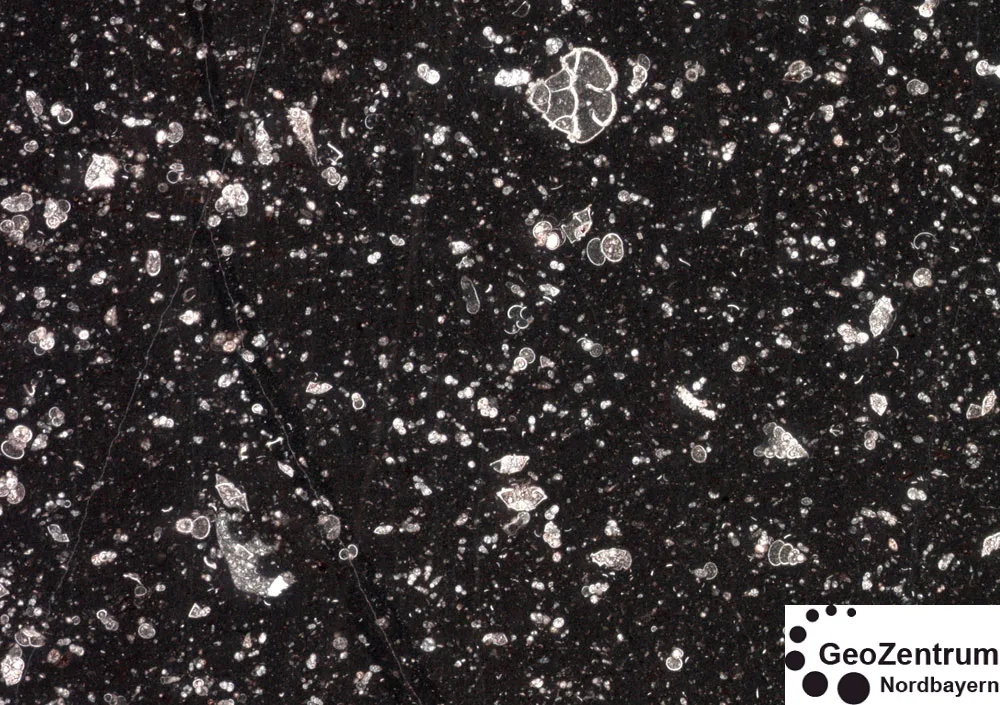
These textures often preserve deposition or accumulation of mud, but they do not uniquely establish water depth or current velocity. Mud can be produced and trapped in diverse environments. The carbonate term mudstone must not be confused with siliciclastic mudrock.
Packstone and Grainstone
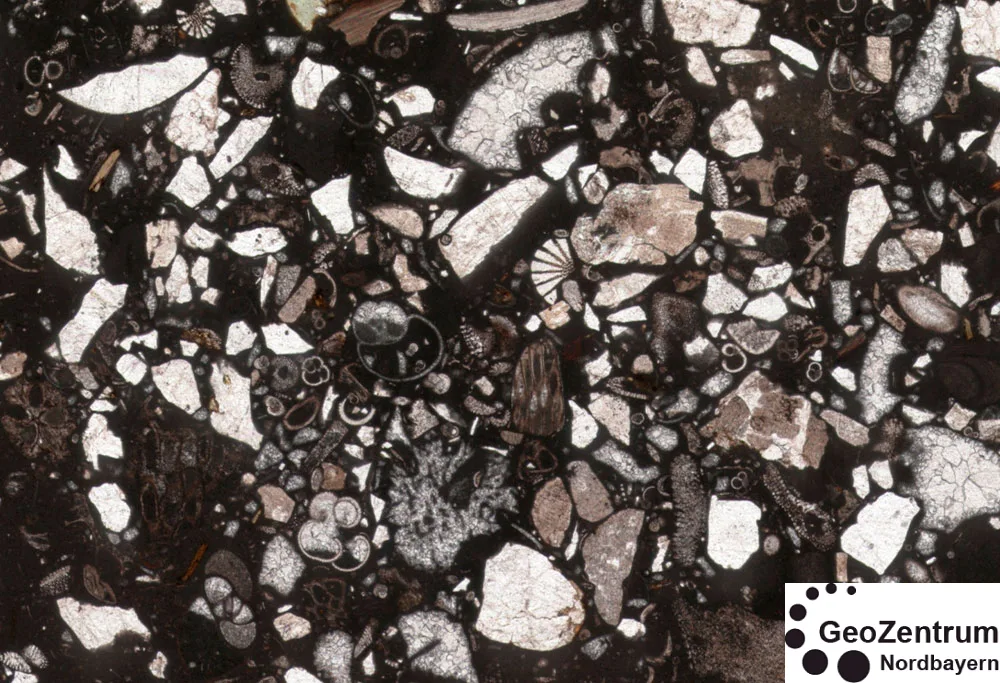
Packstone contains a supporting framework of grains with original mud in the interstices. A grainstone also has a grain-supported fabric but lacks depositional mud. Later sparry calcite cement may fill originally open spaces between grains. Cement is not equivalent to carbonate mud.
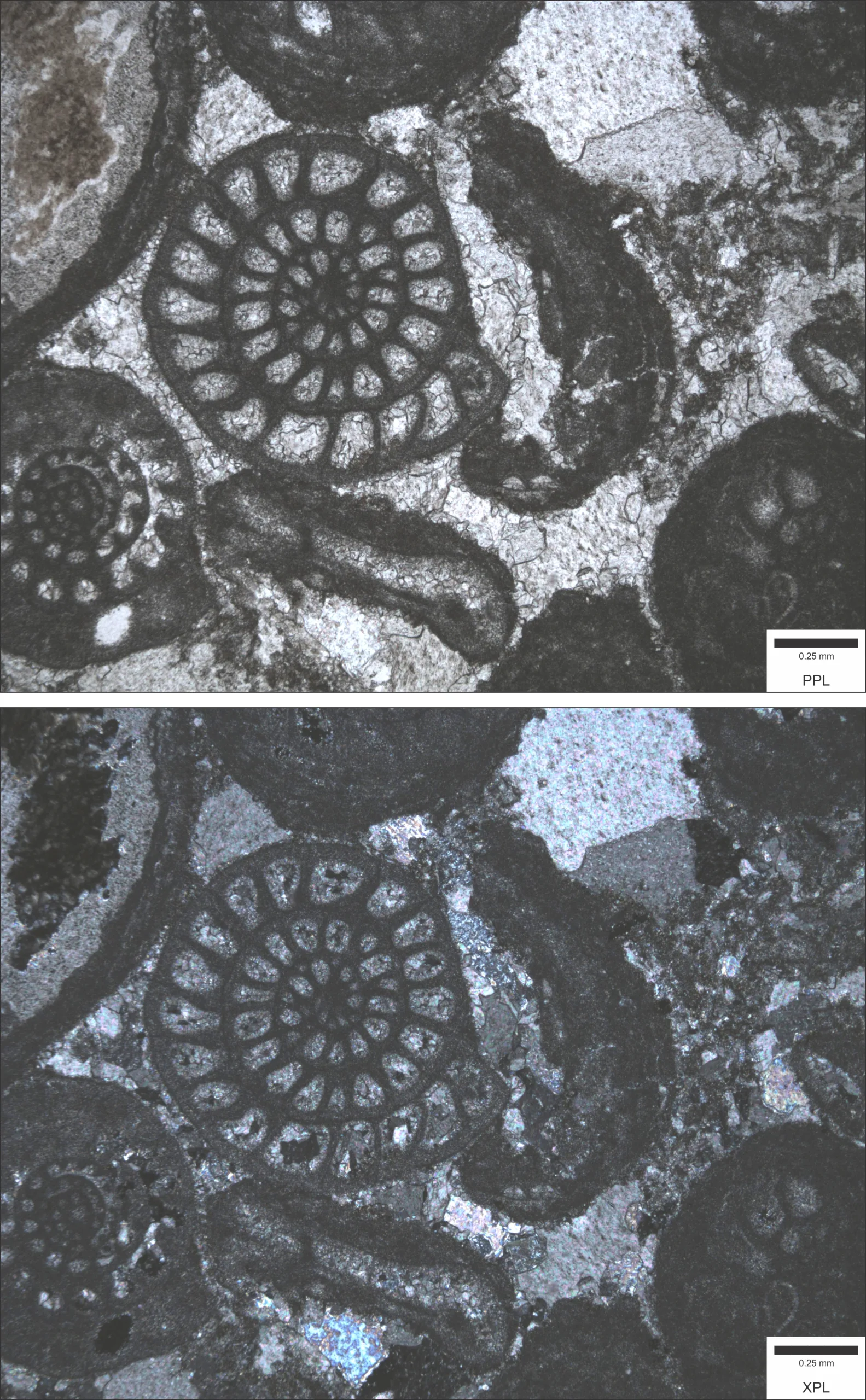
Grain-supported fabrics may reflect winnowing, accumulation of skeletal debris or other depositional processes. Compaction can also modify grain contacts. Always examine preserved depositional relationships rather than inferring texture solely from the current packing of altered crystals.
Embry–Klovan: Floatstone, Rudstone and Reef Textures
The modified scheme separates rocks with more than 10% grains larger than 2 mm. In floatstone, the coarse components lie within a supporting finer matrix. In rudstone, the coarse components support one another. The finer material may itself have a mudstone, wackestone, packstone or grainstone texture, which can be recorded as an additional descriptor.
| Bound carbonate subtype | Role of organisms |
|---|---|
| Bafflestone | Organisms obstruct currents and trap sediment |
| Bindstone | Organisms encrust, bind or stabilize sediment |
| Framestone | Rigid skeletal organisms form an in-place structural framework |
These terms require evidence that organisms influenced accumulation while alive or in place. An isolated coral fragment in a transported skeletal limestone is not evidence of framestone. Reef cavities, internal sediment and multiple generations of cement should be described separately.
How to Use the Classification in Thin Section
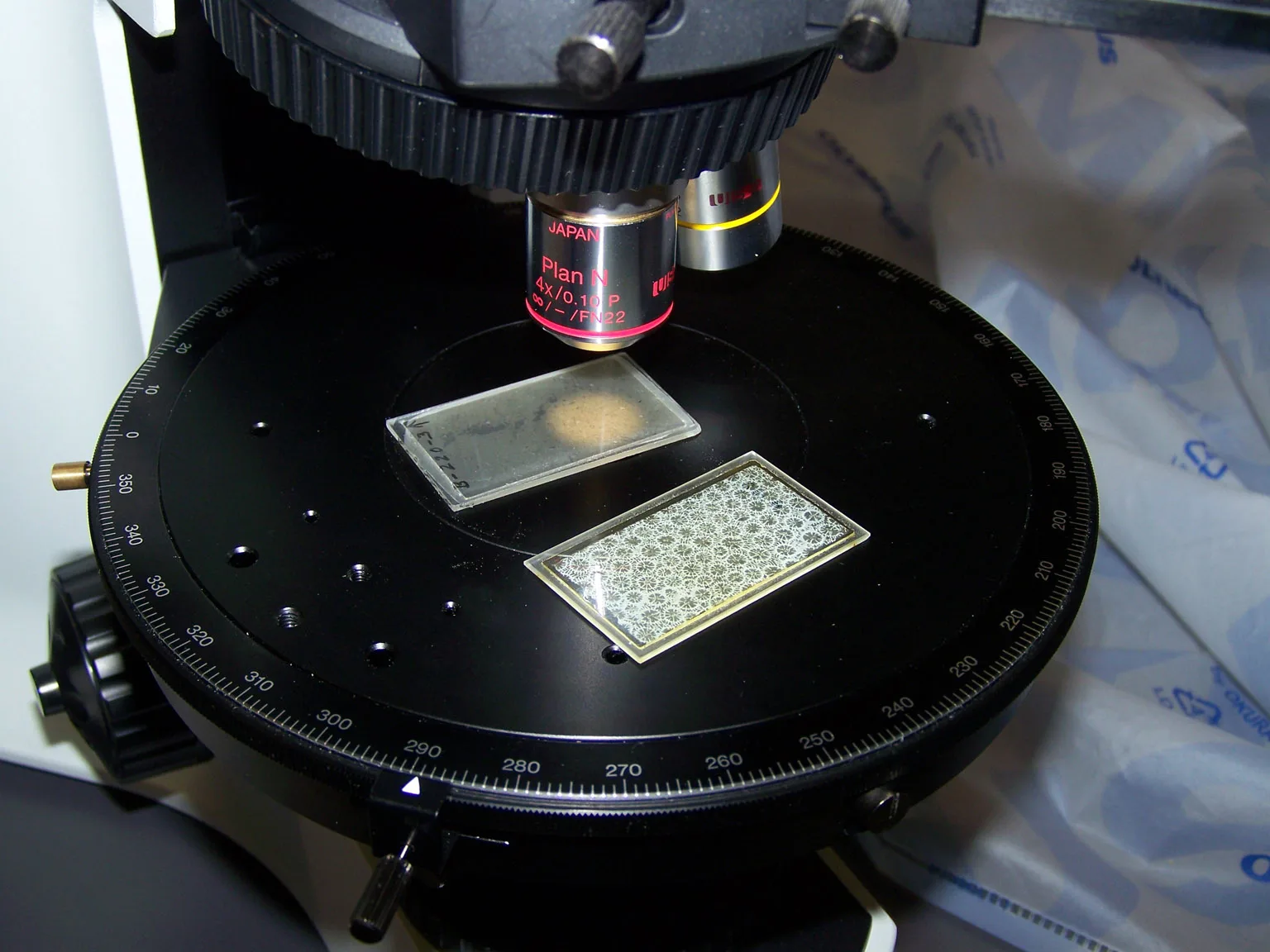
Begin with a fresh hand specimen, polished slab or representative thin section. Recognize skeletal and nonskeletal grains, identify original mud, distinguish depositional support from compaction, and estimate the grain fraction. Thin sections under plane- and crossed-polarized light help separate micrite, sparry cement and replacement crystals. If coarse components are larger than the section, use a larger slab or field observation.
For example, a limestone with approximately 35% skeletal grains, scattered in an original mud matrix, is a wackestone. A similar sample with touching grains and retained mud is a packstone. A rock containing 30% large shell fragments supported by finer sediment is a floatstone under the modified scheme. These hypothetical examples are not measured data from the photographs.
Dunham Versus Folk Classification
| Criterion | Dunham | Folk |
|---|---|---|
| Primary data | Depositional texture and support | Allochem composition and interstitial material |
| Typical name | Skeletal packstone | Biomicrite or another composition-based name |
| Use | Depositional facies and texture | Petrography and carbonate constituents |
The names are complementary, not interchangeable. For example, an ooid grainstone with sparry calcite cement may be described as oosparite in the Folk system. A mud-supported bioclastic wackestone may be biomicrite. A precise conversion requires observations of both texture and constituent proportions.
Limitations and Geological Applications
Diagenetic recrystallization, dolomitization, pressure solution and cementation can obscure original features. If the primary texture cannot be established, use a crystalline carbonate description instead of guessing. Texture can help interpret depositional facies and reservoir heterogeneity, but porosity and permeability also depend on cement, dissolution, fractures and compaction. No rock name alone supplies quantitative engineering or reservoir properties.
Frequently Asked Questions
What is the difference between packstone and grainstone?
Both are grain-supported; packstone contains original mud and grainstone does not.
What is the difference between floatstone and rudstone?
Both contain more than 10% grains larger than 2 mm; support is matrix-based in floatstone and coarse-grain-based in rudstone.
Can Dunham classify a recrystallized limestone?
Only where the original depositional fabric remains recognizable; otherwise describe crystalline carbonate.
Does a grainstone always have high permeability?
No. Cementation, dissolution and fractures strongly affect permeability.
Is the calculator a substitute for thin-section analysis?
No. It organizes observed data and cannot identify texture from an unexamined specimen.
References
Dunham, R.J. (1962). Classification of carbonate rocks according to depositional texture. In: Ham, W.E. (ed.), Classification of Carbonate Rocks, AAPG Memoir 1, 108–121.
Embry, A.F. and Klovan, J.E. (1971). A Late Devonian reef tract on northeastern Banks Island, N.W.T. Bulletin of Canadian Petroleum Geology, 19, 730–781.
Ocean Drilling Program Leg 194 — Lithostratigraphy and sedimentology
CarbonateWorld — Carbonate rock classification terminology
Lokier and Al Junaibi (2016) — The petrographic description of carbonate facies
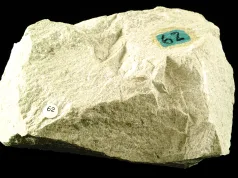
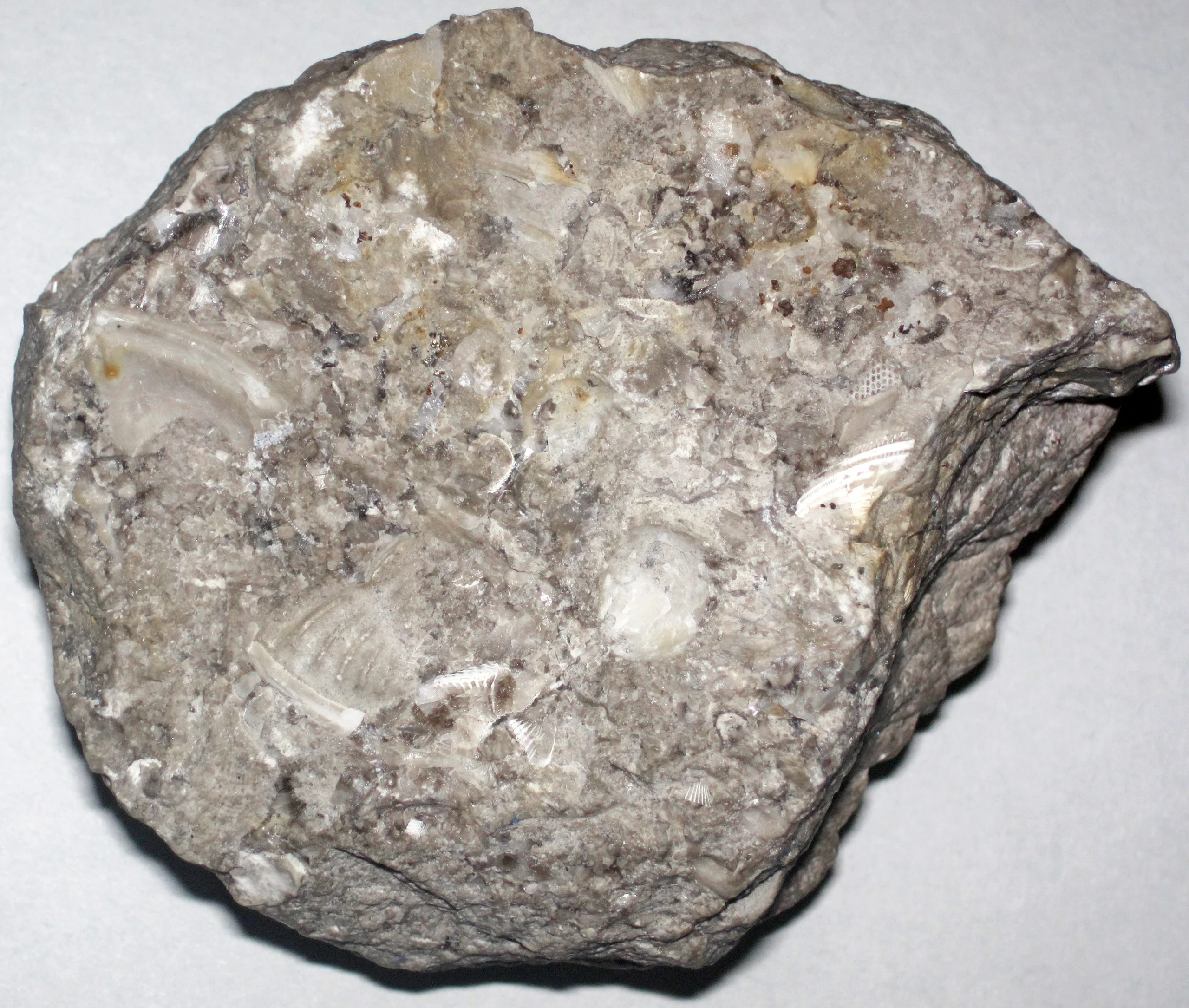
Featured image: fossiliferous limestone, James St. John, Wikimedia Commons, CC BY 2.0.