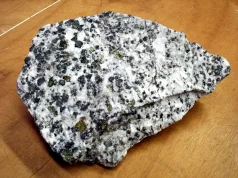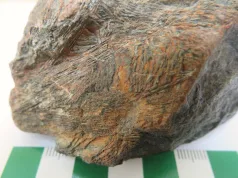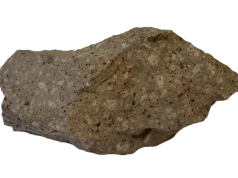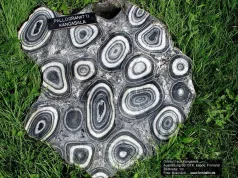


























Granodiorite is a coarse-grained intrusive igneous rock composed mainly of quartz, plagioclase feldspar and alkali feldspar, commonly accompanied by biotite and hornblende. In the QAPF classification, quartz accounts for 20–60% of the normalized quartz–feldspar assemblage, while plagioclase represents 65–90% of the total feldspar. Granodiorite forms through crystallization of magma within the crust and is a major component of many continental volcanic-arc batholiths.
What Is Granodiorite?

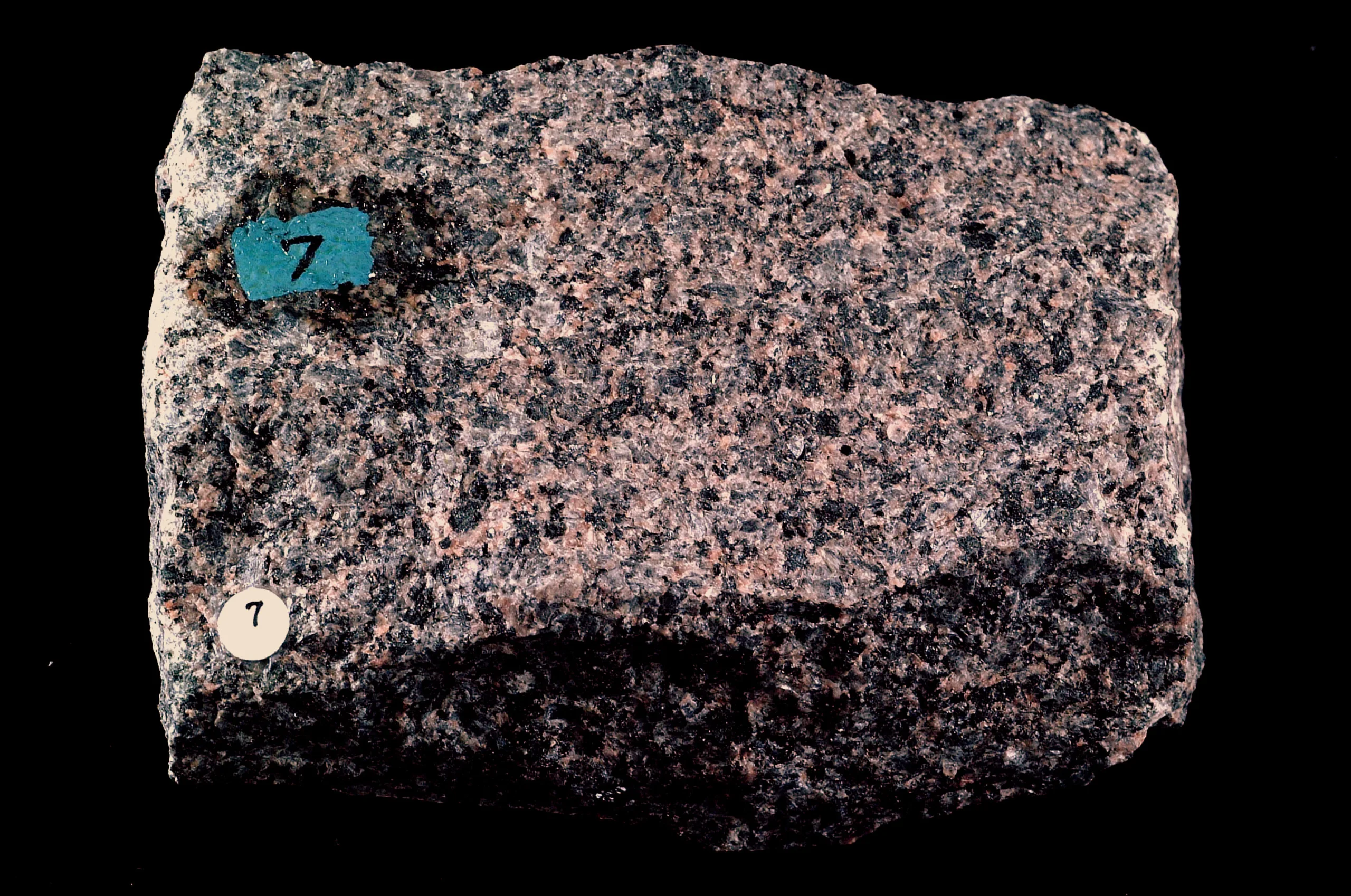
Granodiorite belongs to the granitoid family, which also includes granite and tonalite. Its mineral grains are typically visible without magnification because the rock crystallized below the Earth’s surface. The characteristic speckled appearance reflects light-colored quartz and feldspars interspersed with darker iron- and magnesium-bearing minerals. Color and grain size vary, and the rock cannot be distinguished from granite solely by appearance.
| Property | Typical characteristics |
|---|---|
| Rock group | Intrusive (plutonic) igneous rock |
| Mineral classification | QAPF field 4 |
| Quartz | 20–60% of Q + A + P |
| Plagioclase | 65–90% of A + P |
| Alkali feldspar | 10–35% of A + P |
| Common dark minerals | Biotite and hornblende; others may occur |
| Texture | Phaneritic, commonly medium- to coarse-grained |
| Color | Gray, white, pinkish gray or speckled |
| Density | Often about 2.6–2.8 g/cm³ in fresh, compact specimens |
| Volcanic counterpart | Approximately dacite |
Mineral Composition
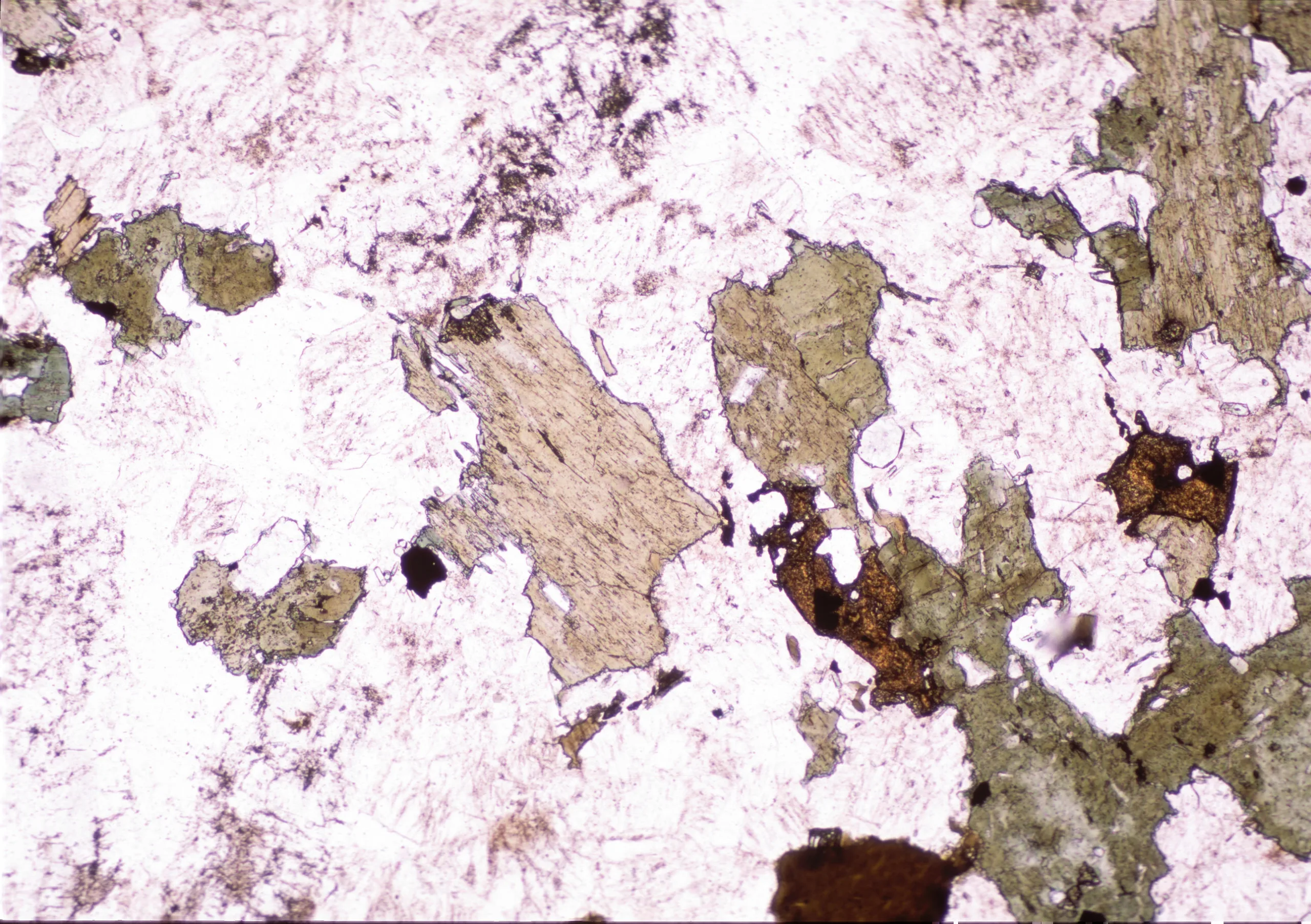
Plagioclase is the dominant feldspar in granodiorite. Its composition varies between intrusions and may change from the core to the rim of a single crystal. The rock also contains substantial quartz and subordinate alkali feldspar, often orthoclase or microcline. Biotite and hornblende are common but are not required to define the rock.
| Mineral | Identification and significance |
|---|---|
| Quartz | Irregular, glassy or smoky gray grains with no cleavage; helps distinguish granitoids from quartz-poor diorite. |
| Plagioclase feldspar | White to gray tabular crystals; repeated twinning is often visible in thin section. |
| Alkali feldspar | White, cream or pink grains; microcline may show cross-hatched twinning under crossed polars. |
| Biotite | Dark brown or black flakes with perfect basal cleavage. |
| Hornblende | Dark elongate amphibole crystals, with cleavage directions near 56° and 124°. |
| Accessory minerals | Zircon, apatite, titanite, magnetite, allanite or others; useful in petrogenetic studies. |
Zircon is particularly important because suitable crystals can be dated by uranium–lead methods, providing constraints on magmatic crystallization. In altered samples, feldspar may be replaced by fine white mica or clay minerals, while biotite may alter to chlorite. These secondary products should not be mistaken for primary magmatic phases.
QAPF Classification and Chemical Composition
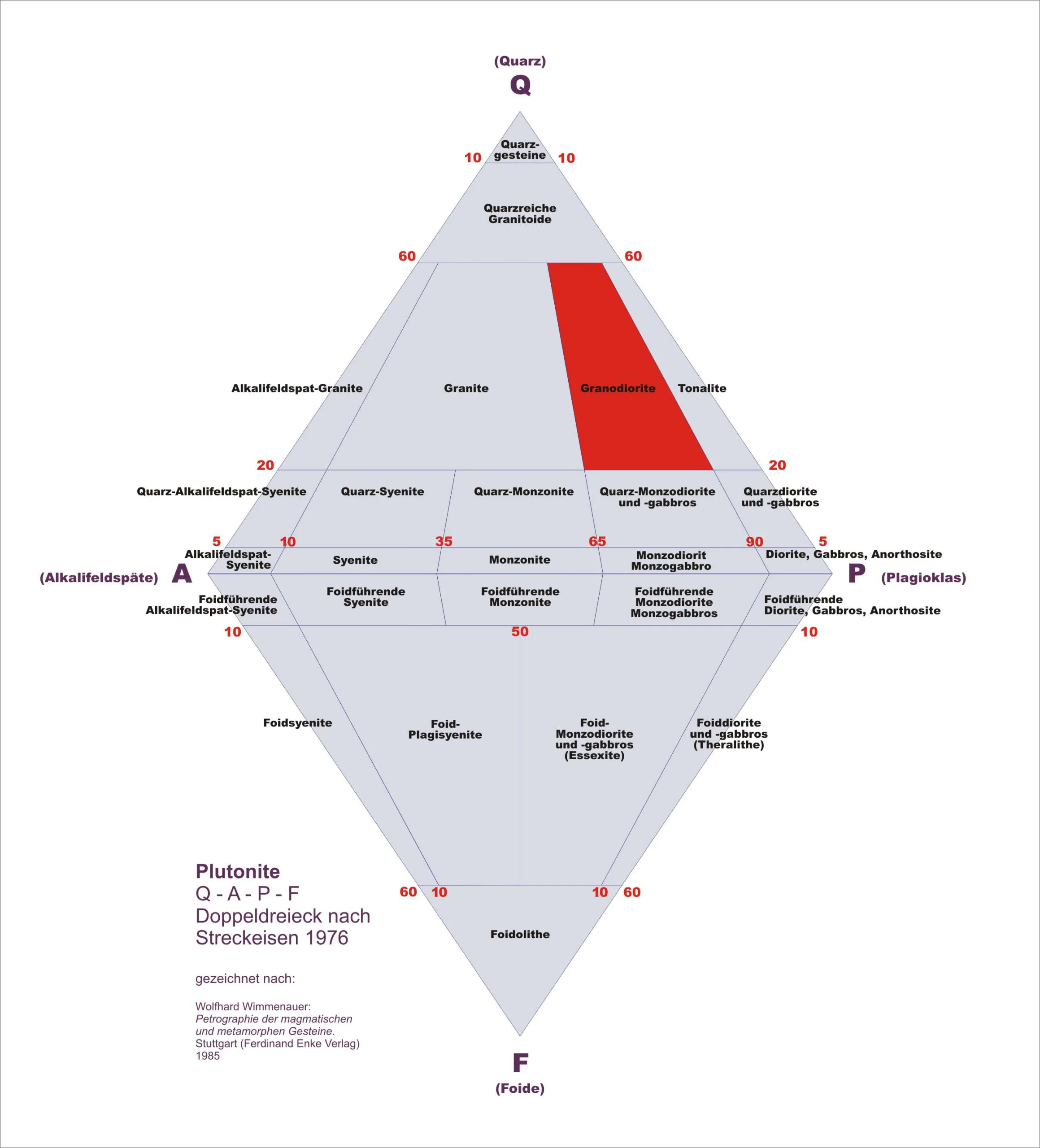
The formal classification uses the observed volume proportions of quartz (Q), alkali feldspar (A), plagioclase (P) and feldspathoids (F). Granodiorite is quartz-bearing, so feldspathoids are absent from the normal QAPF assemblage. Mafic and accessory minerals are excluded from the normalization. The relative proportions determine the rock name, rather than the absolute quartz percentage of the entire specimen.
Worked QAPF example
Consider a sample with 25 vol% quartz, 15% alkali feldspar, 45% plagioclase and 15% mafic minerals. Q + A + P = 85%. The normalized quartz content is 25/85 × 100 = 29.4%. The plagioclase fraction of the feldspars is 45/(15 + 45) × 100 = 75%. Both values fall within the granodiorite field. In contrast, the same normalized quartz content with 95% plagioclase among the feldspars would indicate tonalite.
Whole-rock chemistry
Granodiorite is generally a silica-rich, felsic to intermediate-composition granitoid, but its SiO₂ content is not restricted to a fixed interval. Whole-rock major oxides, including SiO₂, Al₂O₃, CaO, Na₂O and K₂O, provide additional information about magmatic evolution. Trace elements and isotopes help distinguish mantle-derived contributions, crustal melting and assimilation. Chemical data supplement rather than replace modal QAPF classification when the mineral assemblage can be measured.
Texture and Petrography
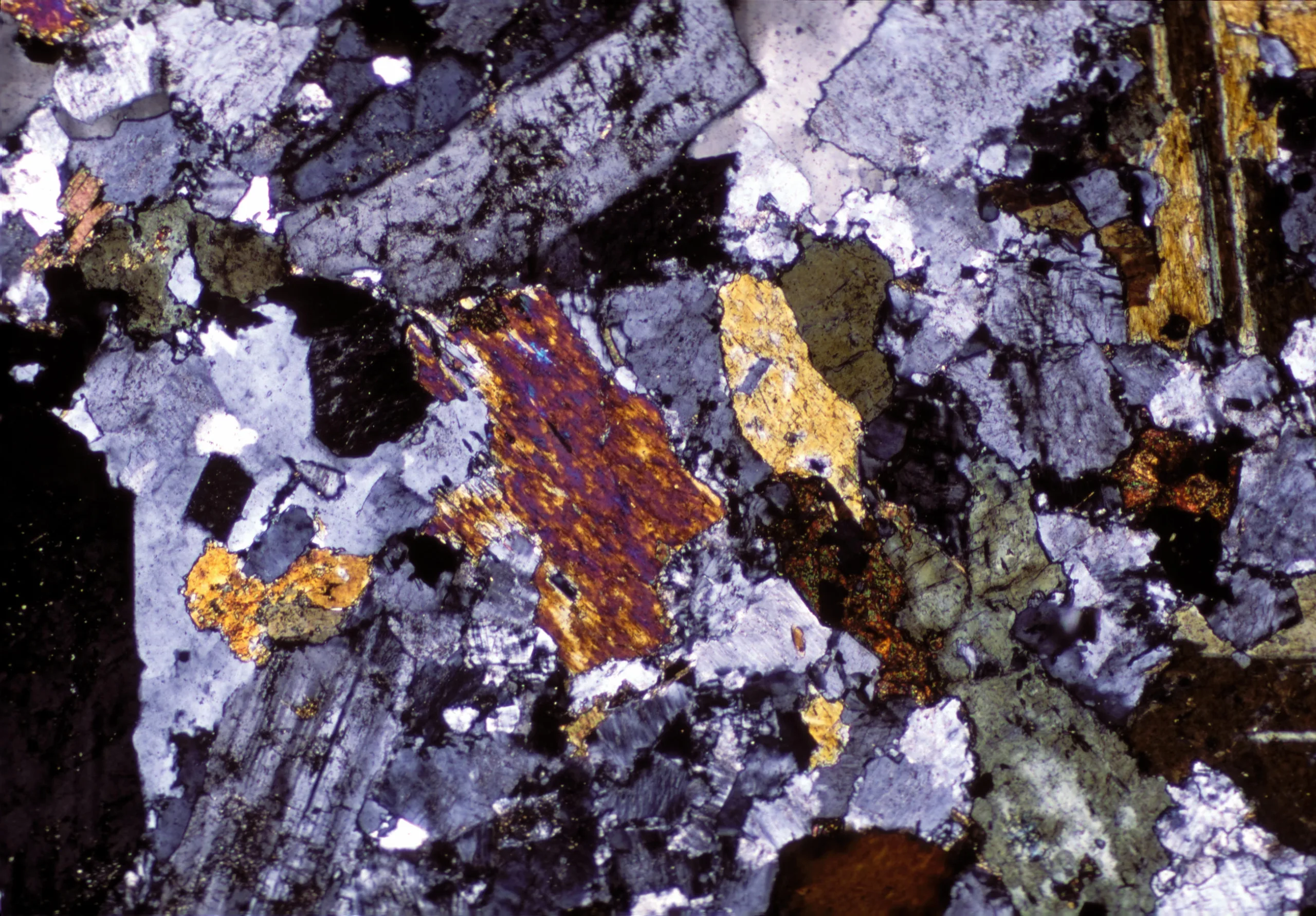
Granodiorite commonly shows a phaneritic texture, with interlocking crystals a few millimeters across or larger. Some bodies are comparatively uniform in grain size; others contain prominent feldspar megacrysts. Mineral boundaries can reveal the order of crystallization: early plagioclase may develop well-formed faces, while late quartz commonly fills irregular spaces between earlier crystals.
- Equigranular: most grains have comparable dimensions.
- Porphyritic: larger crystals are enclosed by a finer but crystalline matrix.
- Magmatic fabric: alignment of elongate minerals may develop during flow or deformation of a crystal-rich magma.
- Deformed fabric: strain after solidification may cause quartz undulose extinction, recrystallization or a penetrative foliation.
Biotite abundance alone does not make a rock foliated. A preferred mineral orientation or systematic compositional fabric must be observed. Under crossed polars, repeated plagioclase twins, quartz extinction behavior and alkali feldspar textures help identify minerals. Point counting or image analysis of representative sections can estimate their modal proportions.
How Does Granodiorite Form?
Granodioritic magmas are particularly widespread in continental arcs above subduction zones. Fluids from the descending plate promote partial melting of the mantle wedge. Ascending melts can then evolve within the crust. The final magma may record a combination of processes rather than a single universal origin.
Magma differentiation and crustal interaction
Crystallization and separation of mafic minerals and calcium-rich feldspars can change the composition of a parental magma. Heat supplied by mantle-derived magma may also trigger partial melting of pre-existing crust. Mixing and assimilation can contribute to the resulting granitoid chemistry. Mineral assemblages and isotopic measurements are used to evaluate the relative importance of these processes.
Pluton emplacement and cooling
Magma may be transported through fractures and accumulate in intrusive bodies at different crustal levels. Repeated magma injections can build composite plutons over extended periods. Slow heat loss enables growth of visible interlocking crystals. Large batholiths are often assembled from many distinct intrusive units rather than one enormous homogeneous magma chamber.
Uplift and erosion subsequently expose the solidified intrusions. Joints, faults and weathering guide the formation of cliffs, rounded domes and valleys. Today, granodiorite exposed at the surface may represent the deeper plumbing system of a long-eroded volcanic arc.
Where Is Granodiorite Found?
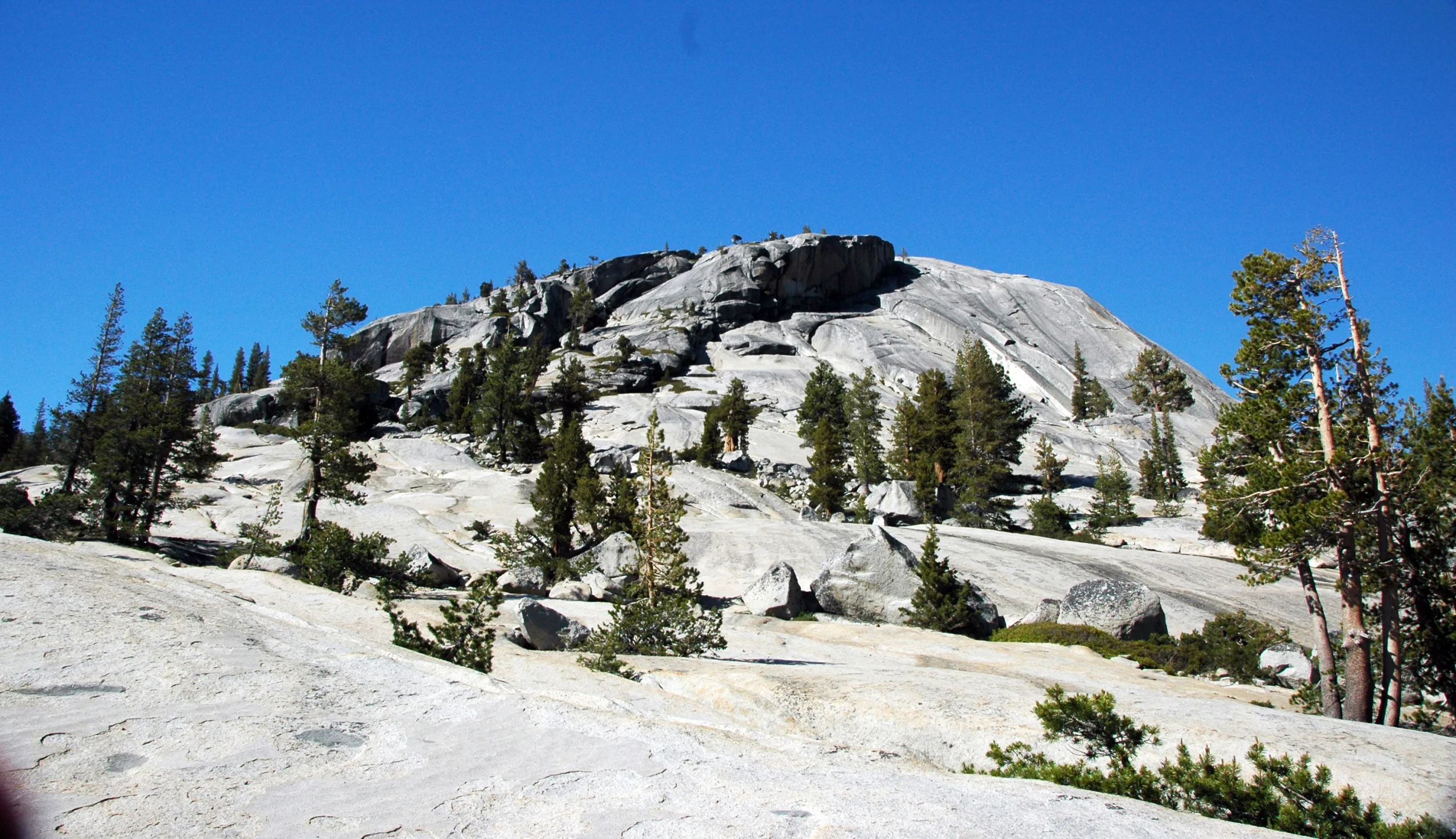
Granodiorite occurs in continental batholiths, smaller plutons and ancient orogenic belts. The Sierra Nevada Batholith in California offers well-studied examples. Yosemite contains multiple intrusive units, including the Half Dome and Cathedral Peak granodiorites. El Capitan, by contrast, is dominated by El Capitan Granite and should not be used as a simple example of a granodiorite landform.
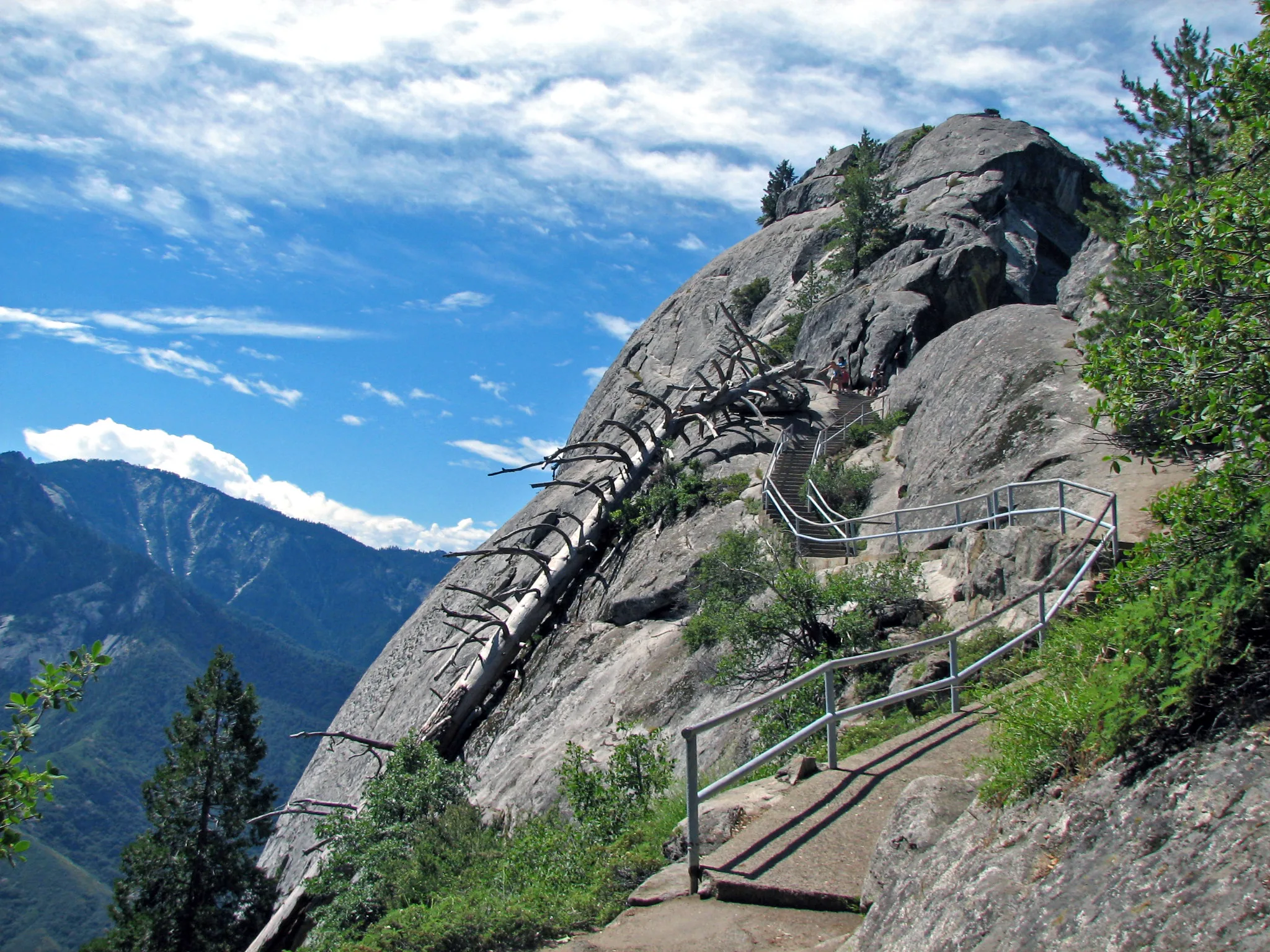
Other occurrences include the St. Cloud granitoids of Minnesota and the Piégut–Pluviers granodiorite of the French Massif Central. These examples represent different geological ages and tectonic histories. A rock’s precise locality and mapped intrusive unit are more informative than the name of a mountain range alone.
How to Identify Granodiorite in the Field
Inspect a fresh surface rather than a weathered outer rind. Look for coarse, interlocking crystals and abundant quartz. Estimate whether plagioclase visibly dominates over alkali feldspar. Quartz lacks cleavage and commonly appears glassy; plagioclase may show fine parallel striations, while alkali feldspar can be pink but is not always so.
- Use a hand lens to distinguish feldspars, quartz and dark minerals.
- Estimate the proportions of quartz and both feldspars on several representative surfaces.
- Avoid assigning a precise QAPF name from color alone.
- Record contacts, enclaves, veins, grain size and mineral orientation in the field.
- Confirm borderline samples with petrographic point counting or suitable mineralogical analysis.
If the feldspar ratio cannot be established confidently, the broader field term granitoid is appropriate until further examination. Granite, granodiorite and tonalite often look very similar in a weathered outcrop.
Granodiorite vs. Granite, Tonalite and Diorite
| Rock | Diagnostic distinction |
|---|---|
| Granite | Normalized quartz 20–60%; plagioclase generally 10–65% of total feldspar in the main granite fields. |
| Granodiorite | Normalized quartz 20–60%; plagioclase 65–90% of total feldspar. |
| Tonalite | Normalized quartz 20–60%; plagioclase exceeds 90% of total feldspar. |
| Diorite | Quartz-poor, commonly rich in plagioclase and mafic minerals; quartz diorite occupies a separate QAPF field. |
| Dacite | Broad volcanic compositional counterpart; commonly fine-grained or porphyritic. |
Granodiorite and granite can both be light or dark, pinkish or gray. Their formal distinction is the feldspar ratio, not the color. Diorite and granodiorite are both plutonic rocks and can have comparable grain sizes. A volcanic rock and its plutonic counterpart may also differ in exact chemical and mineralogical classification.
Weathering and Engineering Properties
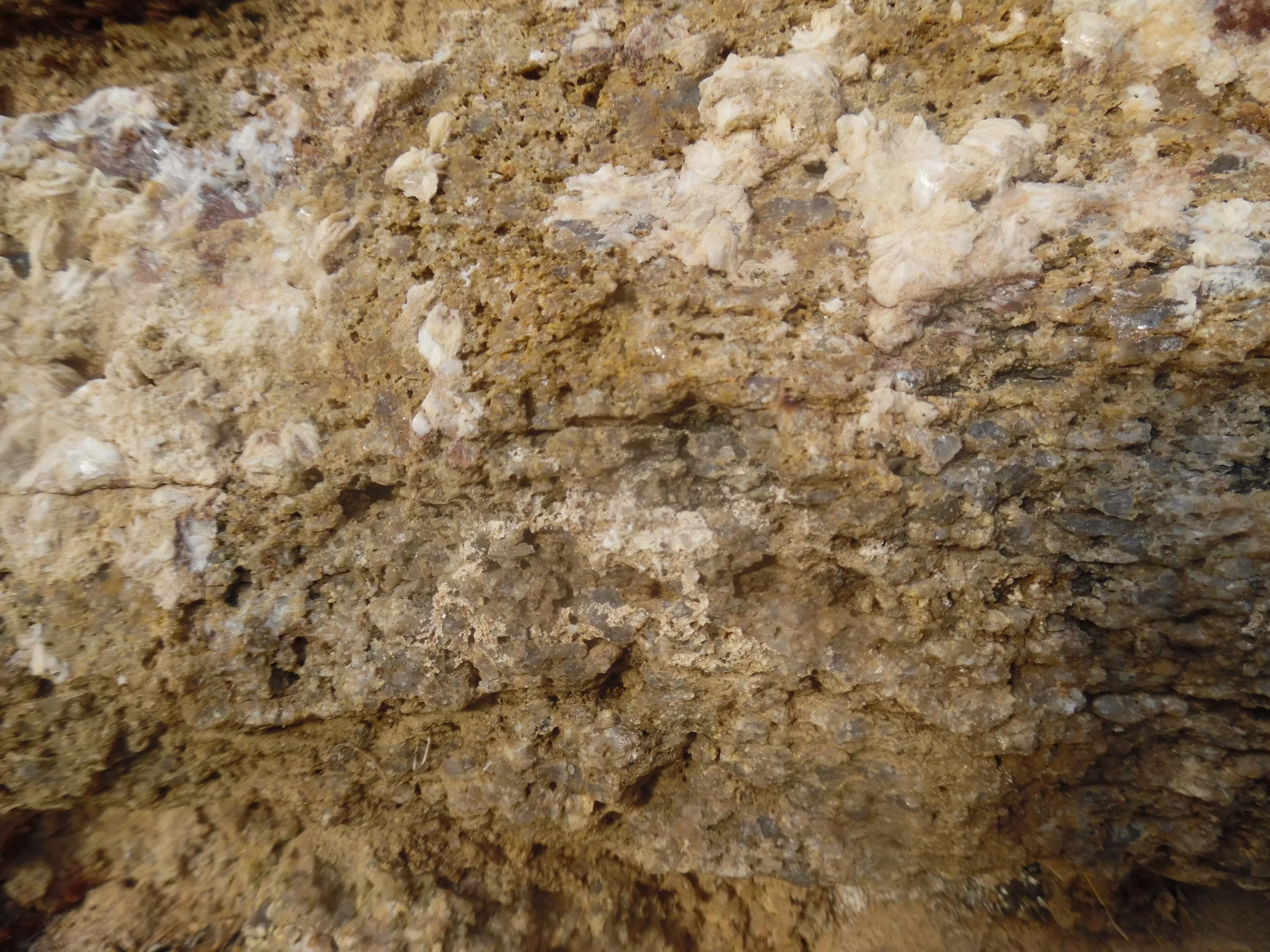
Fresh granodiorite commonly has low porosity and substantial intact-rock strength. Nevertheless, no universal compressive strength or Mohs hardness applies to the rock. Feldspar alteration, microcracks and weathering can weaken the material, and joints may dominate the mechanical behavior of the rock mass. Water movement along fractures can accelerate mineral alteration and create weathered zones.
For foundations, slopes, tunnels and quarries, engineering investigations should separate intact specimen properties from rock-mass behavior. Relevant observations include fracture orientation and spacing, weathering grade, groundwater conditions and rock quality designation (RQD). Laboratory measurements may include uniaxial compressive strength, point-load index, density and water absorption. Design values require site-specific assessment rather than assumptions based on the lithological name.
Uses of Granodiorite
Fresh, suitable granodiorite is used for crushed aggregate, paving, dimension stone, facing slabs, monuments and landscaping. Its interlocking mineral fabric can provide good durability, but quarry products must be tested for the intended application. In the stone trade, some granodiorites are sold under the broader commercial term granite.
Geologists also study granodiorite to reconstruct the growth of continental crust and the evolution of magma reservoirs. Its zircon crystals, mineral chemistry and intrusive relationships can preserve information about tectonic and magmatic events long after the original volcanoes have eroded.
Frequently Asked Questions
Is granodiorite intrusive or extrusive?
It is an intrusive igneous rock that crystallizes within the crust.
What is the difference between granite and granodiorite?
Granodiorite has a higher proportion of plagioclase relative to total feldspar. Both can contain similar amounts of normalized quartz.
Is granodiorite felsic or intermediate?
It is commonly described as a silica-rich granitoid spanning felsic to intermediate chemical compositions. Its formal name is based on mineral proportions.
What is the volcanic equivalent of granodiorite?
Dacite is its approximate volcanic compositional counterpart.
Is granodiorite the same as tonalite?
No. Tonalite has more than 90% plagioclase among its feldspars, compared with 65–90% for granodiorite.
References and Image Credits
- British Geological Survey — Rock Classification Scheme: Granodiorite
- USGS — Lithologic classification of geologic map units
- National Park Service — Geologic Type Section Inventory, Sierra Nevada Network
- USGS — Rock strength properties of granitic rocks in Yosemite Valley
- Le Maitre, R. W. (ed.), 2002. Igneous Rocks: A Classification and Glossary of Terms. 2nd edition. Cambridge University Press.
Featured image: Granodiorite from St. Cloud, Minnesota, Joseph H. Hartman / GeoDIL 25, Wikimedia Commons, CC0; resized and converted to WebP.