






Sedimentary Rocks
Sedimentary rocks are the record keepers of Earth’s surface processes: they form when sediments—whether fragments of older rock, organic remains or mineral precipitates—are deposited, compacted and cemented over time, often in water or by wind. From towering sandstone cliffs to smooth shale beds, from fossil-rich limestones to evaporite layers in dried-up lakes, each sedimentary rock type tells a story of environment, transport and transformation. Because they’re so tied to surface conditions—climate, sea level, source materials—and because their properties vary widely (grain size, sorting, cementation, matrix content), they matter a lot not just in geology but also in engineering and construction. When you’re on a building site, drilling a foundation, assessing slope stability or planning excavation, knowing whether you’re dealing with a brittle sandstone, a weak shale or a highly soluble evaporite can make the difference between disaster and success. In this category you’ll explore how sedimentary rocks form, how to distinguish major groups (clastic vs non-clastic), how to read their textures and features in the field or core, and why for geologists, engineers and all site professionals these rocks deserve careful attention.

Petoskey Stone
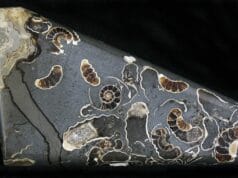
Petoskey Stone is a type of fossilized coral that holds significance and popularity, particularly in the state of Michigan, USA.Origin: Petoskey Stone is...
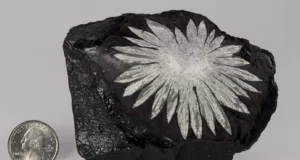
Chrysanthemum Stone
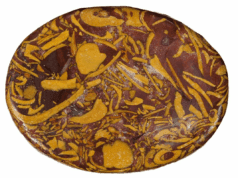
Chrysanthemum stone is a unique and captivating mineral with a rich history, valued for its striking appearance and intricate patterns. This stone is not...

Flint
Flint is a naturally occurring sedimentary rock composed primarily of microcrystalline quartz, or silicon dioxide (SiO2). It is renowned for its historical significance and...
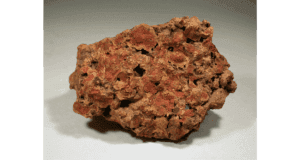
Bauxite
Bauxite is a sedimentary rock mineral that is the primary source of aluminum. It is formed through the weathering of aluminum-rich rocks in tropical...
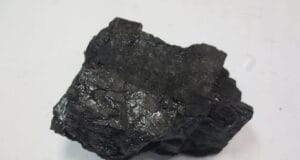
Coal
Coal is a non-clastic sedimentary rock. They are the fossilized remains of plants and are in flammable black and brownish-black tones. Its main element...

Agglomerate
Agglomerate rock is a type of sedimentary rock that forms through the accumulation and cementation of coarse fragments of various sizes, typically ranging from...

Marl
Marl or the other name Marlstone is a calcium carbonate non-clastic sedimentary rock. It has containt variable of clays and silt. The dominant carbonate...

Chalk
Chalk is a soft, white, highly porous biochemical sedimentary rock composed almost entirely of calcite (CaCO₃) derived from the remains of coccolithophores, microscopic marine...

Siltstone
Siltstone is a clastic sedimentary rock that formed from grains whose sized between that of sandstone and mudstone. It can found different environmental conditions...

Oil Shale
The Geological Story of Energy Trapped in Sedimentary EnvironmentsOil shale may appear at first glance as an ordinary dark-colored sedimentary rock. It's finely layered,...

Shale
Shale is the quiet giant of the sedimentary world. It doesn’t have the visual drama of sandstone cliffs or the crystalline sparkle of limestone...

Sandstone
An Ancient Record Written in StoneSandstone is one of the most widespread sedimentary rocks on Earth, formed through the accumulation and cementation of mineral...