






Sedimentary Rocks
Sedimentary rocks are the record keepers of Earth’s surface processes: they form when sediments—whether fragments of older rock, organic remains or mineral precipitates—are deposited, compacted and cemented over time, often in water or by wind. From towering sandstone cliffs to smooth shale beds, from fossil-rich limestones to evaporite layers in dried-up lakes, each sedimentary rock type tells a story of environment, transport and transformation. Because they’re so tied to surface conditions—climate, sea level, source materials—and because their properties vary widely (grain size, sorting, cementation, matrix content), they matter a lot not just in geology but also in engineering and construction. When you’re on a building site, drilling a foundation, assessing slope stability or planning excavation, knowing whether you’re dealing with a brittle sandstone, a weak shale or a highly soluble evaporite can make the difference between disaster and success. In this category you’ll explore how sedimentary rocks form, how to distinguish major groups (clastic vs non-clastic), how to read their textures and features in the field or core, and why for geologists, engineers and all site professionals these rocks deserve careful attention.
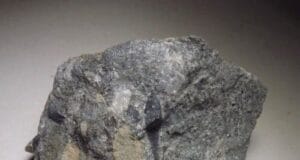
Greywacke
Greywacke is variation of sandstone that saperate from other to hardness, dark color, and poorly sorted angular grains of quartz and feldspar. Generally found in Palezoic strata. Generally larger grain can be sand clast. Matrix material more than 15%.
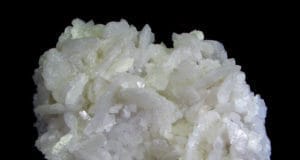
Dolostone (Dolomite)
An important rock-forming mineral, dolomite is named after the French mineralogist Déodat Gratet de Dolomieu. It is a colorless to white, pale brown, grayish, reddish, or pink mineral. Its crystals are commonly rhombohedral or tabular, often have curved faces, and sometimes cluster in saddle-shaped aggregates.

Mudstone
Mudstone is a really pleasant-grained sedimentary rock consisting of a aggregate of clay and silt-sized particles. Terms including claystone and siltstone are often used in location of mudstone, although these consult with rocks whose grain length falls inside a good deal narrower stages and underneath near exam those are frequently technically mudstones. Shale is frequently used to explain mudstones that are difficult and fissile (wreck along bedding planes). Marl is regularly used to explain carbonate-rich tender mudstones.

Limestone
A Rock That Shapes Landscapes and Records Earth’s PastLimestone is one of the most abundant and widely used sedimentary rocks on Earth. Formed primarily...

Chert
Chert is a microcrystalline or cryptocrystalline sedimentary rock cloth composed of silicon dioxide (SiO2). It takes place as nodules, concretionary hundreds, and as layered deposits. Chert breaks with a conchoidal fracture, often producing very sharp edges. Early people took advantage of the way chert breaks and used it to fashion cutting equipment and weapons. The name "flint" is also used for this fabric.
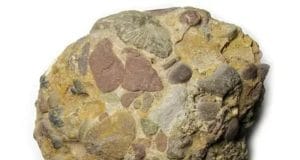
Conglomerate
Conglomerateis a sedimentary rock shaped from rounded gravel and boulder sized clasts cemented collectively in a matrix. The rounding of the clasts indicates that they've been transported a long way from their authentic source (e.G. Through a river or glacier), or that they've resided in a high energy surroundings for a while

Breccia
Breccia is a rock shaped from angular gravel and boulder-sized clasts cemented collectively in a matrix. The angular nature of the clasts suggests that they have now not been transported very far from their source. There are numerous modes of formation for breccia. Some constitute consolidated material accumulated on steep hill slopes or on the foot of cliffs.