













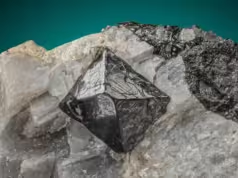
Oxide Minerals
Oxide minerals form a distinctive and essential class of minerals in which oxygen (O²⁻) bonds directly with one or more metal (or semi-metal) cations, producing compounds that often crystallize in igneous environments, during metamorphism or as weathering products at Earth’s surface. These include well-known species such as hematite (Fe₂O₃), magnetite (Fe₃O₄), corundum (Al₂O₃) and chromite (FeCr₂O₄). Because of their relatively simple chemistry compared to silicates and their varied formation settings, oxide minerals provide crucial clues about temperature, oxidation state, fluid history and tectonic processes. They are also directly tied to major ore deposits — for example iron ores, chromium ores and aluminium ores often occur as oxides. In this category you’ll explore how oxide minerals form, how their crystal structures and physical properties reflect those formation conditions, where they occur in the field (or in the subsurface) and why as a geologist, engineer or site-practitioner you should pay attention to them for everything from exploration to material behaviour and geotechnical risk.

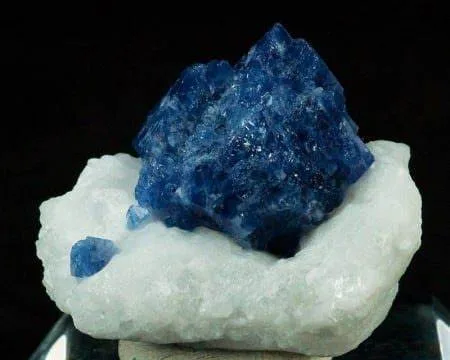
Diaspore
Diaspore, an aluminum hydroxide mineral with the chemical formula AlO(OH), is a fundamental component in the study of geology and mineralogy. It is significant...
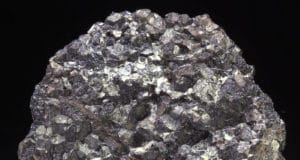
Chromite
Chromite is an oxide mineral that an iron chromium oxide with formula: FeCr2O4. It is belonging to the spinel group. Chromite is the most important ore of chromium. Crystals are uncommon, but when found they are octahedral. Chromite is usually massive or in the form of lenses and tabular bodies, or it may be disseminated as granules.

Powellite
Powellite is a mineral that belongs to the broader group of minerals known as molybdates and tungstates. It is specifically classified as a calcium...

Cuprite
Cuprite is a mineral that belongs to the oxide mineral group. It is composed of copper(I) oxide, with the chemical formula Cu2O. The name...

Uraninite
Uraninite is a mineral that is primarily composed of uranium oxide. It is a significant ore of uranium, which is an important element used...
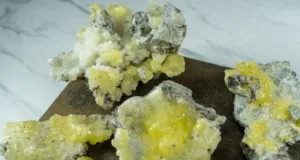
Brucite
Brucite is a mineral that is composed of magnesium hydroxide (Mg(OH)2). It belongs to the class of minerals known as hydroxides, which are compounds...

Musgravite
Musgravite is a rare and precious gemstone that belongs to the oxide mineral family. It is a member of the taaffeite family, which also...