










Geology
Home Geology
Geology is divided into several fields that can be grouped under the main headings of physical and historical geology.
Applied Geology
Applied Geology is geologic knowledge to solving geologic problem. In other words, application of various fields of geology to economic, engineering, water-supply, or environmental problems; geology related to the human activity.
METHODS OF GEOLOGY
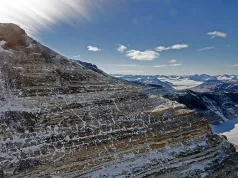
Geologists use primary data associated with petrology (the study of rocks), stratigraphy (the observe of sedimentary layers), and structural geology (the have a look at of positions of rock devices and their deformation). In many cases, geologists additionally take a look at contemporary soils, rivers, landscapes, and glaciers; inspect past and contemporary life and biogeochemical pathways, and use geophysical techniques to investigate the subsurface.
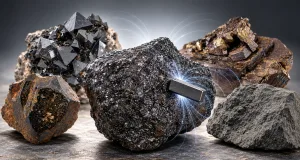
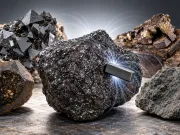
Common Magnetic Rocks and Minerals
When you bring a magnet close to a rock and notice that it is strongly attracted, the result can be surprising. If the rock...
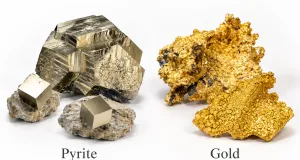
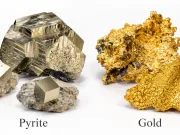
Gold vs. Pyrite: 7 Ways to Tell the Difference
Gold or pyrite? Learn seven practical, mostly non-destructive checks using crystal shape, color, a hand lens, weight and geological context—without scratching valuable gold.
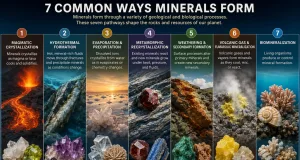
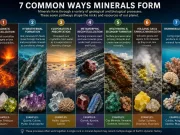
How Do Minerals Form? 7 Common Geological Processes That Form Minerals
Minerals are the building blocks of rocks, but every mineral crystal also records a story.A quartz crystal growing from hot water inside a fracture...
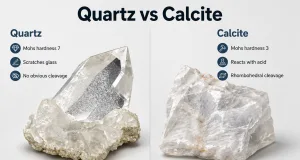
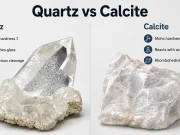
Quartz vs Calcite: What’s the Difference?
Quartz and calcite are two of the most common minerals on Earth, and in some specimens they can be surprisingly easy to confuse.A colorless...
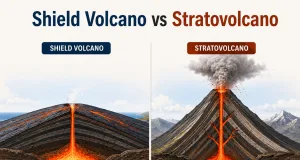
Shield Volcano vs Stratovolcano: What’s the Difference?
Not all volcanoes have the classic cone shape. Some, such as Mauna Loa in Hawaii, form enormous mountains with broad bases and gentle slopes...
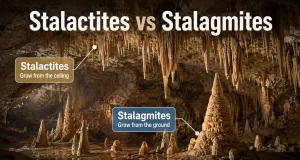
Stalactites vs Stalagmites: What’s the Difference?
When you enter a cave, you may see pointed formations hanging down from the ceiling and similar structures rising upward from the floor. At...
Rock Identification Guide: How to Identify Rocks Like a Geologist
You are walking along a beach, through the mountains, in your backyard, or beside a road when you notice an unusual rock. Maybe it...
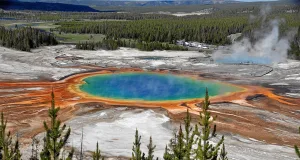
Yellowstone’s Supereruption Was Not a Single Explosion, New Evidence Suggests
1. Yellowstone's Last Supereruption Wasn't as Simple as We ThoughtFor years, textbooks and popular science accounts have painted Yellowstone's last supereruption as one single,...

Top 10 Most Important Fossil Discoveries of All Time
A fossil sometimes looks just like bone turned into stone. But there are some fossils that, on day they're found, change direction of science.Acceptance...

Why Do Some Rocks Break in Perfect Layers?
When rock breaks what do you expect to happen? For most people answer is simple: irregular pieces, random cracks, uncontrolled breaking. Yet in nature...

Why Do Some Rocks Break Easily While Others Don’t?
You take a stone in your hand. An ordinary stone. Neither has special color nor eye-catching shape. It falls to ground, makes short sound...

Why Is Earth So Different From Other Planets?
When you look from space Earth doesn't really mean much actually. A blue ball among dozens of planets rotating around the Sun. Neither as...